
Aphaenogaster striativentris
- Sci. Name
- Aphaenogaster striativentris
- Tribe
- Stenammini
- Subfamily
- Myrmicinae
- Author
- Forel, 1895
- Distribution
- Found in 1 countries
Introduction
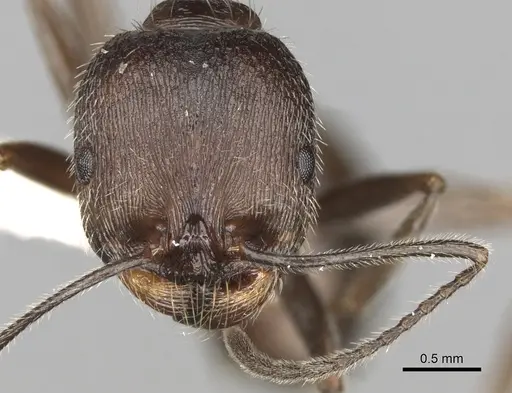
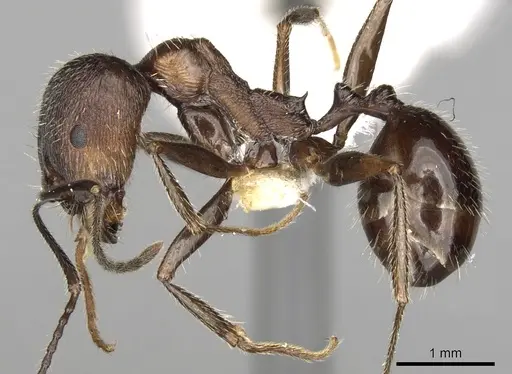
Aphaenogaster striativentris is a distinctive black ant found only in the limestone mountains of southern Spain. Workers come in two sizes: large majors with unusually square heads and powerful curved mandibles that look remarkably similar to harvester ants (Messor), and smaller minors with more typical elongated heads . Queens are robust and shiny black with abundant yellow hairs . The species belongs to the A. gibbosa group and inhabits Mediterranean scrubland at elevations between 320 and 980 meters . What makes these ants special is their evolutionary convergence with seed-harvesting ants. Unlike most Aphaenogaster, the majors have short, powerful mandibles curved toward the midline and rectangular heads perfect for processing seeds - a case of independent evolution to fill a similar ecological niche . They are true seed-eaters (granivores), storing seeds in small chambers inside their nests and placing their larvae directly on the seed piles to feed . They also possess a stridulatory organ for sound production [AntWiki].
Quick Summary
- Difficulty: Medium
- Origin & Habitat: Southern Iberian Peninsula, Spain, limestone mountains of the Subbético region (Rondeño and Malacitano-Almijarense sectors) at 320-980m elevation, in Mediterranean scrubland with rosemary (Rosmarinus) and gorse (Ulex) vegetation [1][3].
- Colony Type: Unconfirmed, natural colony structure not documented in available research. Related Aphaenogaster species are typically single-queen.
- Size & Growth:
- Queen: ~7-9 mm (inferred from Aphaenogaster genus)
- Worker: Polymorphic: majors ~5-7 mm, minors ~4-5 mm (inferred from Aphaenogaster genus)
- Colony: Unknown, maximum colony size not documented.
- Growth: Unknown.
- Development: Unconfirmed, development timeline not documented in available research. (Based on typical Aphaenogaster development, expect several months from egg to worker at room temperature.)
- Antkeeping:
- Temperature: Likely 20-28°C during the activity season, Mediterranean extratropical species may benefit from cooler winter periods around 10-15°C [5]. Specific requirements are unconfirmed, adjust based on colony activity levels.
- Humidity: Moderate humidity with damp but not waterlogged nest substrate, natural habitat is Mediterranean limestone with seasonal dryness [1].
- Diapause: Likely yes, recommended winter cooling to 10-15°C for 2-3 months given the extratropical distribution at 36-37°N latitude, though not explicitly documented [5].
- Nesting: Natural nests occur under flat stones in limestone soil [3], in captivity use shallow nests with stone or plaster surfaces, good drainage, and moderate humidity.
- Behavior: Granivorous seed-harvesters with distinct major and minor worker castes [1][2]. Majors use their powerful, curved mandibles to process seeds. The species shows evolutionary convergence with Messor harvester ants in head shape and mandible structure [2]. Generally peaceful and non-aggressive, suitable for observation.
- Common Issues: granivorous diet requires consistent seed supply plus supplemental protein, colonies may fail without appropriate seeds [1]., polymorphic majors need adequate space and larger food items to utilize their specialized mandibles properly., limited natural distribution and lack of commercial availability make colonies difficult to obtain., specific humidity needs for Mediterranean limestone habitats, avoid tropical moisture levels that can cause mold.
Nest Preferences and Natural Habitat
In nature, Aphaenogaster striativentris nests under flat stones in the limestone mountains of southern Spain's Subbético region [3]. They occur at elevations from 320 to 980 meters in Mediterranean scrubland dominated by rosemary and gorse vegetation [1]. The habitat experiences seasonal dryness typical of Mediterranean climates, with well-drained limestone substrates.
For captive keeping, recreate these conditions with shallow formicaria that have flat stone or plaster surfaces. Avoid deep, tropical-style nests with high moisture. Provide a slight humidity gradient with one side slightly damper, but ensure the substrate never becomes waterlogged. Good ventilation is essential to prevent mold in the moderate humidity levels these ants prefer.
Feeding and Diet - The Granivorous Specialist
Aphaenogaster striativentris is a true seed-eater (granivore). Natural nests contain small seed chambers where larvae are placed directly on seed piles to feed [1]. In laboratory settings, workers accepted seeds from Salvia and Cistus plants, as well as insects such as Drosophila [1].
In captivity, provide a varied diet of small seeds (such as grass seeds, chia, or millet) mixed with protein sources. Offer seeds constantly in a dedicated chamber or feeding area. Supplement with small live insects like fruit flies, springtails, or tiny pieces of mealworm. Observe whether your colony prefers certain seed types, as specialization may vary. Unlike many ants that thrive on sugar water, this species has specific seed requirements that must be met for long-term success.
Polymorphism and Convergent Evolution
This species is the first documented polymorphic Aphaenogaster, meaning it has distinct major and minor worker castes [1]. The majors possess square heads and short, powerful mandibles that curve toward the midline, remarkably similar to harvester ants of the genus Messor [3][2]. This is an example of convergent evolution, where unrelated species independently evolve similar traits to exploit similar ecological niches [2].
The majors likely specialize in seed processing, using their robust mandibles to crack hard seeds, while minors may handle foraging and brood care. When keeping this species, ensure the enclosure allows majors enough space to maneuver their larger heads, and provide food items appropriate for different worker sizes.
Temperature and Seasonal Care
Aphaenogaster striativentris inhabits extratropical Mediterranean regions at approximately 36.8°N latitude [5]. This suggests they experience seasonal temperature variations and likely require a winter rest period (diapause) to maintain healthy colony cycles.
Keep the colony at 20-28°C during the active season (spring through autumn). As temperatures drop naturally, gradually reduce the temperature to 10-15°C for 2-3 months during winter. This cooling period mimics their natural Mediterranean climate and may be necessary for proper brood development and queen health, though specific diapause requirements remain unconfirmed. Use a heating cable on one side of the nest to create a gentle gradient, allowing the ants to thermoregulate.
Behavior and Temperament
These ants are generally peaceful and non-aggressive, making them suitable for observation. They forage for seeds and small prey items, carrying them back to the nest. The presence of a stridulatory organ (a sound-producing structure) has been documented in this species, though the specific communications purposes are not fully understood [4].
The polymorphic worker caste system adds behavioral interest, as majors and minors may divide labor differently. Majors with their specialized mandibles likely focus on seed processing, while smaller workers handle general foraging and nest maintenance. They are not escape artists per se, but their small size requires standard escape prevention such as tight-fitting lids and barriers.
Frequently Asked Questions
What do Aphaenogaster striativentris eat?
They are granivorous (seed-eating) ants. In nature they store seeds in small chambers and place larvae directly on the seed piles. They accept seeds from plants like Salvia and Cistus, as well as small insects such as fruit flies. In captivity, provide a constant supply of small seeds plus regular protein from live or dead insects.
Do Aphaenogaster striativentris have major workers?
Yes, they are polymorphic with distinct major and minor worker castes. The majors have square heads and powerful curved mandibles that look similar to harvester ants (Messor), while minors have more typical elongated heads. This was the first polymorphic species documented in the genus Aphaenogaster.
Where do Aphaenogaster striativentris come from?
They are endemic to the southern Iberian Peninsula, specifically the limestone mountains of Spain's Subbético region in provinces like Málaga and Cádiz. They inhabit Mediterranean scrubland at elevations between 320 and 980 meters.
How big are Aphaenogaster striativentris queens and workers?
Queens are approximately 7-9 mm. Workers are polymorphic: majors reach roughly 5-7 mm with large square heads, while minors are smaller at approximately 4-5 mm with elongated heads. These sizes are inferred from the Aphaenogaster genus as exact measurements are not documented.
Do Aphaenogaster striativentris need hibernation?
Likely yes. Given their extratropical Mediterranean distribution at 36-37°N latitude, they probably require a winter diapause. Cool the colony to 10-15°C for 2-3 months during winter, though specific requirements are not yet documented in research.
Are Aphaenogaster striativentris good for beginners?
They are medium difficulty. While not aggressive, they have specific dietary needs as granivores and require appropriate Mediterranean habitat conditions. Their limited availability and lack of extensive captive breeding documentation make them better suited for keepers with some experience.
Can I keep Aphaenogaster striativentris in a test tube setup?
A standard test tube setup may work for founding colonies, though the founding behavior (claustral vs semi-claustral) is unconfirmed. Ensure the tube is not too humid, as they prefer moderate moisture levels typical of Mediterranean limestone habitats.
How long until Aphaenogaster striativentris get their first workers?
The egg-to-worker timeline is unconfirmed for this species. Based on typical Aphaenogaster development, expect several months from egg to worker at room temperature.
How big do Aphaenogaster striativentris colonies get?
Maximum colony size is unknown and not documented in available research. Given their specialized granivorous niche and polymorphic worker system, they likely remain moderate in size compared to generalist species.
Do Aphaenogaster striativentris sting?
Like most Aphaenogaster, they likely possess a stinger but are not considered dangerous to humans. They are generally peaceful and non-aggressive.
Report an Issue
The current care sheet is based fully on literature. See inconsistencies, or something that's incorrect? Please , it will be resolved after review from an admin. Contributing to the blogs tab also helps providing information, to make us be able to further improve the caresheets. Thank you for your support!
References

This caresheet is licensed under CC BY-SA 4.0 .
Community Blogs
CASENT0280964
View on AntWeb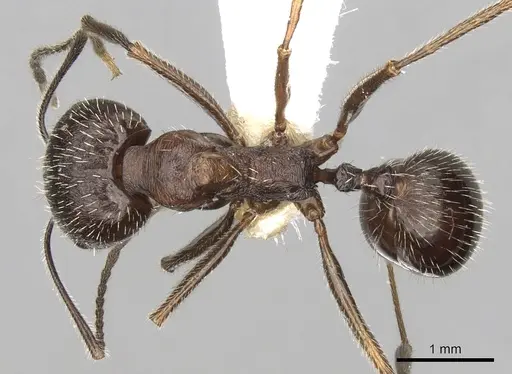
Literature
Loading distribution map...Loading products...