
Simonelli's Collared Ant
Aphaenogaster simonellii
- Sci. Name
- Aphaenogaster simonellii
- Tribe
- Stenammini
- Subfamily
- Myrmicinae
- Author
- Emery, 1894
- Common Name
- Simonelli's Collared Ant
- Distribution
- Found in 2 countries
Introduction
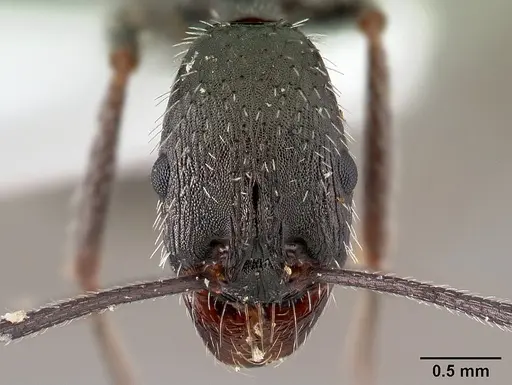
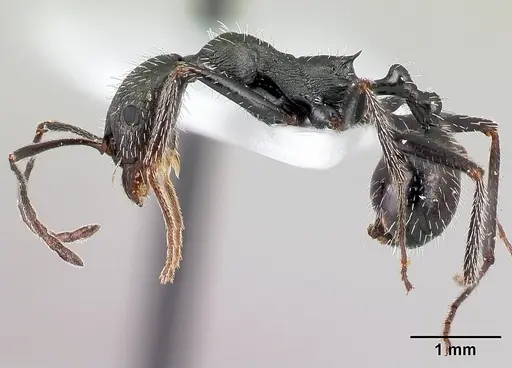
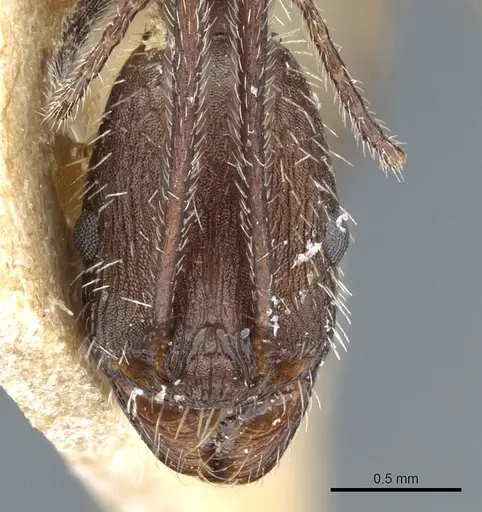
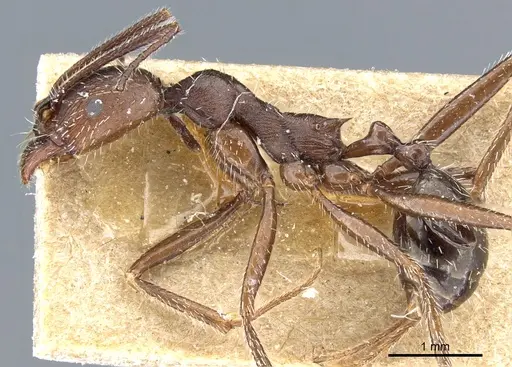
Aphaenogaster simonellii is a small ant endemic to Crete, with workers measuring approximately 3-4 mm in total length and queens around 4-5 mm . They are distinguished by their shiny, glossy body and slightly angular pronotum in lateral view . These warmth-loving ants are found across the Greek islands including Crete, Karpathos, Rhodes, and the Peloponnese, plus Turkey, nesting in dry soil under stones and in rock crevices up to 1200 meters altitude . This species is notable for seed collection behavior. They gather myrmecochorous seeds (seeds with fatty attachments that ants eat) and have been observed carrying olive petals back to their nests in large quantities, sometimes leaving crops of bare petals . They also hunt live and dead arthropods and collect dead plant material . When disturbed, they move quickly and may evacuate their entire nest .
Quick Summary
- Difficulty: Medium
- Origin & Habitat: Crete and other Greek islands (endemic to Crete), Turkey. Found in open dry forests, olive groves, rocky areas, grasslands, and urban lawns in Mediterranean climates [1][2].
- Colony Type: Single-queen (monogyne) colonies based on typical Aphaenogaster patterns.
- Size & Growth:
- Queen: Approximately 4-5 mm, inferred from head measurements (CL 1.68 mm, CW 1.37 mm) [1]
- Worker: Approximately 3-4 mm, inferred from head measurements (CL 1.18-1.82 mm, CW 0.89-1.41 mm) [1][2]
- Colony: Unknown, colony size data not documented in available research.
- Growth: Moderate
- Development: Unknown for this species. (Development likely depends on temperature, as with related Mediterranean Aphaenogaster species.)
- Antkeeping:
- Temperature: Keep warm and stable around 24-28°C. These are thermophilous (warmth-loving) ants from Mediterranean climates [2]. Provide a gentle heat gradient.
- Humidity: Dry to moderately damp. In nature they nest in dry soil under stones [1][3]. Keep the nest substrate slightly moist but never wet, with good drainage.
- Diapause: Likely yes, Mediterranean species typically experience winter slowdown. Specific duration unconfirmed for this species.
- Nesting: Soil nests under stones and in rock crevices [1][3]. In captivity, use Y-tong (AAC), plaster, or naturalistic setups with flat stones for cover.
- Behavior: Fast-moving and cautious forager [1]. Workers forage individually on the ground and among vegetation, searching carefully before moving [1]. They react quickly to disturbances and may evacuate the nest when threatened, particularly in May [1]. Their small size makes them difficult to contain.
- Common Issues: tiny size means they can escape through the smallest gaps, use fine mesh barriers and Fluon., fast movement makes them difficult to recapture if they escape., may require seeds in diet for optimal health, standard protein and sugar alone may not suffice., dry nesting conditions are important, overly humid conditions can harm seed caches.
Nest Preferences
In nature, Aphaenogaster simonellii nests in dry soil, almost always sheltered by stones or in rock cavities [1][3]. They prefer open, sunny spots often overgrown by herbs and grass, and have even been found in cracked walls surrounding hotel gardens [2]. Most records come from low to mid altitudes up to 800 meters, with the highest known site at 1200 meters [2]. The nests remain dry, with the stones providing protection and thermal stability.
In captivity, recreate these conditions with a dry to moderately moist substrate. Y-tong (aerated concrete) or plaster nests work well if kept relatively dry. Provide a naturalistic setup with flat stones or slate pieces if possible. The ants will appreciate narrow chambers and tight spaces under cover. Avoid overly humid conditions that might promote mold in their stored seed caches.
Feeding and Diet
These ants are omnivorous seed collectors. They feed on live and dead arthropods, plus myrmecochorous seeds, seeds that have fatty elaiosomes attached that ants eat [1]. They also collect dead vegetable material and have been observed hauling olive petals back to their nests in large quantities [1].
In captivity, offer a varied diet including small live insects (fruit flies, springtails, small crickets) and dead insects. Provide a regular supply of small seeds such as chia, poppy, or millet. Place seeds in a dry area of the outworld where the ants can collect and process them. Also offer sugar water or honey water in a test tube setup or small feeder.
Temperature and Care
Aphaenogaster simonellii is thermophilous, meaning they prefer warm conditions [2]. In their native Crete, they thrive in open sunny habitats at low to mid altitudes up to 800 meters, with the highest record at 1200 meters [2].
Keep your colony at roughly 24-28°C with a gentle heat gradient across the nest. Use a heating cable or heat mat on one side of the nest, placed on top to avoid driving moisture upward and creating condensation. As a Mediterranean species, they likely experience a winter rest period. If your colony slows down in winter, move them to a cooler spot around 10-15°C for 2-3 months, then return to warmth in spring.
Behavior and Temperament
These ants show precautionary foraging, they scout carefully and move with deliberate caution until disturbed [1]. When alarmed, they move fast [1]. They are territorial and have been observed evacuating their entire nest when threatened, particularly in May [1].
Workers forage individually rather than in trails, searching the ground, herbs, and bases of shrubs for food [1]. Because of their small size and speed, they can be challenging to contain. Use excellent escape prevention including Fluon barriers and fine mesh ventilation. Their territorial nature means you should keep multiple colonies well separated to prevent stress from mutual aggression.
Colony Founding
The founding behavior of Aphaenogaster simonellii has not been documented in scientific studies. Set up founding queens in a standard test tube with water reservoir and cotton plug. Wait for the first workers (nanitics) to emerge before offering regular food. Observe the queen's behavior to determine if she leaves the chamber to forage (semi-claustral) or remains sealed (claustral).
Frequently Asked Questions
Can I keep Aphaenogaster simonellii in a test tube?
Yes, test tubes work well for founding colonies. Use a standard setup with water reservoir and cotton plug. Because they are small and fast, ensure the plug is tight and consider adding a second barrier like Fluon around the tube opening when you open it for feeding.
How long until Aphaenogaster simonellii gets first workers?
The exact timeline is unknown. Based on related Mediterranean Aphaenogaster species, expect roughly 8-12 weeks at 25-28°C. First workers (nanitics) may emerge slightly faster than subsequent brood.
What do Aphaenogaster simonellii eat?
They eat live and dead arthropods plus seeds, particularly myrmecochorous seeds with fatty attachments [1]. In captivity, feed small insects and offer seeds like chia, poppy, or millet regularly. They also accept sugar water.
Do Aphaenogaster simonellii need hibernation?
Likely yes. As a Mediterranean species from Crete, they probably experience winter slowdown. If your colony becomes less active in winter, cool them to 10-15°C for 2-3 months.
Are Aphaenogaster simonellii good for beginners?
They are medium difficulty. While they are hardy Mediterranean ants, their small size and fast movement make escape prevention challenging. They also require seeds in their diet for optimal health, adding complexity to feeding.
How big do Aphaenogaster simonellii colonies get?
Exact maximum size is unknown. Colony size data has not been documented in available research.
Do Aphaenogaster simonellii sting?
No. At approximately 3-4 mm, these ants are too small to sting humans effectively. They rely on speed to escape threats rather than defense [1].
Can I keep multiple Aphaenogaster simonellii queens together?
Not recommended. Aphaenogaster are typically monogyne (single-queen), and combining multiple queens usually leads to fighting. Start with one queen per colony.
Report an Issue
The current care sheet is based fully on literature. See inconsistencies, or something that's incorrect? Please , it will be resolved after review from an admin. Contributing to the blogs tab also helps providing information, to make us be able to further improve the caresheets. Thank you for your support!
References

This caresheet is licensed under CC BY-SA 4.0 .
Community Blogs
CASENT0179867
View on AntWeb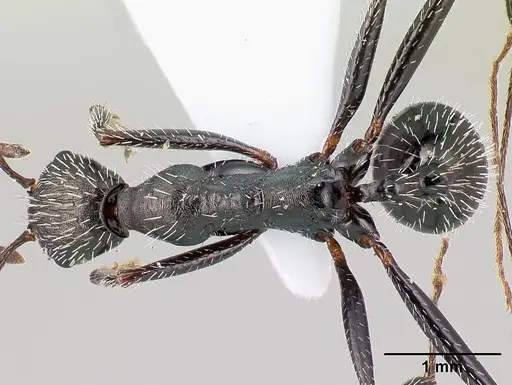
CASENT0904159
View on AntWeb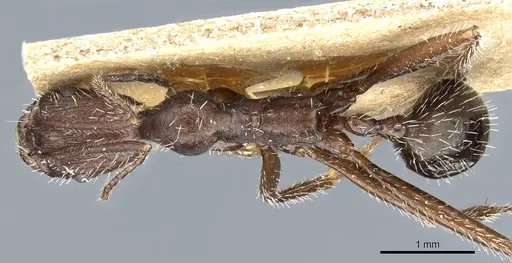
Literature
Loading distribution map...Loading products...