
Aphaenogaster rupestris
- Sci. Name
- Aphaenogaster rupestris
- Tribe
- Stenammini
- Subfamily
- Myrmicinae
- Author
- Forel, 1909
- Distribution
- Found in 1 countries
Introduction
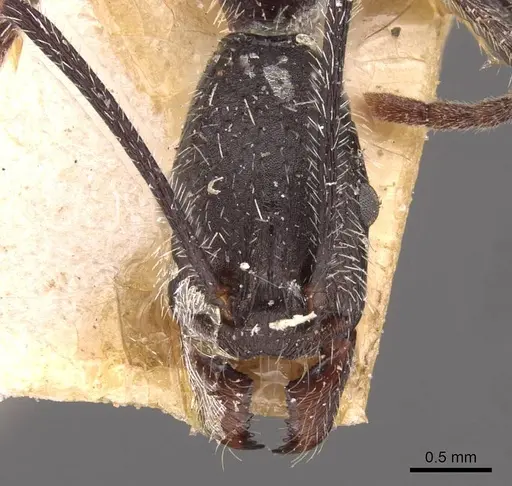
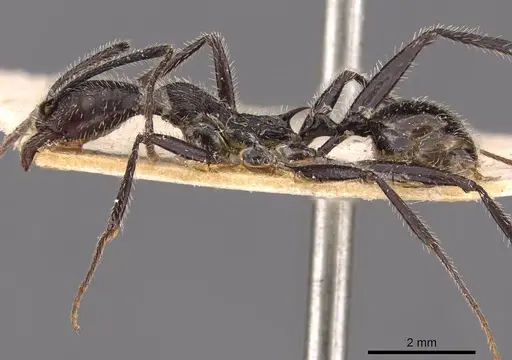
Aphaenogaster rupestris is a rare ant endemic to Algeria and Morocco . Workers hunt by climbing on rock walls and foraging on the ground near limestone formations . They nest under stone slabs or deep inside limestone fissures in relatively humid microhabitats, often in mixed forests of Atlantic cedar and evergreen oaks at elevations around 1450 meters . The most notable aspect of this species is its strict association with rocky habitats. Unlike many ground-nesting ants, Aphaenogaster rupestris specializes in living within the cracks and crevices of limestone ledges . This rock-dwelling lifestyle means they are rarely captured in standard pitfall traps and must be collected by hand from rock formations .
Quick Summary
- Difficulty: Expert
- Origin & Habitat: Endemic to Algeria and Morocco [1][2], found in humid limestone ledges in cedar-oak forests at approximately 1450m elevation [1]
- Colony Type: Unconfirmed
- Size & Growth:
- Queen: size data unavailable, inferred from Aphaenogaster genus (~6-8mm)
- Worker: size data unavailable, inferred from Aphaenogaster genus (~3-5mm)
- Colony: Unknown
- Growth: Unknown
- Development: Unknown (No direct development studies exist for this rare species.)
- Antkeeping:
- Temperature: Keep warm and stable, roughly low-to-mid 20s°C during active season. Inferred from Mediterranean mountain habitat at 1450m elevation [1]
- Humidity: Moderate humidity, nest in relatively humid limestone ledges [1]. Keep soil damp but not waterlogged.
- Diapause: Likely yes, inferred from temperate Mediterranean mountain species at 1450m elevation [1]
- Nesting: Under stone slabs or in limestone fissures [1]. Use flat stone setups or narrow crevice-style nests in captivity.
- Behavior: Rock-climbing hunters that forage on rock walls and ground [1]. Not captured in pitfall traps, suggesting limited ground activity or extreme rarity [1].
- Common Issues: extreme rarity in the trade makes finding colonies difficult or impossible., specific humidity requirements from limestone ledge habitats require careful moisture management., likely requires hibernation which beginners may miss, causing colony failure., small size typical of the genus means escape prevention must be excellent.
Natural History and Distribution
Aphaenogaster rupestris is endemic to Algeria and Morocco and considered rare [1][2]. The species was first discovered by Forel in 1909 at El Kantara (Biskra), where only workers were collected [1]. Males were described later from the same region in 1913,and all three castes were first found together by Cagniant in 1969 at Djebel Boutaleb (Sétif) in mixed forest of Atlantic cedar and evergreen oaks [1].
This ant inhabits relatively humid limestone ledges in mixed forests at elevations around 1450 meters [1]. Their distribution appears limited to specific rocky formations in Algeria [1].
Nest Preferences
In nature, Aphaenogaster rupestris nests under stone slabs or inside limestone fissures [1]. They prefer the humid microclimates found within these rocky crevices.
In captivity, recreate this environment using flat stone setups or naturalistic enclosures with limestone slabs. Provide narrow crevice-like spaces between flat stones or use formicaria designed to mimic rock fissures. The nest should offer tight, secure chambers rather than open spaces.
Temperature and Seasonal Care
This species comes from Mediterranean mountain habitats at approximately 1450 meters elevation [1]. This suggests they experience warm summers but require cooler winter periods.
Keep the colony at roughly low-to-mid 20s°C during the active season. You will likely need to provide a hibernation period at cooler temperatures during winter months, as is typical for temperate Mediterranean ants. Watch for reduced activity in autumn as a sign to begin cooling.
Feeding and Diet
Workers hunt by climbing on rock walls but also forage on the ground [1]. Like other Aphaenogaster species, they are generalist predators and scavengers.
Offer small live prey such as fruit flies, springtails, and small cricket pieces. They may also accept dead insects and possibly seeds, as many Aphaenogaster species collect seeds. Provide a sugar source such as honey water or sugar water in a test tube or liquid feeder.
Behavior and Temperament
These ants are specialized rock-dwellers. They are not captured in pitfall traps, meaning you must collect them by hand from rock formations [1]. This suggests they either rarely forage on open ground or are simply extremely rare.
Workers actively hunt by climbing on rock walls [1]. Given their specific habitat requirements, they are likely not aggressive generalists but rather specialized hunters of specific prey found in rocky microhabitats.
Frequently Asked Questions
Can I keep Aphaenogaster rupestris in a test tube?
Yes for founding, but provide small pieces of stone or soil to mimic their natural limestone fissure habitat. They nest under slabs and in rock crevices [1], so a plain test tube may not feel secure. Add a small flat stone or create a narrow space.
How long until Aphaenogaster rupestris gets first workers?
The egg-to-worker timeline is unknown for this rare species. No direct development studies exist for Aphaenogaster rupestris.
Do Aphaenogaster rupestris need hibernation?
Likely yes. They come from Mediterranean mountain habitats at 1450m elevation [1], suggesting they experience seasonal cooling. Provide a winter rest period at cooler temperatures for several months.
What do Aphaenogaster rupestris eat?
Workers hunt on rock walls and ground [1]. Feed small live prey like fruit flies and springtails, plus sugar water. They likely scavenge dead insects and may collect seeds like other Aphaenogaster species.
Are Aphaenogaster rupestris rare?
Yes, they are endemic to Algeria and Morocco and considered rare [1][2]. They are not commonly available in the antkeeping trade.
Can I keep multiple Aphaenogaster rupestris queens together?
This has not been documented. Do not attempt to combine multiple queens unless you have specific evidence this species accepts polygyny.
What is the best nest type for Aphaenogaster rupestris?
Use flat stone setups or naturalistic enclosures with limestone slabs that create narrow crevices [1]. They nest under stone slabs and in limestone fissures, so provide tight, secure spaces between flat stones.
What temperature do Aphaenogaster rupestris need?
Keep them at roughly low-to-mid 20s°C during the active season. They likely need hibernation at cooler temperatures during winter (inferred from their mountain habitat at 1450m [1]).
Report an Issue
The current care sheet is based fully on literature. See inconsistencies, or something that's incorrect? Please , it will be resolved after review from an admin. Contributing to the blogs tab also helps providing information, to make us be able to further improve the caresheets. Thank you for your support!
References

This caresheet is licensed under CC BY-SA 4.0 .
Community Blogs
CASENT0907704
View on AntWeb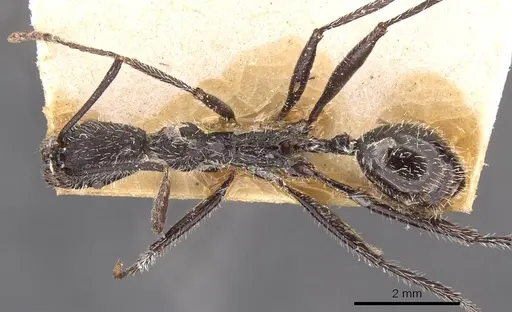
Literature
Loading distribution map...Loading products...