
Aphaenogaster punctaticeps
- Sci. Name
- Aphaenogaster punctaticeps
- Tribe
- Stenammini
- Subfamily
- Myrmicinae
- Author
- MacKay, 1989
- Distribution
- Found in 2 countries
Introduction
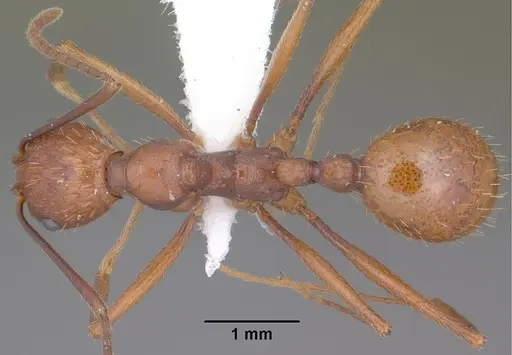
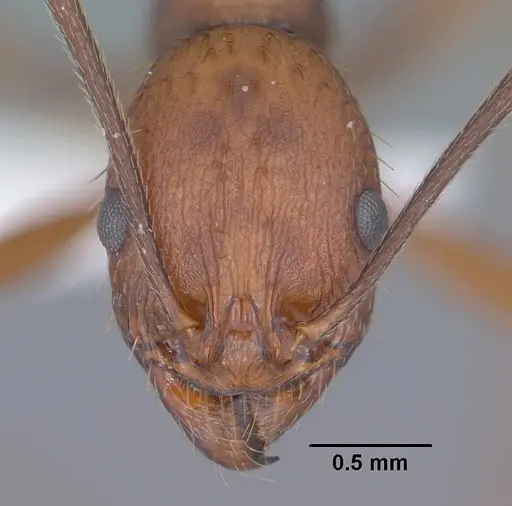
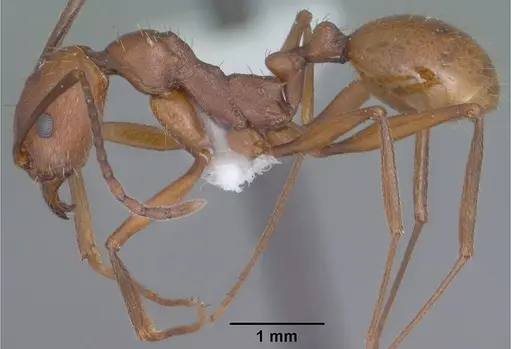
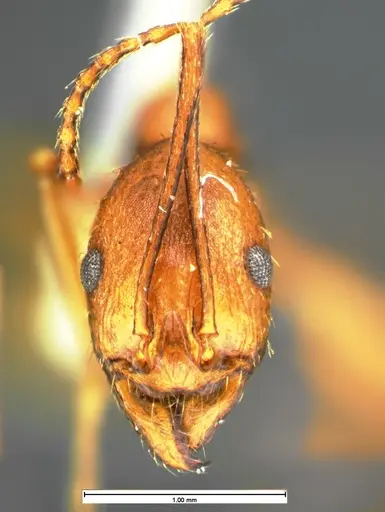
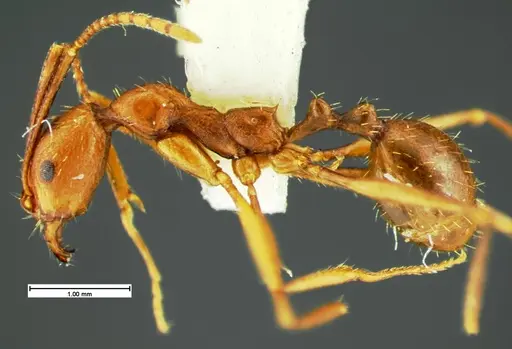
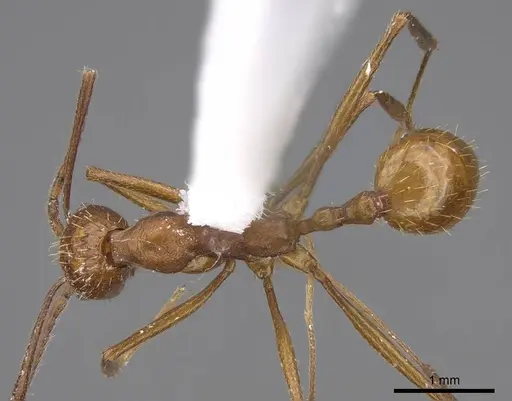
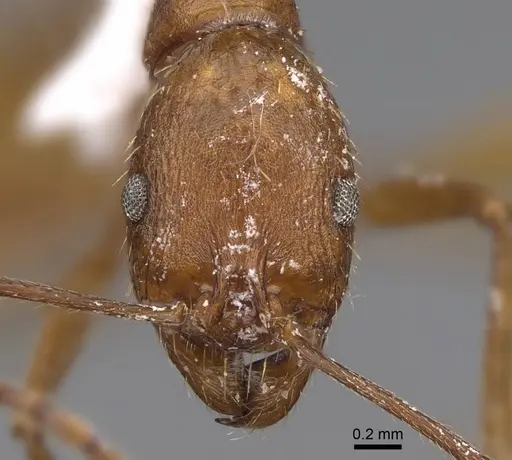
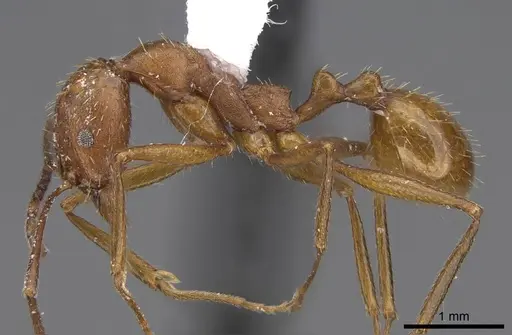
Aphaenogaster punctaticeps is a reddish brown desert ant found in the southwestern United States and northern Mexico . Workers have an elongate head covered in fine punctures and noticeably long legs for their body size . They inhabit creosotebush scrub deserts where they nest inside kangaroo rat mounds or prairie dog towns rather than excavating their own nests . Unlike typical seed-harvesting ants, these ants apparently steal seeds directly from rodent food caches .
Quick Summary
- Difficulty: Hard
- Origin & Habitat: Desert regions of Texas, New Mexico, and Arizona in the United States, plus northern Mexico, specifically creosotebush scrub habitat [2][3][1].
- Colony Type: Unconfirmed. Colony structure has not been studied for this species.
- Size & Growth:
- Queen: Size data unavailable, no measurements exist for this species.
- Worker: Approximately 5-6 mm total length, inferred from Aphaenogaster genus patterns (head width 1.04 mm recorded) [1].
- Colony: Unknown, no colony size data exists for this species.
- Growth: Unknown
- Development: Unknown, development timing has not been studied for this species. (Related Aphaenogaster species typically take 6-10 weeks at warm temperatures.)
- Antkeeping:
- Temperature: Keep at 24-28°C during active season. Provide winter diapause at 10-15°C for 3-4 months [3].
- Humidity: Provide a moisture gradient, one side of the nest slightly damp, the other dry. Desert species need access to water but are sensitive to excess moisture.
- Diapause: Yes, required. Cool gradually in fall to 10-15°C for 3-4 months during winter [3].
- Nesting: Soil-based nests. Use Y-tong (AAC), plaster, or naturalistic soil setups. Provide multiple small chambers connected by narrow tunnels. Include a small seed storage area [2].
- Behavior: Fast, agile foragers with long legs that make them excellent climbers and quick runners [1]. They are nervous and skittish rather than aggressive, and they lack a functional sting. Their small size means they can squeeze through tiny gaps, use fine mesh barriers and Fluon for escape prevention.
- Common Issues: excess humidity causes mold and fungal infections in this desert species., rare in the antkeeping trade and difficult to acquire., specific seed preferences are undocumented, you may need to experiment with different seed types., long legs make them excellent climbers, escape prevention must be thorough despite their small size.
Natural History and Habitat
These ants are desert specialists inhabiting creosotebush scrub across the Chihuahuan and Sonoran deserts [2]. Rather than excavating their own nests, they occupy abandoned kangaroo rat mounds or spaces within prairie dog towns [2]. This gives them ready-made chamber systems and places them near concentrated seed resources. They apparently steal seeds directly from rodent food caches rather than simply collecting fallen seeds [2]. The species is considered rare across its range and shows specific adaptations to arid life, including long legs for rapid foraging in open, hot environments [1].
Nest Preferences
In captivity, replicate their soil-dwelling habits with a nest that mimics a rodent burrow. A Y-tong (AAC) nest or plaster nest filled with a sandy soil mix works well. Provide multiple small chambers connected by narrow tunnels rather than one large open space. Include a small seed storage area where you can place seeds for the colony to cache. Maintain a moisture gradient with one side slightly damp and the other dry, allowing the ants to regulate their exposure. [2]
Feeding and Diet
As seed thieves, they need both seeds and insect protein. Offer small seeds such as millet, chia, canary grass seed, or desert grass seeds to see which they accept and store. Supplement with small live insects like fruit flies, springtails, or tiny pieces of mealworm. Provide sugar water or honey water in a test tube setup. Remove old seed husks and uneaten insect parts promptly to prevent mold. [2]
Temperature and Seasonal Care
Being from temperate deserts at roughly 33°N latitude, these ants need distinct seasonal temperature cycles [3]. Keep them at 24-28°C during spring and summer when actively foraging and raising brood. In late fall, gradually cool the colony over 2-3 weeks to 10-15°C for a winter diapause lasting 3-4 months. During diapause, keep the nest slightly moist and offer minimal food. Warm them up gradually in spring to trigger resumed activity.
Behavior and Temperament
Workers have exceptionally long legs for their body size, making them fast, agile runners that can quickly escape if given the chance [1]. They are generally nervous and skittish rather than aggressive, and they do not possess a functional sting. When disturbed, they scatter quickly rather than attacking. Their small size combined with climbing ability means you must use excellent escape prevention including fine mesh lids and Fluon or talcum powder barriers on outworld rims.
Frequently Asked Questions
Can I keep Aphaenogaster punctaticeps in a test tube?
You can start a founding queen in a test tube setup, but move her to a soil-based nest once the first workers arrive. They nest in soil and rodent burrows in nature, so they do poorly long-term in pure test tubes.
How long until first workers for Aphaenogaster punctaticeps?
The exact timeline is unknown, development timing has not been studied for this species. Related temperate Aphaenogaster species typically take 6-10 weeks at warm temperatures.
Do Aphaenogaster punctaticeps need hibernation?
Yes. As a desert species from temperate latitudes (around 33°N), they require a winter diapause. Cool them to 10-15°C for 3-4 months each winter.
What seeds do Aphaenogaster punctaticeps eat?
They apparently steal seeds from rodent caches in the wild, but specific preferences are undocumented. Experiment with small seeds like millet, chia, canary grass seed, or desert grass seeds to see what they store.
Can I keep multiple Aphaenogaster punctaticeps queens together?
Colony structure is unconfirmed for this species. Without specific studies, combining multiple queens may result in fighting.
Are Aphaenogaster punctaticeps good for beginners?
No. They are rare in captivity, have specific desert habitat requirements, and need seasonal diapause care. They are better suited for keepers with experience maintaining temperate desert species.
How big do Aphaenogaster punctaticeps colonies get?
Colony size is unstudied, no data exists for this species.
Do Aphaenogaster punctaticeps ants sting?
No. Like most Aphaenogaster, they lack a functional sting and rely on speed to escape threats rather than defense.
Report an Issue
The current care sheet is based fully on literature. See inconsistencies, or something that's incorrect? Please , it will be resolved after review from an admin. Contributing to the blogs tab also helps providing information, to make us be able to further improve the caresheets. Thank you for your support!
References

This caresheet is licensed under CC BY-SA 4.0 .
Community Blogs
Literature
Loading distribution map...Loading products...