
Aphaenogaster poultoni
- Sci. Name
- Aphaenogaster poultoni
- Tribe
- Stenammini
- Subfamily
- Myrmicinae
- Author
- Crawley, 1922
- Distribution
- Found in 1 countries
Introduction
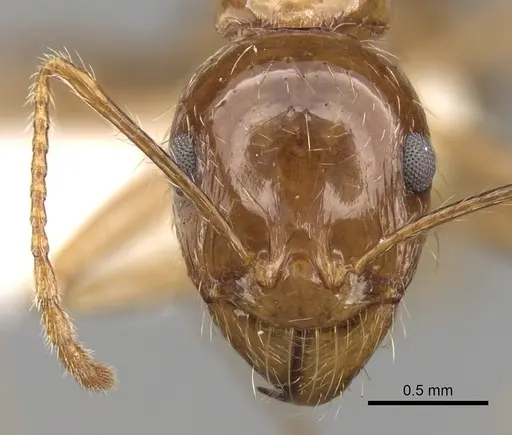
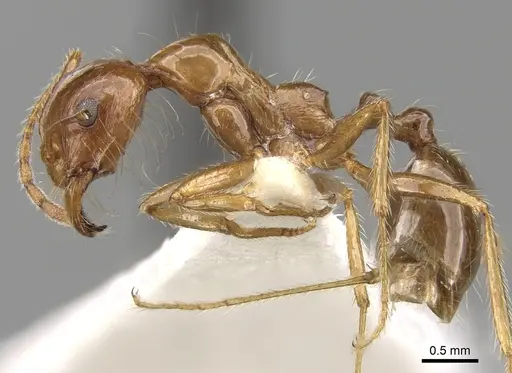
Aphaenogaster poultoni is a medium-sized ant species native to south-western Western Australia. Workers have distinctive features including a psammophore - a row of hairs on the underside of the head used for carrying sand and debris . Their eyes are relatively small, and they have short scapes and reduced propodeal spines appearing as small denticles. The head tends to be more square-shaped compared to similar species like Aphaenogaster barbigula and Aphaenogaster mediterrae. These ants are restricted to a narrow semi-arid band across south-western Western Australia, where they inhabit diverse environments from coastal scrub to jarrah forests and mallee woodlands . This species builds nests in soil featuring large crater-like entrances, similar to other funnel ants in the genus. An exceptionally large mating swarm has been documented, indicating they can produce dramatic nuptial flight events . As with other Aphaenogaster species, they are not aggressive but will defend their nests when threatened, emerging in small numbers to deter intruders .
Quick Summary
- Difficulty: Medium
- Origin & Habitat: South-western Western Australia, from coastal scrub through jarrah forests, dry sandy sclerophyll, mulga woodlands to mallee. Restricted to a narrow semi-arid band in this region [1].
- Colony Type: Colony structure is unconfirmed for this specific species. Based on typical Aphaenogaster patterns, likely monogyne (single queen) colonies.
- Size & Growth:
- Queen: ~7-9mm, inferred from Aphaenogaster genus patterns
- Worker: ~4-6mm, inferred from Aphaenogaster genus patterns
- Colony: Likely reaches several thousand workers based on related Aphaenogaster species, exact colony size unconfirmed for this species
- Growth: Moderate, based on typical Aphaenogaster development patterns
- Development: Estimated 6-10 weeks at optimal temperature based on genus-level data for similar Australian Aphaenogaster species (Development time is estimated from related species, specific timing for A. poultoni has not been directly studied)
- Antkeeping:
- Temperature: Keep at 22-26°C. These ants come from temperate to semi-arid regions of Western Australia. Provide a gentle temperature gradient allowing workers to regulate their conditions.
- Humidity: Keep nest substrate moderately moist but allow it to partially dry between waterings. Avoid waterlogging. The semi-arid to sclerophyll habitat suggests they prefer drier conditions than many tropical ants.
- Diapause: Likely required, Australian Aphaenogaster species typically experience reduced activity during cooler winter months. A 2-3 month period at 10-15°C is recommended, reducing feeding and keeping the colony slightly cooler.
- Nesting: Soil-based nests with large crater entrances. In captivity, a naturalistic setup with a deep soil chamber (at least 5-10cm deep) works well. The Y-tong or plaster nests with a moisture reservoir can also work, but provide a soil area for their natural tunneling behavior.
- Behavior: Not aggressive but will defend nests when disturbed. Workers emerge in small numbers to attack intruders near the entrance [2]. Foraging activity is typically limited to areas near the nest entrance, they rarely forage far from the colony. This species tends aphids on plant roots in addition to hunting arthropods. Escape risk is moderate, use standard barrier methods but they are not particularly prone to escaping compared to some tiny species.
- Common Issues: colonies may struggle if humidity is too high, these ants prefer semi-arid conditions, slow founding phase means queens can take months to produce first workers, beginners may lose patience, nest entrances can attract mold if the area is too damp, ensure good ventilation, wild-caught colonies may have parasites that affect survival in captivity, deep soil nests can make it difficult to observe the colony, consider a hybrid setup with an observation chamber
Nest Preferences and Housing
Aphaenogaster poultoni naturally nests in soil, constructing burrows that can reach 30cm deep with distinctive funnel-shaped or crater-like entrances [2]. In captivity, a naturalistic setup with deep soil (at least 8-10cm) works best, allowing the ants to exhibit their natural tunneling behavior. You can use a formicarium with a soil chamber or a hybrid setup that combines observation areas with a soil section for digging.
Provide a mix of fine sand and soil for their tunneling, and ensure the substrate can hold its structure for their galleries. A moisture reservoir or drip system helps maintain appropriate humidity without waterlogging the deep chambers.
Feeding and Diet
Like other Aphaenogaster species, A. poultoni is omnivorous with a preference for protein. They hunt arthropods and collect honeydew from aphids, notably, they tend aphids on plant roots rather than above-ground plant sap-suckers [2]. In captivity, offer a varied diet including small insects (fruit flies, small crickets, mealworms), and sugar sources like honey water or sugar water.
Their diet in the wild includes arthropod fragments found in the upper portions of nests, suggesting they actively hunt and collect prey. The funnel-shaped nest entrances may even act as passive traps for surface-foraging arthropods that fall in [2]. Feed protein sources 2-3 times per week and keep sugar water available constantly. Remove uneaten prey after 24-48 hours to prevent mold.
Temperature and Seasonal Care
These ants come from the temperate to semi-arid regions of south-western Western Australia. Optimal development occurs around 22-26°C. A temperature gradient in the nest allows workers to move between warmer and cooler areas as needed.
Australian Aphaenogaster species typically experience reduced activity during winter. Provide a diapause period of 2-3 months during the cooler months (roughly May-July in the southern hemisphere), keeping the colony at 10-15°C. Reduce feeding during this period and keep the nest slightly drier. This winter rest helps synchronize their natural seasonal cycle and promotes healthy colony development. [2]
Behavior and Colony Dynamics
Aphaenogaster poultoni is not aggressive but will defend its nest when threatened. When disturbed, workers emerge in small numbers from the nest entrance to attack the intruder [2]. This defensive behavior is localized, they don't swarm aggressively like some other ant species.
Foraging is typically limited to areas near the nest entrance, with few workers seen on the surface away from the colony [2]. This means you won't see extensive foraging trails like some ant species. The colony focuses its activity around the nest structure.
Colony growth is moderate, founding queens may take several months to produce their first workers (nanitics), and full colony development takes time. Be patient during the founding phase. Mating swarms can be exceptionally large, as documented for this species [1], indicating they produce significant nuptial flight events when conditions are right.
Frequently Asked Questions
How long does it take for Aphaenogaster poultoni to produce first workers?
Based on typical Aphaenogaster development, expect 6-10 weeks from egg to first worker at optimal temperature (22-26°C). The exact timing for this species hasn't been studied, so the founding phase may take several months from queen capture to nanitic emergence.
What is the best nest type for Aphaenogaster poultoni?
A naturalistic setup with deep soil (at least 8-10cm) works best, replicating their natural burrowing behavior. You can also use a hybrid formicarium with a soil chamber for tunneling and an observation area. Avoid fully enclosed acrylic nests without soil, as these ants prefer to dig.
Do Aphaenogaster poultoni ants sting?
Aphaenogaster species are not known for painful stings. While they can defend their nests, they are not aggressive and rarely sting handlers.
What do Aphaenogaster poultoni eat?
They are omnivorous, preferring protein from small insects (fruit flies, small crickets, mealworms) and sugar sources (honey water, sugar water). In nature they also tend aphids on plant roots and collect arthropod fragments.
Do Aphaenogaster poultoni need hibernation?
Yes, a winter diapause of 2-3 months at 10-15°C is recommended. This simulates their natural seasonal cycle in Western Australia and helps maintain healthy colony rhythms. Reduce feeding during this period.
Are Aphaenogaster poultoni good for beginners?
They are moderate difficulty, not the easiest but not challenging either. Their main requirements are appropriate soil housing, moderate humidity, and a winter diapause period. The main challenge is patience during the slow founding phase.
How big do Aphaenogaster poultoni colonies get?
Based on related species, colonies likely reach several thousand workers. The exact maximum size for this species hasn't been documented, but dense nest populations are typical for the genus.
Can I keep multiple Aphaenogaster poultoni queens together?
Not recommended unless observed in the wild. Combining unrelated foundresses of this species hasn't been documented and could result in aggression. Most Aphaenogaster species are monogyne (single queen).
Why are my Aphaenogaster poultoni not foraging much?
This is normal behavior, Aphaenogaster species typically forage only near the nest entrance rather than establishing long foraging trails. If your colony is established, they may simply not need to travel far for food.
What humidity level do Aphaenogaster poultoni need?
Keep nest substrate moderately moist but allow it to partially dry between waterings. They come from semi-arid to sclerophyll habitats in Western Australia and prefer conditions that can partially dry between waterings. Avoid keeping them constantly wet, this can cause mold problems.
Report an Issue
The current care sheet is based fully on literature. See inconsistencies, or something that's incorrect? Please , it will be resolved after review from an admin. Contributing to the blogs tab also helps providing information, to make us be able to further improve the caresheets. Thank you for your support!
References

This caresheet is licensed under CC BY-SA 4.0 .
Community Blogs
CASENT0280942
View on AntWeb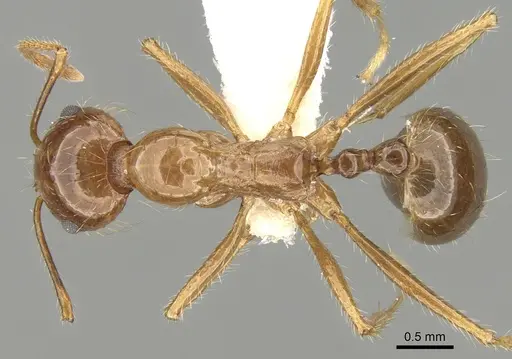
Literature
Loading distribution map...Loading products...