
Aphaenogaster mauritanica
- Sci. Name
- Aphaenogaster mauritanica
- Tribe
- Stenammini
- Subfamily
- Myrmicinae
- Author
- Dalla Torre, 1893
- Distribution
- Found in 2 countries
Introduction
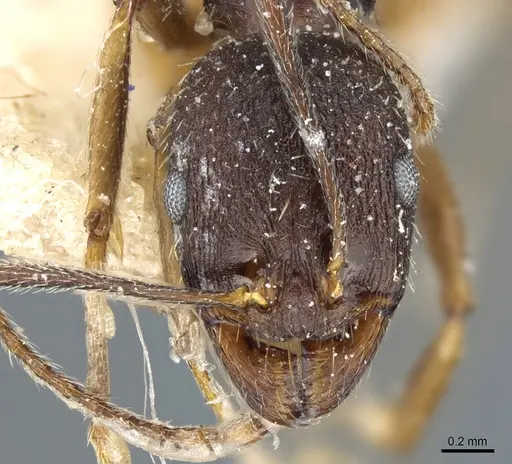
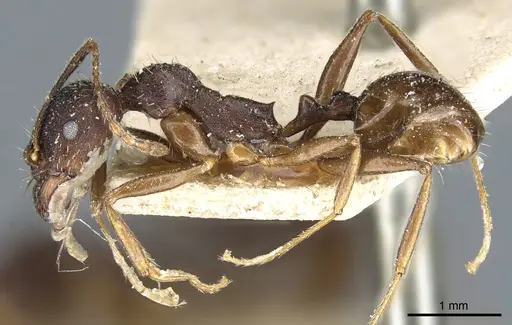
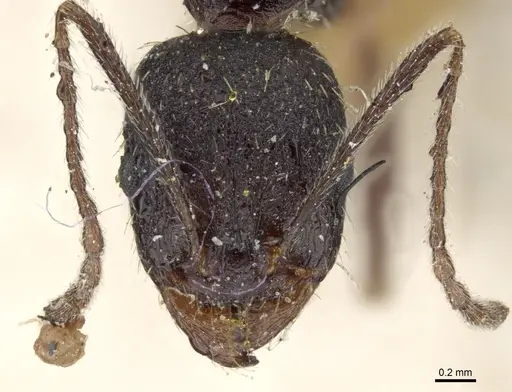
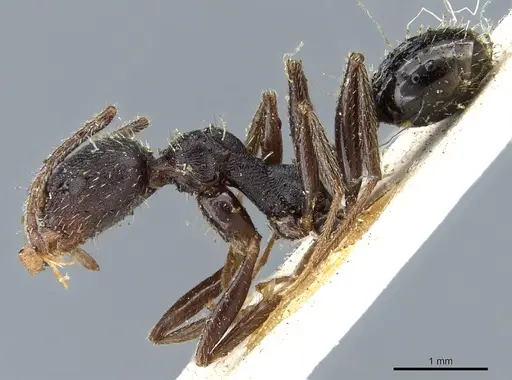
Aphaenogaster mauritanica is a medium-sized ant from the Maghreb region of North Africa, confirmed as a distinct species in 2023 after being previously confused with Aphaenogaster foreli and Aphaenogaster gibbosa homonyma . Workers belong to the gibbosa species group and display triangular spines on the thorax with sharp tips, plus antennae stems bearing noticeable hairs . These ants inhabit cork oak forests and mountainous areas across Morocco, Algeria, and Tunisia . They are rarely encountered in the wild, representing less than one percent of ants collected in forest surveys .
Quick Summary
- Difficulty: Medium
- Origin & Habitat: Northwest Africa (Morocco, Algeria, Tunisia), cork oak forests and mountainous regions in the Atlas ranges at approximately 34°N latitude [6][4][3].
- Colony Type: Unconfirmed, colony structure data unavailable for this species.
- Size & Growth:
- Queen: Size data unavailable, no measurements published for this species.
- Worker: Size data unavailable, no measurements published for this species.
- Colony: Unknown, no colony size data published for this species.
- Growth: Unknown
- Development: Unknown, no development data published for this species. (Development timeline unconfirmed. Monitor your colony for brood development patterns.)
- Antkeeping:
- Temperature: Keep at 20-25°C during active season. Provide winter rest at 10-15°C for 3-4 months. This species inhabits Mediterranean climates at 34°N latitude with seasonal variation [6].
- Humidity: Moderate humidity, provide damp nest material with some drier areas available.
- Diapause: Yes, likely required during winter months based on Mediterranean climate origin [6].
- Nesting: Non-hypogaeic (surface-dwelling) [5]. Use shallow naturalistic setups with stones or cork bark, or Y-tong nests with moderate chamber depth. Avoid deep soil setups.
- Behavior: Non-hypogaeic forager that searches on the surface rather than digging deep [5]. Likely a generalist scavenger typical of the genus. Escape risk is moderate.
- Common Issues: rarity makes acquisition difficult, this species is rarely collected and uncommon in the wild [4][5]., founding behavior unconfirmed, monitor queens carefully to determine if they need food during founding., hibernation timing unclear, observe colony for seasonal activity slowdown to determine when to cool them., easily confused with similar species, verify origin as Maghreb region rather than Europe [1].
Taxonomy and Identification
Aphaenogaster mauritanica was formally recognized as a distinct species in 2023, when it was confirmed as the senior synonym (the correct name) for populations previously called Aphaenogaster mauritanica and Aphaenogaster mauritanica [1]. Workers can be identified by their membership in the gibbosa species group: they have triangular spines on the thorax with sharp tips, and their antennae stems lack lengthwise ridges but carry hairs longer than half the stem's width [2]. They differ from European Aphaenogaster gibbosa and Moroccan Aphaenogaster theryi in subtle morphological details [1]. If you acquire these ants, verify their origin as Maghreb (Northwest Africa) rather than Europe to ensure correct identification.
Natural Habitat and Distribution
This species lives in the Maghreb region, specifically Morocco, Algeria, and Tunisia [3]. They favor cork oak forests (called Subéraie) and mountainous areas in the Atlas ranges, particularly in Moyen and Haut Atlas regions [4]. Despite their broad range across three countries, they are rarely collected, they have been found in only 8 localities total, 6 of which are in Morocco [4]. They represent only 0.16% to 0.76% of ants captured in forest surveys [4][5]. They are non-hypogaeic, meaning they do not nest deep underground but rather live in surface-level cavities or under stones [5]. Their habitat at approximately 34°N latitude experiences hot, dry summers and mild, wet winters typical of Mediterranean climates [6].
Nesting and Housing
Because Aphaenogaster mauritanica is non-hypogaeic, they do not require deep substrate for nesting [5]. In captivity, provide a naturalistic setup with flat stones, cork bark, or rotting wood pieces where they can create shallow chambers. Alternatively, a Y-tong or plaster nest with moderate chamber depth works well. Ensure the nest has areas of damp soil or plaster alongside drier sections so the colony can regulate their microclimate. Avoid deep soil-filled containers designed for fully subterranean species.
Temperature and Seasonal Care
Coming from Mediterranean climates at 34°N latitude, these ants need a winter rest period (diapause) when temperatures drop [6]. Keep them at 20-25°C during the active season (spring through autumn), then gradually cool them to 10-15°C for 3-4 months during winter. If the colony shows reduced activity and stops brood development in autumn, this signals they are ready for cooling. Do not let them overheat above 30°C, as they inhabit extratropical regions rather than tropical ones [6].
Feeding and Diet
While specific diet studies are lacking for this species, Aphaenogaster species are typically generalist scavengers and predators. Offer a variety of foods including small insects (fruit flies, pinhead crickets), seeds, and sugar sources like honey water or sugar water. They likely collect honeydew and scavenge dead insects in the wild. Provide protein twice weekly and keep sugar water available constantly. Watch what your specific colony accepts, as preferences may vary.
Colony Founding
The founding behavior of Aphaenogaster mauritanica remains unconfirmed by research. Set up founding queens in test tubes or small founding chambers with a water reservoir. Monitor whether the queen accepts food, if she ignores food, she may be claustral (seal herself in and live off stored body fat), if she eats, she may be semi-claustral (needing to forage during founding). Without published data, you will need to observe your specific queen to determine her behavior.
Frequently Asked Questions
Can I keep Aphaenogaster mauritanica in a test tube?
Yes, test tubes work well for founding queens and small colonies. Use a standard water reservoir setup with cotton blocking the water end. Because they are non-hypogaeic (surface-dwelling), they do not need deep substrate even as the colony grows [5].
Do Aphaenogaster mauritanica need hibernation?
Yes, they require a winter rest period. They come from Mediterranean regions at 34°N latitude with distinct seasons [6]. Cool them to 10-15°C for 3-4 months when they slow down in autumn.
How long until Aphaenogaster mauritanica get their first workers?
The egg-to-worker timeline is unconfirmed for this species. Monitor your colony for brood development and adjust conditions accordingly.
What is the difference between Aphaenogaster mauritanica and Aphaenogaster gibbosa?
Aphaenogaster mauritanica was previously confused with Aphaenogaster gibbosa but is now recognized as a distinct species found in Northwest Africa (Morocco, Algeria, Tunisia) rather than Europe. They differ in subtle morphological features and geographic origin [1].
How big do Aphaenogaster mauritanica colonies get?
Colony size data is unavailable for this specific species. Monitor your colony's growth and adjust housing as needed.
What do Aphaenogaster mauritanica eat?
They are likely generalist scavengers like other Aphaenogaster. Feed them small insects, seeds, and sugar water. They probably scavenge dead insects and collect honeydew in the wild.
Are Aphaenogaster mauritanica good for beginners?
They are probably best for intermediate keepers. Their rarity in the trade, unconfirmed founding behavior, and need for proper hibernation make them more challenging than common starter species like Lasius niger.
Do Aphaenogaster mauritanica sting?
Stinging behavior is not documented for this species. Most Aphaenogaster have a sting but rarely use it against humans, and they are not considered dangerous.
What nest type is best for Aphaenogaster mauritanica?
Use shallow naturalistic setups with stones or cork bark, or Y-tong nests with moderate chamber depth. They are non-hypogaeic (not deep underground dwellers), so avoid deep soil setups [5].
Where do Aphaenogaster mauritanica come from?
They are native to the Maghreb region of Northwest Africa, specifically Morocco, Algeria, and Tunisia [3].
Report an Issue
The current care sheet is based fully on literature. See inconsistencies, or something that's incorrect? Please , it will be resolved after review from an admin. Contributing to the blogs tab also helps providing information, to make us be able to further improve the caresheets. Thank you for your support!
References

This caresheet is licensed under CC BY-SA 4.0 .
Community Blogs
CASENT0904172
View on AntWeb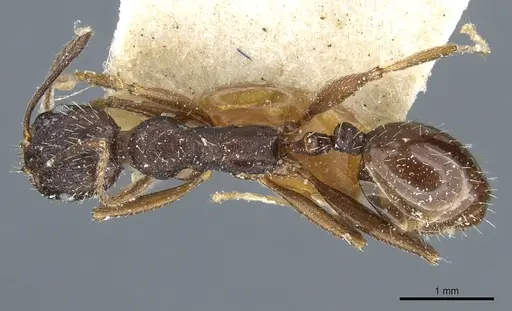
CASENT0904173
View on AntWeb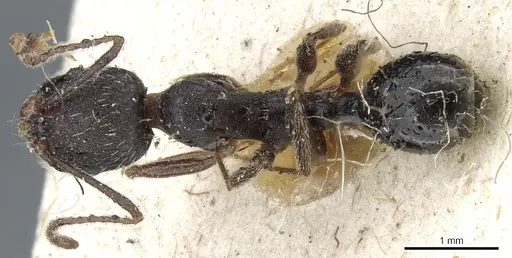
Literature
Loading distribution map...Loading products...