
Aphaenogaster lustrans
- Sci. Name
- Aphaenogaster lustrans
- Tribe
- Stenammini
- Subfamily
- Myrmicinae
- Author
- Smith, 1961
- Distribution
- Found in 1 countries
Introduction
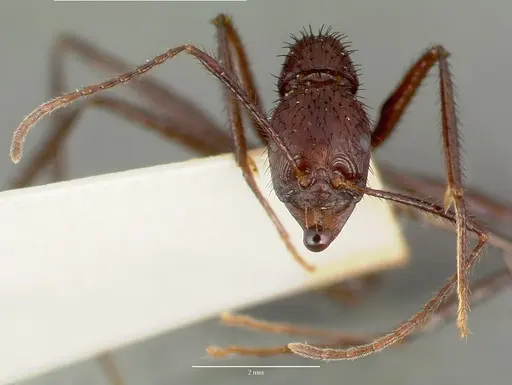
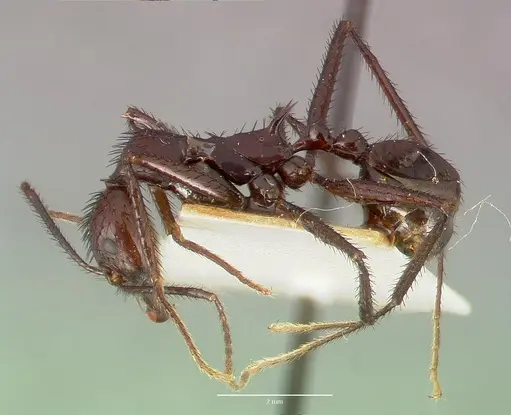
Aphaenogaster lustrans is one of the rarest and least-studied ants in the world. Scientists have only ever documented four workers, all collected in 1944 from a coconut plantation in Milne Bay, Papua New Guinea [AntWiki]. No queen has ever been described, and no living colony has ever been observed. These ants belong to the genus Aphaenogaster, a group known for their slender bodies and deliberate movements. They come from tropical Australasia at roughly 9.7 degrees south latitude . Because they have never been kept in captivity, any attempt to raise them would be completely pioneering work.
Quick Summary
- Difficulty: Expert
- Origin & Habitat: Milne Bay, Papua New Guinea, tropical plantation habitat [1][2]
- Colony Type: Unknown, no queen has ever been described for this species
- Size & Growth:
- Queen: Size data unavailable, queens have never been described
- Worker: Size data unavailable, only four workers were ever collected and not measured [1]
- Colony: Unknown, no colony has ever been observed
- Growth: Unknown
- Development: Unknown (No observations of brood development exist for this species)
- Antkeeping:
- Temperature: Warm and stable, roughly 24-28°C year-round, tropical species from 9.7°S latitude cannot tolerate cold [2]
- Humidity: High humidity required, maintain damp substrate similar to tropical rainforest floor
- Diapause: No, tropical species do not hibernate [2]
- Nesting: Likely soil-nesting based on genus habits, use Y-tong, plaster, or naturalistic setups with excellent humidity retention
- Behavior: Unknown specifically. Based on genus patterns, likely generalist foragers that scavenge dead insects. Probably not aggressive. Escape risk is unknown but assume they can squeeze through small gaps.
- Common Issues: complete lack of specific care data means colonies may fail unexpectedly., tropical origin requires consistent warmth, temperatures below 20°C may kill the colony., extreme rarity means any specimens would be wild-caught with unknown parasite loads., humidity needs are unstudied, desiccation is a constant risk without proper moisture., no queen has ever been described, obtaining a founding queen may be impossible.
Distribution and Rarity
Aphaenogaster lustrans has one of the most restricted known ranges in ant-keeping. The species is only known from the type series: four workers collected in March-April 1944 at Hihilai Plantation in Milne Bay, Papua New Guinea [1]. The collection site sits at approximately 9.7 degrees south latitude in tropical Australasia [2]. No subsequent collections have been reported, and the species has never entered the ant-keeping trade. This extreme rarity means nothing is known about their natural colony structure, diet, or seasonal behavior.
Housing and Environment
Since no one has kept this species, care must be inferred from related Aphaenogaster. Most Aphaenogaster nest in soil or rotting wood. Provide a humid nest with materials like Y-tong, plaster, or a naturalistic soil setup that retains moisture without flooding. Keep temperatures stable between 24-28°C, these tropical ants have no tolerance for cold and will not survive cool temperatures. A heating cable on one side of the nest creates a gentle gradient, but avoid overheating. [1]
Feeding and Diet
Wild diet is completely unknown for this species. In captivity, offer small protein sources like fruit flies, pinhead crickets, or boiled egg pieces. Provide sugar water or honey water in a test tube setup or small feeder. Watch to see what they accept, with an unknown species, observation is your only guide. [1]
The Challenge of Unknown Biology
Keeping Aphaenogaster lustrans means working without a map. We do not know how large queens are, how many workers a colony produces, or how long development takes. If you somehow acquire these ants, you will be the first to document their care. Watch closely for signs of stress: workers clumping together suggests they are too cold, rapid movement with raised abdomens suggests they are too dry, and refusal to forage may indicate poor health. Document everything you observe to help future keepers.
Frequently Asked Questions
How big are Aphaenogaster lustrans workers?
Unknown. Only four workers were ever collected, and they were not measured in the original description. No size data is available for this species.
Do Aphaenogaster lustrans need hibernation?
No. They come from tropical Papua New Guinea at 9.7 degrees south latitude and require warm, stable temperatures year-round. Never cool them below room temperature.
What do Aphaenogaster lustrans eat?
Unknown specifically. Offer dead insects, seeds, and sugar water, then observe what they accept.
How long until Aphaenogaster lustrans get their first workers?
Unknown. No data exists on development time for this species.
Can I keep multiple Aphaenogaster lustrans queens together?
Not recommended. No data exists on colony structure for this species. If you obtain queens, house them separately.
Are Aphaenogaster lustrans good for beginners?
No. They are extremely rare, completely unstudied in captivity, and their specific requirements are unknown. Only highly experienced keepers with proper tropical setups should attempt keeping them, and even then, success is uncertain.
Where can I buy Aphaenogaster lustrans?
You likely cannot. They have never been documented in the ant-keeping trade. Any specimens would need to be collected from Papua New Guinea, which requires scientific permits and significant expertise.
Do Aphaenogaster lustrans ants sting?
Unknown. This has not been documented for this specific species.
Report an Issue
The current care sheet is based fully on literature. See inconsistencies, or something that's incorrect? Please , it will be resolved after review from an admin. Contributing to the blogs tab also helps providing information, to make us be able to further improve the caresheets. Thank you for your support!
References

This caresheet is licensed under CC BY-SA 4.0 .
Community Blogs
CASTYPE06885
View on AntWeb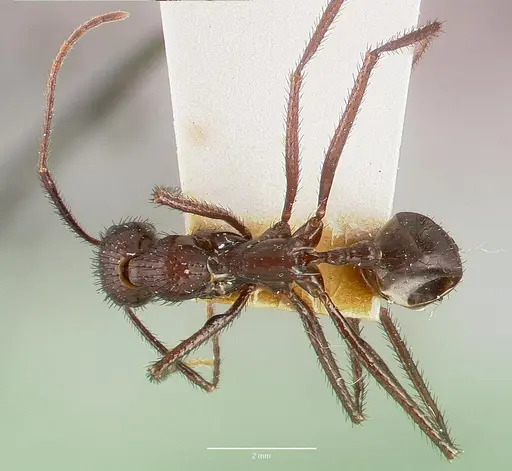
Literature
Loading distribution map...Loading products...