
Aphaenogaster laevior
- Sci. Name
- Aphaenogaster laevior
- Tribe
- Stenammini
- Subfamily
- Myrmicinae
- Author
- Emery, 1887
- Distribution
- Found in 1 countries
Introduction
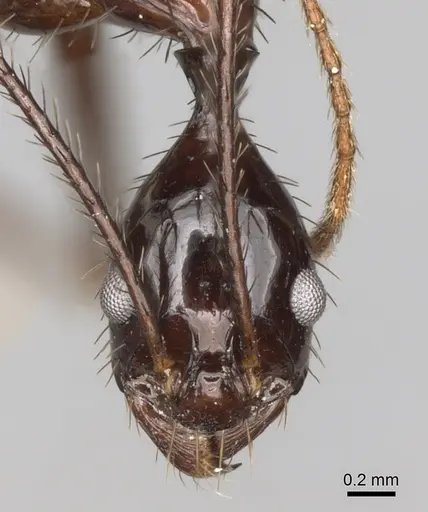
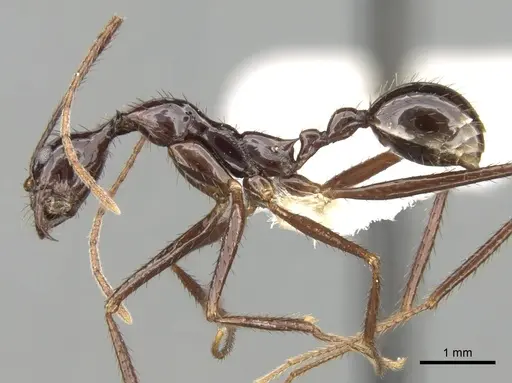
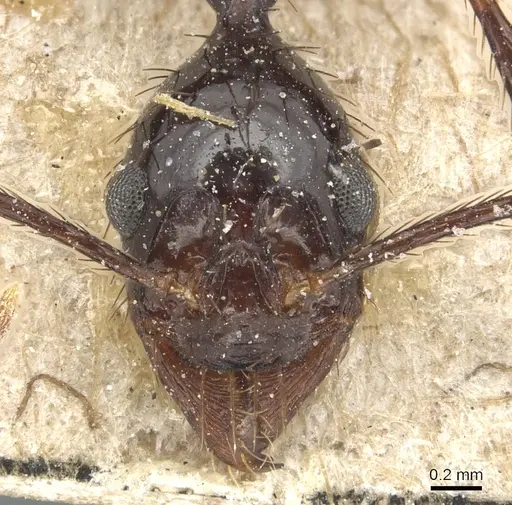
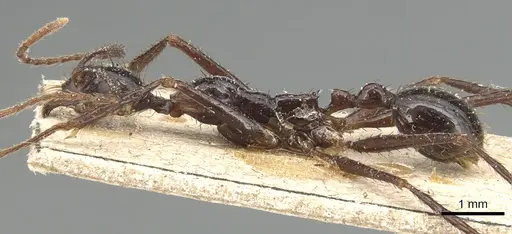
Aphaenogaster laevior is an extremely rare ant species known only from a single historical specimen collected in Sulawesi, Indonesia . This tropical species is found at approximately 1° south latitude in the Indomalayan region . Belonging to the subgenus Deromyrma, it has never been studied in the wild, and no living colonies have been documented in captivity . All care information must be extrapolated from its tropical origins and related Aphaenogaster species.
Quick Summary
- Difficulty: Expert
- Origin & Habitat: Sulawesi, Indonesia. Tropical Indomalayan rainforest at equatorial latitudes (approximately 1°S) [1][2].
- Colony Type: Unknown, colony structure has never been observed [2].
- Size & Growth:
- Antkeeping:
- Temperature: 24-28°C (75-82°F) year-round. As an equatorial tropical species, they require stable warmth without seasonal cooling [1].
- Humidity: High humidity, keep nest substrate consistently moist but not waterlogged, mimicking tropical forest floor conditions.
- Diapause: No, tropical equatorial species do not require winter rest [1].
- Nesting: Unknown in nature. Related Aphaenogaster species nest in soil, rotting wood, or leaf litter, a naturalistic setup with coco fiber or a plaster nest would be appropriate.
- Behavior: Unknown, no behavioral observations exist [2]. Based on genus patterns, they likely forage for seeds and small insects. Temperament and sting capability are unconfirmed.
- Common Issues: extreme rarity means obtaining a colony is practically impossible, only the type specimen from 1887 is documented., complete lack of captive care records means you are pioneering care with no established guidelines., tropical equatorial requirements demand precise climate control without seasonal variation., if sourced from wild collections, parasites or stress from unknown nesting conditions may cause colony failure.
Rarity and Availability
Aphaenogaster laevior is known only from the original type specimen collected at Kandari, Sulawesi, by O. Beccari in the 19th century, housed at the Museo Civico di Storia Naturale in Genoa [2]. No subsequent collections, field observations, or captive colonies have been recorded. This species is effectively unavailable in the ant trade. Any claim of possessing this species should be viewed with skepticism unless accompanied by definitive taxonomic verification. If you are researching this species, you are working with the same limited information available to taxonomists, a name, a location, and a place in the Deromyrma clade [1].
Inferred Care Guidelines
Since no one has successfully kept Aphaenogaster laevior in captivity, all care advice is theoretical. Based on its equatorial tropical origin at -1.00° latitude [1], maintain constant temperatures between 24-28°C without seasonal drops. High humidity is essential, think damp tropical forest floor. Aphaenogaster species generally accept a variety of foods including seeds, insect protein, and sugar sources. Offer a mix of small seeds, springtails, and honey water, adjusting based on acceptance. Nest options should include humid chambers with ventilation to prevent mold in tropical conditions.
Nest Preferences
Wild nesting behavior is unconfirmed [2]. However, the Deromyrma subgenus within Aphaenogaster typically nests in soil, rotting wood, or under stones in forest habitats. For this tropical species, provide a nest that maintains humidity without becoming waterlogged. A naturalistic setup with a mix of coco fiber, leaf litter, and rotting wood pieces would simulate their likely Sulawesi forest floor habitat. If using an artificial nest, plaster or Y-tong with a hydration chamber would work, but ensure the humidity stays high enough for tropical conditions while allowing some ventilation to prevent fungal growth.
Temperature and Environment
As a tropical Indomalayan species from equatorial Sulawesi [1], Aphaenogaster laevior likely experiences minimal seasonal temperature variation. Maintain a stable 24-28°C year-round. Unlike temperate Aphaenogaster species that require hibernation, this species should remain active throughout the year. Use a heating cable or mat on one side of the nest to create a gentle gradient, but avoid overheating, tropical forest floor temperatures rarely exceed 30°C. Consistency is more important than exact temperature. Avoid fluctuations that would stress a tropical colony.
Frequently Asked Questions
How rare is Aphaenogaster laevior?
Extremely rare, only the original type specimen from 1887 has been documented, and no living colonies are known to exist in captivity [2].
Can I keep Aphaenogaster laevior in a test tube?
While test tubes are standard for founding queens, you would first need to locate a queen, which has never been documented for this species. If found, a test tube setup with high humidity would be appropriate for founding [2].
What temperature do Aphaenogaster laevior need?
Maintain 24-28°C (75-82°F) year-round. As an equatorial tropical species from Sulawesi, they require stable warmth without seasonal cooling or hibernation [1].
Do Aphaenogaster laevior need hibernation?
No. Tropical species from equatorial regions like Sulawesi do not experience winter and remain active year-round [1].
How long until Aphaenogaster laevior first workers?
Unknown. No development data exists for this species [2].
What do Aphaenogaster laevior eat?
Unknown in the wild. Based on genus patterns, they likely accept small seeds, insect protein like springtails or fruit flies, and sugar water.
Are Aphaenogaster laevior good for beginners?
No. This is an expert-level species due to extreme rarity, lack of care information, and specific tropical requirements [2].
Where can I buy Aphaenogaster laevior?
You cannot. This species is not available in the ant trade and likely exists only in museum collections [2].
How big do Aphaenogaster laevior colonies get?
Unknown. Wild colony sizes have never been documented [2].
Do Aphaenogaster laevior ants sting?
Unknown for this species. Most Aphaenogaster have a stinger but are not aggressive toward humans.
Report an Issue
The current care sheet is based fully on literature. See inconsistencies, or something that's incorrect? Please , it will be resolved after review from an admin. Contributing to the blogs tab also helps providing information, to make us be able to further improve the caresheets. Thank you for your support!
References

This caresheet is licensed under CC BY-SA 4.0 .
Community Blogs
CASENT0280949
View on AntWeb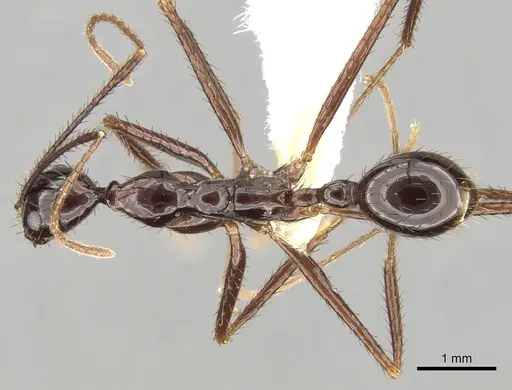
CASENT0904187
View on AntWeb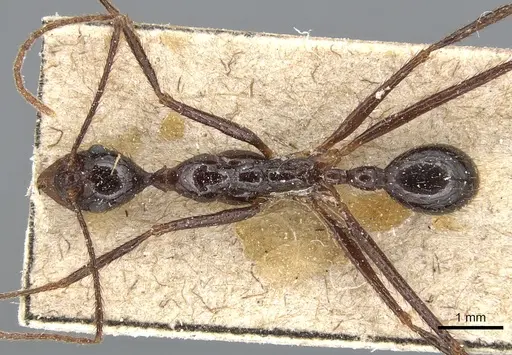
Literature
Loading distribution map...Loading products...