
Aphaenogaster kurdica
- Sci. Name
- Aphaenogaster kurdica
- Tribe
- Stenammini
- Subfamily
- Myrmicinae
- Author
- Ruzsky, 1905
- Distribution
- Found in 1 countries
Introduction
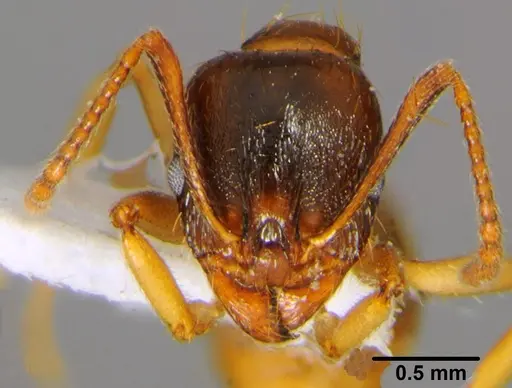
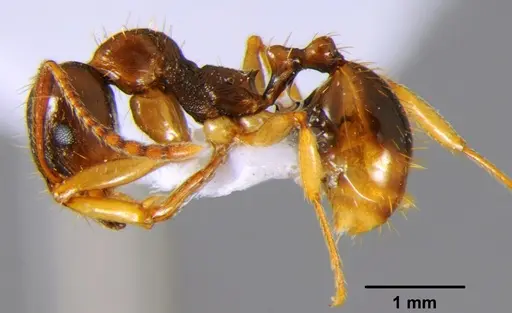
Aphaenogaster kurdica is a small ant with yellowish to light brown coloration, native to the Caucasus region and northern Iran. Workers measure approximately 4-5mm in total length, inferred from the genus pattern . These ants inhabit forest environments, having been collected from the trunks of Carpinus betulus (hornbeam) trees in the Tuskestan Forest and similar woodland habitats across the region . The species has a mutualistic relationship with aphids, specifically tending Brachycaudus helichrysi on Malcolmia africana plants . Taxonomically, this species has a complicated history - originally described as a subspecies of Aphaenogaster subterranea, then moved to Aphaenogaster smythiesii, and now recognized as a distinct member of the graeca species-group [AntWiki].
Quick Summary
- Difficulty: Medium
- Origin & Habitat: Caucasus region (Armenia, Azerbaijan, Georgia, Russia) and northern Iran, specifically forest habitats including Carpinus betulus woodlands [5][1][2].
- Colony Type: Unconfirmed, the specific colony structure for this species has not been documented.
- Size & Growth:
- Queen: Size data unavailable, queens have not been described in the available literature.
- Worker: Approximately 4-5mm in total length, inferred from head and mesosoma measurements [1].
- Colony: Unknown, no colony size data is available.
- Growth: Unknown.
- Development: Estimated 8-12 weeks based on typical temperate Aphaenogaster development patterns. (This is an estimate. Actual timing depends on temperature and conditions.)
- Antkeeping:
- Temperature: Room temperature (20-25°C) during the active season. Being from latitude 41.65°N in the extratropical Palearctic, they likely need seasonal temperature variation [6].
- Humidity: Moderate to high humidity preferred, reflecting their forest habitat [2]. Keep nest material damp but not waterlogged, with ventilation to prevent mold.
- Diapause: Likely required given temperate distribution, inferred from their Palearctic range at 41.65°N [6].
- Nesting: Naturalistic setups with rotting wood or soil best match their collection from tree trunks and forest floors [1].
- Behavior: Specific temperament unstudied. Related Aphaenogaster species are generally peaceful foragers. Their small size (4-5mm) requires excellent escape prevention, they can slip through tiny gaps.
- Common Issues: lack of specific care data means you must observe carefully and adjust conditions based on colony response., small worker size allows escape through tiny gaps, use fine mesh and barriers., taxonomic confusion with similar species means verification may require expert keys [1]., forest habitat requirements mean they may suffer in dry conditions, maintain humidity.
Taxonomy and Identification
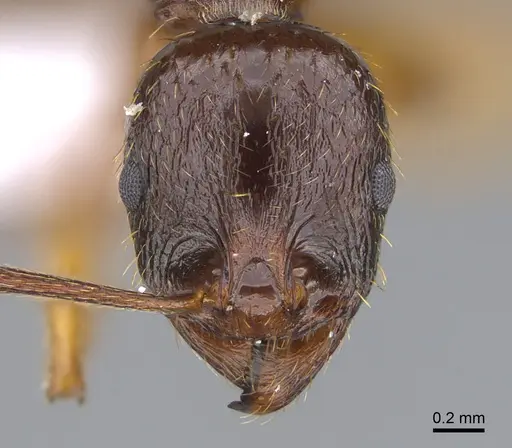
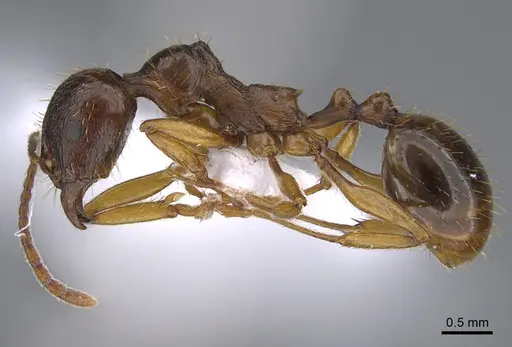
Aphaenogaster kurdica was originally described by Ruzsky in 1905 as a subspecies of Aphaenogaster subterranea, later moved to Aphaenogaster smythiesiii by Emery, and finally raised to full species status by Arnoldi in 1948 [1]. Recent work has excluded it from the subterranea species-group and placed it in the graeca group based on morphological features, particularly the mesonotum which rises distinctly above the pronotum [1]. Workers are yellowish to light brown, with the head and middle body section sometimes darker rusty brown [1]. They measure approximately 4-5mm in total length [1]. You can distinguish them from similar Aphaenogaster by the combination of a long scape (antenna base) measuring 1.2-1.3 times the head width, moderately long propodeal spines, and the elevated middle thorax section [1].
Natural Habitat and Distribution
This species occurs across the Caucasus region including Russia (North Caucasus), Armenia, Azerbaijan, Georgia, and extends into northern Iran (Golestan province) [5][1]. They inhabit forest environments, specifically collected from the trunks of Carpinus betulus (hornbeam) trees in the Tuskestan Forest [1]. Other records place them in general forest habitats near waterfalls and woodland areas [2]. Their distribution spans extratropical Palearctic regions around latitude 41.65°N, indicating adaptation to temperate climates with seasonal variation [6]. This means you should provide forest-floor conditions with moderate humidity and seasonal temperature changes.
Feeding and Diet
In the wild, Aphaenogaster kurdica tends aphids, specifically Brachycaudus helichrysi feeding on Malcolmia africana plants [3]. This mutualistic relationship provides the ants with honeydew. Like other Aphaenogaster, they are generalist predators and scavengers, collecting small insects and seeds. In captivity, offer sugar water or honey for carbohydrates, and small live prey such as fruit flies, springtails, or small cricket pieces for protein. Watch what they accept, as specific dietary preferences beyond the aphid association are undocumented.
Nesting Requirements
Given their collection from rotting wood and forest habitats, provide nests that mimic these conditions [1]. A naturalistic setup with rotting wood, soil, or a combination works well. If you use artificial nests, Y-tong (aerated concrete) or plaster nests with tight chambers suit their size. Keep the nest material moderately damp to reflect their forest origins, but ensure good ventilation to prevent mold growth [2]. Avoid dry setups, these are forest ants that need humidity.
Temperature and Seasonal Care
As a temperate species from the Caucasus, they thrive at room temperature (20-25°C) during the active season [6]. Being from latitude 41.65°N, they need a winter diapause period at 10-15°C for 2-3 months, this is inferred from their geographic distribution rather than direct observation [6]. Watch for reduced activity in autumn as a cue to begin cooling. Do not overheat them, they are not tropical ants and suffer in temperatures above 28°C.
Frequently Asked Questions
Can I keep Aphaenogaster kurdica in a test tube?
Founding behavior for Aphaenogaster kurdica is unconfirmed. Based on typical Aphaenogaster patterns, queens likely found colonies claustrally (sealed in chambers), making test tubes potentially suitable, but observe carefully to confirm the queen is thriving.
How long until Aphaenogaster kurdica gets its first workers?
Development time is unknown. Based on related temperate Aphaenogaster species, expect approximately 8-12 weeks from egg to worker at 25°C, though this is an estimate.
Do Aphaenogaster kurdica need hibernation?
Likely yes. As a temperate species from the Caucasus region at latitude 41.65°N, they require a winter rest period at cooler temperatures (10-15°C), though specific requirements are unconfirmed [6].
What do Aphaenogaster kurdica eat?
They tend aphids in the wild, specifically Brachycaudus helichrysi, feeding on honeydew [3]. They likely accept sugar water and small insects in captivity.
Are Aphaenogaster kurdica good for beginners?
Probably not ideal for complete beginners due to the lack of specific care data. They are best suited to keepers comfortable with observing and adjusting care based on colony response.
How big do Aphaenogaster kurdica colonies get?
Maximum colony size is unknown.
Can I keep multiple Aphaenogaster kurdica queens together?
Not recommended. While some Aphaenogaster are polygyne (multi-queen), the colony structure of this species is unconfirmed. Combining queens risks fighting unless you observe natural polygyny.
Do Aphaenogaster kurdica ants sting?
Aphaenogaster species typically lack a functional sting, instead using formic acid for defense. They are not considered dangerous to humans.
Report an Issue
The current care sheet is based fully on literature. See inconsistencies, or something that's incorrect? Please , it will be resolved after review from an admin. Contributing to the blogs tab also helps providing information, to make us be able to further improve the caresheets. Thank you for your support!
References

This caresheet is licensed under CC BY-SA 4.0 .
Community Blogs
CASENT0923713
View on AntWeb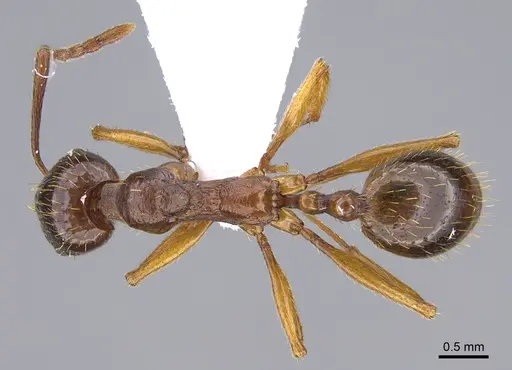
CFH000010
View on AntWeb
Literature
Loading distribution map...Loading products...