
Aphaenogaster honduriana
- Sci. Name
- Aphaenogaster honduriana
- Tribe
- Stenammini
- Subfamily
- Myrmicinae
- Author
- Mann, 1922
- Distribution
- Found in 1 countries
Introduction
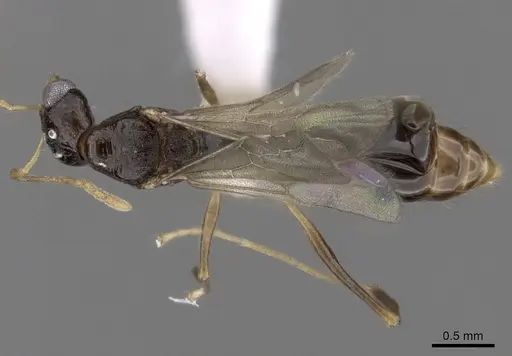
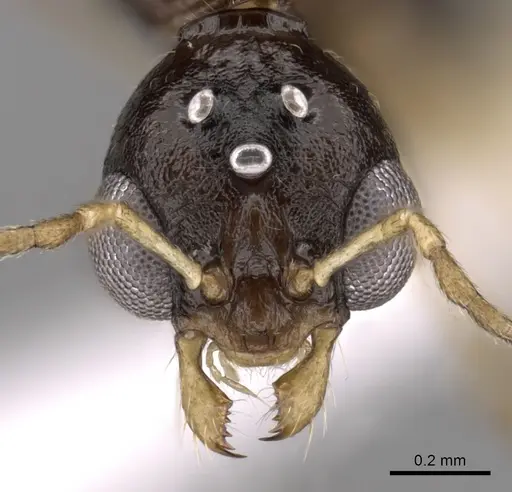
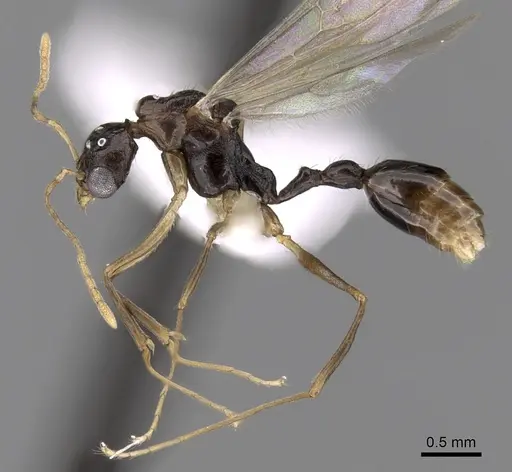
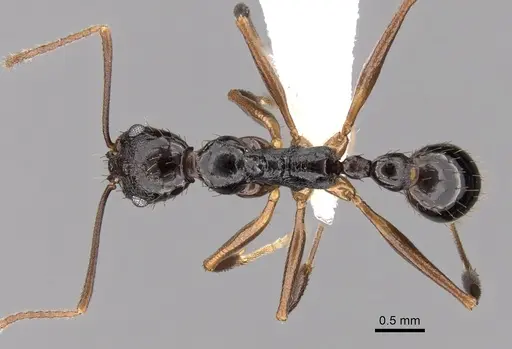
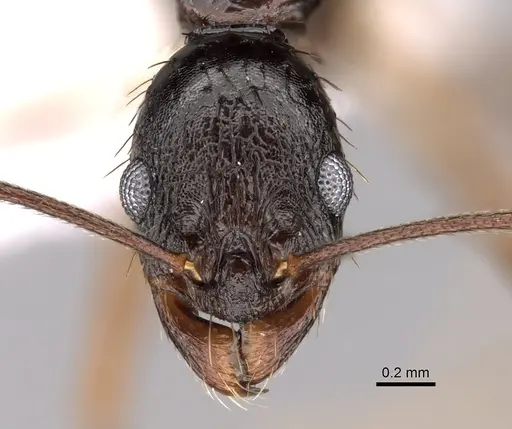
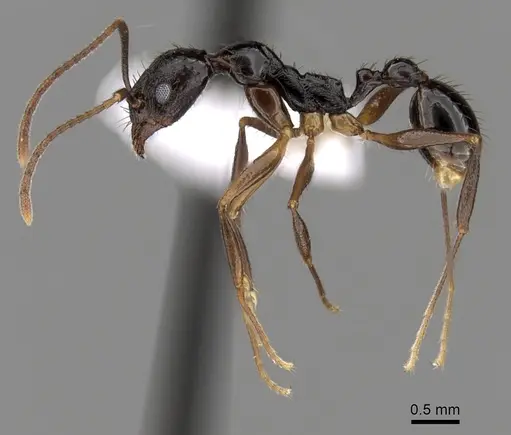
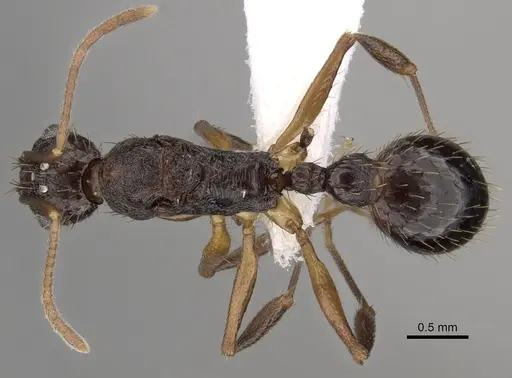
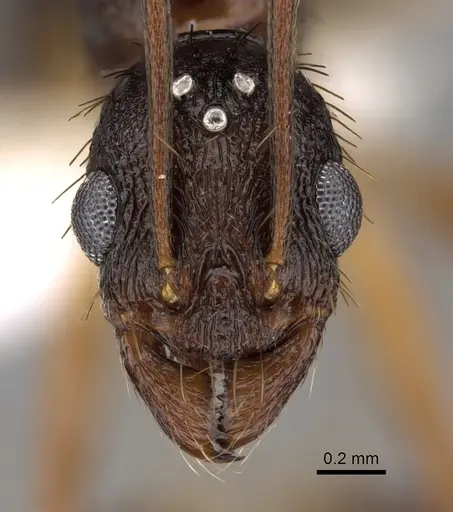
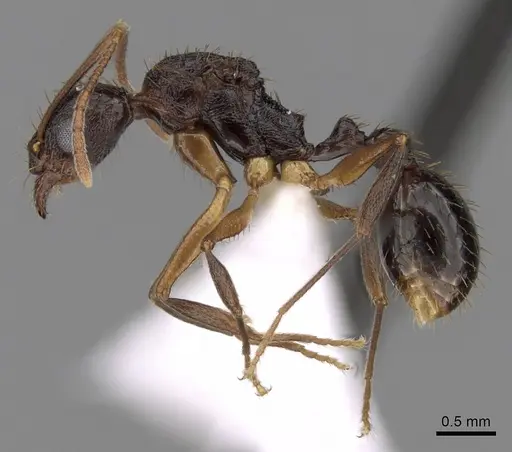
Aphaenogaster honduriana is a tropical ant native to Honduras, described by Mann in 1922 . It belongs to the subgenus Deromyrma and is found in the Neotropical region at approximately 15.65°N latitude . Size data is unavailable, as no total length measurements are provided in the research . The species is known only from Honduras, with type specimens from Lombardia, San Juan Pueblo . Very little is known about this species' biology or behavior in the wild, making it a poorly studied ant .
Quick Summary
- Difficulty: Hard
- Origin & Habitat: Honduras, Neotropical region, tropical forest habitats at approximately 15.65°N latitude [2][1]
- Colony Type: Unconfirmed
- Size & Growth:
- Queen: Size data unavailable
- Worker: Size data unavailable
- Colony: Unknown
- Growth: Moderate
- Development: Unknown (Based on related Aphaenogaster species, development may take 6-10 weeks at warm temperatures, but this is not confirmed for honduriana.)
- Antkeeping:
- Temperature: Keep warm and stable, roughly 24-28°C based on tropical origin [2].
- Humidity: Maintain moderate to high humidity, keep nest substrate damp but not waterlogged, based on tropical forest conditions [2].
- Diapause: No diapause required, tropical species from Honduras do not experience cold winters [2].
- Nesting: Naturalistic setups with soil and rotting wood are recommended based on Aphaenogaster genus patterns.
- Behavior: Temperament is unknown, but based on genus patterns, they are likely deliberate foragers with moderate escape risk.
- Common Issues: limited scientific documentation means care parameters are uncertain, start conservative and observe closely., tropical humidity requirements can lead to mold without adequate ventilation., keeping them too cool will slow development significantly, ensure adequate heating for tropical species.
Distribution and Natural History
Aphaenogaster honduriana is only known from Honduras in Central America [1]. The type specimens were collected at Lombardia, San Juan Pueblo by W.M. Mann in 1920 [3]. Phylogenomic studies place this species in the subgenus Deromyrma, a tropical Neotropical clade found at approximately 15.65 degrees north latitude [2]. This tropical location means they experience warm temperatures year-round without significant seasonal cold periods [2]. Beyond collection locality data, virtually nothing is published about their specific ecological requirements, nest site preferences, or interactions with other species [2][4].
Colony Founding and Development
Founding behavior has not been directly observed in Aphaenogaster honduriana. No specific data is available on whether queens are claustral or semi-claustral [2][4]. Development time from egg to worker is unknown for this species. Related Aphaenogaster species typically take 6-10 weeks at 25-28°C, but this is not confirmed for honduriana.
Temperature and Humidity
Keep these ants warm. Their tropical origin at 15.65°N latitude suggests they need stable temperatures between 24-28°C [2]. Start around 25°C and adjust based on activity levels. Maintain moderate to high humidity. Keep the nest substrate damp but not waterlogged, mimicking tropical forest floor conditions [2].
Housing and Nest Setup
In nature, Aphaenogaster species typically nest in soil, rotting wood, or under stones. For captive colonies, use a naturalistic setup with soil and wood, or a Y-tong (AAC) nest with moderate humidity retention. Provide tight-fitting chambers scaled to their size. Avoid tall, open spaces that stress small ants. Ensure the nest has adequate ventilation while maintaining humidity to prevent mold growth.
Feeding and Diet
Based on typical Aphaenogaster behavior, these ants are likely generalist scavengers. They probably accept dead insects, sugar water, and honey. Offer small protein sources like fruit flies, cricket pieces, or mealworms. Provide sugar water in a test tube or liquid feeder. Remove uneaten food promptly to prevent mold in the humid conditions they prefer.
Frequently Asked Questions
Can I keep Aphaenogaster honduriana in a test tube?
Yes, test tubes work well for founding queens. Use a standard water reservoir setup and keep the tube warm around 25°C. Ensure the cotton does not dry out completely, as tropical species need consistent humidity [1].
How long until Aphaenogaster honduriana gets first workers?
The exact timeline is unknown. Based on related Aphaenogaster species, expect roughly 6-10 weeks at 25-28°C, but this is not confirmed for this species.
Do Aphaenogaster honduriana need hibernation?
No. They come from tropical Honduras and do not experience cold winters [2]. Keep them at stable warm temperatures year-round.
What do Aphaenogaster honduriana eat?
They are likely generalist scavengers. Offer dead insects for protein and sugar water or honey for carbohydrates. Small prey items work best.
Are Aphaenogaster honduriana good for beginners?
Not ideal for beginners. Limited research means care requirements are uncertain, and tropical species need precise temperature and humidity control. They are better suited to keepers with some experience.
How big do Aphaenogaster honduriana colonies get?
Colony size is unknown for this species. Based on the Aphaenogaster genus, they may reach several hundred to a few thousand workers over a few years, but this is not confirmed.
What temperature do Aphaenogaster honduriana need?
Keep them warm and stable, around 24-28°C, based on their tropical origin [2]. Use a heating cable or mat on one side of the nest to create a gradient.
Can I keep multiple Aphaenogaster honduriana queens together?
Not recommended. This species is likely monogyne (single-queen) based on typical Aphaenogaster patterns, but this is unconfirmed. Combining unrelated queens will probably result in fighting.
Report an Issue
The current care sheet is based fully on literature. See inconsistencies, or something that's incorrect? Please , it will be resolved after review from an admin. Contributing to the blogs tab also helps providing information, to make us be able to further improve the caresheets. Thank you for your support!
References

This caresheet is licensed under CC BY-SA 4.0 .
Community Blogs
Literature
Loading distribution map...Loading products...