
Boulder Collared Ant
Aphaenogaster boulderensis
- Sci. Name
- Aphaenogaster boulderensis
- Tribe
- Stenammini
- Subfamily
- Myrmicinae
- Author
- Smith, 1941
- Common Name
- Boulder Collared Ant
- Distribution
- Found in 2 countries
Introduction
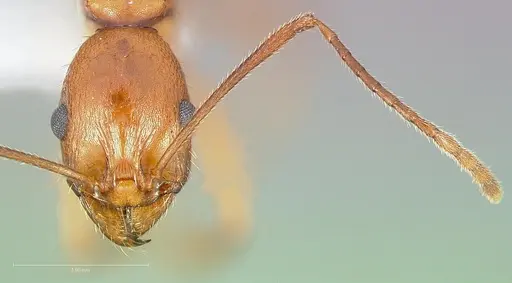
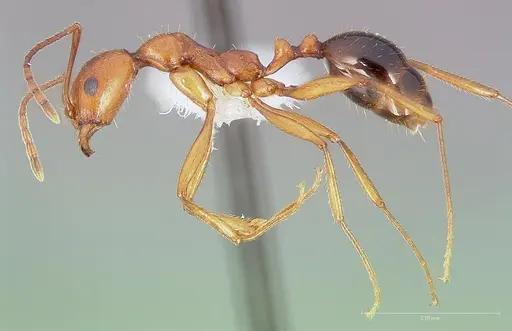
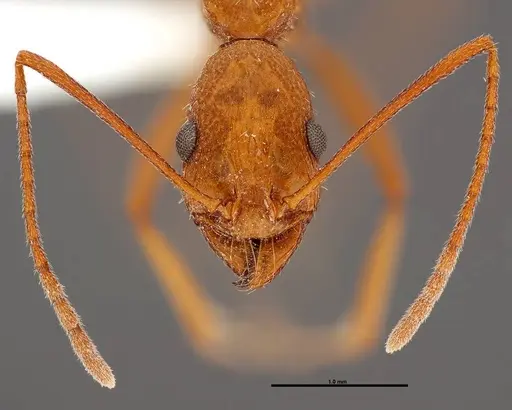
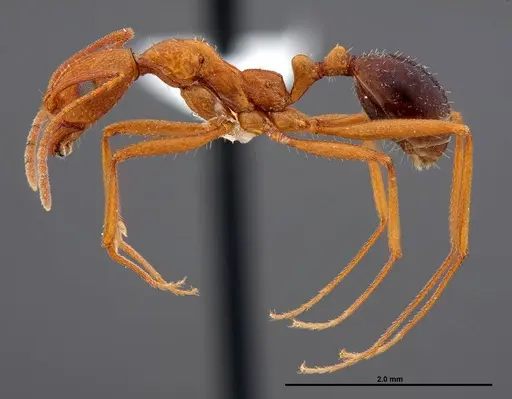
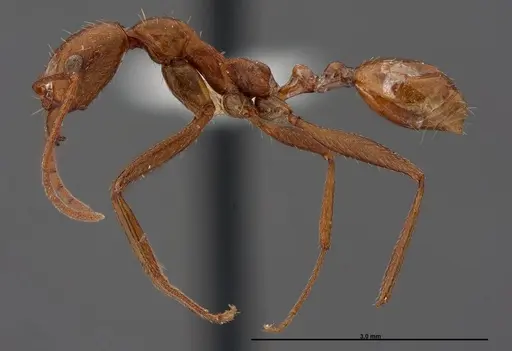
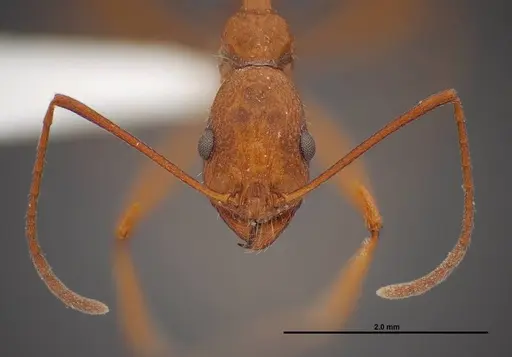
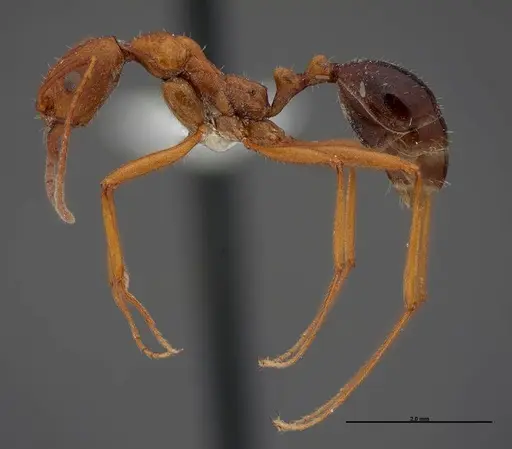
Aphaenogaster boulderensis is a medium-sized ant with workers measuring 4.5-5.5mm in total length, displaying light brown to yellowish-brown coloration with eastern populations showing a notably darker gaster . This species stands out within its genus as one of the few North American Aphaenogaster that completely lack propodeal spines, possessing only small angles or low ridges instead, paired with an elongated head and relatively small eyes containing approximately 15 facets . They inhabit desert canyons and scrublands across the southwestern United States and northern Mexico, including Arizona, California, Nevada, Utah, New Mexico, Texas, Colorado, Baja California, Sonora, and Chihuahua . What makes this species particularly interesting is its specialized nocturnal lifestyle and unique nesting preferences. In the wild, they nest in vertical stone walls of desert canyons and beneath flat rocks, making wild colonies extremely difficult to locate and excavate . They are crepuscular and nocturnal foragers, becoming active at dusk and continuing throughout the night, with eyes specially adapted for low-light conditions featuring approximately 148 facets and larger-than-average facets for light capture . This strict nocturnal schedule means you will rarely observe activity during daylight hours.
Quick Summary
- Difficulty: Medium
- Origin & Habitat: Desert canyons and scrublands of the southwestern United States and northern Mexico, specifically found in Arizona, California, Nevada, Utah, New Mexico, Texas, Colorado, Baja California, Sonora, and Chihuahua. They inhabit Blackbrush Scrub, Mojave Yucca Scrub, Desert Wash, and Joshua Tree Woodland communities at elevations between 3200-4100 feet [6][2][4][5].
- Colony Type: Based on typical Aphaenogaster patterns, this species is likely monogyne (single-queen), though specific colony structure remains unconfirmed in available research.
- Size & Growth:
- Queen: Size data unavailable, queen measurements have not been documented in available research.
- Worker: 4.5-5.5 mm total length [1].
- Colony: Maximum colony size not documented in available research.
- Growth: Moderate, estimated based on typical Aphaenogaster development patterns.
- Development: Estimated 8-12 weeks at 25-28°C based on related Aphaenogaster species, though specific development timing is unconfirmed for this species. (Development timing is inferred from genus patterns, actual rates may vary based on temperature and colony health.)
- Antkeeping:
- Temperature: Maintain 24-28°C during the day with cooler nights acceptable, reflecting their desert canyon habitat at 3200-4100ft elevation. A heating cable on one side of the nest creates a beneficial temperature gradient.
- Humidity: Provide moderate humidity in the nest area with a dry outworld available. The nest substrate should feel slightly damp but not waterlogged, mimicking moisture-retaining stone crevices in desert canyons.
- Diapause: Likely required given their Nearctic distribution and elevation range. Cool the colony to 10-15°C for 2-3 months during winter, though specific diapause timing is unconfirmed in research.
- Nesting: Flat stones or rock slabs arranged with vertical surfaces and tight cavities work best, or Y-tong/plaster nests with narrow chambers. They naturally nest in vertical stone walls and under flat rocks in desert canyons [1][6].
- Behavior: Strictly crepuscular and nocturnal, with foraging activity beginning at dusk and continuing through the night [3][1]. They are opportunistic foragers [6] with relatively calm but deliberate movements. Their small size (4.5-5.5mm) means escape prevention must be excellent, use tight-fitting lids and fine mesh barriers.
- Common Issues: colonies may appear inactive or dead during daylight hours due to their strictly nocturnal foraging schedule., require excellent escape prevention due to small worker size and ability to squeeze through tiny gaps., wild-caught colonies from vertical stone walls are difficult to excavate intact and may fail to adapt to artificial nest setups., desert-adapted physiology may suffer in overly humid or poorly ventilated enclosures without a dry area available.
Natural History and Nesting
In their native desert canyon habitats, Aphaenogaster boulderensis shows a strong preference for nesting in vertical stone walls and beneath flat rocks [1]. Collection records from the Mojave National Preserve show them inhabiting Blackbrush Scrub, Mojave Yucca Scrub, Desert Wash, and Joshua Tree Woodland communities at elevations between 3200-4100 feet, where they likely nest under stones [6]. The type series was collected beneath lava rock on an island in Mead Lake [1]. They are recorded as active every month of the year [6].
For captive housing, recreate these conditions by providing flat stones or rock slabs that create tight, narrow chambers. A vertical orientation of the nest may be appreciated given their natural tendency to exploit stone wall crevices. Y-tong (AAC) nests or plaster nests with shallow, narrow cavities work well, provided they offer the darkness and security of stone crevices. Ensure the nest has a moisture gradient, damp in the deepest chambers where brood is kept, but with access to drier areas near the entrance.
Activity Patterns and Vision
Aphaenogaster boulderensis is strictly crepuscular and nocturnal, with foraging activity beginning at dusk and continuing into the night [3][1]. Research on their eye structure reveals approximately 148 ommatidia with a facet diameter of about 20 μm, adaptations that maximize light capture in low-light conditions [3]. Their brightness value of 53.7 indicates they are relatively pale-colored, which may help with thermoregulation during cool desert nights [3].
In captivity, do not expect to see activity during daylight hours. Foraging should be offered in the evening, and red lighting can be used to observe their nocturnal behaviors without disturbing them. Their small eyes are specifically adapted for this lifestyle, making them vulnerable to bright light [1][3].
Identification and Similar Species
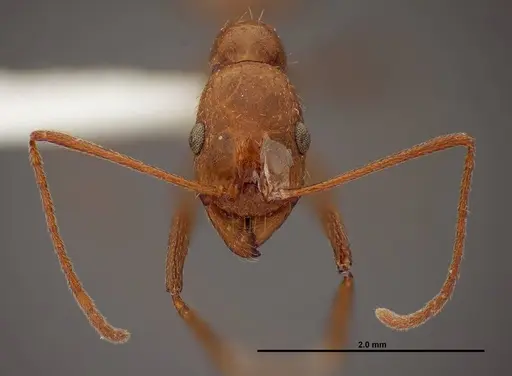
Aphaenogaster boulderensis is one of the few North American Aphaenogaster species that completely lacks propodeal spines, instead showing only small angles or low ridges on the propodeum [2][1]. They possess an elongated head that narrows posteriorly, and antennal scapes that extend past the back of the head by about one-third their length [1].
They can be confused with Aphaenogaster megommata, but differ in having smaller eyes with about 15 facets in the greatest diameter (compared to 20 in A. megommata) and eyes positioned about 1.5 times the eye diameter from the mandible base [1]. Additionally, A. boulderensis is ferrugineous red, while A. megommata is pale tan [1]. Eastern populations (Arizona, New Mexico, Texas, Chihuahua) typically show a much darker red-black gaster, while western populations (Arizona, Nevada) have the gaster similar in color to the mesosoma [2].
Temperature and Seasonal Care
Coming from desert canyon environments at 3200-4100 feet elevation, these ants experience warm to hot days and cooler nights [6]. Maintain daytime temperatures of 24-28°C with a gentle heat gradient across the nest. Nighttime drops to 18-20°C are acceptable and may even be beneficial.
Given their distribution across the southwestern United States and northern Mexico, they likely experience seasonal temperature variations that trigger a winter rest period. While specific diapause requirements are unconfirmed, you should cool the colony to 10-15°C for 2-3 months during winter, stopping or reducing feeding during this period. Resume normal temperatures and feeding in spring when the colony shows increased activity.
Frequently Asked Questions
Why are my Aphaenogaster boulderensis inactive during the day?
This is completely normal. Aphaenogaster boulderensis are strictly nocturnal and crepuscular, meaning they forage at dusk and throughout the night [3][1]. They have small eyes specifically adapted for low-light conditions and will remain hidden in their nest during daylight hours. Check for activity using red light in the evening.
Can I keep Aphaenogaster boulderensis in a test tube?
While test tubes can work for founding queens, these ants naturally nest in stone crevices and under flat rocks in vertical walls [1]. They may do better in a small naturalistic setup with stones or a Y-tong nest with tight chambers from the start. If using a test tube, provide a very dark environment and plan to move them to a stone-based nest once workers arrive.
Do Aphaenogaster boulderensis need hibernation?
Likely yes. Given their Nearctic distribution across the southwestern United States and their occurrence at elevations up to 4100 feet, they probably experience seasonal slowdown [6]. Cool the colony to 10-15°C for 2-3 months during winter, though specific diapause timing remains unconfirmed in research.
How do I identify Aphaenogaster boulderensis?
Look for the lack of propodeal spines (unusual for this genus), an elongated head, and relatively small eyes [2][1]. They are light brown with a darker gaster in eastern populations. They differ from similar Aphaenogaster megommata by having smaller eyes with fewer facets and darker coloration [1].
What is the best nest type for Aphaenogaster boulderensis?
Flat stones or rock slabs arranged to create tight, narrow chambers best mimic their natural vertical stone wall nests [1]. Y-tong (AAC) nests or plaster nests with shallow cavities also work well. Provide a vertical orientation if possible, as they naturally exploit cliff faces and canyon walls.
How long until Aphaenogaster boulderensis get their first workers?
The exact timeline is unknown as development rates have not been documented for this species. Based on related Aphaenogaster species, expect roughly 8-12 weeks at 25-28°C, but this is an estimate.
Do Aphaenogaster boulderensis sting?
Like most Aphaenogaster, they possess a stinger but are small (4.5-5.5mm) and not aggressive toward humans. Any sting would be mild and unlikely to penetrate skin due to their size [1].
Are Aphaenogaster boulderensis good for beginners?
They present moderate difficulty. While not particularly aggressive, their nocturnal habits make them less observable, their desert origins require careful humidity management, and their small size demands excellent escape prevention. They are best suited to keepers with some experience.
Report an Issue
The current care sheet is based fully on literature. See inconsistencies, or something that's incorrect? Please , it will be resolved after review from an admin. Contributing to the blogs tab also helps providing information, to make us be able to further improve the caresheets. Thank you for your support!
References

This caresheet is licensed under CC BY-SA 4.0 .
Community Blogs
CASENT0005722
View on AntWeb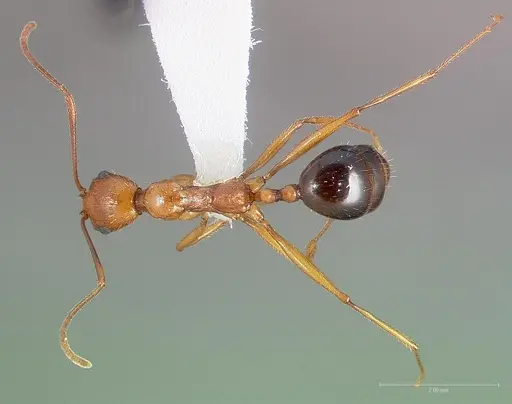
FMNHINS0000062660
View on AntWeb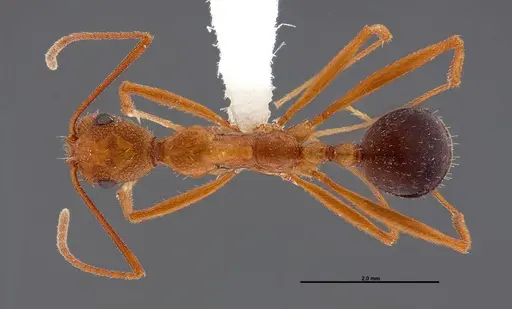
FMNHINS0000062700
View on AntWeb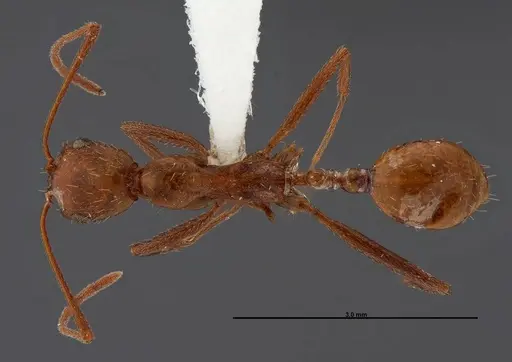
FMNHINS0000083010
View on AntWeb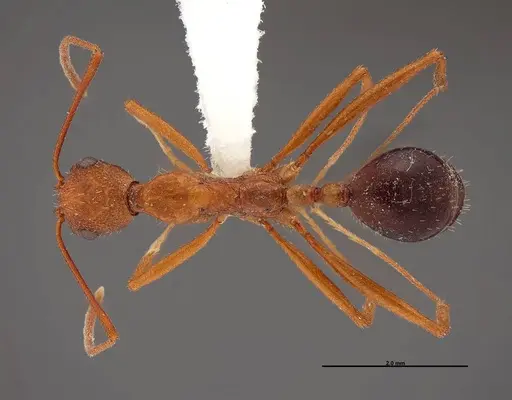
Literature
Loading distribution map...Loading products...