
Aphaenogaster beccarii
- Sci. Name
- Aphaenogaster beccarii
- Tribe
- Stenammini
- Subfamily
- Myrmicinae
- Author
- Emery, 1887
- Distribution
- Found in 3 countries
Introduction
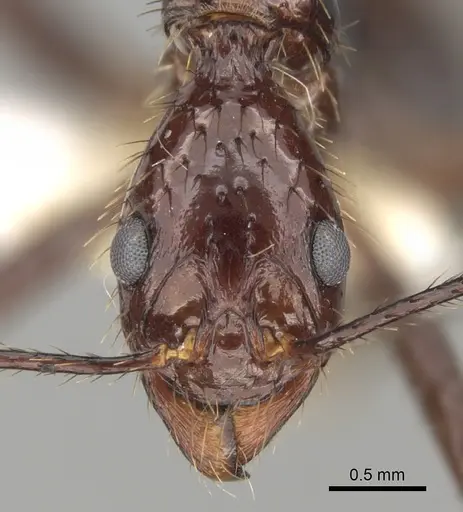
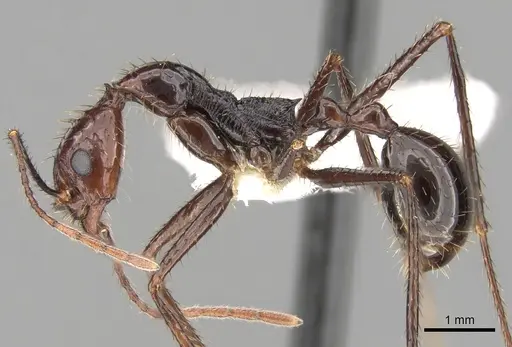
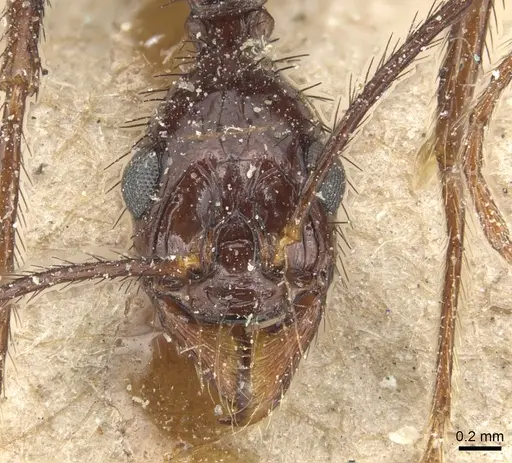
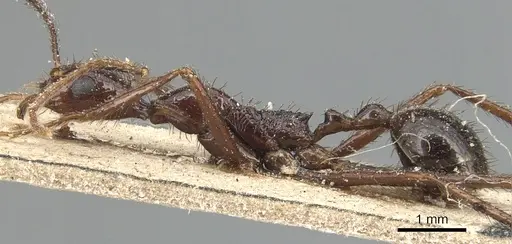
Aphaenogaster beccarii is a medium-sized ant species with workers measuring 4.6-5.3 mm in total length . Workers have distinctive elongated heads with large eyes,12-segmented antennae ending in a 4-segmented club, and two small spines on the propodeum . The body is dark brown with slightly lighter antennae and legs . This species is native to the Indomalayan region, found across tropical Asia from India through China to Indonesia and Sri Lanka . A key ecological trait sets them apart: they are strict primary forest specialists. In Xishuangbanna, China, they were found only in pristine old-growth rainforest and completely absent from secondary forests and rubber plantations . This means they require stable, humid conditions that mimic an undisturbed forest floor.
Quick Summary
- Difficulty: Medium
- Origin & Habitat: Indomalayan region including India (Andaman & Nicobar Islands, Arunachal Pradesh, Goa, Karnataka, Maharashtra, Sikkim, Tamil Nadu, Tripura, West Bengal, Meghalaya), China (Yunnan, Guangxi, Zhejiang, Fujian), Indonesia (Sumatra), and Sri Lanka, primary tropical rainforest [2][3][1][5][4]
- Colony Type: Unconfirmed, specific colony structure data is not available for this species
- Size & Growth:
- Queen: Size data unavailable, no documented measurements for queens exist in the literature
- Worker: 4.6-5.3 mm total length [1]
- Colony: Unknown, no documented colony size data available
- Growth: Moderate
- Development: Unknown, development timeline has not been studied for this species (Not directly studied. Tropical Aphaenogaster species typically develop from egg to worker in 6-10 weeks at warm temperatures, but this is unconfirmed for A. beccarii.)
- Antkeeping:
- Temperature: 24-28°C, keep warm and stable. Records from 1478m elevation in Meghalaya show they tolerate cooler montane conditions, but maintain consistent warmth [6][1]
- Humidity: High humidity 60-80% with consistently moist substrate. Primary forest specialists need damp conditions similar to a forest floor [5]
- Diapause: No, tropical species from the Indomalayan region does not require winter diapause [6]
- Nesting: Soil nester, documented nesting in soil in natural habitat [1]. In captivity use formicaria with soil or plaster substrates that retain moisture well
- Behavior: Soil-dwelling forest ants with moderate activity levels. Workers forage individually on the forest floor. Not aggressive and unlikely to sting humans. Their small size (around 5mm) means they can squeeze through tiny gaps, so use fine mesh under 0.5mm for ventilation and apply barrier coatings to outworld walls [1]
- Common Issues: primary forest specialization means they need stable high humidity and suffer in dry conditions., small worker size requires excellent escape prevention with fine mesh barriers., limited scientific data means some aspects of care require observation and adjustment., growth may be slow if kept below optimal temperatures.
Nest Preferences
In nature, Aphaenogaster beccarii nests in soil, as documented from a nest found at 1478m elevation in Meghalaya, India [1]. They are primary forest specialists found only in undisturbed tropical rainforest, suggesting they require stable, humid microhabitats without disturbance [5]. In captivity, provide a nest with soil or plaster substrate that holds moisture well. A test tube setup with a small amount of soil works for founding colonies. For established colonies, use a formicarium with humid chambers or a naturalistic setup with soil and leaf litter. Ensure the nest has a moisture gradient from damp to slightly drier areas so workers can choose their preferred microclimate. Avoid dry setups or nests with excessive ventilation that dries out the substrate.
Feeding and Diet
Specific dietary studies are lacking for this species, but Aphaenogaster ants are generally omnivorous. They typically collect seeds, tend hemipterans for honeydew, and hunt small insects. Offer a varied diet including small live insects such as fruit flies, springtails, and small cricket pieces. Provide sugar water or honey water in a test tube or small feeder, and offer small seeds like chia or millet. As primary forest dwellers, they likely rely on forest floor arthropods and honeydew from canopy insects. Feed small amounts 2-3 times weekly, removing uneaten food within 24 hours to prevent mold in the humid conditions they require.
Temperature and Care
Keep colonies warm at 24-28°C consistent with their tropical Indomalayan distribution [6]. Records from 1478m elevation in Meghalaya suggest they tolerate slightly cooler montane tropical conditions, but maintain stable warmth [1]. Use a heating cable on one side of the nest to create a temperature gradient, placing it on top rather than underneath to prevent waterlogging. They do not require hibernation (diapause) as they are a tropical species. Maintain high humidity (60-80%) matching their primary forest habitat [5]. Monitor substrate moisture daily, if the surface dries, mist lightly with distilled water. If condensation pools in the nest, increase ventilation slightly.
Behavior and Temperament
Aphaenogaster beccarii shows moderate activity levels typical of soil-dwelling forest ants. Workers are solitary foragers that search the ground for food items rather than forming trails. They are not known to be aggressive and lack a painful sting, though they may bite if the nest is disturbed. Their small size means they can squeeze through gaps in standard mesh lids, so use fine mesh under 0.5mm or apply a barrier like Fluon to the upper outworld walls. They are not climbing specialists but their size makes standard barriers risky. [1]
Growth and Development
Development timelines are not directly studied for this species. Based on tropical Aphaenogaster patterns, expect eggs to reach the worker stage in approximately 6-10 weeks when kept at 25-28°C. Colonies likely grow at a moderate pace. The first workers (nanitics) may be slightly smaller than subsequent workers. Because they are primary forest specialists, growth may be slower than more adaptable generalist species if temperature or humidity fluctuates.
Frequently Asked Questions
Can I keep Aphaenogaster beccarii in a test tube?
Yes, for founding colonies. Use a standard test tube setup with a water reservoir and cotton plug. Adding a small amount of soil or sand helps mimic their natural soil-nesting preference.
How long until Aphaenogaster beccarii gets first workers?
Unknown, development timeline has not been studied for this species. Based on related tropical Aphaenogaster species, it may take 6-10 weeks at 25-28°C, but this is unconfirmed.
Do Aphaenogaster beccarii need hibernation?
No. They are a tropical species from the Indomalayan region and remain active year-round. Keep them at stable warm temperatures (24-28°C) without a winter cooling period.
Can I keep multiple Aphaenogaster beccarii queens together?
Not recommended. There is no documented information about this species accepting multiple queens. Aphaenogaster species are typically single-queen, and combining queens likely leads to fighting.
What is the egg to worker timeline for Aphaenogaster beccarii?
Unknown, development timeline has not been documented for this specific species.
Are Aphaenogaster beccarii good for beginners?
Probably not ideal for absolute beginners. As primary forest specialists, they require stable high humidity and warm temperatures, and limited data means some trial and error is necessary. They are best suited to keepers with some experience maintaining tropical species.
What do Aphaenogaster beccarii eat?
Likely omnivorous based on genus patterns. Offer small insects (fruit flies, springtails, cricket pieces), sugar water or honey water, and small seeds like chia or millet.
How big do Aphaenogaster beccarii colonies get?
Unknown, no documented colony size data is available for this species.
Do Aphaenogaster beccarii ants sting?
They possess a stinger but it is very small and unlikely to penetrate human skin effectively. They are not considered dangerous and are not aggressive, though they may bite if the nest is heavily disturbed.
Why are my Aphaenogaster beccarii dying?
Check humidity first, as primary forest specialists, they suffer in dry conditions. Ensure the substrate remains moist and humidity stays above 60%. Also verify temperatures are stable and warm (24-28°C), as fluctuations stress tropical species.
Report an Issue
The current care sheet is based fully on literature. See inconsistencies, or something that's incorrect? Please , it will be resolved after review from an admin. Contributing to the blogs tab also helps providing information, to make us be able to further improve the caresheets. Thank you for your support!
References

This caresheet is licensed under CC BY-SA 4.0 .
Community Blogs
CASENT0280948
View on AntWeb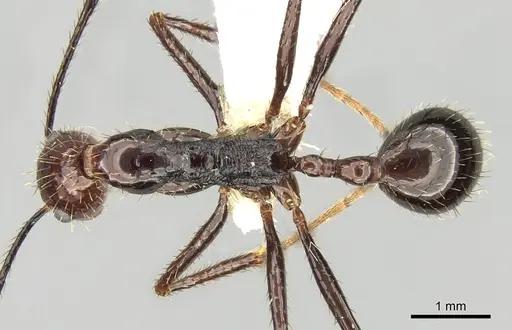
CASENT0904186
View on AntWeb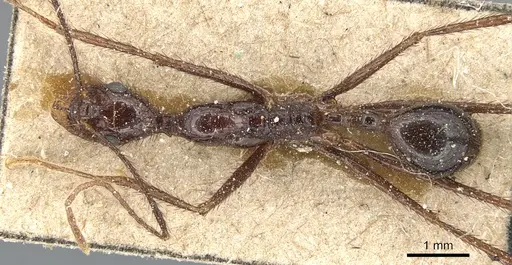
Literature
Loading distribution map...Loading products...