
Aphaenogaster araneoides
- Sci. Name
- Aphaenogaster araneoides
- Tribe
- Stenammini
- Subfamily
- Myrmicinae
- Author
- Emery, 1890
- Distribution
- Found in 3 countries
Introduction
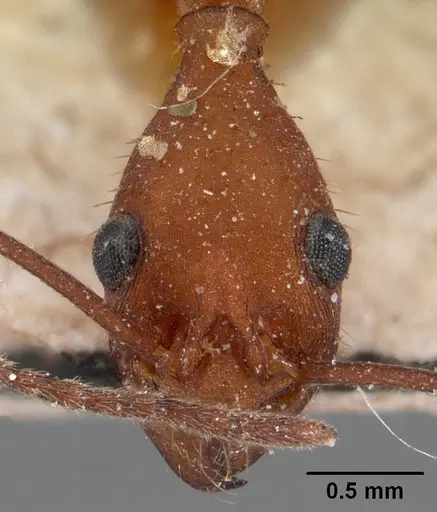
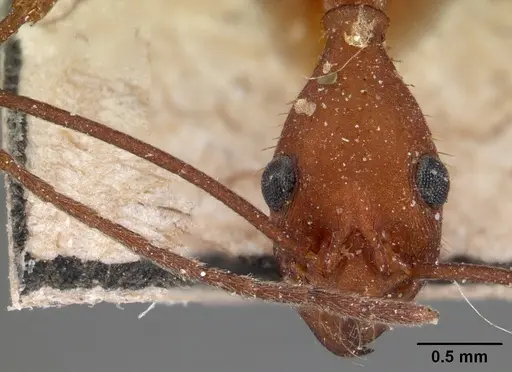
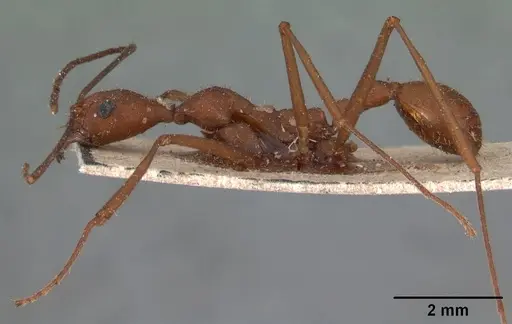
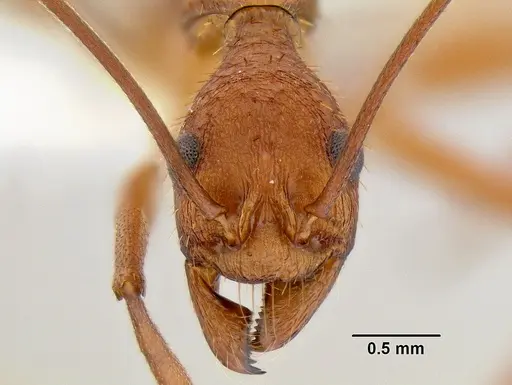
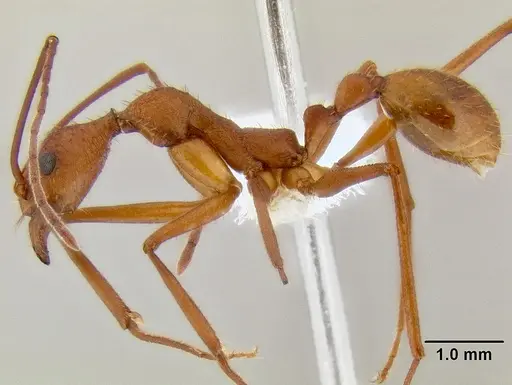
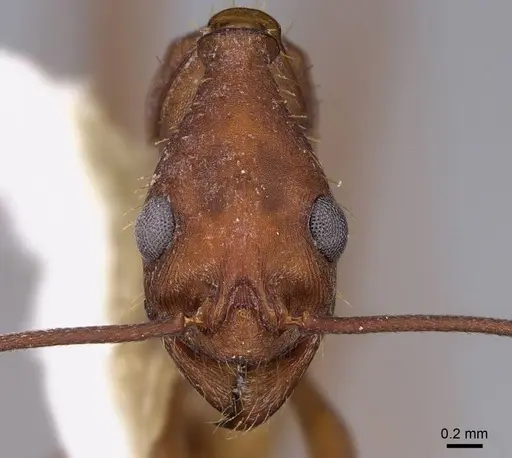
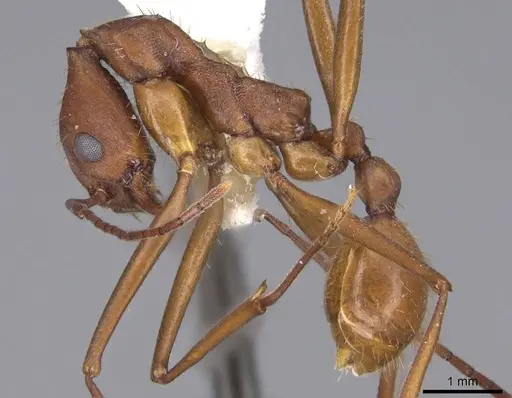
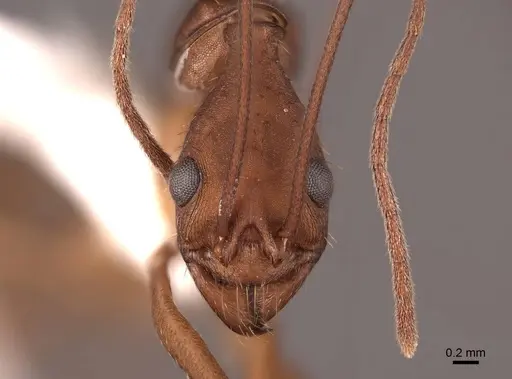
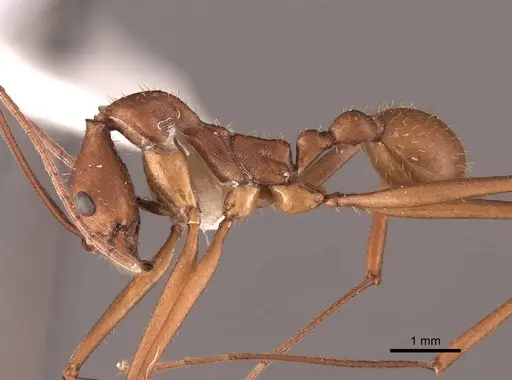
Aphaenogaster araneoides are slender, long-legged ants from the tropical forests of Central America. You can recognize workers by their distinctive narrow neck - the back of the head pinches in dramatically, and they carry themselves with a timid, delicate posture . They live in Costa Rica, Panama, Guatemala, Honduras, Nicaragua, El Salvador, and Colombia in lowland rainforests and wet forests up into the mountains . Unlike most ants you might keep, these practice serial monodomy - they rotate between multiple underground nests, rarely staying in one spot for more than a week . Their queens are ergatoid, meaning they are born completely wingless and look like large workers rather than having wings .
Quick Summary
- Difficulty: Medium
- Origin & Habitat: Neotropical region: Costa Rica, Panama, Guatemala, Honduras, Nicaragua, El Salvador, and Colombia [3][1][2]. They inhabit tropical wet forests and lowland rainforests, nesting in soil chambers under logs or in leaf litter [3][5].
- Colony Type: Single-queen colonies (monogyne) with occasional two-queen colonies documented. Queens are ergatoid (wingless) [1][7].
- Size & Growth:
- Queen: size data unavailable, ergatoid queens have enlarged gasters and three visible ocelli (white spots) on the head [1][7].
- Worker: size data unavailable, described as slender with elongated legs [2][1].
- Colony: Up to 235 workers, averaging around 123 workers per colony [7][5].
- Growth: Moderate, colonies grow continuously year-round in tropical conditions [5].
- Development: estimated 6-10 weeks based on related tropical Myrmicinae. (Colonies produce brood continuously without seasonal breaks in their native habitat [5].)
- Antkeeping:
- Temperature: Warm tropical temperatures, roughly 24-28°C. Keep stable year-round [3][5].
- Humidity: High humidity required, they relocate nests frequently when vapor pressure deficit increases (dry conditions) [5]. Keep nest substrate moist but not waterlogged.
- Diapause: No, tropical species with continuous activity and reproduction throughout the year [5].
- Nesting: Soil-based nests required (Ytong, plaster, or naturalistic). Provide multiple small nest chambers connected by tubing to allow natural relocation behavior [5][6].
- Behavior: Timid and non-aggressive, workers run from threats rather than fight [1]. Solitary foragers search leaf litter individually [1][8]. When attacked by army ants, colonies evacuate entirely, carrying brood to hide in vegetation or litter [9][5]. They move nests frequently (every 7-8 days on average) to escape parasites and changing conditions [5].
- Common Issues: mite infestations can build up in nests occupied too long, provide clean nest options regularly [5]., stress from inability to relocate, colonies need multiple nest sites to rotate between [6][5]., dehydration risk, they are sensitive to low humidity and will abandon dry nests [10]., small colony size means slow growth, beginners may overfeed or disturb the colony too frequently [7].
Nest Preferences and Serial Monodomy
In nature, Aphaenogaster araneoides practices serial monodomy, the colony occupies exactly one nest at a time, but maintains several empty backup nests nearby [6][1]. They move frequently, relocating on average every 7.6 days (roughly once a week), usually shifting less than a meter from the previous site [5]. Nests are simple chambers dug in soil or under rotting logs, with entrances about 2 cm across leading to passages up to 8 cm long [5][3].
For captive care, this means you cannot give them just one permanent nest. Provide two or three small connected nest sites (Ytong, plaster, or soil-filled containers) and let them choose. They will likely abandon perfectly good nests on their own schedule, this is normal behavior to escape parasites and changing humidity [5]. When they do move, they carry all brood and adults to the new site, leaving the old nest completely empty [5].
Feeding and Diet
These ants are generalist predators and scavengers. In the wild, they forage individually in leaf litter for small arthropods and are attracted to protein baits including Vienna sausages, fish, chicken, and carrion such as dead snakes [3][5][8]. They do not appear to rely heavily on seeds or sugar sources like honeydew [11].
In captivity, feed small live or freshly killed insects such as fruit flies, springtails, pinhead crickets, or bits of chicken and fish. Offer protein twice weekly and remove uneaten food promptly to prevent mold in their humid environment. While they may accept sugar water, protein appears to be their primary requirement [3][5].
Temperature and Humidity
As a tropical species from lowland rainforests, Aphaenogaster araneoides needs warm, stable conditions year-round. Keep the nest area at roughly 24-28°C without seasonal drops [3][5]. They do not enter diapause or slow down for winter, colonies grow and produce sexuals continuously when conditions are right [5].
Humidity is critical. In the wild, relocation frequency increases dramatically when vapor pressure deficit rises (dry air) [5]. Keep the nest substrate consistently moist, damp to the touch but not waterlogged. Use a water tower or hydration chamber to maintain humidity, and provide ventilation to prevent stagnation while keeping the air humid.
Colony Structure and Reproduction
Colonies contain ergatoid queens, wingless reproductive females that look like large workers with slightly enlarged gasters and three white spots (ocelli) on their heads [1][2][7]. Most colonies have one queen, though occasionally two coexist [1][7]. Because queens lack wings, new colonies likely form by colony fission (splitting) rather than by a lone queen founding independently [10].
Colonies are small, ranging from 55 to 235 workers with an average around 123 [7][5]. They produce males and new queens continuously throughout the year when healthy, with larger colonies producing more sexual offspring [5][7].
Defense and Predator Avoidance
These are timid ants that rely on escape rather than combat. When threatened by army ants (Eciton, Labidus, or Neivamyrmex), workers evacuate the nest immediately, carrying brood to hide in leaf litter or climb nearby vegetation [9][5]. They do not defend fixed territories against other ant species, though they will compete for high-quality food patches [7].
In captivity, they rarely bite or sting. Their defense is flight, they will scatter and hide when disturbed. Keep their outworld cluttered with leaf litter or debris where they can seek cover when feeling exposed [1][9].
Health Concerns: Mites and Flooding
Wild colonies frequently harbor mites (Acari) in their lower nest chambers, especially where brood is kept [5]. Mite loads increase the longer a nest is occupied, which may be one reason colonies move so often [5]. In captivity, rotate nest sites regularly to prevent mite buildup, and ensure substrate is not contaminated with wild soil that might introduce mites.
They can survive flooding by fleeing vertically to climb vegetation or refuge sites above the water line [12]. If you keep them in a naturalistic setup, provide some vertical climbing structure above the substrate in case of accidental flooding.
Frequently Asked Questions
Can I keep Aphaenogaster araneoides in a test tube?
Test tubes work temporarily for small colonies, but long-term they need a soil-based nest they can remodel. In nature they live in soil chambers with specific humidity levels, not open spaces [3][5].
How long until Aphaenogaster araneoides gets their first workers?
Development time from egg to worker has not been measured for this species. Based on related tropical Myrmicinae, expect roughly 6-10 weeks at warm temperatures (25-28°C), but this is an estimate.
Why do my Aphaenogaster araneoides keep moving nests?
This is natural behavior. In the wild, they move every 7-8 days on average to escape parasites, predators, and changing humidity. Provide multiple nest options and let them rotate between them [5][6].
Do Aphaenogaster araneoides need hibernation?
No. They come from tropical forests and remain active year-round. Keep them at stable warm temperatures (24-28°C) without winter cooling [5][3].
Can I keep multiple Aphaenogaster araneoides queens together?
Not recommended. While wild colonies occasionally contain two ergatoid queens, they are typically single-queen colonies. Combining unrelated queens has not been documented and would likely result in fighting [1][7].
How big do Aphaenogaster araneoides colonies get?
Relatively small, wild colonies range from 55 to 235 workers, with most averaging around 123 workers [7][5].
What do Aphaenogaster araneoides eat?
They are generalist predators and scavengers. In the wild they eat leaf litter arthropods and are attracted to protein baits like meat and fish. Offer small insects, fruit flies, or bits of chicken and fish in captivity [5][3][8].
Are Aphaenogaster araneoides good for beginners?
Probably not ideal for absolute beginners. They need warm, humid conditions, multiple nest sites to satisfy their relocation behavior, and their small colony size means slow growth. Better suited to keepers with some experience.
Do Aphaenogaster araneoides ants sting?
They are not known to sting humans. They are timid ants that flee from threats rather than fight [1][9].
How often should I feed Aphaenogaster araneoides?
Offer small protein items twice weekly. Remove uneaten food within 24 hours to prevent mold in their humid nest environment [5][3].
Report an Issue
The current care sheet is based fully on literature. See inconsistencies, or something that's incorrect? Please , it will be resolved after review from an admin. Contributing to the blogs tab also helps providing information, to make us be able to further improve the caresheets. Thank you for your support!
References

This caresheet is licensed under CC BY-SA 4.0 .
Community Blogs
CASENT0102145
View on AntWeb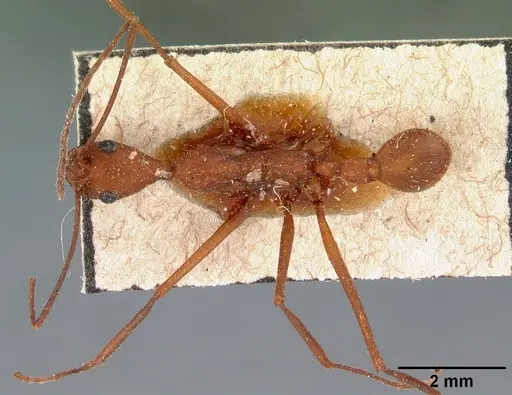
CASENT0106242
View on AntWeb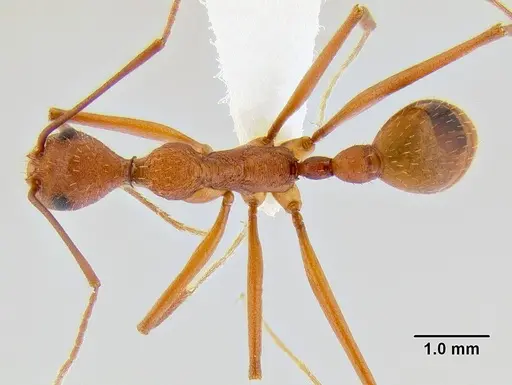
CASENT0914484
View on AntWeb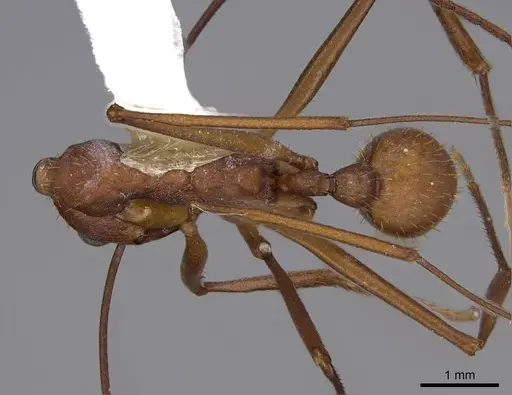
FMNHINS0000062986
View on AntWeb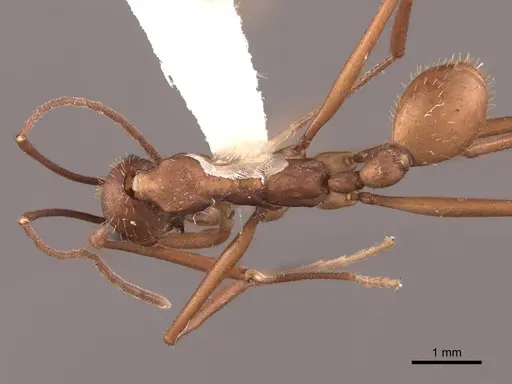
Literature
Loading distribution map...Loading products...