
Anoplolepis tenella
- Sci. Name
- Anoplolepis tenella
- Tribe
- Plagiolepidini
- Subfamily
- Formicinae
- Author
- Santschi, 1911
- Distribution
- Found in 2 countries
Introduction
Anoplolepis tenella is a small ant native to the Afrotropical region, found in Cameroon, Congo, the Democratic Republic of Congo, and Nigeria . In nature, they live in tropical forests and cassava fields, where they build nests in soil at the base of plants . This species has an unusual relationship with the scale insect Stictococcus vayssierei - they tend these insects for honeydew, protect them from predators, and even carry them to new cassava plants . Colonies are strongly polygynous, meaning multiple queens share the same nest, and they show tramp ant characteristics including high densities in disturbed areas and possibly polydomous behavior .
Quick Summary
- Difficulty: Medium
- Origin & Habitat: Cameroon, Congo, DRC, and Nigeria [1][2][3]. Found in tropical forests, cassava fields, and disturbed agricultural areas [4][5].
- Colony Type: Polygyne, multiple queens per nest (strongly polygynous) [4]. Possibly polydomous with interconnected nests [7].
- Size & Growth:
- Queen: Size data unavailable, no measurements found in research.
- Worker: Size data unavailable, likely small based on genus patterns.
- Colony: Likely large due to polygyny and tramp ant characteristics.
- Growth: Moderate, colonies can grow rapidly due to multiple queens.
- Development: Unknown. (Sexual brood present in nests June-August, with nuptial flights August-September [4].)
- Antkeeping:
- Temperature: Keep warm, roughly 24-28°C, condition-based from tropical forest habitat [4]. Provide a gentle heat gradient.
- Humidity: High humidity required, maintain damp nest material similar to tropical forest floor conditions [4][5].
- Diapause: No, tropical species active year-round.
- Nesting: Soil nests with interconnected galleries at plant bases in nature [4]. In captivity, use soil-filled or plaster nests with multiple chambers and tunnels.
- Behavior: Fast, erratic 'crazy ant' movement without trail formation, they run everywhere at high density [7]. Highly resistant to attacks by other ant species such as Pheidole megacephala [8]. Multiple queens cooperate in the same nest [4]. Shows tramp ant characteristics with high densities in disturbed areas [4].
- Common Issues: dependency on honeydew sources, colonies may struggle without liquid sugars to replace their natural scale insect tending., high escape risk due to small size and extremely fast, erratic movement., polygynous colonies can grow rapidly and require frequent enclosure upgrades., tropical humidity requirements make them prone to desiccation if kept too dry.
Nest Preferences
In nature, Anoplolepis tenella builds nests in soil at the base of plants, particularly cassava plants infested with scale insects [4]. Their nests consist of cavities interconnected by galleries, creating a network of chambers [4]. They reach higher densities in disturbed agricultural areas and cassava fields compared to primary forests [4][6]. In captivity, replicate these conditions with a soil-filled formicarium or plaster nest that allows for tunneling. Provide multiple chambers connected by narrow passages, and keep the nest material consistently damp but not waterlogged.
Feeding and Diet
Anoplolepis tenella has a specialized relationship with the root-feeding scale insect Stictococcus vayssierei. They tend these scale insects to collect honeydew, protect them from natural enemies, and even transport them to new plants [3][6]. In addition to honeydew, they collect small prey and dead insects [7]. In captivity, provide liquid sugar sources such as honey water or sugar water to replace the honeydew they would naturally obtain. Offer small live prey such as fruit flies, springtails, or tiny insect pieces, along with occasional dead insects. Their strong association with scale insects suggests they may prefer liquid carbohydrates, so ensure sugar water is always available.
Temperature and Care
As a tropical forest species from Central Africa, Anoplolepis tenella requires warm temperatures year-round [4]. Keep the nest area between roughly 24-28°C with a gentle heat gradient so the ants can self-regulate. Use a heating cable or mat on one side of the nest, placed on top to avoid drying out the lower chambers. High humidity is essential, maintain damp nest material similar to tropical forest floor conditions [4][5]. Avoid allowing the nest to dry out completely. Since they are tropical, they do not require a winter rest period and remain active throughout the year.
Behavior and Temperament
Anoplolepis tenella displays 'crazy ant' behavior, they rarely use trails and instead run everywhere at high density in an erratic, fast-moving pattern [7]. This makes them fascinating to watch but also increases escape risk. They show high resistance to raids by other ant species, including the aggressive Pheidole megacephala [8]. Colonies are strongly polygynous, meaning multiple queens coexist and cooperate in the same nest [4]. They also show characteristics of tramp ants, forming high-density populations in disturbed areas and possibly maintaining polydomous colonies where multiple nests work together [4][7].
Reproduction and Nuptial Flights
Colonies produce sexual brood from June to August, with nuptial flights occurring from August to September in their native range [4]. Queens are strongly polygynous, and nests show a low percentage of queenless colonies, suggesting stable multi-queen structures [4]. If you collect a founding colony, you may find multiple queens present. However, the exact founding behavior has not been documented, so treat new colonies carefully and provide both sugar sources and small prey items.
Frequently Asked Questions
Can I keep multiple Anoplolepis tenella queens together?
Yes. Anoplolepis tenella is strongly polygynous, meaning multiple queens naturally share the same nest and work together [4]. You do not need to separate queens, they will cooperate in colony founding and maintenance.
Do Anoplolepis tenella need scale insects to survive in captivity?
No, but they naturally depend on the scale insect Stictococcus vayssierei for honeydew in the wild [3][6]. In captivity, provide sugar water or honey water as a substitute for scale insect honeydew. They also need protein from small insects.
What temperature do Anoplolepis tenella need?
Keep them warm at approximately 24-28°C, consistent with their tropical forest origins [4]. Use a heating cable on one side of the nest to create a gradient, and avoid letting temperatures drop below 20°C.
Are Anoplolepis tenella good for beginners?
They are medium difficulty. While their polygynous nature makes colonies resilient, their small size, fast erratic movement, and high humidity requirements make them more challenging than typical beginner species.
When do Anoplolepis tenella have nuptial flights?
In their native Central African range, nuptial flights occur from August to September, with sexual brood developing in nests from June to August [4].
How big do Anoplolepis tenella colonies get?
Exact maximum size is unknown, but they can potentially reach large sizes due to their polygynous nature and tramp ant characteristics [4][7]. Be prepared to provide spacious enclosures as the colony grows.
Do Anoplolepis tenella need hibernation?
No. As a tropical species from Central Africa, they remain active year-round and do not require a winter rest period.
Why are my Anoplolepis tenella dying?
Common causes include desiccation from insufficient humidity, starvation from lack of liquid sugars, or escape-related stress. Ensure the nest stays damp and sugar water is always available.
Report an Issue
The current care sheet is based fully on literature. See inconsistencies, or something that's incorrect? Please , it will be resolved after review from an admin. Contributing to the blogs tab also helps providing information, to make us be able to further improve the caresheets. Thank you for your support!
References

This caresheet is licensed under CC BY-SA 4.0 .
Community Blogs
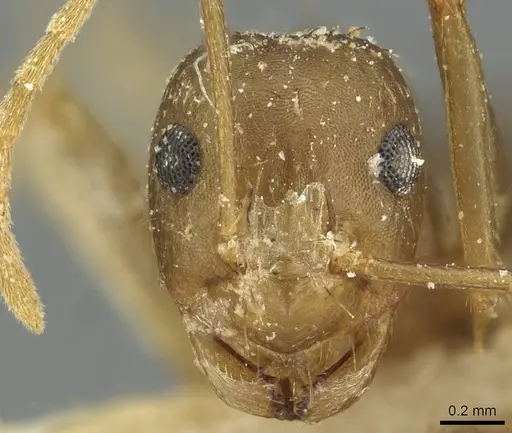
CASENT0906282
View on AntWeb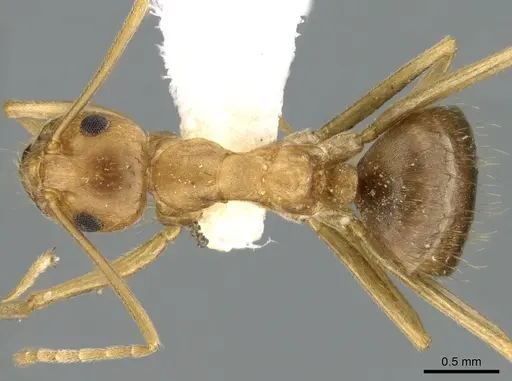
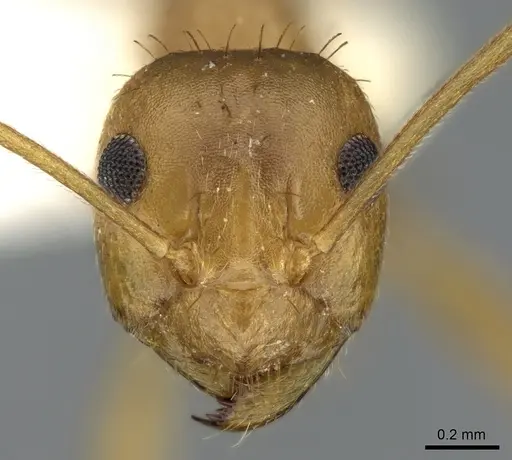
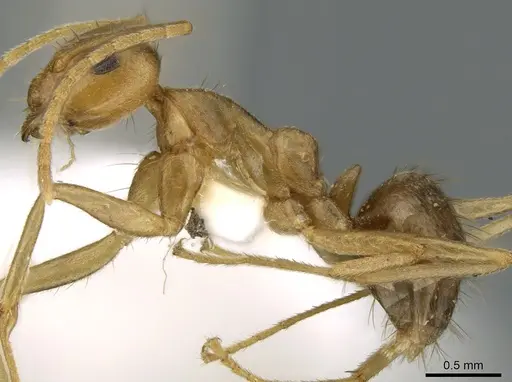
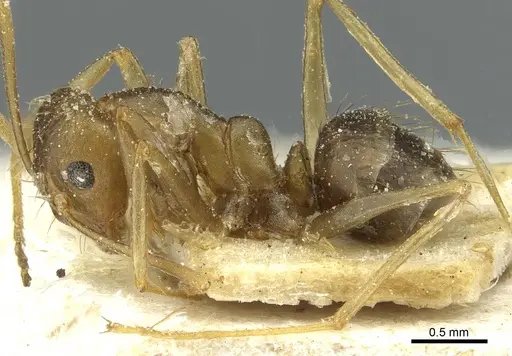
CASENT0912356
View on AntWeb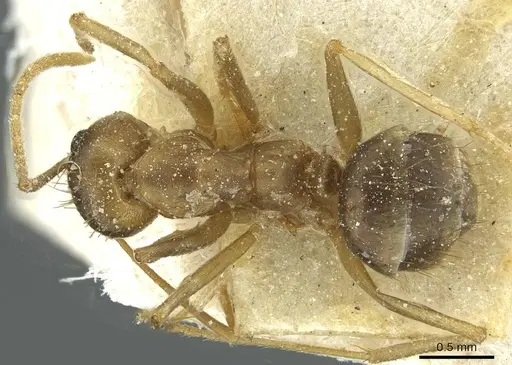
Literature
Loading distribution map...Loading products...