
Anoplolepis carinata
- Sci. Name
- Anoplolepis carinata
- Tribe
- Plagiolepidini
- Subfamily
- Formicinae
- Author
- Emery, 1899
- Distribution
- Found in 3 countries
Introduction
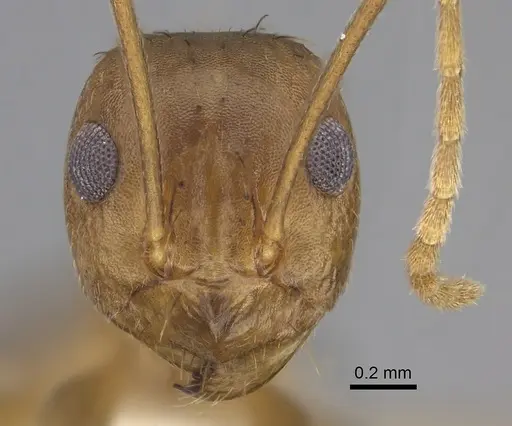
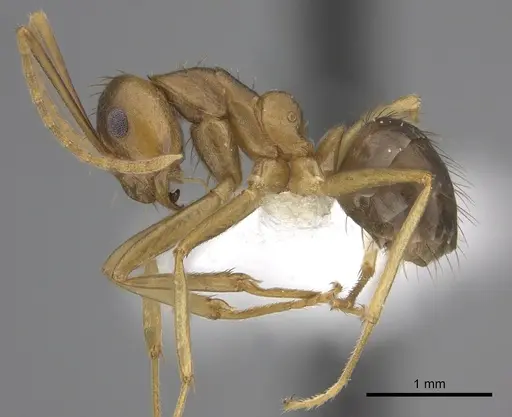
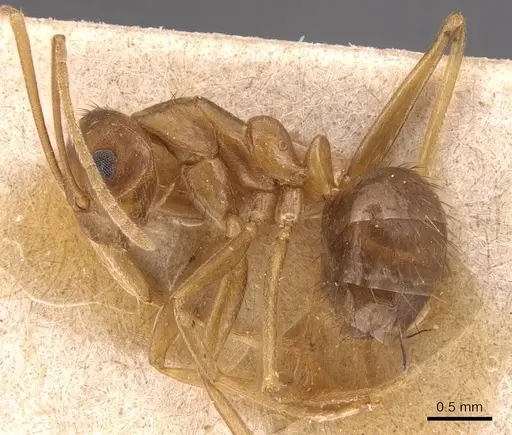
Anoplolepis carinata is an African ant species recorded in the Democratic Republic of Congo, specifically found in Bas-Congo, Haut-Uélé, and Tshopo provinces . Research confirms they prey on termites, with termite DNA detected in 11.4% of individuals tested in a gut-content analysis . Specific morphology, colony size, and detailed behavior for this species remain unstudied.
Quick Summary
- Difficulty: Medium
- Origin & Habitat: Democratic Republic of Congo, tropical African regions [1]
- Colony Type: Unconfirmed, no specific data on colony structure
- Size & Growth:
- Queen: size data unavailable, no measurements in available literature
- Worker: size data unavailable, no measurements in available literature
- Colony: Unknown
- Growth: Unknown
- Development: estimated 6-10 weeks based on typical tropical Formicinae patterns (No direct development studies available, estimate assumes warm (25-28°C) conditions)
- Antkeeping:
- Behavior: Fast-moving with good climbing ability based on genus patterns, specific behavior unstudied
- Common Issues: lack of specific care data means you must watch your colony closely and adjust based on behavior., fast movement and climbing ability increase escape risks without excellent barriers., termite predation suggests high protein needs that may be difficult to maintain in captivity.
Distribution and Habitat
These ants live in the Democratic Republic of Congo. Records place them in Bas-Congo, Haut-Uélé, and Tshopo provinces, with historical specimens collected by Forel (1913), Wheeler (1922), and Santschi (1930,1935) [1]. As a tropical African species, they likely inhabit warm, humid forest environments, though specific nesting preferences remain unstudied.
Diet and Feeding
Research shows these ants hunt termites. In a study analyzing gut contents, researchers detected termite DNA in 4 out of 35 individuals (11.4%), specifically matching Anoplotermes-group termites [2]. While this confirms termite predation, the relatively low detection rate suggests termites are part of a broader diet. In captivity, offer small live insects such as fruit flies, springtails, and termites if available. They likely accept sugar sources based on typical Formicinae patterns, though specific acceptance is unconfirmed.
General Care Guidelines
Keep them warm and humid. Aim for roughly 24-28°C based on their tropical African origin [1]. Provide a moisture gradient in the nest so workers can choose their preferred spot. Use excellent escape prevention, Anoplolepis ants typically climb well and move fast. Apply Fluon or talcum powder barriers to outworld walls.
Colony Founding
Founding behavior is unconfirmed for this species. Without specific studies, the founding method cannot be determined. If attempting founding, provide a small, secure chamber with minimal disturbance and monitor closely.
Frequently Asked Questions
Can I keep Anoplolepis carinata in a test tube?
Test tubes can work for founding. Keep the cotton moist but not soaked, and secure the tube well since these ants likely climb and move quickly.
What do Anoplolepis carinata eat?
They hunt termites in the wild, research found termite DNA in their guts [2]. In captivity, offer small live insects like fruit flies, springtails, and termites if available. They likely accept sugar water too.
How long until first workers Anoplolepis carinata?
Unknown. Based on typical tropical Formicinae, expect roughly 6-10 weeks at warm temperatures (25-28°C), but this is an estimate with no species-specific data.
Do Anoplolepis carinata need hibernation?
No. They come from tropical Africa and likely remain active year-round. Keep them warm consistently.
Are Anoplolepis carinata good for beginners?
Probably not ideal for first-time keepers. The lack of specific care information means you must troubleshoot without guides, and their likely fast, skittish nature increases escape risks.
How big do Anoplolepis carinata colonies get?
Unknown. No specific colony size data is available for this species.
Can I keep multiple Anoplolepis carinata queens together?
Unconfirmed. No specific data exists for this species. Combining unrelated queens is risky without species-specific information.
Report an Issue
The current care sheet is based fully on literature. See inconsistencies, or something that's incorrect? Please , it will be resolved after review from an admin. Contributing to the blogs tab also helps providing information, to make us be able to further improve the caresheets. Thank you for your support!
References

This caresheet is licensed under CC BY-SA 4.0 .
Community Blogs
Literature
Loading distribution map...Loading products...