
Anonychomyrma extensa
- Sci. Name
- Anonychomyrma extensa
- Tribe
- Leptomyrmecini
- Subfamily
- Dolichoderinae
- Author
- Emery, 1887
- Distribution
- Found in 0 countries
Introduction
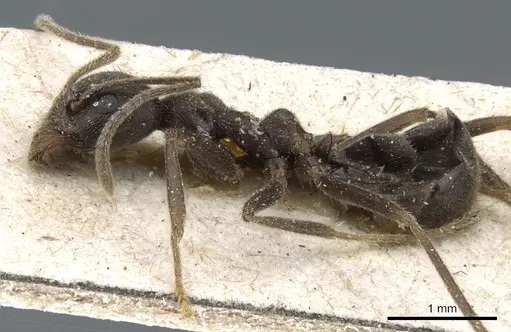
Anonychomyrma extensa was first described as Iridomyrmex extensus in 1887 by Emery based on workers collected from Hatam in Irian Jaya, New Guinea . In 2011,Heterick and Shattuck transferred this species to the genus Anonychomyrma after noticing distinctive morphological features: a high pronotum that angles sharply away from the mesonotum, and a tall, dome-shaped propodeum, which differs from the flatter profile seen in true Iridomyrmex species . This species is rarely collected and almost nothing is known about its biology, colony structure, or behavior in the wild . Because published studies focus only on taxonomy, captive care for Anonychomyrma extensa remains entirely experimental. You should assume they need typical tropical ant conditions based on their New Guinea origin, but specific requirements for temperature, humidity, nesting, and diet are unconfirmed.
Quick Summary
- Difficulty: Expert
- Origin & Habitat: New Guinea (Irian Jaya, Indonesia), tropical forest [2]
- Colony Type: Unknown, no colony structure studies published
- Size & Growth:
- Queen: size data unavailable
- Worker: size data unavailable
- Colony: Unknown
- Growth: Unknown
- Development: Unknown (No development studies exist for this species.)
- Antkeeping:
- Temperature: Likely warm tropical conditions, roughly 24-28°C, based on New Guinea location. Start in this range and adjust based on colony activity.
- Humidity: Likely high humidity based on tropical forest origin. Keep nest substrate consistently moist but not waterlogged.
- Diapause: Probably not required, tropical species typically do not hibernate.
- Nesting: Unknown. A naturalistic setup with options for both ground and arboreal nesting is safest.
- Behavior: Unknown. As members of the Dolichoderinae subfamily, they lack a functional sting but can secrete defensive chemical compounds from a slit-like opening at the tip of the abdomen for defense.
- Common Issues: extremely limited research means all captive care is experimental and high-risk., tropical origin requires stable warm temperatures without seasonal cooling., unknown founding type makes starting new colonies unpredictable., rarity in collections makes replacement stock difficult to obtain., complete lack of basic biological data makes successful captive breeding highly uncertain.
Taxonomy and Identification
Anonychomyrma extensa has a complicated taxonomic history. Emery first described it as Anonychomyrma extensa in 1887 based on specimens from Hatam, Irian Jaya [1]. For over a century, it remained classified within Iridomyrmex until Heterick and Shattuck revised the genus in 2011 and transferred it to Anonychomyrma [1].
You can identify them by their distinctive body shape: the pronotum is relatively high and forms a sharp angle where it meets the mesonotum, while the propodeum is high and dome-shaped [1]. This differs from the flatter profile seen in most Iridomyrmex species. The type material was collected by O. Beccari, though the original syntype series could not be located by modern researchers [1].
Natural History and Data Limitations
Despite being described over 130 years ago, Anonychomyrma extensa remains a mystery in terms of its biology. We know only that it lives in the tropical forests of Irian Jaya, New Guinea [1]. No studies have documented its colony size, nesting habits, diet, or reproductive behavior.
This lack of data means you cannot rely on established care guides. Any captive colony would essentially be a pioneering effort. The species appears in taxonomic lists and catalogs, but researchers have not observed its behavior in the field or studied its development in captivity [1].
Inferred Care Guidelines
Since no direct care studies exist, you must infer requirements from the species' origin and subfamily. Based on their collection in tropical New Guinea, they likely need warm temperatures around 24-28°C and high humidity. As Dolichoderinae, they probably accept a generalist diet of sugar water or honeydew plus small insects, and they likely do not require hibernation.
However, these are educated guesses. Start with a naturalistic setup that offers both soil and wood nesting options, maintain tropical conditions, and observe carefully. Watch for signs of stress such as sluggish movement or brood abandonment, and adjust conditions accordingly.
Captive Challenges
Keeping Anonychomyrma extensa presents unique risks due to the complete absence of care documentation. You will not find answers to basic questions like how long development takes, whether queens forage during founding, or how large colonies grow.
If you attempt to keep this species, document everything and share observations with the antkeeping community. Start with a small experimental setup, expect high mortality rates, and do not invest heavily in expensive equipment until you confirm the colony can survive. The rarity of this species in collections also means losing a colony may mean losing your only opportunity to work with the species.
Frequently Asked Questions
Are Anonychomyrma extensa good for beginners?
No. The complete lack of care information, unknown founding behavior, and tropical requirements make them suitable only for expert antkeepers willing to experiment with undocumented species.
What do Anonychomyrma extensa eat?
Their diet is unconfirmed. Based on typical Dolichoderinae behavior, they likely accept sugar water and small insects, but you will need to test food acceptance experimentally.
How long is the egg to worker timeline for Anonychomyrma extensa?
Unknown. No studies have documented their development speed. Based on related tropical Dolichoderinae, it could range from 4-8 weeks at warm temperatures, but this is purely speculative.
Do Anonychomyrma extensa need hibernation?
Probably not. As a tropical species from New Guinea, they likely remain active year-round without a winter rest period.
Can I keep multiple Anonychomyrma extensa queens together?
Unknown. Since colony structure is unstudied, combining queens is not recommended. Start with single queens until the species' social structure is better understood.
What temperature do Anonychomyrma extensa need?
Likely 24-28°C based on their tropical New Guinea origin. Use a heating cable on one side of the nest to create a gradient, and adjust based on worker activity levels.
How big do Anonychomyrma extensa colonies get?
Unknown. No colony size estimates exist for this species.
Report an Issue
The current care sheet is based fully on literature. See inconsistencies, or something that's incorrect? Please , it will be resolved after review from an admin. Contributing to the blogs tab also helps providing information, to make us be able to further improve the caresheets. Thank you for your support!
References

This caresheet is licensed under CC BY-SA 4.0 .
Community Blogs
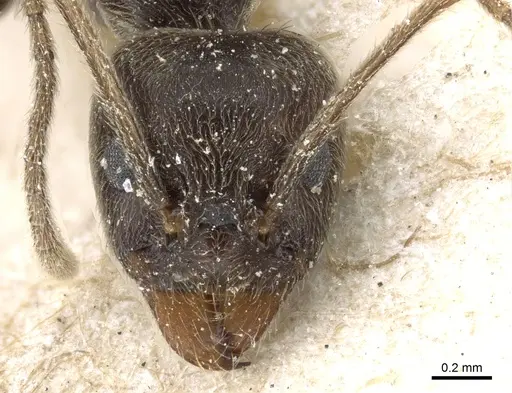
CASENT0249527
View on AntWeb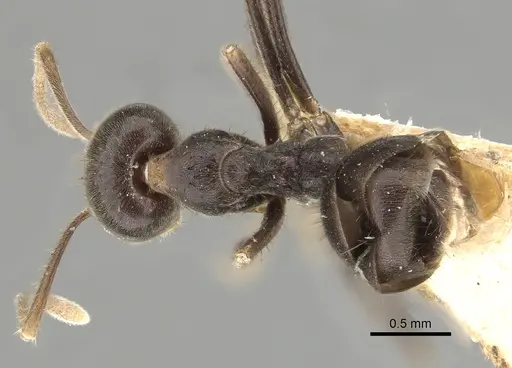
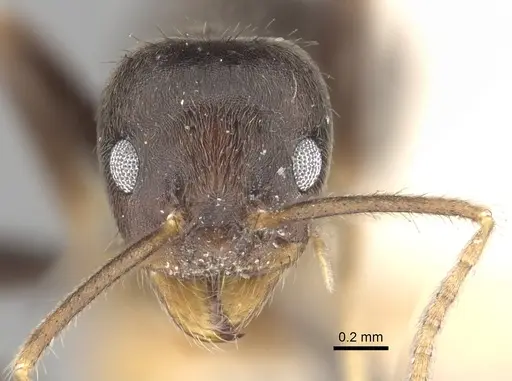
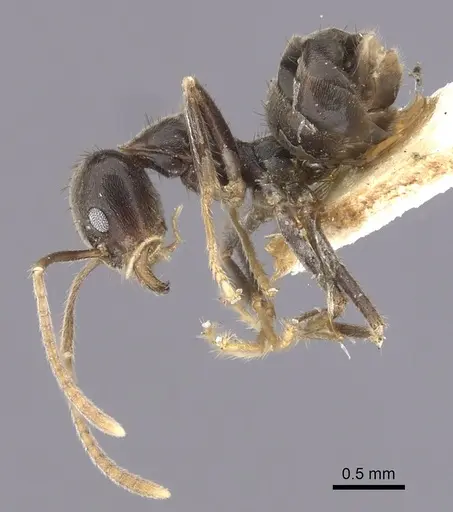
CASENT0905049
View on AntWeb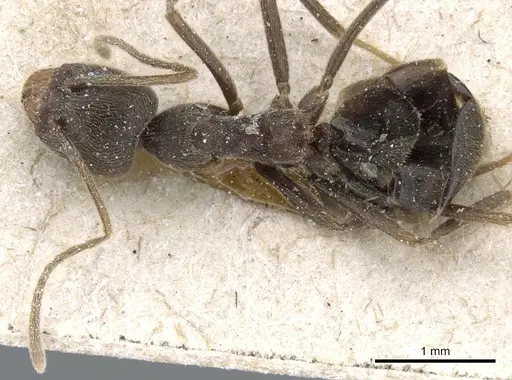
Literature
Loading distribution map...Loading products...