
Anochetus testaceus
- Sci. Name
- Anochetus testaceus
- Tribe
- Ponerini
- Subfamily
- Ponerinae
- Author
- Forel, 1893
- Distribution
- Found in 2 countries
Introduction
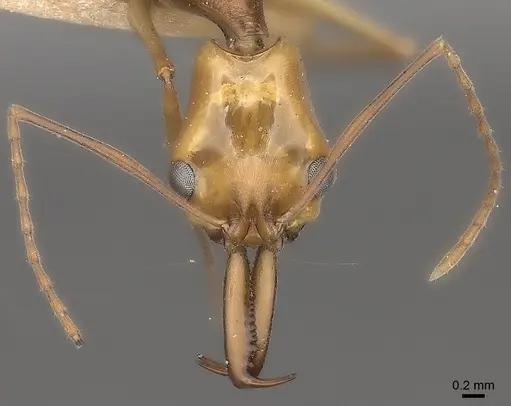
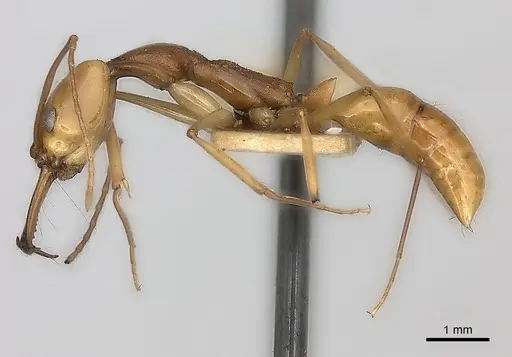
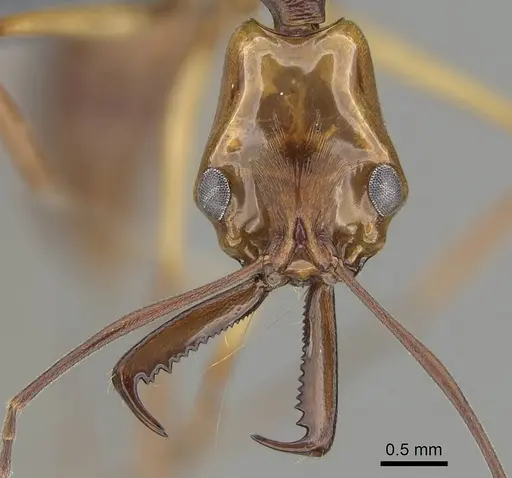
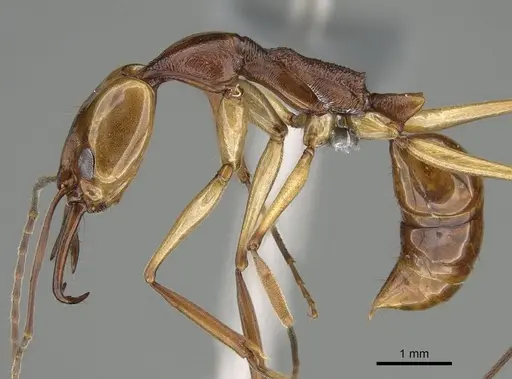
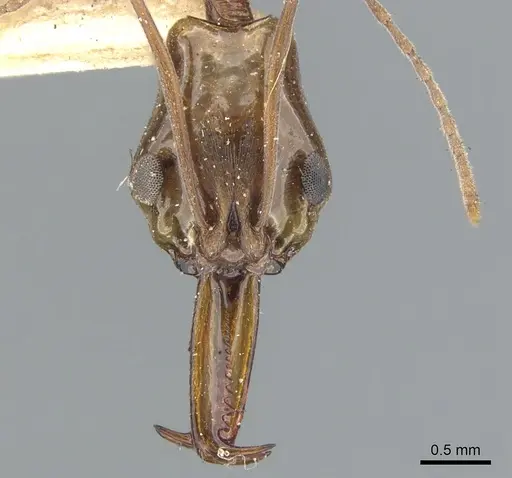
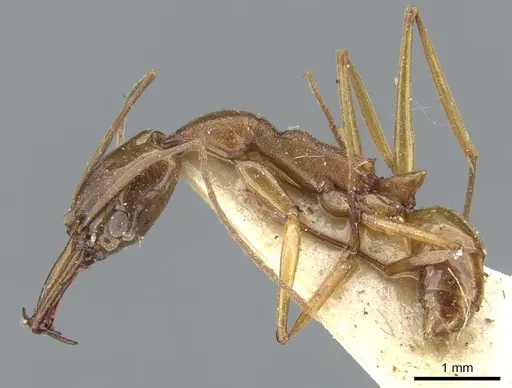
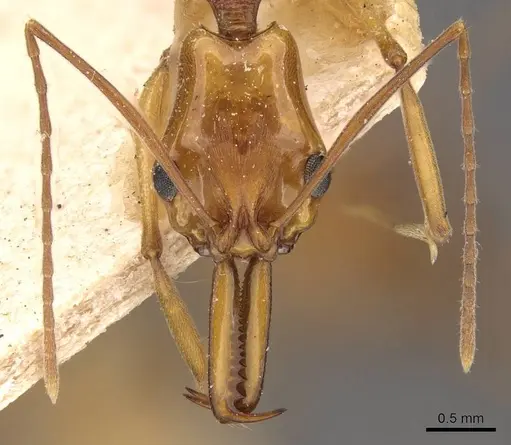
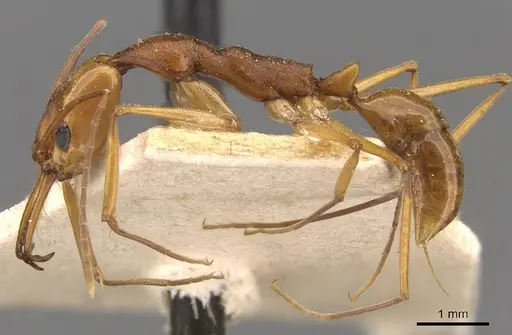
Anochetus testaceus is a trap-jaw ant native to the Caribbean islands of St. Vincent, Grenada, Puerto Rico, Bahamas, and Belize . Workers have a distinctive ferruginous yellow thorax with smooth, shiny surfaces on the head, pronotum, and upper petiole . They are the largest of the three Anochetus species found in Grenada . In the wild, colonies nest under flat stones in shaded areas along dry stream beds, with 30-100 workers per colony . Their cocoons are unusually long and slender, similar to those of Leptogenys ants . Like other trap-jaw ants, they possess spring-loaded mandibles that snap shut to capture prey.
Quick Summary
- Difficulty: Medium
- Origin & Habitat: Caribbean islands including St. Vincent, Grenada, Puerto Rico, Bahamas, and Belize [1][2]. Found in dry arroyos under stones in shaded areas of undisturbed forest [4][5].
- Colony Type: Unconfirmed. Wild colonies contain 30-100 workers, but colony structure (single or multiple queens) is not documented.
- Size & Growth:
- Antkeeping:
- Temperature: 24-28°C. These tropical ants need consistent warmth year-round.
- Humidity: Moderate humidity with good ventilation. Keep nest material slightly damp but not wet.
- Diapause: No. This is a tropical species that remains active year-round.
- Nesting: Naturalistic setups with flat stones or shallow plaster nests with tight chambers. They nest under stones in the wild [4][5].
- Behavior: Trap-jaw hunters that use their spring-loaded mandibles to strike prey. They possess a stinger and can sting if handled, though they are not aggressive colony defenders. Their small colony size means they are not escape artists by nature, but their small size requires good barriers.
- Common Issues: small colony size means slow growth, expect limited activity., trap-jaw ants require small live prey, they may not accept dead insects or sugar water., exact size measurements are unknown, assume they are small enough to escape through standard mesh., over-humid conditions can cause mold in their nest, they prefer drier conditions than many tropical ants.
Nest Preferences
In nature, Anochetus testaceus nests under flat stones in the shade of trees along dry arroyos in Puerto Rico and forested areas of Grenada [2][4]. They prefer undisturbed forest habitats with access to shaded, stable microclimates [4][5]. For captive care, recreate this with a naturalistic setup featuring flat stones or slate pieces over a shallow soil layer. Alternatively, use a plaster nest with tight, shallow chambers rather than tall open spaces. The nest should have a slight moisture gradient, damp underneath the stone but with a drier area available for the ants to choose.
Feeding and Diet
As trap-jaw ants, Anochetus testaceus are specialized predators that hunt small live prey using their spring-loaded mandibles. They likely feed on small arthropods found in leaf litter and soil. In captivity, offer small live prey such as springtails, fruit flies, or tiny crickets. They may not accept dead insects or sugar sources like honey water, as they are active hunters rather than scavengers. Feed small amounts appropriate to the colony size, with only up to 100 workers, they need far less food than large-colony species. [2]
Temperature and Care
Being from the Caribbean, these ants need warm, stable temperatures between 24-28°C year-round. They do not require hibernation as they are a tropical species. Use a heating cable or mat on one side of the nest to create a gentle gradient, allowing the ants to self-regulate. Avoid overheating, if workers cluster away from the heat source, reduce the temperature. Good ventilation is important to prevent mold, as they nest in relatively dry microhabitats under stones. [2]
Colony Founding
Founding behavior is unconfirmed for this specific species. If queens are semi-claustral, they would need to leave the nest periodically to forage for food while raising their first workers. If you have a founding queen, provide a small outworld or foraging area from the start, and offer small live prey regularly. Do not disturb the queen excessively, but ensure she has access to food.
Behavior and Temperament
Anochetus testaceus forms small colonies of up to 100 workers [2]. They are not aggressive defenders like some larger trap-jaw ants, but they can deliver a sting if mishandled. Their trap-jaw mechanism is primarily for hunting, the mandibles snap shut at high speed to stun or kill prey. With such small colony numbers, they are not constantly active, you may see periods of quiet as they wait in ambush near the nest entrance. This low activity level can frustrate beginners expecting constant motion.
Frequently Asked Questions
Can I keep Anochetus testaceus in a test tube setup?
Test tubes can work for founding queens, but because founding behavior is unconfirmed, monitor whether the queen needs access to food during founding. For established colonies, a naturalistic setup with flat stones or a shallow plaster nest works better than a test tube.
How long until Anochetus testaceus gets its first workers?
The exact timeline is unknown for this species. Development data for Anochetus is limited.
Can I keep multiple Anochetus testaceus queens together?
Not recommended. Colonies in the wild contain only up to 100 workers, and colony structure is unconfirmed. Combining unrelated queens will likely result in fighting.
Do Anochetus testaceus ants sting?
Yes. Like other ants in the subfamily Ponerinae, they possess a stinger and can sting if threatened or handled roughly.
What do Anochetus testaceus eat?
They are specialized predators that hunt small live prey using their trap-jaw mandibles. Offer springtails, fruit flies, or small crickets. They may not accept dead insects or sugar water.
Do Anochetus testaceus need hibernation?
No. This is a tropical Caribbean species that remains active year-round. Keep them at a consistent 24-28°C throughout the year.
Are Anochetus testaceus good for beginners?
They are medium difficulty. While their small colony size makes housing easy, they require live prey, grow slowly, and have specific humidity needs. They are better for keepers with some experience than absolute beginners.
Why is my Anochetus testaceus colony so small?
This is normal. Wild colonies only contain up to 100 workers [2]. They are not a species that produces thousands of workers. Enjoy the intimate scale and individual behaviors rather than expecting massive colony growth.
Report an Issue
The current care sheet is based fully on literature. See inconsistencies, or something that's incorrect? Please , it will be resolved after review from an admin. Contributing to the blogs tab also helps providing information, to make us be able to further improve the caresheets. Thank you for your support!
References

This caresheet is licensed under CC BY-SA 4.0 .
Community Blogs
CASENT0217513
View on AntWeb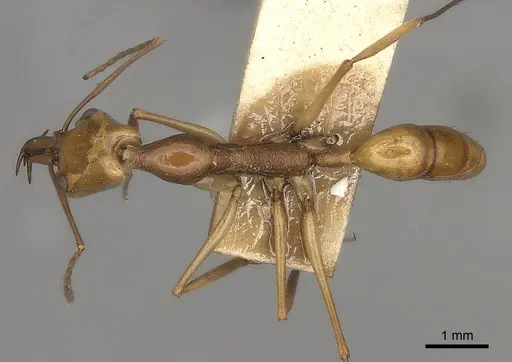
CASENT0729163
View on AntWeb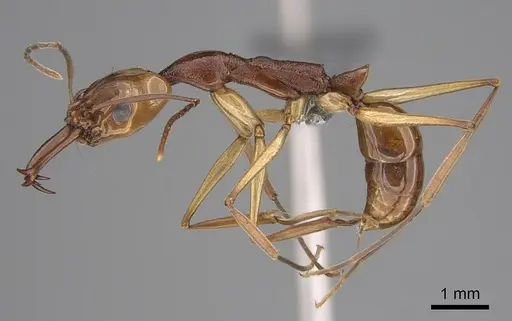
CASENT0729165
View on AntWeb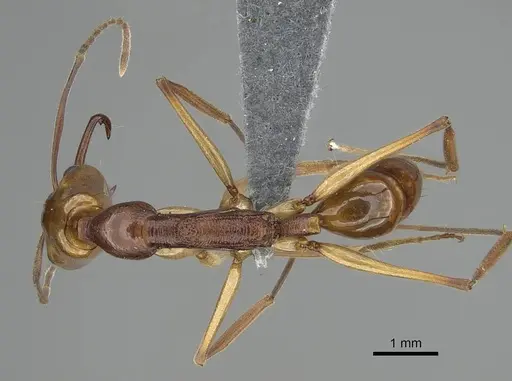
CASENT0902428
View on AntWeb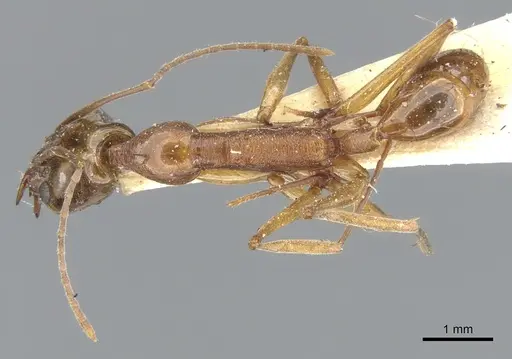
CASENT0907421
View on AntWeb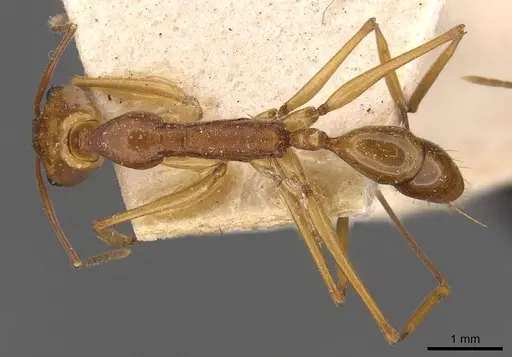
Literature
Loading distribution map...Loading products...