
Anochetus pupulatus
- Sci. Name
- Anochetus pupulatus
- Tribe
- Ponerini
- Subfamily
- Ponerinae
- Author
- Brown, 1978
- Distribution
- Found in 1 countries
Introduction
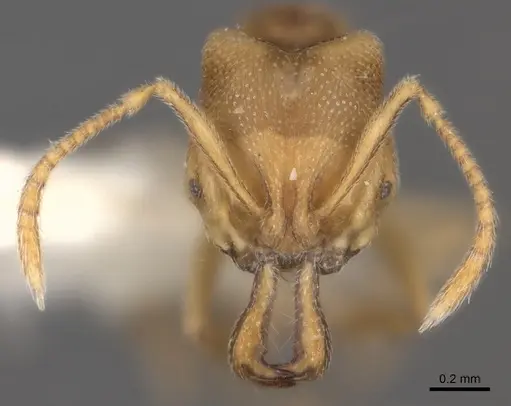
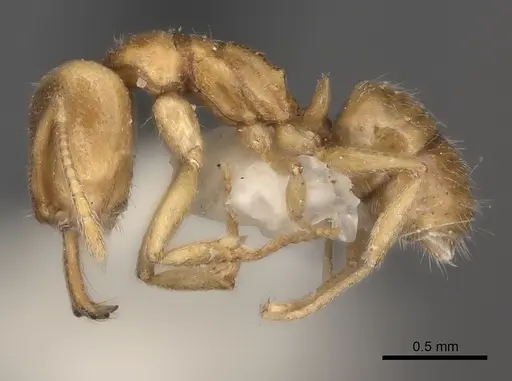
Anochetus pupulatus is a tiny trap-jaw ant endemic to India, with workers measuring 2.9-3.1 mm in total length and showing clear light yellow coloring throughout their bodies . They possess dramatically reduced eyes containing only 12-14 facets, giving them a distinctive appearance among their genus . Found only in the Western Ghats region of Kerala and Tamil Nadu, they inhabit both dry-season deciduous woodland and evergreen forest litter . What makes this species particularly notable is their extreme miniaturization combined with powerful trap-jaw mandibles - they are the smallest of the 'minute-eyed' Anochetus species .
Quick Summary
- Difficulty: Expert
- Origin & Habitat: Endemic to India (Western Ghats region: Kerala and Tamil Nadu), found in dry soil at tree bases in deciduous woodland and evergreen forest litter [1][2].
- Colony Type: Unconfirmed, no data on queen number or social structure
- Size & Growth:
- Queen: Size data unavailable, queens remain undescribed [1].
- Worker: 2.9-3.1 mm [1].
- Colony: Unknown, colony size has not been documented.
- Growth: Unknown.
- Development: Unconfirmed, development timeline has not been studied for this species. (No specific data available. Related tropical trap-jaw ants may take several weeks to months at warm temperatures.)
- Antkeeping:
- Temperature: Likely 24-26°C based on tropical Indian climate, start at 24°C and observe colony response [1].
- Humidity: Moderate, nest material should feel damp but not waterlogged, reflecting their collection from both dry soil and forest litter [1].
- Diapause: Unlikely required, tropical species from the Western Ghats probably do not hibernate [1].
- Nesting: Naturalistic soil setups or Y-tong nests with very small chambers, they prefer darkness and digging space [1].
- Behavior: Trap-jaw predators that snap mandibles shut to capture prey, reduced eyes suggest reliance on touch and chemical cues rather than vision [1]. Their tiny 3 mm size makes escape through small gaps extremely likely without excellent barriers [1]. They possess a stinger typical of Ponerinae ants.
- Common Issues: tiny size means they escape through the smallest gaps in standard setups without excellent barriers like Fluon., lack of research means captive care requirements are largely unknown and require experimentation., likely require live prey small enough for their 3 mm size, complicating feeding., wild-caught colonies may carry parasites or fail to adapt to artificial conditions.
Natural History and Distribution
Anochetus pupulatus lives only in India, specifically the Western Ghats region of Kerala and Tamil Nadu states [2]. They belong to the longifossatus species group within the genus [4]. Workers dig nests in dry soil at the base of large trees in disturbed, open, dry-season deciduous woodland, though they also appear in evergreen forest litter samples [1]. This suggests they tolerate both drier and more humid forest conditions, though always within the warm tropical climate of southern India. The species was first described by Brown in 1978 from specimens collected near Punnapuzha in Kerala [5].
Physical Characteristics and Size
These are exceptionally small ants. Workers measure just 2.9-3.1 mm in total length, making them the smallest of the 'minute-eyed' Anochetus species [1][3]. They show clear light yellow coloring throughout their bodies [1]. Their most distinctive feature is their greatly reduced eyes, containing only 12-14 facets and filling just half the eye socket, much smaller than their relatives [1]. Despite their tiny size, they possess the characteristic trap-jaw mandibles of the genus, though these are shorter and thicker than in larger Anochetus species [1].
Nest Preferences in Captivity
In nature, these ants nest in soil and leaf litter [1]. You should provide a naturalistic setup with a soil or sand-clay mixture that allows for digging. A Y-tong (AAC) nest with very small chambers might work for observation, but they likely prefer darkness and may stress under bright light given their reduced eyes. The nest area should feel slightly damp but not wet, matching the dry soil and litter habitats where they were found [1]. Because of their tiny size, ensure any nest has extremely tight-fitting lids and fine mesh ventilation to prevent escapes.
Temperature and Climate Care
Coming from the tropical Western Ghats of India, these ants likely need warm, stable temperatures year-round [1][2]. Start with temperatures around 24-26°C and observe activity levels. They probably do not need hibernation (diapause) given their tropical origin, but maintain steady conditions rather than allowing temperature drops. Keep humidity moderate, the nest material should feel damp to the touch but never waterlogged, reflecting their collection from both dry woodland and evergreen forest floor [1]. Avoid heating elements that dry out the nest completely.
Feeding and Diet
As trap-jaw ants, Anochetus pupulatus are specialized predators. They hunt by holding their mandibles open and snapping them shut when prey touches sensitive trigger hairs on the inner jaw surfaces. Given their tiny size (3 mm), they need very small live prey such as springtails, minute soil mites, or fruit fly larvae. Prey should be smaller than the ants themselves. They may also accept sugar water or honeydew, but protein from live prey is likely essential for colony growth. [1]
Behavior and Temperament
These ants show typical trap-jaw defensive behavior, if threatened, they may strike at predators or even jump away by snapping their jaws against the ground. Their reduced eyes suggest they rely more on touch and chemical signals than vision. They are not aggressive toward humans and any stinger present is likely too small to penetrate skin effectively. However, their tiny size makes them expert escape artists, they can squeeze through the smallest gaps in standard formicarium setups. [1]
Challenges in Captivity
Keeping Anochetus pupulatus presents several challenges. Their extremely small size (3 mm) means they can escape through gaps that would contain larger ants, you need excellent barriers like Fluon or baby powder barriers applied carefully [1]. Very little is known about their colony founding behavior or growth rates, so captive care requires experimentation. They likely need live prey, which complicates feeding compared to species that accept dead insects. Finally, they are rarely available in the ant-keeping trade, and wild-caught colonies may carry parasites or fail to adapt to captivity.
Frequently Asked Questions
Can I keep Anochetus pupulatus in a test tube?
Standard test tubes may be too large for these 3 mm ants. If using test tubes, choose very small diameter ones and ensure the cotton plug is packed extremely tightly, they can squeeze through tiny gaps. A naturalistic soil setup is likely better for this species [1].
How long until Anochetus pupulatus first workers arrive?
The egg-to-worker timeline is unconfirmed for this species. No specific development data exists in research.
What do Anochetus pupulatus eat?
They are trap-jaw predators that likely require small live prey such as springtails, soil mites, or fruit fly larvae sized appropriately for their 3 mm bodies. They may accept sugar water, but live protein is probably essential [1].
Do Anochetus pupulatus need hibernation?
Unlikely. As a tropical species from India's Western Ghats, they probably do not require diapause (winter rest). Maintain stable warm temperatures year-round [1].
Are Anochetus pupulatus dangerous?
No. At only 3 mm long, they are too small to effectively sting humans. Their trap-jaw mandibles can snap shut quickly but cannot break skin. They are not aggressive toward people [1].
How big do Anochetus pupulatus colonies get?
Colony size is unknown for this species. Many Anochetus species maintain small to moderate colonies, but specific data for A. pupulatus has not been documented.
Can I keep multiple Anochetus pupulatus queens together?
Not recommended. Whether this species accepts multiple queens is unknown. Combining unrelated queens risks fighting and colony failure. Single-queen founding is the safer approach unless proven otherwise.
Where do Anochetus pupulatus live in the wild?
They are endemic to India, specifically the Western Ghats region of Kerala and Tamil Nadu states. They nest in dry soil at tree bases in deciduous woodland and in evergreen forest litter [1][2].
Why are my Anochetus pupulatus dying?
Common causes include escapes (they are tiny and squeeze through small gaps), incorrect humidity (too wet or too dry), prey that is too large to handle, or stress from light exposure (they have reduced eyes and prefer darkness) [1].
What temperature do Anochetus pupulatus need?
As tropical ants from India, they likely need temperatures around 24-26°C. Start at 24°C and adjust based on activity levels, if they are sluggish, increase slightly, if they avoid heated areas, reduce temperature [1].
Report an Issue
The current care sheet is based fully on literature. See inconsistencies, or something that's incorrect? Please , it will be resolved after review from an admin. Contributing to the blogs tab also helps providing information, to make us be able to further improve the caresheets. Thank you for your support!
References

This caresheet is licensed under CC BY-SA 4.0 .
Community Blogs
CASENT0217512
View on AntWeb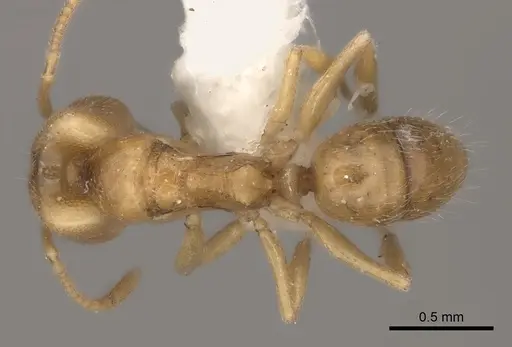
Literature
Loading distribution map...Loading products...