
Anochetus orchidicola
- Sci. Name
- Anochetus orchidicola
- Tribe
- Ponerini
- Subfamily
- Ponerinae
- Author
- Brown, 1978
- Distribution
- Found in 3 countries
Introduction
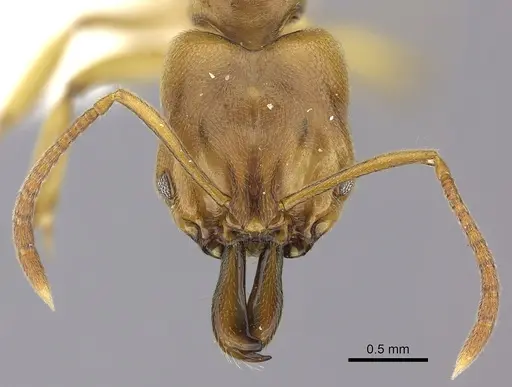
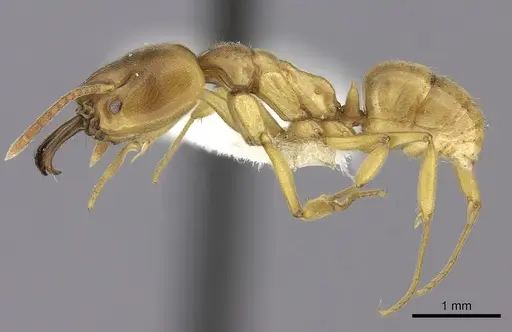
Anochetus orchidicola is a small trap-jaw ant from the montane wet forests of Central America. Workers measure about 4.8mm in total length and show a dull orange-brown coloration. They range from southern Mexico through Panama to northern Argentina , living in the low arboreal zone where they nest beneath epiphytes, plants that grow on tree branches without soil . These ants belong to the altisquamis species group , characterized by their shortened, thick mandibles compared to other trap-jaw ants. Their small eyes and compact body shape suit the dim, humid spaces under dense plant mats. Unlike ground-dwelling relatives, they hunt in the forest canopy layer, using their trap-jaw mechanism to capture small prey among the roots and debris of orchids and other plants .
Quick Summary
- Difficulty: Hard
- Origin & Habitat: Montane wet forests of Central America (Mexico to Panama), nesting beneath epiphytes in the low arboreal zone [1][2]
- Colony Type: Unknown, colony structure has not been documented in scientific literature
- Size & Growth:
- Queen: Unknown, queens remain undescribed in the scientific literature
- Worker: 4.8mm total length [1]
- Colony: Unknown, likely small based on typical Anochetus patterns
- Growth: Unknown, likely slow
- Development: Unknown, no species-specific data available (Development timeline unconfirmed for this species)
- Antkeeping:
- Temperature: Keep at moderate stable temperatures (around 20-24°C), inferred from montane habitat [1]
- Humidity: High humidity, keep substrate moist but not waterlogged, inferred from wet forest habitat [1]
- Diapause: No, tropical species do not require winter rest
- Nesting: Arboreal setup with small vertical chambers, they naturally nest under epiphytes in trees [1]
- Behavior: Specialist ambush predators using trap-jaw mandibles, arboreal foraging habits, small size creates significant escape risk
- Common Issues: tiny size under 5mm means escapes are likely without fine mesh barriers and tight-fitting lids., arboreal nesting preferences make standard horizontal test tube setups less suitable than vertical arrangements., specialist predatory diet may reject common feeder insects like mealworms., limited captive breeding data makes troubleshooting colony problems difficult.
Nest Preferences
In nature, Anochetus orchidicola nests beneath epiphytes in the low arboreal zone of montane wet forests [1]. Epiphytes are plants like orchids and bromeliads that grow on tree branches without soil, creating moist, sheltered microhabitats. Workers have also been collected in Winkler samples from the forest floor, suggesting they may forage at ground level even if they nest above [1].
For captive housing, you should provide a vertical or arboreal setup rather than a standard horizontal test tube. Use small chambers scaled to their 4.8mm size, tunnels should be narrow to give them a sense of security. A naturalistic setup with cork bark, small branches, and moss mimics their epiphyte-root habitat well. You can also use a vertical test tube arrangement or a small arboreal formicarium with tight-fitting chambers. Keep the nest material slightly moist but not wet, matching the humid conditions under forest epiphytes.
Feeding and Diet
Anochetus orchidicola are specialist predators with trap-jaw mandibles [4]. Their mandibles are short and thick with two teeth at the apex, designed for snapping shut on small prey [4]. They hunt by waiting in ambush and striking when prey touches trigger hairs on their mandibles.
You should offer small live prey appropriate for their size. Springtails, small fruit flies (Drosophila), and tiny cricket nymphs work well. Prey should be small enough for workers to handle individually given their compact 4.8mm size. While they may accept sugar sources, protein should form the bulk of their diet. Remove uneaten prey quickly to prevent mold in their humid enclosure.
Temperature and Care
These ants come from montane wet forests, which are cooler than lowland tropical forests but still stable year-round [1]. You should keep them at moderate temperatures without major fluctuations. Because they live in montane regions, they do not need a winter rest period (diapause).
Maintain high humidity to match their wet forest habitat. You can achieve this by keeping the nest substrate moist but not waterlogged, and by limiting ventilation. However, you must ensure some air exchange to prevent stagnant air and mold growth. Avoid overheating, montane species tolerate cooler conditions better than hot ones.
Behavior and Temperament
Anochetus orchidicola workers are specialist ambush predators that rely on their trap-jaw mechanism to capture prey [4]. When hunting, they hold their mandibles open and snap them shut with incredible speed when trigger hairs detect prey contact. This makes them fascinating to observe, though their small size means you will need magnification to see the details.
They are arboreal foragers, meaning they prefer to climb and hunt on vertical surfaces rather than walking on flat ground [5]. Their small size means they can escape through tiny gaps that larger ants cannot. You must use excellent escape prevention including fine mesh (steel or nylon) and Fluon or talc barriers on all ventilation openings and lid edges.
Like other ants in the Ponerinae subfamily, they possess a sting, though their small size means they are unlikely to penetrate human skin effectively.
Frequently Asked Questions
Can I keep Anochetus orchidicola in a test tube?
Yes, but arrange the test tube vertically rather than horizontally to match their arboreal nesting preferences. Use a small test tube with a tight cotton plug, as their 4.8mm size allows them to squeeze through surprisingly small gaps.
How long until first workers for Anochetus orchidicola?
The egg-to-worker timeline is unknown for this species. No documented captive breeding data exists for this species.
Do Anochetus orchidicola need hibernation?
No. They come from tropical montane forests in Central America where temperatures remain stable year-round. You should keep them at moderate consistent temperatures without a winter cooling period.
What do Anochetus orchidicola eat?
They are specialist predators with trap-jaw mandibles. Feed them small live prey such as springtails, fruit flies, or tiny cricket nymphs. Prey should be small enough for individual workers to handle given their compact size.
Are Anochetus orchidicola good for beginners?
No. They are difficult to keep due to their small size requiring excellent escape prevention, specialized arboreal housing needs, predatory diet requirements, and lack of documented captive breeding information. They are better suited to experienced antkeepers.
Can I keep multiple Anochetus orchidicola queens together?
This is not recommended. The colony structure of this species is unknown, and combining unrelated queens has not been documented. Most Anochetus species are single-queen colonies, so assume they are monogyne unless proven otherwise.
What is the best nest type for Anochetus orchidicola?
Use an arboreal or vertical setup with small chambers. Naturalistic setups with cork bark, branches, and moss work well. If using a formicarium, choose one with narrow passages and small chambers scaled to their 4.8mm size, with a vertical orientation.
Why are my Anochetus orchidicola dying?
Common causes include escapes (they are tiny and squeeze through small gaps), incorrect humidity (they need high humidity but stagnant air causes mold), inappropriate prey (they need small live prey, not large insects or processed foods), or temperature fluctuations (montane species need stable moderate temperatures).
How big do Anochetus orchidicola colonies get?
Colony size is unknown for this species. No documented data exists on maximum colony size for this species.
Report an Issue
The current care sheet is based fully on literature. See inconsistencies, or something that's incorrect? Please , it will be resolved after review from an admin. Contributing to the blogs tab also helps providing information, to make us be able to further improve the caresheets. Thank you for your support!
References

This caresheet is licensed under CC BY-SA 4.0 .
Community Blogs
CASENT0260503
View on AntWeb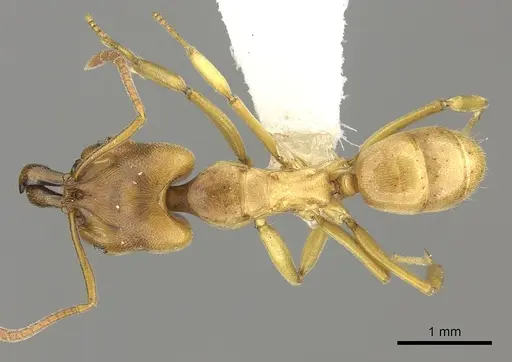
Literature
Loading distribution map...Loading products...