
Anochetus obscurior
- Sci. Name
- Anochetus obscurior
- Tribe
- Ponerini
- Subfamily
- Ponerinae
- Author
- Brown, 1978
- Distribution
- Found in 1 countries
Introduction
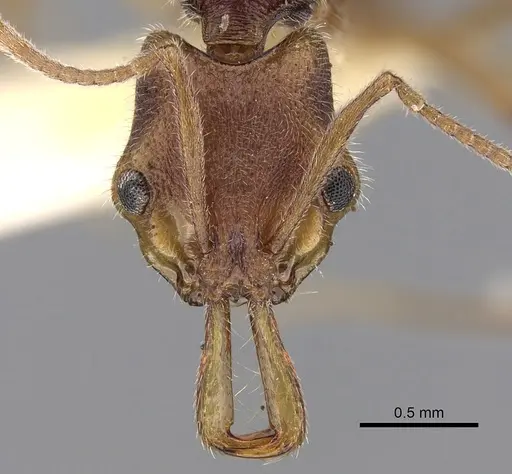
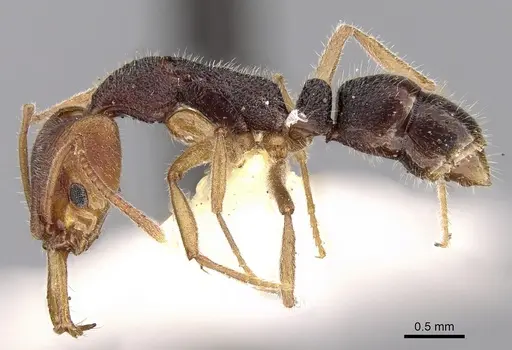
Anochetus obscurior is a small trap-jaw ant found across southern India and Sri Lanka . Workers are dark brown to black, often with a bluish opalescent shine, and possess the spring-loaded mandibles characteristic of the genus Anochetus . They belong to the sedilloti species group . This species remains rarely kept in captivity, and specific colony behavior observations have not been published. Like other trap-jaw ants, they use their specialized mandibles for both hunting prey and defensive snapping, capable of jumping backward by striking the ground with their jaws when threatened.
Quick Summary
- Difficulty: Medium
- Origin & Habitat: India and Sri Lanka, recorded from Gujarat, Karnataka, Kerala, Maharashtra, and Tamil Nadu in India [1][2]. Tropical Indomalayan region.
- Colony Type: Unconfirmed, colony structure has not been documented for this species.
- Size & Growth:
- Queen: size data unavailable
- Worker: size data unavailable
- Colony: Maximum colony size unknown, likely small to moderate based on typical Anochetus patterns
- Growth: Unknown
- Development: Unknown (Development time has not been documented. Related trap-jaw ants typically take 6-10 weeks at tropical temperatures, but this is unconfirmed for A. obscurior.)
- Antkeeping:
- Temperature: Likely 24-28°C based on tropical distribution, start at 25°C and adjust based on colony activity
- Humidity: Likely moderate to high humidity typical of Indomalayan species. Keep nest substrate damp but not waterlogged.
- Diapause: Unlikely required (tropical species) but not explicitly confirmed
- Nesting: Nesting preferences unconfirmed, likely small cavities in soil or rotting wood based on genus patterns
- Behavior: Trap-jaw predatory behavior based on genus characteristics. Fast-moving and capable of jumping with their mandibles. Escape risk is moderate to high due to small size, can escape through small gaps.
- Common Issues: lack of specific care information means keepers must determine requirements through careful observation., trap-jaw ants require live prey which can be difficult to maintain consistently., small size allows escape through gaps in standard mesh or loose-fitting lids.
Identification and Appearance
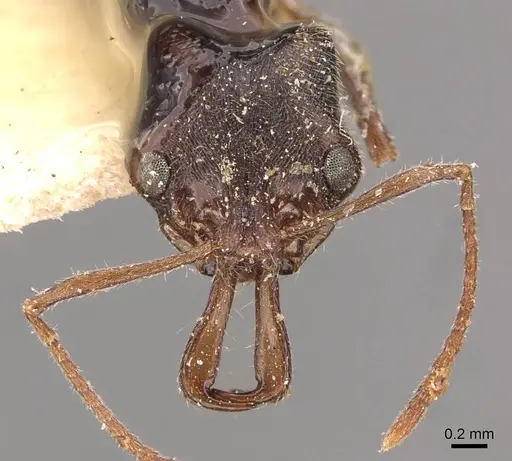
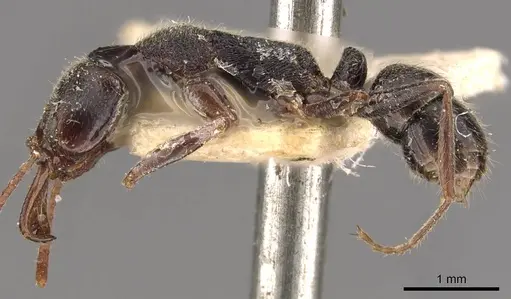
Anochetus obscurior workers show the classic trap-jaw ant body plan with long, slender mandibles capable of rapid snapping movements. Their bodies are piceous or blackish (dark brown to black), often with a bluish opalescent shine [3]. The petiole has a broadly rounded top when viewed from the side, with the front slope being convex or straight [3]. The first segment of the gaster has a rough, scratched texture on the front half that becomes smooth and shiny toward the back [3].
These ants are small even by trap-jaw standards. You will need excellent magnification to observe the diagnostic features that separate them from similar Anochetus species.
Natural History and Distribution
This species inhabits the Indomalayan region, specifically the Indian states of Gujarat, Karnataka, Kerala, Maharashtra, and Tamil Nadu, plus Sri Lanka [1][2]. The type specimens were originally collected from Madras (now Chennai) in Tamil Nadu [2].
As a member of the sedilloti species group, they are closely related to other Asian trap-jaw ants including species in the graeffei and longifossatus groups [4]. Their natural nesting preferences are not described in the available literature, though related species typically nest in soil, rotting wood, or leaf litter in tropical forests.
Trap-Jaw Biology
While specific hunting behaviors have not been documented for A. obscurior, all Anochetus species possess spring-loaded mandibles that can snap shut with incredible speed. They use this mechanism both to capture small prey and to launch themselves backward when threatened, literally jumping away from danger by striking the ground with their jaws.
In captivity, you should expect them to hunt small live prey. They will likely ignore dead insects unless extremely hungry, as the trap-jaw mechanism is designed for active hunting. Provide prey small enough that the ants can handle them safely, springtails, small fruit flies, or very young crickets. [2]
Captive Care Considerations
Keeping Anochetus obscurior presents challenges due to the lack of published captive care records. You will need to apply general principles for small tropical predatory ants while watching your colony carefully for signs of stress.
Start with a small nest, test tubes or tiny plaster nests work well for founding. Maintain tropical temperatures around 24-26°C and provide humidity through damp substrate rather than open water sources that could drown small workers. Feed live prey regularly, as trap-jaw ants have high metabolisms and likely cannot survive long periods without food.
Because the founding type is unconfirmed for this species, treat new queens as potentially semi-claustral: offer food regularly but do not disturb excessively. If the queen refuses food, she may be fully claustral (sealed in and living off stored fat), but assume she needs food until proven otherwise.
Frequently Asked Questions
What do Anochetus obscurior eat?
Their specific diet is unconfirmed, but based on trap-jaw ant biology, they require small live prey such as springtails, fruit flies, or tiny crickets. They may not accept dead insects readily.
How long until Anochetus obscurior get their first workers?
The egg-to-worker timeline is unknown for this species. Related trap-jaw ants typically take 6-10 weeks at tropical temperatures, but this is only an estimate.
Do Anochetus obscurior need hibernation?
Probably not. They come from tropical India and Sri Lanka where temperatures remain warm year-round. However, this has not been explicitly confirmed in research.
Are Anochetus obscurior good for beginners?
No. The lack of specific care information means you would be working with unknown requirements. Combined with their need for live prey and small size, they are better suited to experienced keepers willing to experiment carefully.
Can I keep multiple Anochetus obscurior queens together?
This is not recommended. Whether this species accepts multiple queens is unknown, and most trap-jaw ants are single-queen species. Combining queens risks fighting and death.
What is the best nest type for Anochetus obscurior?
This is unknown. Start with a test tube setup for founding, then move to a small formicarium with tight chambers scaled to their size. They likely prefer small cavities similar to other Anochetus species.
How big do Anochetus obscurior colonies get?
Maximum colony size is unknown. Most Anochetus species maintain small to moderate colonies, often under 200 workers, but this is not confirmed for A. obscurior specifically.
Report an Issue
The current care sheet is based fully on literature. See inconsistencies, or something that's incorrect? Please , it will be resolved after review from an admin. Contributing to the blogs tab also helps providing information, to make us be able to further improve the caresheets. Thank you for your support!
References

This caresheet is licensed under CC BY-SA 4.0 .
Community Blogs
CASENT0281883
View on AntWeb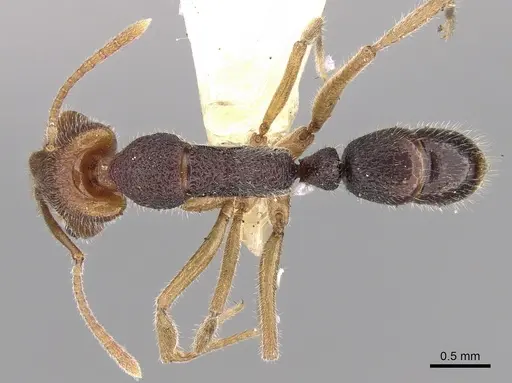
CASENT0907407
View on AntWeb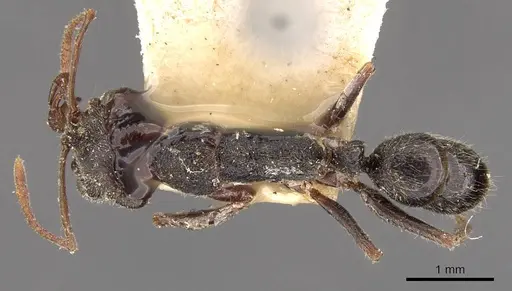
Literature
Loading distribution map...Loading products...