
Anochetus minans
- Sci. Name
- Anochetus minans
- Tribe
- Ponerini
- Subfamily
- Ponerinae
- Author
- Mann, 1922
- Distribution
- Found in 3 countries
Introduction
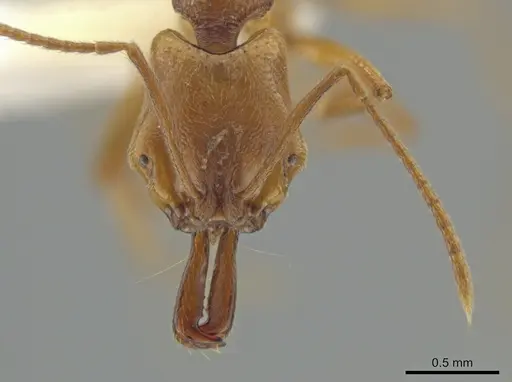
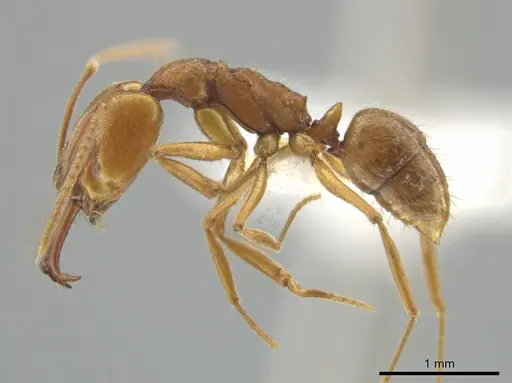
Anochetus minans is a tiny, pale trap-jaw ant native to the tropical forests of Costa Rica and Honduras . Workers show reduced pigmentation associated with cryptobiosis - meaning they are lighter colored, likely pale yellow or tan - which helps them blend into their hidden lifestyle underground . They belong to the mayri species group and possess the spring-loaded mandibles typical of trap-jaw ants, though exact size measurements are unavailable . These ants live almost entirely beneath the soil surface or deep within leaf litter, making them rarely seen in the wild . Colonies stay small, usually containing fewer than 100 workers . This species spends nearly all its time in darkness, hunting tiny soil prey rather than foraging openly on the surface . Their secretive, underground lifestyle makes them challenging to observe and keep in captivity.
Quick Summary
- Difficulty: Expert
- Origin & Habitat: Costa Rica and Honduras [1], found in tropical forest habitats with underground (hypogaeic) nesting in soil and leaf litter [3].
- Colony Type: Colony structure is unconfirmed for this species.
- Size & Growth:
- Queen: Size data unavailable, inferred from Anochetus genus (~4-6mm).
- Worker: Size data unavailable, inferred from Anochetus genus (~3-4mm).
- Colony: Fewer than 100 workers [2].
- Growth: Slow, small colonies develop gradually.
- Development: Timeline is unconfirmed for this species. (Development timeline is unknown, estimates from related trap-jaw ants suggest several months at tropical temperatures, but this is unverified.)
- Antkeeping:
- Temperature: Tropical species, maintain around 24-26°C with stable conditions. Avoid temperature fluctuations.
- Humidity: High humidity required, keep nest soil consistently moist but not waterlogged, mimicking their underground lifestyle [3].
- Diapause: Not required, this is a tropical species from Central America [1].
- Nesting: Naturalistic soil or leaf litter setups with small, tight chambers, avoid open spaces and provide complete darkness [3].
- Behavior: Underground-dwelling (hypogaeic) and secretive, using trap-jaw mandibles to hunt small prey [3]. They move slowly until striking and spend most time hidden from light. As a Ponerine ant, they possess a stinger, though their tiny size makes it unlikely to penetrate human skin effectively.
- Common Issues: tiny size means escape prevention must be excellent, use fine mesh and tight-fitting lids., small colonies grow very slowly, requires patience and minimal disturbance to avoid stress., trap-jaw hunting mechanism requires small live prey like springtails, which can be difficult to maintain consistently., underground lifestyle means they are sensitive to light and drying out, need consistent moisture and darkness., extremely limited research means captive care is experimental and success rates are uncertain.
Nest Preferences
Anochetus minans lives underground or deep in leaf litter, making them a hypogaeic species [3]. In captivity, recreate this hidden environment using naturalistic setups with soil, leaf litter, or a mix of both. The nest needs small, tight chambers rather than large open spaces, these tiny ants feel secure in narrow passages. Keep the setup completely dark by covering it with black paper or keeping it in a dark place, as they are adapted to life away from light [3]. Provide consistent moisture throughout the substrate but avoid waterlogging, as their underground habitats stay humid but not flooded.
Feeding and Diet
As trap-jaw ants, Anochetus minans are predators that hunt using their spring-loaded mandibles [3]. In nature, they likely prey on tiny soil arthropods such as springtails and small insect larvae. In captivity, offer small live prey, springtails are ideal, though tiny fruit flies or pinhead crickets may work if small enough. The prey must be small enough for these tiny workers to handle. While they might accept dead prey or protein jelly, live prey triggers their natural hunting behavior and is more likely to be accepted. Avoid large prey items that could injure the workers or be ignored.
Temperature and Care
Coming from tropical Central America, Anochetus minans needs warm, stable temperatures [1]. Maintain a nest temperature around 24-26°C and observe the colony's activity. If workers cluster near a heat source, increase slightly, if they avoid warm areas, reduce the temperature. Avoid fluctuations, these underground ants experience stable conditions in nature. You can use a heating cable on one side of the nest to create a gentle gradient, but place it on top rather than underneath to prevent the soil from drying out too quickly. High humidity is essential, the soil should feel damp to the touch, with some slightly drier areas available for the ants to choose.
Behavior and Temperament
Anochetus minans is secretive and slow-moving until hunting [3]. They spend most of their time hidden in darkness, emerging only to hunt or move brood. When hunting, they use their trap-jaw mandibles to strike prey with incredible speed. Because of their tiny size, they are not aggressive toward humans and their stinger is likely too small to penetrate skin effectively. However, their small size makes them excellent escape artists, they can squeeze through the tiniest gaps in seemingly secure setups.
Colony Founding
The founding behavior of Anochetus minans has not been directly studied. If you obtain a queen, provide her with a small, dark, moist setup and monitor her behavior. Watch whether she leaves the chamber to hunt, if she does, she may require regular feeding during founding. Without specific research, the founding method remains unconfirmed for this species.
Growth and Development
Colonies of Anochetus minans remain small, typically containing fewer than 100 workers [2]. This slow growth means you will need patience, do not expect rapid expansion like larger ant species. The small colony size also means you should avoid overfeeding, as even small amounts of prey can overwhelm the limited foraging capacity of the colony. Disturbance should be minimized, as small colonies are fragile and may abandon brood or stop laying eggs if stressed.
Frequently Asked Questions
Can I keep Anochetus minans in a test tube?
Yes, but you must cover the test tube completely to provide darkness, as these ants are adapted to underground life and avoid light [3]. Use a small test tube (10mm or less) to make them feel secure, and ensure the water reservoir is small to prevent flooding.
What do Anochetus minans eat?
They are trap-jaw predators that need small live prey. Offer springtails, tiny insect larvae, or very small fruit flies. The prey must be small enough for these tiny ants to handle safely [3].
How big do Anochetus minans colonies get?
Colonies remain small, typically containing fewer than 100 workers [2]. Do not expect large colony sizes even after several years.
Are Anochetus minans good for beginners?
No, these are expert-level ants due to their tiny size requiring excellent escape prevention, specialized diet needs, secretive behavior, and extremely limited available care information.
Do Anochetus minans need hibernation?
No, they come from tropical Central America where temperatures remain warm year-round [1]. Maintain stable warm temperatures year-round.
How long until first workers for Anochetus minans?
The egg-to-worker timeline is unconfirmed for this species. Without specific research, development time cannot be reliably estimated.
Can I keep multiple Anochetus minans queens together?
Not recommended. While the natural colony structure is unconfirmed, combining unrelated queens has not been documented and likely leads to fighting.
Why are my Anochetus minans dying?
Common causes include desiccation (too dry), mold from excessive moisture, inability to capture prey that is too large, or stress from too much light or disturbance. Ensure the setup stays moist, dark, and undisturbed with appropriately sized prey.
Report an Issue
The current care sheet is based fully on literature. See inconsistencies, or something that's incorrect? Please , it will be resolved after review from an admin. Contributing to the blogs tab also helps providing information, to make us be able to further improve the caresheets. Thank you for your support!
References

This caresheet is licensed under CC BY-SA 4.0 .
Community Blogs
CASENT0640998
View on AntWeb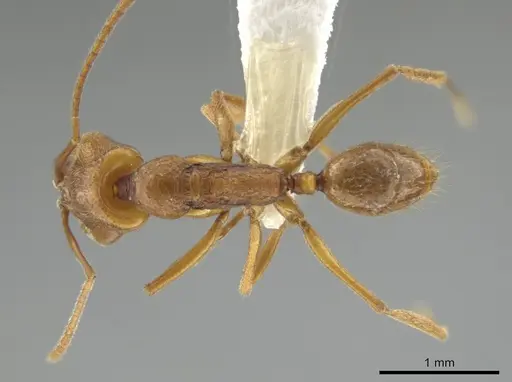
Literature
Loading distribution map...Loading products...