
Anochetus maynei
- Sci. Name
- Anochetus maynei
- Tribe
- Ponerini
- Subfamily
- Ponerinae
- Author
- Forel, 1913
- Distribution
- Found in 2 countries
Introduction
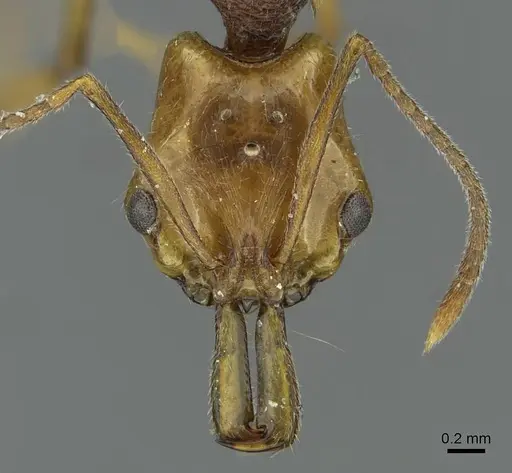
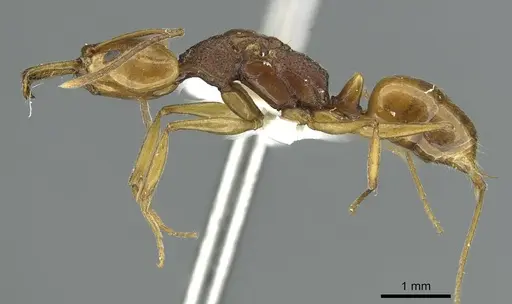
Anochetus maynei is a rare trap-jaw ant species documented only from Province KN in the Democratic Republic of Congo . Historical taxonomic references date back to 1913,but no studies document its biology, behavior, or care requirements. As with other Anochetus species, they likely possess the characteristic trap-jaw mandibles used to snap shut on prey, though this specific trait is unconfirmed for A. maynei .
Quick Summary
- Difficulty: Expert
- Origin & Habitat: Democratic Republic of Congo, Province KN [1].
- Colony Type: Unconfirmed
- Size & Growth:
- Queen: Size data unavailable
- Worker: Size data unavailable
- Colony: Unknown
- Growth: Unknown
- Development: Unknown (No development studies exist for this species.)
- Antkeeping:
- Temperature: Unconfirmed, tropical origin suggests warm conditions around 24-28°C [1]
- Humidity: Unconfirmed, likely requires moderate to high humidity based on typical Anochetus preferences [2]
- Diapause: Unlikely, tropical species typically do not hibernate [1]
- Nesting: Unknown, likely prefers humid soil or decaying wood based on genus patterns [2]
- Behavior: Behavior is unconfirmed. Based on genus patterns, Anochetus are typically predatory ants with trap-jaw mandibles used for capturing small prey. They possess a functional sting as part of the Ponerinae subfamily [2].
- Common Issues: no specific care data exists, making captive keeping highly experimental., species identification requires expert taxonomic verification., unknown dietary and environmental needs may cause colony failure., trap-jaw mandibles may pose injury risk when handling., stinging capability present as default Ponerinae defense, handle with caution.
Known Distribution
Anochetus maynei has confirmed records only from Province KN in the Democratic Republic of Congo [1]. The checklist references older taxonomic works including Forel (1913c), Wheeler (1922b), and Brown (1978), but these provide no additional biological data. No other localities or habitat descriptions exist in the available research.
Data Limitations and Keeping Risks
Virtually nothing is known about the specific biology of Anochetus maynei. No studies document colony size, founding behavior, diet, temperature requirements, or nesting habits. Any captive keeping would be entirely experimental. Keepers should expect high mortality rates due to the complete absence of species-specific care guidelines. Expert taxonomic verification is essential to confirm species identity.
General Genus Context
Anochetus maynei belongs to the genus Anochetus, commonly known as trap-jaw ants. While specific data for this species is absent, related species in the genus are typically small predatory ants with specialized trap-jaw mandibles capable of snapping shut at extremely high speeds to capture prey. They generally require warm temperatures, high humidity, and small live prey such as springtails or fruit flies. However, these assumptions may not apply to A. maynei, and keepers should not rely on them without verification. [2]
Frequently Asked Questions
What do Anochetus maynei eat?
Their diet is unknown. No feeding studies exist for this species. Based on genus patterns, they likely prey on small invertebrates.
Where are Anochetus maynei found?
They are recorded only from Province KN in the Democratic Republic of Congo [1].
Do Anochetus maynei need hibernation?
Probably not. They come from tropical Africa where temperatures remain warm year-round [1].
How big do Anochetus maynei colonies get?
Unknown. No colony size data exists in the research.
Are Anochetus maynei good for beginners?
No. The complete lack of care information makes them suitable only for expert keepers willing to experiment with unknown requirements.
What is the egg to worker timeline for Anochetus maynei?
Unknown. No development studies have been published.
Can I keep multiple Anochetus maynei queens together?
Unknown. Colony structure has not been studied.
Do Anochetus maynei sting?
As members of the Ponerinae subfamily, they possess a functional sting. The default defense mechanism for this tribe is stinging [2].
Report an Issue
The current care sheet is based fully on literature. See inconsistencies, or something that's incorrect? Please , it will be resolved after review from an admin. Contributing to the blogs tab also helps providing information, to make us be able to further improve the caresheets. Thank you for your support!
References

This caresheet is licensed under CC BY-SA 4.0 .
Community Blogs
RMCAENT000017739
View on AntWeb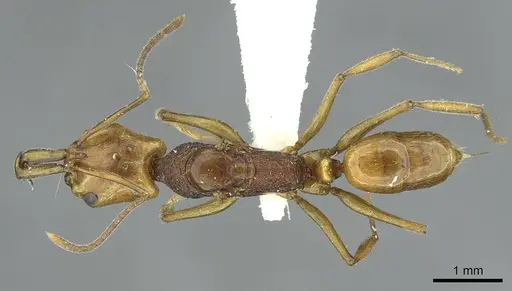
Literature
Loading distribution map...Loading products...