
Anochetus jonesi
- Sci. Name
- Anochetus jonesi
- Tribe
- Ponerini
- Subfamily
- Ponerinae
- Author
- Arnold, 1926
- Distribution
- Found in 1 countries
Introduction
Anochetus jonesi is a trap-jaw ant native to South Africa, first described from the Zululand region in 1926 . Like other members of the genus Anochetus, they possess spring-loaded mandibles that snap shut at incredible speeds to capture prey. The species is rarely encountered in collections and remains poorly studied, with virtually no documentation of their specific biology in the wild . These ants are ambush predators. Their long, slender mandibles can open wide and lock into place using a latch mechanism. When prey touches sensitive hairs on the mandibles, they snap shut in a fraction of a second. This hunting strategy means they require live prey in captivity, making them challenging to maintain.
Quick Summary
- Difficulty: Expert
- Origin & Habitat: South Africa (Zululand region) [1]
- Colony Type: Colony structure is unconfirmed, likely single-queen based on typical Anochetus patterns
- Size & Growth:
- Queen: Size data unavailable, inferred from Anochetus genus patterns (~6-8mm)
- Worker: Size data unavailable, inferred from Anochetus genus patterns (~3-5mm)
- Colony: Likely small (under 100 workers) based on genus patterns
- Growth: Likely slow
- Development: Unconfirmed, estimated 8-12 weeks based on related Anochetus species at 25-28°C (Timeline is unconfirmed for A. jonesi specifically.)
- Antkeeping:
- Temperature: Start around 24-28°C and observe activity levels. Zululand has a warm subtropical climate [1].
- Humidity: Keep nest material moderately moist to damp. Provide a gradient from wet to slightly dry areas.
- Diapause: Likely not required, Zululand has mild winters. They may slow down in cooler months but true hibernation is unconfirmed.
- Nesting: Likely nest in soil or rotting wood in nature. In captivity, use small naturalistic setups or test tubes with soil layers.
- Behavior: Trap-jaw predators that hunt small live prey. Likely nocturnal. Possess a sting typical of Ponerinae ants. Tiny size requires excellent escape prevention.
- Common Issues: tiny size means escapes are likely without fine mesh barriers., specialized predatory diet requires small live prey like springtails or fruit flies., slow growth means colonies take months to establish., virtually no captive care documentation exists for this species.
Nest Preferences
In nature, Anochetus jonesi likely nests in soil or rotting wood, though specific nesting biology is unconfirmed. The type specimens were collected in Zululand, South Africa, which suggests a warm, wooded habitat [1]. For captive colonies, provide a small naturalistic setup with a mix of soil and sand, or a test tube with a substrate layer for them to grip. They need secure, dark chambers. Because of their small size, ensure any ventilation holes are covered with fine mesh to prevent escapes. Avoid tall, open spaces, they prefer tight chambers scaled to their body size.
Feeding and Diet
As trap-jaw ants, they are specialized predators. They likely hunt small soft-bodied prey like springtails, mites, or tiny insects. The trap-jaw mechanism is triggered by prey contact, making live food essential for stimulation. Offer small live prey twice weekly. They may accept sugar water or honey, but protein is critical for brood development. Remove uneaten dead prey promptly to prevent mold. Fruit flies and springtails are ideal prey items for these small ants.
Temperature and Care
Native to Zululand, South Africa, these ants expect warm conditions [1]. Maintain the nest area around 24-28°C. You can create a gentle heat gradient using a heating cable on one side of the nest. Avoid temperatures below 20°C for extended periods. Humidity should be moderate to high, keep the nest material damp but not waterlogged. Ventilation is important to prevent mold, but use fine mesh to block escapes. Check moisture levels regularly and rehydrate when the surface starts drying.
Behavior and Temperament
Anochetus jonesi are likely nocturnal hunters that spend daylight hours in their nest. They possess a sting typical of the Ponerinae subfamily. Their small size makes them vulnerable to drying out, so maintain humidity carefully. They are not aggressive toward humans but will sting if threatened. Workers are solitary hunters that use their trap-jaws to ambush prey rather than group foraging. They move slowly and deliberately until prey is detected.
Colony Founding
Founding behavior is unconfirmed for this species. Based on typical Anochetus patterns, queens are likely semi-claustral, meaning the queen must leave the nest to forage for food during the founding stage rather than sealing herself in and living on stored fat. If you have a founding queen, offer her small live prey regularly. Do not expect her to survive without food until the first workers hatch. Keep founding queens in small, secure containers with substrate and regular feeding.
Frequently Asked Questions
Can I keep Anochetus jonesi in a test tube?
Yes, a test tube setup works for founding and small colonies. Use a standard test tube with water reservoir and cotton plug, but add a thin layer of substrate like sand or soil for them to grip. Ensure the cotton is secure, they are small enough to squeeze through gaps. Move them to a small formicarium when the colony reaches about 20-30 workers.
How long until Anochetus jonesi gets first workers?
The timeline is unknown for this species. Based on related Anochetus species, expect roughly 8-12 weeks from egg to worker at 25-28°C. First workers (nanitics) may be smaller than subsequent workers. If temperatures are cooler, development will take longer.
Can I keep multiple Anochetus jonesi queens together?
Not recommended. Anochetus are typically single-queen species (monogyne). Combining queens will likely result in fighting and death. Multiple queens founding together (pleometrosis) is not documented for A. jonesi. Start with one queen per colony.
Are Anochetus jonesi good for beginners?
No. They are an Expert-level species due to being poorly documented, requiring live prey, and having specific humidity and temperature needs. Beginners should start with easier species like Lasius niger or Camponotus that accept dead insects and have well-documented care.
What do Anochetus jonesi eat?
They need small live prey such as springtails, fruit flies, or tiny crickets. As trap-jaw ants, they hunt using their specialized mandibles and may not recognize dead food. They may also accept sugar water or honey dew, but protein is essential for the colony to grow.
Do Anochetus jonesi need hibernation?
Likely not. They come from subtropical South Africa where winters are mild. They may slow down in cooler months but do not require true hibernation (diapause) like temperate species. Keep them above 20°C year-round for best activity.
How big do Anochetus jonesi colonies get?
Unknown. Anochetus colonies are typically small, often under 100 workers. They are not mass-colony builders like some other genera. Even mature colonies may fit comfortably in a small formicarium.
Why are my Anochetus jonesi dying?
Common causes include: too dry conditions (they need humidity), wrong food (they need live prey, not just sugar water), or temperature too low. Also check for mites or mold in the nest. Because they are rarely kept, wild-caught colonies may also have parasites or health issues.
Report an Issue
The current care sheet is based fully on literature. See inconsistencies, or something that's incorrect? Please , it will be resolved after review from an admin. Contributing to the blogs tab also helps providing information, to make us be able to further improve the caresheets. Thank you for your support!
References

This caresheet is licensed under CC BY-SA 4.0 .
Community Blogs
CASENT0902456
View on AntWeb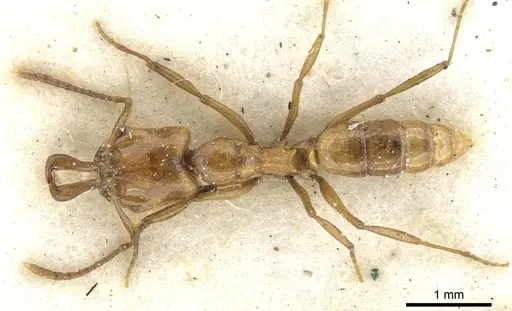
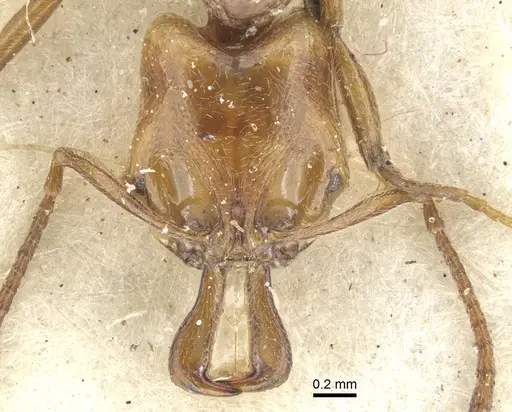
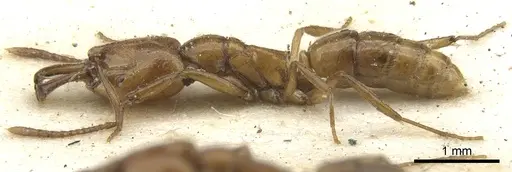
Literature
Loading distribution map...Loading products...