
Anochetus incultus
- Sci. Name
- Anochetus incultus
- Tribe
- Ponerini
- Subfamily
- Ponerinae
- Author
- Brown, 1978
- Distribution
- Found in 2 countries
Introduction
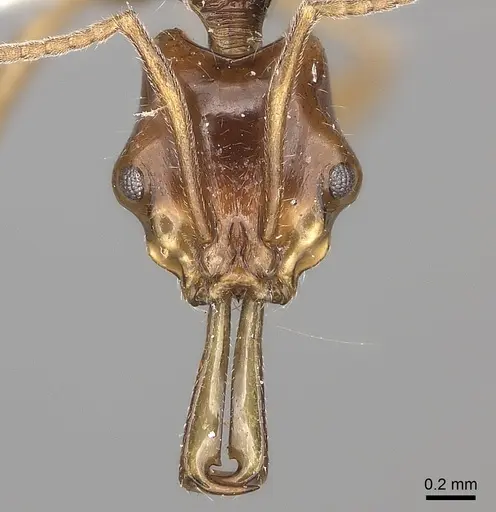
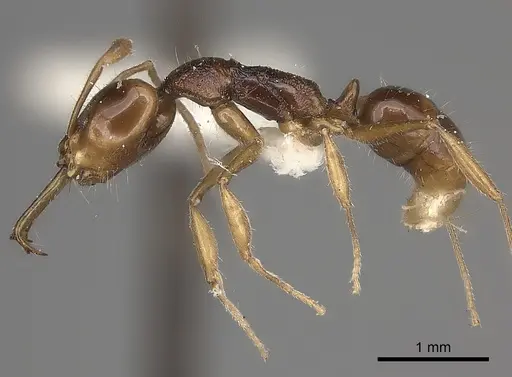
Anochetus incultus is a small trap-jaw ant, with workers measuring 4.4-5.2 mm and queens reaching 5.0-5.6 mm in total length. They display a deep reddish-brown coloration with lighter yellowish mandibles, antennae, legs, cheeks and the tip of the abdomen. Scientists originally described them from Luzon Island in the Philippines where they are endemic, though records also exist from Borneo, Singapore and Malaysia. In nature, they inhabit the leaf litter of tropical forests. As a trap-jaw ant, they possess spring-loaded mandibles that snap shut to capture prey, though specific hunting behaviors for this species remain unstudied. Despite being described in 1978,their colony biology is virtually unknown, making them a challenging species for antkeepers.
Quick Summary
- Difficulty: Expert
- Origin & Habitat: Luzon Island, Philippines (endemic) with additional records from Borneo, Singapore and Malaysia, tropical forest leaf litter
- Colony Type: Unknown colony structure
- Size & Growth:
- Antkeeping:
- Temperature: 24-28°C (inferred from tropical distribution)
- Humidity: High humidity, keep nest substrate damp like forest leaf litter
- Diapause: No, tropical species
- Nesting: Naturalistic setup with leaf litter, or small-chambered plaster/Y-tong nests, they live in leaf litter in nature
- Behavior: Trap-jaw predators with spring-loaded mandibles, likely cryptic and slow-moving, small size requires excellent escape prevention
- Common Issues: they can escape through gaps that seem too small for them., care requirements are unpredictable due to lack of captive breeding records., maintaining cultures of small live prey adds complexity., founding queens may fail due to unknown biological requirements.
Nest Preferences
Scientists collected Anochetus incultus exclusively from leaf litter samples in tropical forests. This suggests they nest in the soil and decaying organic matter of the forest floor rather than creating conspicuous mounds or nesting in wood. For captive care, a naturalistic setup with a soil and leaf litter substrate would most closely mimic their natural environment. Alternatively, a plaster or Y-tong nest with very small chambers and narrow passages would accommodate their diminutive size. Because they are only about 5 mm long, any nest setup must have extremely tight-fitting components to prevent escapes. The nest area should maintain high humidity similar to the damp leaf litter of their native forests, though ventilation is still necessary to prevent mold growth.
Feeding and Diet
As a trap-jaw ant in the genus Anochetus, they are specialized predators that use their spring-loaded mandibles to capture prey. While specific dietary studies for A. incultus are lacking, related Anochetus species hunt small soft-bodied arthropods. You should offer small live prey such as springtails, fruit flies (Drosophila), or very small crickets. Prey items should be smaller than the workers to ensure they can be handled safely. Whether they accept sugar water or honeydew is unknown for this species, though many predatory ants will occasionally take liquid carbohydrates. You can offer a small drop of sugar water or honey to test acceptance, but do not rely on this as a primary food source.
Temperature and Care
This species comes from tropical regions including the Philippines, Borneo and Singapore, where temperatures remain warm year-round. You should maintain their nest between 24-28°C. Because they are tropical, they do not require a winter rest period (diapause) and should be kept active year-round. A heating cable or mat placed on one side of the nest can create a beneficial temperature gradient, allowing the ants to choose their preferred microclimate. Monitor the colony's behavior to adjust temperature, if workers cluster tightly around the heat source, they may need slightly more warmth, while avoidance of the heated area suggests it is too warm.
Behavior and Temperament
Anochetus incultus possesses the characteristic trap-jaw mechanism of its genus, allowing it to snap its mandibles shut with remarkable speed to capture prey or potentially for defense. However, at only 5 mm in length, they pose little threat to humans and their sting would likely be barely noticeable. They are likely cryptic and slow-moving when not hunting, spending much of their time hidden in leaf litter. Their small size makes them excellent escape artists, they can squeeze through gaps that would stop larger ants. You must use fine mesh (at least 300 micron) and barrier products like Fluon or talcum powder on all ventilation and access points.
Colony Founding
No one has documented the founding behavior of Anochetus incultus. The founding type (claustral or semi-claustral) is unconfirmed for this species. If attempting to found a colony from a queen, you should provide a small founding chamber with access to food just in case she needs to forage. Success rates for founding this species in captivity are unknown, and beginners should not attempt to found colonies without established protocols.
Frequently Asked Questions
Can I keep Anochetus incultus in a test tube setup?
A test tube can work temporarily for a small colony, but the small size of these ants (5 mm) makes escapes very likely unless you use extremely fine mesh or cotton plugs secured with wire. For long-term housing, a naturalistic setup with leaf litter or a small-chambered plaster nest is better.
How long does Anochetus incultus take from egg to worker?
The development timeline is unknown for this species. No documented studies exist on their development time.
Can I keep multiple Anochetus incultus queens together?
Not recommended. The colony structure is unknown, and combining multiple queens risks fighting and death unless you observe natural polygyny (multiple queens) in this species, which has not been documented.
Are Anochetus incultus good for beginners?
No. This is an expert-level species due to their small size, escape risk, predatory diet requirements, and complete lack of captive breeding documentation. Beginners should start with species like Lasius niger or Camponotus instead.
What do Anochetus incultus eat?
They are trap-jaw predators that likely hunt small live prey such as springtails, fruit flies, and tiny insects. Whether they accept sugar water is unknown, offer it occasionally but rely primarily on live prey.
Do Anochetus incultus need hibernation?
No. They come from tropical regions and remain active year-round. Keep them at stable warm temperatures (24-28°C) without a winter cooling period.
Why is my Anochetus incultus colony dying?
Common causes include escapes (they are tiny), starvation (if not provided appropriate live prey), dehydration (they need humid conditions), or simply the difficulty of keeping a species whose biology is poorly understood. Wild-caught colonies may also carry parasites.
How big do Anochetus incultus colonies get?
Colony size is unknown, but based on related Anochetus species, they likely remain small.

This caresheet is licensed under CC BY-SA 4.0 .
Community Blogs
CASENT0217506
View on AntWeb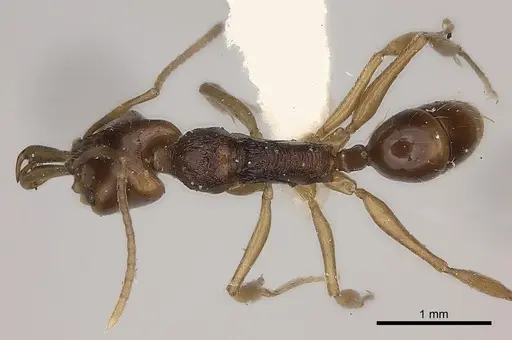
Literature
Loading distribution map...Loading products...