
Anochetus faurei
- Sci. Name
- Anochetus faurei
- Tribe
- Ponerini
- Subfamily
- Ponerinae
- Author
- Arnold, 1948
- Distribution
- Found in 1 countries
Introduction
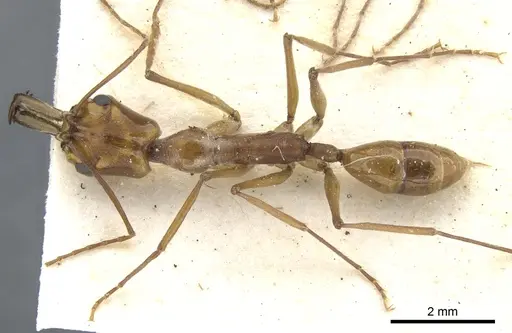
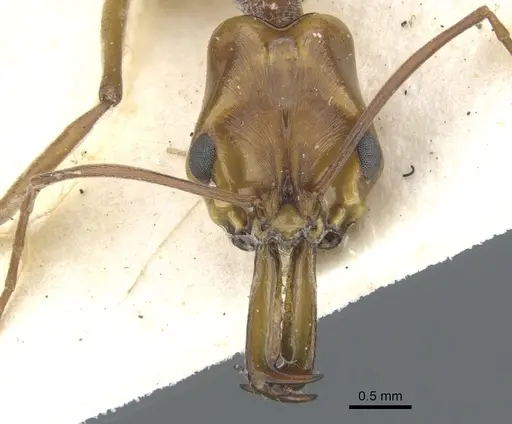
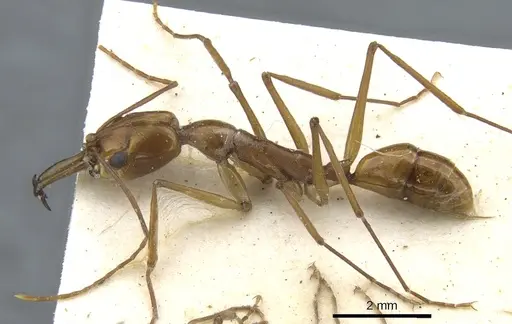
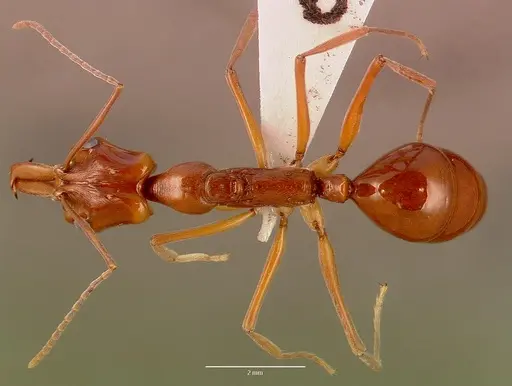
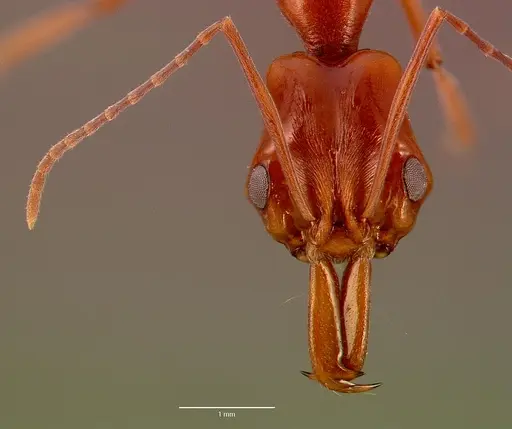
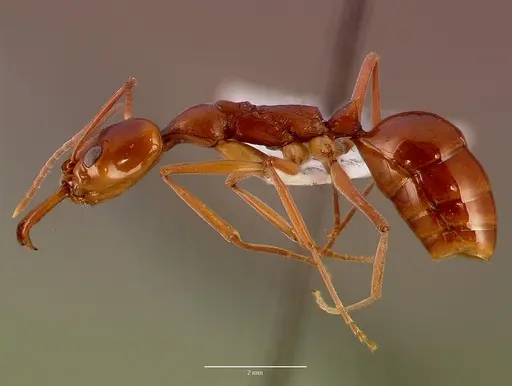
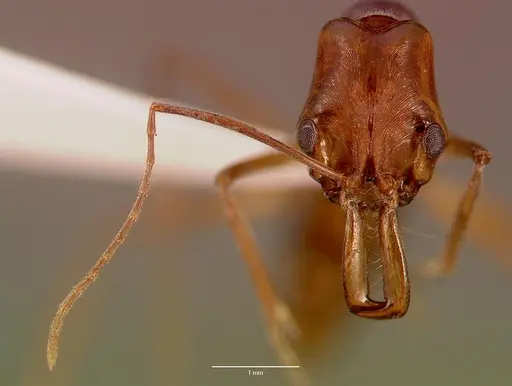
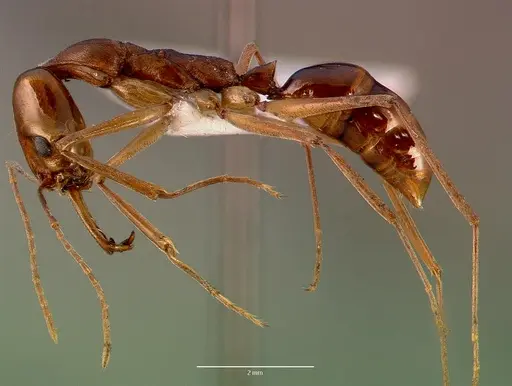
Anochetus faurei is a small trap-jaw ant native to the montane grasslands of KwaZulu-Natal, South Africa . Unlike most ant species, their queens are born completely wingless and resemble large workers, though you can identify them by their lighter color and distinctly bulbous, rounded abdomen . In nature, these ants construct raised mounds within grass tussocks in cooler mountain regions . As trap-jaw ants in the Ponerinae subfamily, they possess specialized spring-loaded mandibles that snap shut at incredible speeds to capture prey . This species uses sting as its defense mechanism.
Quick Summary
- Difficulty: Medium
- Origin & Habitat: Montane grassland in KwaZulu-Natal, South Africa [2][1]
- Colony Type: Single-queen colonies (monogyne). Queens are wingless (ergatomorphic) and workers are sterile [2].
- Size & Growth:
- Queen: size data unavailable, wingless, larger than workers with bulbous gaster [2]
- Worker: size data unavailable [1]
- Colony: Typically fewer than 100 workers, up to 400 maximum [4]
- Growth: Moderate
- Development: estimated 8-12 weeks based on related Ponerinae (Development time not directly studied, estimate assumes temperatures around 24-26°C)
- Antkeeping:
- Temperature: 20-25°C with a gentle gradient, montane origin suggests avoiding excessive heat [2]
- Humidity: Moderate, nest in raised mounds suggests well-drained substrate with some moisture [2]
- Diapause: Unknown, seasonal slowdown possible but not confirmed
- Nesting: Raised mounds in grass tussocks, use shallow nests with grass stems or flat stones [2]
- Behavior: Predatory trap-jaw hunters using spring-loaded mandibles. Moderate activity. Wingless queens require careful identification to distinguish from workers [2][3]. Uses sting as defense mechanism.
- Common Issues: wingless queens look like large workers, verify by checking for bulbous gaster and lighter color before purchase., workers are sterile and cannot replace the queen, colony will die if she is lost., trap-jaw mechanism requires live prey to function properly, may not accept dead insects., small natural colony size means slow growth requiring long-term patience.
Identifying the Wingless Queen
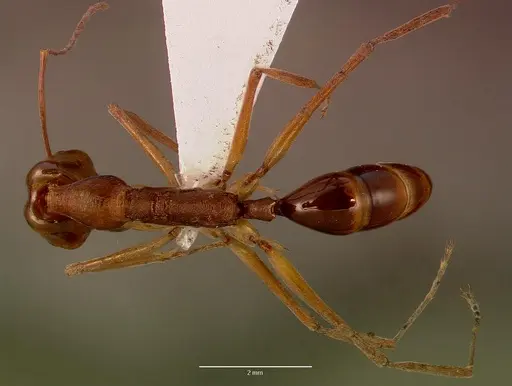
Anochetus faurei queens are born without wings, which is unusual for ants. This makes them look like large workers at first glance. To identify a queen, look for a much more bulbous and voluminous gaster (abdomen) compared to workers. Queens are also noticeably lighter in color than workers [2]. Additionally, queens lack ocelli (the three simple eyes on top of the head that many ant queens have), and their thorax (middle body section) is raised and saddle-like rather than flat [2]. The petiole node (the narrow waist segment) is wider and more contracted in queens. This identification is critical because you must ensure you are buying or collecting an actual queen and not just a large worker.
Nest Preferences
In nature, these ants build raised mounds within grass tussocks in montane grassland habitats [2]. This nesting style suggests they prefer some structure and elevation to avoid flooding. For captive care, provide a shallow nest setup with materials that allow them to create small mounds. Flat stones with gaps underneath, or a naturalistic setup with grass stems and moss, work well. Ensure the nest has good drainage because raised mounds in nature likely protect the colony from waterlogging. A Y-tong (AAC) nest with shallow chambers can also work if it mimics the tight spaces they naturally occupy.
Feeding and Trap-Jaw Hunting
As trap-jaw ants, Anochetus faurei possess spring-loaded mandibles that snap shut at high speed when trigger hairs touch prey [3]. This means they are specialized predators that hunt live prey. You will need to provide small live insects such as fruit flies, springtails, or tiny crickets. They may not recognize or accept dead prey because the trap-jaw mechanism relies on movement to trigger. While not confirmed for this species, related trap-jaw ants rarely accept sugar sources, so focus on providing protein-rich live prey rather than honey or sugar water.
Colony Dynamics and Size
These ants form small colonies, typically containing fewer than 100 workers, though some observations note colonies up to 400 workers [4]. The workers are completely sterile, possessing zero ovarioles (egg-producing structures) [2]. This means workers cannot lay eggs under any circumstances. If your queen dies, the colony has no way to produce new queens, males, or workers. The colony will simply die out over time as workers age. This makes the queen absolutely irreplaceable and means you must take extra care to keep her safe and healthy.
Temperature and Seasonal Care
Coming from montane grasslands in South Africa, these ants likely prefer moderate temperatures rather than tropical heat. Keep them around 20-25°C with a gentle heat gradient across the nest [2]. Use a heating cable on one side of the nest to create a warm area and a cooler area so they can choose. Avoid overheating them. Their diapause (winter rest) requirements are unknown, but being from a region with mild seasonal changes, they likely do not need full hibernation like temperate species. However, you may notice reduced activity during cooler months if temperatures drop below 20°C.
Frequently Asked Questions
How do I identify an Anochetus faurei queen?
Queens are wingless (born without wings) and look like large workers. Look for a much more bulbous, rounded gaster (abdomen), lighter color than workers, and a wider petiole node. They also lack the three small eyes (ocelli) that many ant queens have on top of the head [2].
Can Anochetus faurei workers reproduce if the queen dies?
No. Workers have no ovaries (obligate sterility) and cannot lay eggs. If the queen dies, the colony will die out because they cannot raise a new queen [2].
How big do Anochetus faurei colonies get?
They stay relatively small. Most colonies contain fewer than 100 workers, though some may reach up to 400 workers [4].
What do Anochetus faurei eat?
They are predatory trap-jaw ants that hunt live prey. Their spring-loaded mandibles snap shut when they touch prey. Feed small live insects like fruit flies, springtails, or tiny crickets. They may not accept dead prey or sugary foods [3].
Do Anochetus faurei need hibernation?
It is unknown if they require diapause (winter rest). Being from the mountains of South Africa, they may slow down in cooler months but likely do not need full hibernation like temperate species.
Are Anochetus faurei good for beginners?
They are moderate difficulty. The main challenges are identifying the wingless queen, ensuring she is actually mated, providing live prey consistently, and their slow growth due to small colony sizes.
How long until Anochetus faurei get their first workers?
Development time is not documented. Based on related trap-jaw ants, expect roughly 8-12 weeks from egg to worker at 24-26°C, but this is an estimate.
Why is my Anochetus faurei queen not laying eggs?
First, verify she is actually a queen (bulbous gaster, lighter color) and not a worker. She needs peace, moderate humidity, and regular feeding if she is semi-claustral (though founding type is unconfirmed). Some Ponerine queens need live prey to start laying.
Report an Issue
The current care sheet is based fully on literature. See inconsistencies, or something that's incorrect? Please , it will be resolved after review from an admin. Contributing to the blogs tab also helps providing information, to make us be able to further improve the caresheets. Thank you for your support!
References

This caresheet is licensed under CC BY-SA 4.0 .
Community Blogs
Literature
Loading distribution map...Loading products...