
Anochetus chirichinii
- Sci. Name
- Anochetus chirichinii
- Tribe
- Ponerini
- Subfamily
- Ponerinae
- Author
- Emery, 1897
- Distribution
- Found in 1 countries
Introduction
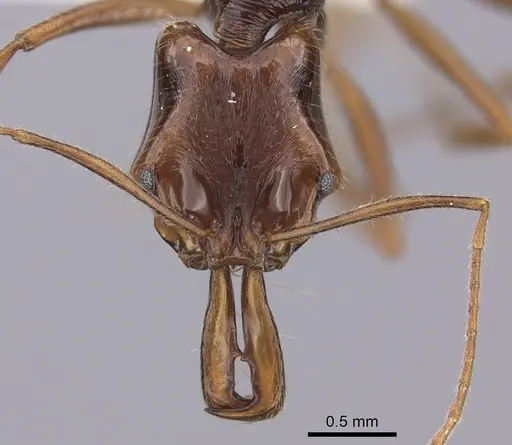
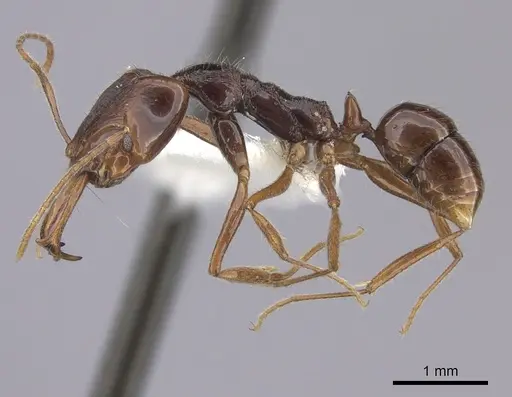
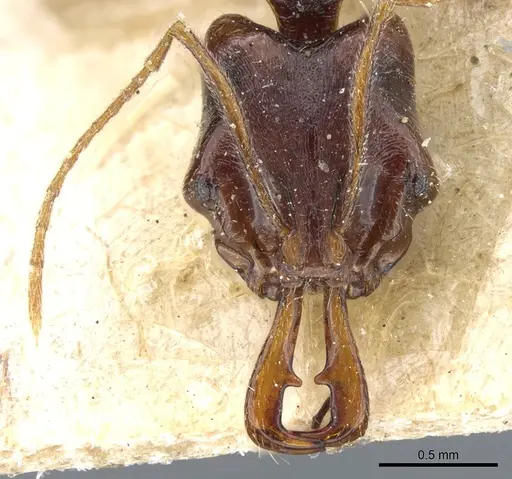
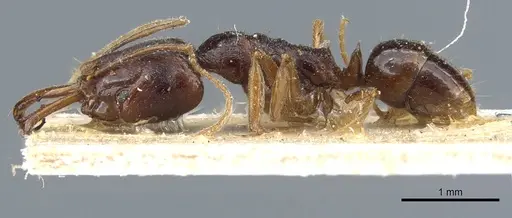
Anochetus chirichinii is a trap-jaw ant belonging to the chirichinii species group . These ants possess the characteristic trap-jaw mechanism common to all Anochetus species, with spring-loaded mandibles that snap shut to capture prey. Specific details about their size, coloration, and native range are unavailable in current research.
Quick Summary
- Difficulty: Expert
- Origin & Habitat: Native range unconfirmed. Anochetus species are found in tropical and subtropical regions worldwide.
- Colony Type: Unconfirmed, no species-specific data available.
- Size & Growth:
- Queen: Size data unavailable
- Worker: Size data unavailable
- Colony: Unknown
- Growth: Unknown
- Development: Unknown (No development data available for this species.)
- Antkeeping:
- Temperature: Unknown, use conditions suitable for tropical ants (24-28°C) as a starting point and observe.
- Humidity: Unknown, provide a humidity gradient and monitor colony behavior.
- Diapause: Unlikely required, Anochetus are typically tropical.
- Nesting: Likely soil or leaf litter cavities based on typical Anochetus nesting preferences.
- Behavior: Trap-jaw predators. Their small size means they can escape through very small gaps. They possess a stinger typical of Ponerinae ants.
- Common Issues: lack of specific care data means you must adjust conditions based on careful observation., tiny size makes escape prevention critical, use fine mesh and barriers., founding behavior is unconfirmed, if semi-claustral, the queen will need to hunt.
Trap-Jaw Mechanism
Anochetus chirichinii possesses the classic trap-jaw mechanism characteristic of the genus [1]. They open their mandibles wide and hold them with a latch mechanism. When prey contacts sensitive trigger hairs, the mandibles snap shut in a fraction of a second to capture prey. This is a general characteristic of Anochetus ants.
Defense Mechanism
As a member of the Ponerinae subfamily, Anochetus chirichinii has a functional stinger. The sting injects peptide-rich venom that is painful to vertebrates. However, their small size likely limits their ability to penetrate human skin.
Colony Founding
Founding behavior is unconfirmed for this species. Many Anochetus queens are semi-claustral, meaning they may need to leave the nest to hunt for food while raising their first workers. Without confirmed data, monitor your founding queen closely and consider offering small prey if she appears active outside her chamber.
Housing and Escape Prevention
These ants are small, so escape prevention is critical. Use fine mesh on all ventilation holes. Apply Fluon or baby powder barriers to the outworld to prevent climbing. For nesting, provide small chambers in soil or plaster that mimic natural leaf litter or soil habitats.
Temperature and Humidity
Without specific data for this species, use conditions suitable for tropical ants as a starting point. Maintain temperatures between 24-28°C with a heating cable on one side to create a gradient. Provide a humidity gradient with one side slightly damp and one side dry so the colony can choose their preferred spot.
Frequently Asked Questions
Do Anochetus chirichinii ants sting?
They have a stinger typical of Ponerinae ants, but their small size likely prevents them from penetrating human skin effectively.
How long until first workers for Anochetus chirichinii?
Unknown, no development data is available for this species.
What do Anochetus chirichinii eat?
They are predators. Based on typical Anochetus behavior, they likely hunt small live prey like springtails or tiny insects. Protein is essential, and they may accept sugar water.
Are Anochetus chirichinii good for beginners?
No. There is no specific care data for this species, they likely require live prey, and founding behavior is unconfirmed making colony establishment difficult.
Do Anochetus chirichinii need hibernation?
Unlikely. Anochetus are typically tropical ants and do not require winter diapause.
Can I keep multiple Anochetus chirichinii queens together?
Unknown, colony structure data is unavailable for this species. Most Anochetus are single-queen, but this is unconfirmed for A. chirichinii.
How big do Anochetus chirichinii colonies get?
Unknown, colony size data is unavailable for this species.
Why are my Anochetus chirichinii dying?
Without specific data, common issues likely include incorrect humidity, failure to provide appropriate prey if founding is semi-claustral, or escapes. Ensure barriers are secure and the nest is not too dry.
Report an Issue
The current care sheet is based fully on literature. See inconsistencies, or something that's incorrect? Please , it will be resolved after review from an admin. Contributing to the blogs tab also helps providing information, to make us be able to further improve the caresheets. Thank you for your support!
References

This caresheet is licensed under CC BY-SA 4.0 .
Community Blogs
CASENT0260491
View on AntWeb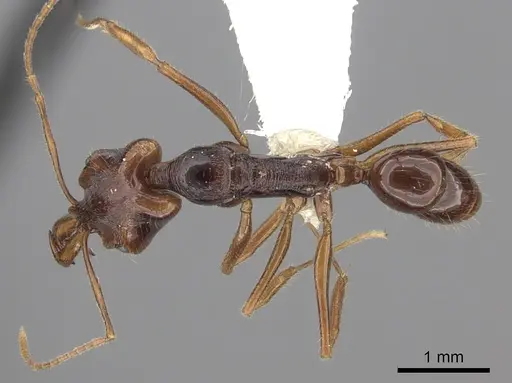
CASENT0903981
View on AntWeb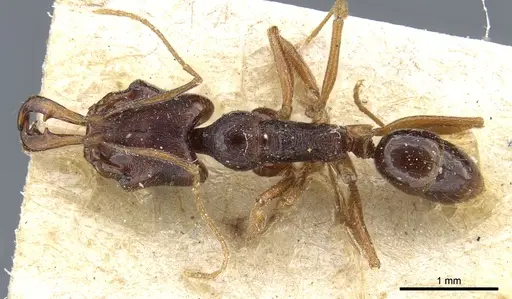
Literature
Loading distribution map...Loading products...