
Agraulomyrmex meridionalis
- Sci. Name
- Agraulomyrmex meridionalis
- Tribe
- Plagiolepidini
- Subfamily
- Formicinae
- Author
- Prins, 1983
- Distribution
- Found in 1 countries
Introduction
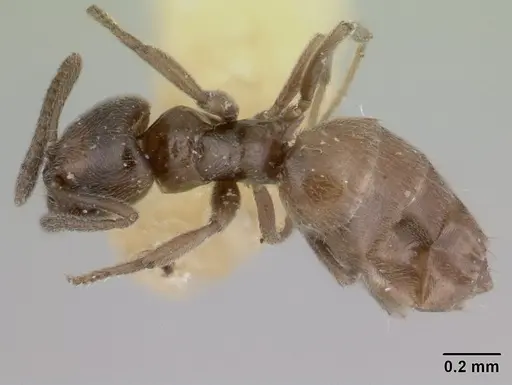
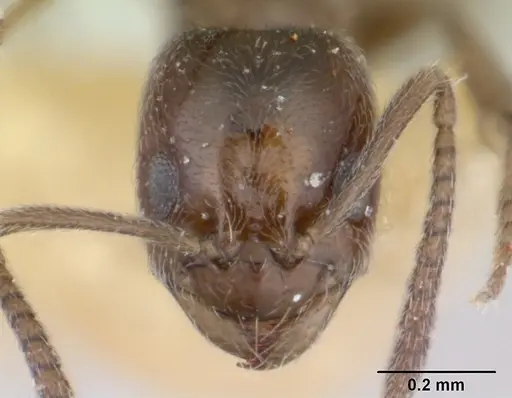
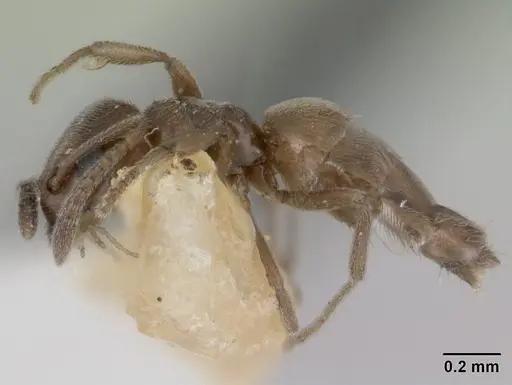
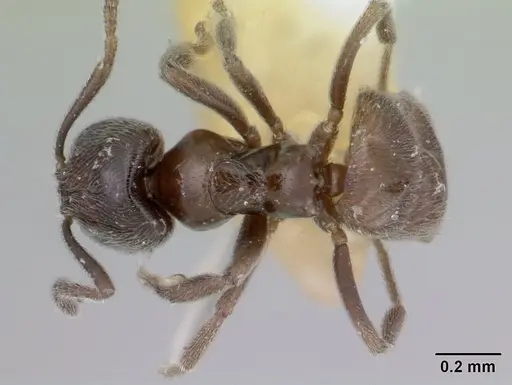
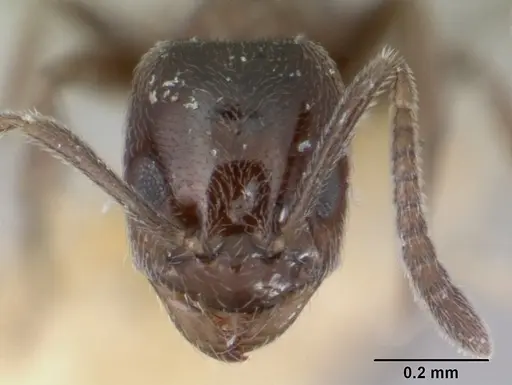
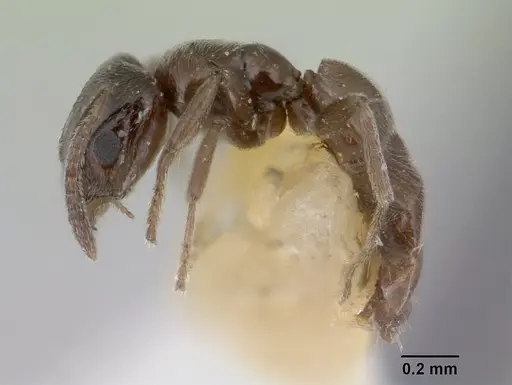
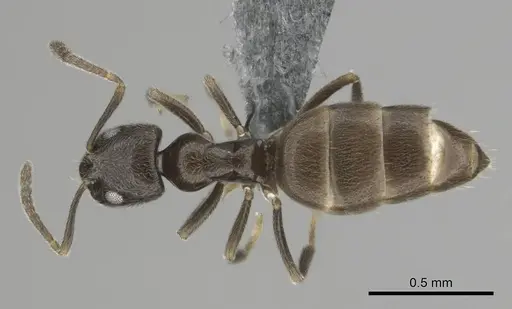
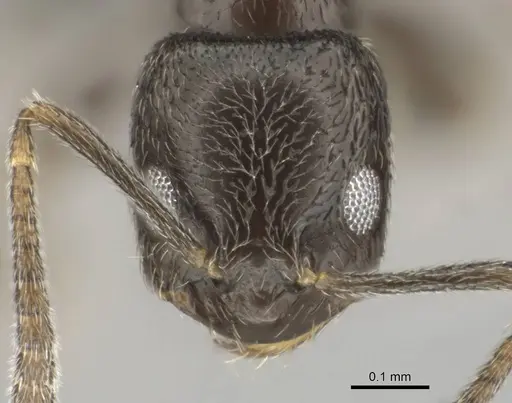
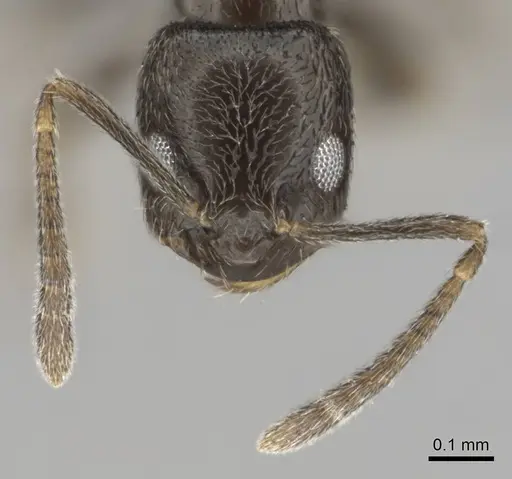
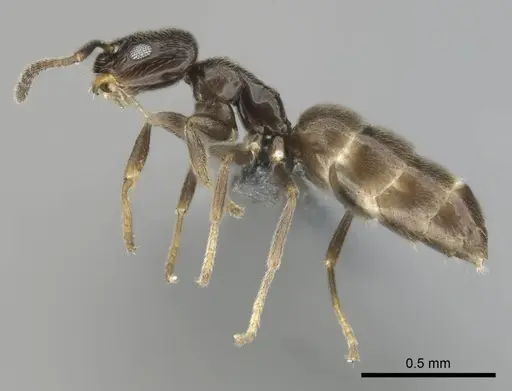
Agraulomyrmex meridionalis are tiny dark brown ants from South Africa's Western Cape, with workers measuring about 2 mm in total length . They have smooth, shiny bodies and unusually large eyes for their size, giving them a distinctive appearance similar to miniature Acropyga but with better vision . These ants live underground (hypogaeic) in citrus orchards and grassland veld near the coast . They show strong seasonal patterns - active during the cooler winter months and early spring, but disappearing completely during hot summers and autumn . In the wild, they tend aphids on low-growing weeds, farming them for honeydew on warm winter days .
Quick Summary
- Difficulty: Expert
- Origin & Habitat: Western Cape, South Africa (Mediterranean climate), found in citrus orchards and coastal grassland veld near Velddrif and Citrusdal [1]
- Colony Type: Unknown, colony structure unconfirmed
- Size & Growth:
- Queen: size data unavailable, no queen measurements published
- Worker: about 2 mm (total length) [1]
- Colony: Unknown, no published colony size data
- Growth: Unknown
- Development: Unknown, no development data exists for this species (Development timeline is unstudied. These ants are active during winter months, so development may follow different seasonal patterns than typical temperate ants.)
- Antkeeping:
- Temperature: Keep cool during their active winter period (around 15-20°C), with warmer conditions in summer when they naturally slow down [1]
- Humidity: Moderate, keep nest substrate moist but not waterlogged, similar to orchard soil conditions [1]
- Diapause: Likely yes, seasonal disappearance during summer suggests they require aestivation (summer dormancy) or have reversed seasonal activity compared to typical temperate ants [1]
- Nesting: Hypogaeic (underground), requires small, dark chambers scaled to their 2mm size. Y-tong (AAC) nests with narrow chambers or naturalistic setups work well [1]
- Behavior: Timid and slow-moving due to small size, primarily subterranean with occasional surface foraging for aphid honeydew [1]. Extreme escape risk due to tiny 2mm worker size.
- Common Issues: escape prevention is critical, 2mm workers can squeeze through the tiniest gaps in standard formicariums., seasonal timing is reversed compared to most temperate ants, they are active in winter and disappear in summer., extremely limited information exists about founding behavior and queen care requirements., wild-caught colonies may carry mites or parasites from citrus orchards., feeding appropriate prey is challenging due to minute size, standard fruit flies may be too large.
Nest Preferences and Setup
In nature, Agraulomyrmex meridionalis lives hypogaeically, meaning they stay underground or under objects close to the soil surface [1]. For captive colonies, this translates to a need for small, dark nesting spaces with tight chambers scaled to their 2mm body size. Standard test tubes may work for founding, but the cotton must be packed carefully to prevent escapes through gaps. Y-tong (AAC) nests with narrow carved chambers work well, as do naturalistic setups with flat stones and soil. The nest should offer darkness and security, these ants are not exposed nesters. Because they are so small, any ventilation holes must be covered with extremely fine mesh to prevent escapes.
Temperature and Seasonal Care
These ants come from the Western Cape of South Africa, which has a Mediterranean climate with cool, wet winters and hot, dry summers [1]. Field observations show they are active during cooler winter months and early spring, but are never seen during summer and autumn [1]. This suggests they require either a cool winter period or a summer aestivation (heat diapause). Keep them at 15-20°C during their active phase, and provide a seasonal cycle that mimics their natural Mediterranean climate, cooler and slightly damper in winter, warmer and drier in summer when they may naturally slow down or stop brood production. Avoid constant tropical temperatures year-round.
Feeding and Diet
Wild colonies tend aphids (specifically Hyadaphis coriandri) on low-growing weeds, positioning themselves 4-7 cm above ground level on warm days to collect honeydew [1]. This suggests they need both sugar sources (honeydew in nature, sugar water or honey in captivity) and protein. However, their tiny 2mm size makes feeding challenging. They likely prey on minute soil arthropods or accept very small insects. Try offering tiny prey like springtails, minute soil mites, or the smallest available fruit fly larvae. Sugar water should be provided in very small drops or via cotton wicks to prevent drowning. Observe carefully to see what they actually accept, this species has not been successfully kept in captivity by many keepers, so diet is largely inferred from field observations.
Behavior and Escape Prevention
Agraulomyrmex meridionalis workers are timid, slow-moving, and primarily subterranean [1]. They are not aggressive and lack a functional sting (being Formicinae), though they may possess acidopores for chemical defense like their relatives. The primary behavioral concern is their minute size, at just 2mm, they can escape through gaps that would contain much larger ants. You must use excellent escape prevention: Fluon or PTFE barriers applied carefully, fine mesh on ventilation, and tight-fitting lids. Even small gaps in test tube cotton plugs can allow escapes. Their hypogaeic nature means they prefer to stay hidden, so provide plenty of substrate or dark cover in the outworld.
Frequently Asked Questions
Can I keep Agraulomyrmex meridionalis in a test tube setup?
Yes, but with extreme caution. Standard test tubes can work for founding, but you must pack the cotton plug very tightly and check for gaps. At 2mm, workers can squeeze through surprisingly small openings. Use a very small water reservoir to prevent flooding, and keep the tube in darkness as they are hypogaeic (underground-dwelling) ants [1].
How long does Agraulomyrmex meridionalis take from egg to worker?
Unknown. No development data exists for this species. Development may be slower during cooler winter months when they are naturally active [1].
Do Agraulomyrmex meridionalis need hibernation or diapause?
Likely yes. Field observations show they disappear during summer and autumn months in their native South Africa, suggesting they either enter summer aestivation (heat diapause) or are strictly winter-active [1]. Provide a seasonal cycle with cooler winter conditions (15-20°C) and warmer summers, allowing the colony to naturally slow down during the hot season.
Are Agraulomyrmex meridionalis good for beginners?
No. This is an expert-only species due to their extremely small size (2mm workers), poorly documented biology, unknown founding requirements, and specific seasonal needs. They are rarely available in the trade and should only be attempted by experienced keepers with proper micro setups [1].
What do Agraulomyrmex meridionalis eat?
In the wild, they tend aphids for honeydew and likely prey on tiny soil arthropods [1]. In captivity, offer sugar water or honey, plus very small protein sources like springtails, minute soil mites, or the smallest fruit fly larvae. Standard prey items may be too large for these 2mm ants.
How big do Agraulomyrmex meridionalis colonies get?
Unknown. Based on their hypogaeic (underground) lifestyle and small worker size, colony size may remain small. No colony size data has been published for this species [1].
Can I keep multiple Agraulomyrmex meridionalis queens together?
Not recommended. Colony structure is unknown for this species, and combining unrelated queens has not been documented. Most Formicinae are single-queen, so assume queens will fight unless proven otherwise [1].
Report an Issue
The current care sheet is based fully on literature. See inconsistencies, or something that's incorrect? Please , it will be resolved after review from an admin. Contributing to the blogs tab also helps providing information, to make us be able to further improve the caresheets. Thank you for your support!
References

This caresheet is licensed under CC BY-SA 4.0 .
Community Blogs
Literature
Loading distribution map...Loading products...