
Aenictus wroughtonii
- Sci. Name
- Aenictus wroughtonii
- Subfamily
- Dorylinae
- Author
- Forel, 1890
- Distribution
- Found in 1 countries
Introduction
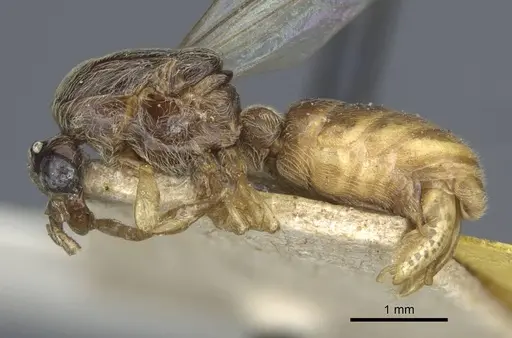
Aenictus wroughtonii is a tiny army ant species native to western India, with workers measuring just 2.5-2.7 mm in total length . These ants have smooth, shiny bodies colored deep yellow to pale brown, with relatively sparse standing hairs mixed with shorter hairs across the surface . Only the worker caste has ever been documented in modern collections - no queens have been described, making colony establishment in captivity impossible . They belong to the Aenictus wroughtonii species group and are the smallest member of that group . Beyond their physical description and distribution in Indian lowlands, virtually no biological information exists for this species .
Quick Summary
- Difficulty: Expert
- Origin & Habitat: Western India (Maharashtra, Kerala, Madhya Pradesh, West Bengal), probably inhabiting lowland areas based on type locality [1][3]. Found in diverse habitat types including botanical gardens [4].
- Colony Type: Unknown, only the worker caste has been documented [2]. Aenictus are typically large-colony army ants, but specific colony structure for this species is unconfirmed.
- Size & Growth:
- Queen: Unknown, queens have never been documented [2].
- Worker: 2.5-2.7 mm total length [1].
- Colony: Unknown, no colony size data exists.
- Growth: Unknown, no development data available.
- Development: Unknown, no data exists on development timing. (Development timeline has never been documented for this species.)
- Antkeeping:
- Temperature: Unknown, based on lowland Indian distribution, likely requires warm conditions, but specific requirements are unconfirmed [1].
- Humidity: Unknown, likely requires moderate to high humidity based on lowland habitat preferences, but unconfirmed [1].
- Diapause: Unknown, likely not required given tropical distribution, but unconfirmed.
- Nesting: Unknown in the wild. Aenictus species are typically subterranean and nomadic.
- Behavior: Army ant behavior presumed, likely nomadic with group raiding of other ant nests. Workers are extremely small (2.5-2.7 mm) with smooth, shiny bodies [1]. Escape prevention would need to be exceptional given their minute size.
- Common Issues: only workers have been documented, making colony founding impossible with current knowledge., extremely small size (2.5-2.7 mm) creates extreme escape risk requiring specialized barriers., army ant biology requires massive space and constant food supplies that standard ant farms cannot provide., complete lack of biological data means care requirements are entirely unknown.
Why Aenictus wroughtonii Cannot Be Kept in Captivity
You cannot currently keep Aenictus wroughtonii in a standard ant farm because only workers have ever been documented [2]. Without queens, you cannot start a colony. Even if queens were discovered, Aenictus are true army ants (subfamily Dorylinae), which require specialized care that goes far beyond typical ant keeping. Army ants are nomadic, meaning they constantly move their nest and require massive foraging areas to hunt other ants and small prey. They need continuous food supplies and space that household setups cannot provide. The complete absence of biological data for this specific species makes any attempt at captive care purely speculative.
Physical Identification and Size
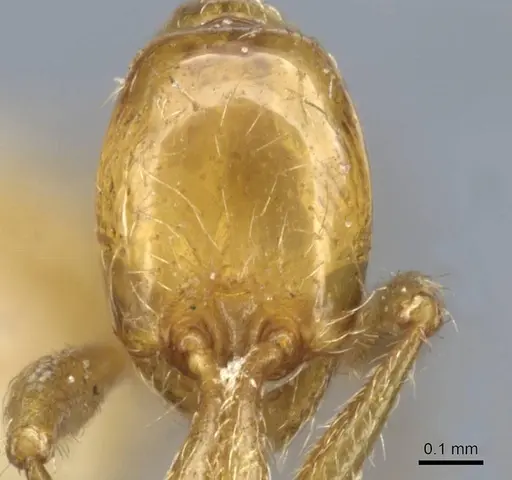
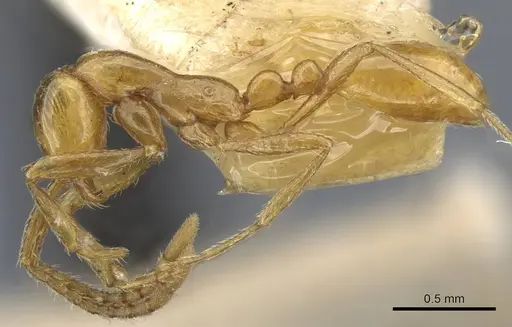
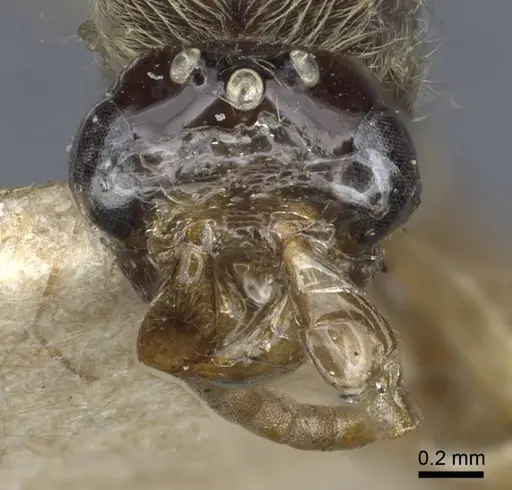
Workers are unmistakably tiny at just 2.5-2.7 mm long [1]. Their bodies are smooth, shiny, and deep yellow to pale brown in color, with the mandibles and rear portion of the gaster often appearing paler [1]. The head is longer than it is wide with weakly convex sides, and the antennae have 10 segments with the scape reaching the back of the head [1]. The front of the clypeus bears 8-10 small teeth [1][5]. The petiole (waist segment) is compressed and rounded on top, with almost no subpetiolar process underneath [1]. These features distinguish them from related species like Aenictus sagei, which has longer hairs [5].
Distribution and Natural Habitat
These ants live in western India, specifically recorded from Maharashtra (near Poona/Thana where the type specimens were collected), Kerala, Madhya Pradesh, and West Bengal [1][3]. Based on the type locality near Poona, they probably inhabit lowland areas [1]. A survey in the Acharya Jagadish Chandra Bose Indian Botanical Garden in Howrah found them present across all four habitat types studied, suggesting they tolerate diverse conditions within their range [4]. However, specific nesting habits remain completely unknown.
Army Ant Biology and Care Implications
Aenictus wroughtonii belongs to a genus of true army ants. While specific behavior is unstudied, related Aenictus species are nomadic predators that hunt in groups and frequently relocate their nests. They prey primarily on other ants and small arthropods. This lifestyle requires enormous space, constant food availability, and specialized containment that allows for colony movement while preventing escapes. Their minute size means they can squeeze through almost any gap, requiring extremely fine mesh or barriers like Fluon on all ventilation. Without knowing their colony size, founding method, or specific dietary needs, providing appropriate care is impossible. [1]
The Unknowns of Aenictus wroughtonii Biology
Almost every aspect of this ant's biology remains undocumented. We do not know how colonies are founded, how many workers they contain, what they eat specifically, how long development takes, or what temperatures and humidity they require. The queen caste has never been described from modern collections, and males have only been found in the original type series from 1890 [2][6]. Until researchers document queens and basic colony biology, these ants must remain a scientific curiosity rather than a captive species.
Frequently Asked Questions
Can I keep Aenictus wroughtonii in a test tube or formicarium?
No. Only workers have ever been documented for this species, so you cannot acquire a queen to start a colony [2]. Even if queens were available, army ants require specialized setups with massive foraging areas that standard test tubes or formicariums cannot provide.
Why can't I find queens for Aenictus wroughtonii?
Queens have never been documented in modern scientific collections. The species is only known from worker specimens, though males were present in the original 1890 type series [2][6]. It is possible that queens are extremely rare, cryptic, or that colonies reproduce by fission (splitting), but this remains unknown.
What do Aenictus wroughtonii eat?
Their specific diet is unknown. As army ants in the genus Aenictus, they likely prey on other ants and small soil arthropods, but this has never been observed directly for this species.
How big do Aenictus wroughtonii colonies get?
Colony size is completely unknown. Other Aenictus species can have colonies with thousands of workers, but no one has documented colony size for this species specifically.
Do Aenictus wroughtonii need hibernation or diapause?
This is unknown. Given their tropical distribution in India, they likely do not require hibernation, but this has never been confirmed [1].
Are Aenictus wroughtonii dangerous?
They are extremely small (2.5-2.7 mm) and unlikely to harm humans, but as army ants they may bite if threatened [1]. Their danger lies in their ability to escape through tiny gaps rather than any venom or sting.
What makes Aenictus wroughtonii different from other army ants?
They are the smallest species in the A. wroughtonii group, with workers under 3 mm long [1]. They are also one of the most poorly known, with no biological data available beyond their physical description and distribution [1].
Where do Aenictus wroughtonii live in the wild?
They inhabit western India, specifically recorded from Maharashtra, Kerala, Madhya Pradesh, and West Bengal, probably in lowland areas [1][3]. They have been found in botanical gardens and diverse habitat types [4].
Report an Issue
The current care sheet is based fully on literature. See inconsistencies, or something that's incorrect? Please , it will be resolved after review from an admin. Contributing to the blogs tab also helps providing information, to make us be able to further improve the caresheets. Thank you for your support!
References

This caresheet is licensed under CC BY-SA 4.0 .
Community Blogs
CASENT0907022
View on AntWeb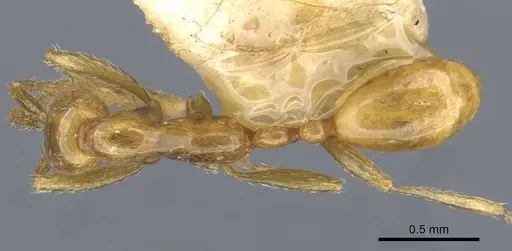
CASENT0916864
View on AntWeb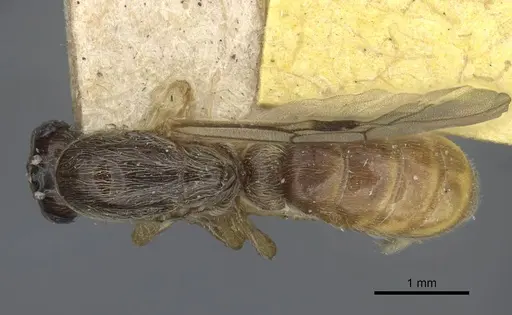
Literature
Loading distribution map...Loading products...