
Aenictus susanae
- Sci. Name
- Aenictus susanae
- Subfamily
- Dorylinae
- Author
- Gómez, 2022
- Distribution
- Found in 2 countries
Introduction
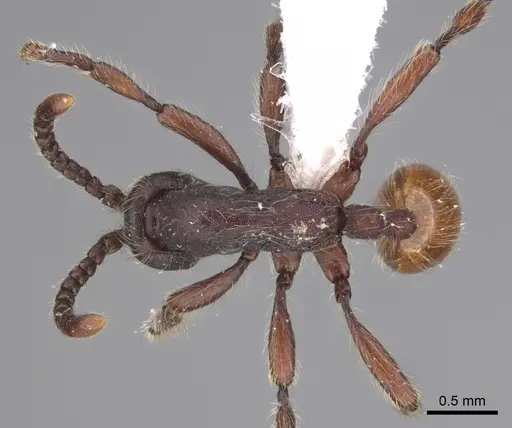
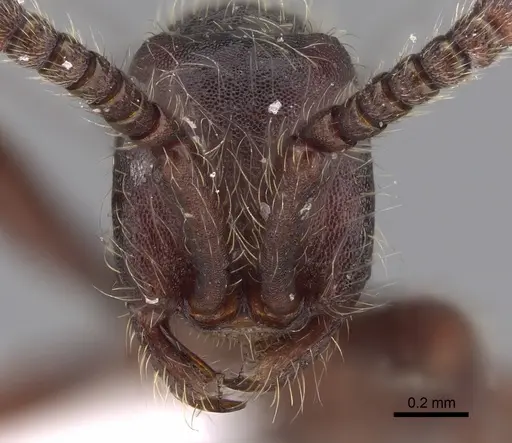
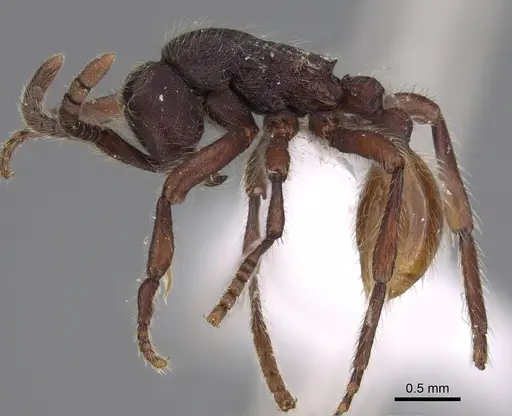
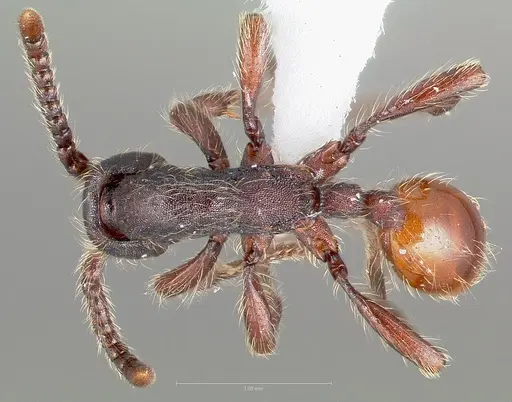
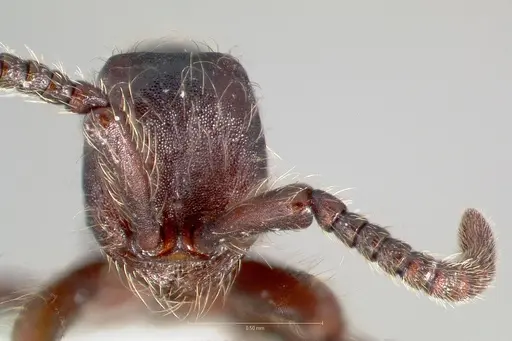
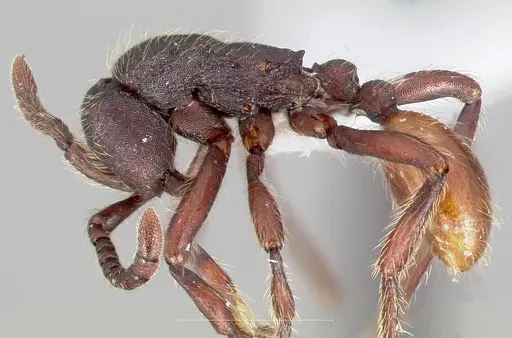
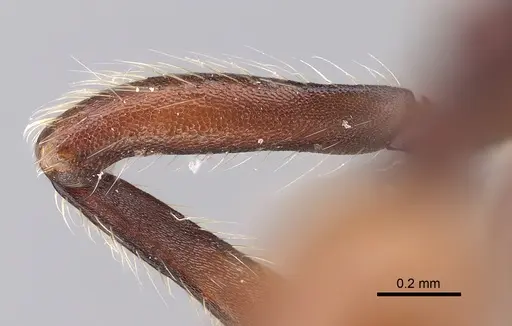
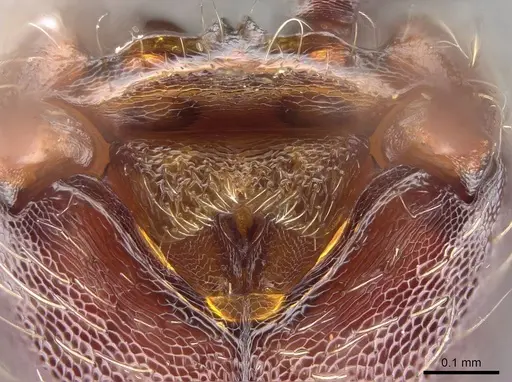
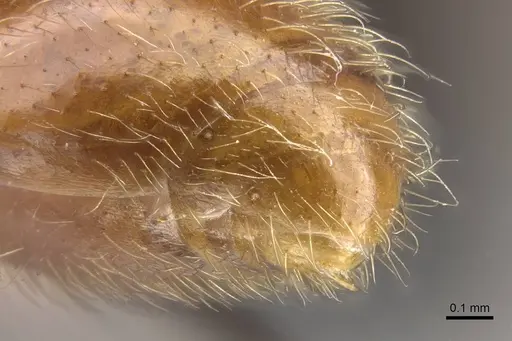
Aenictus susanae is a tiny army ant from the rainforests of Central Africa, described in 2022 . Workers are unmistakable - they are the most heavily sculptured Aenictus in Africa, with deep reticulation (pitting) covering their entire body including the head and legs, and they carry dense, long white hairs . They are dark brown with a yellowish-brown gaster . Only workers are known - no queens, males, or brood have ever been described . As army ants, they are nomadic predators with biology fundamentally incompatible with standard ant keeping.
Quick Summary
- Difficulty: Expert
- Origin & Habitat: Cameroon and Central African Republic, collected from rainforest leaf litter and rotten wood at elevations around 510m [1][2]
- Colony Type: Unknown, only workers described. Likely single-queen army ant structure based on genus patterns, but queens remain undescribed [1]
- Size & Growth:
- Queen: Unknown, queens undescribed [1]
- Worker: Approximately 3-4mm, inferred from Aenictus genus patterns [1]
- Colony: Likely hundreds to workers, estimated from typical Aenictus patterns [1]
- Growth: Unknown, likely moderate to fast in stable tropical conditions
- Development: Unknown (Development time is unconfirmed. Army ants typically reproduce by colony fission rather than single queens raising first workers.)
- Antkeeping:
- Temperature: Likely 24-28°C based on tropical rainforest habitat. Start at 25°C and adjust based on activity levels [1]
- Humidity: High humidity required, keep nest material damp like rainforest floor leaf litter. Do not let it dry out [1]
- Diapause: No, tropical species active year-round [1]
- Nesting: Cannot use standard nests. Army ants form temporary bivouacs (living nests made of their own bodies) and require open foraging areas. They will die in enclosed formicaria [1]
- Behavior: Highly aggressive obligate predators. They raid other ant colonies and social insects relentlessly. Because of their tiny size and constant foraging drive, escape prevention is nearly impossible in standard setups [1]
- Common Issues: cannot be contained in standard formicaria or test tubes due to nomadic army ant biology, require massive daily quantities of live ant prey (specifically ant brood), which is impossible for most keepers to supply, unknown queen biology and reproductive strategy prevents captive colony founding or maintenance, will raid and destroy any other ant colonies kept nearby, no successful long-term captive care documented for any Aenictus species
Why Army Ants Cannot Be Kept in Standard Setups
Aenictus susanae are army ants, which means they have no permanent home. In nature, these ants form temporary camps called bivouacs using their own bodies to protect the queen and brood. They stay in one place only a few days before the entire colony marches to a new location to raid fresh hunting grounds. You cannot put them in a test tube, formicarium, or any enclosed nest, they require massive open foraging areas to survive and will quickly die in confined spaces. Their biology is fundamentally incompatible with the equipment used by ant keepers. [1]
Identification and Natural History
Workers of Aenictus susanae are easy to recognize if you find them. They are the most heavily sculptured Aenictus in Africa, with deep reticulation covering their entire body, head, and even legs [1]. They have dense, long white hairs covering their bodies, the hairs are about as long as the petiole height [1]. The ants are dark brown with a yellowish-brown gaster [1]. They were collected from rainforest leaf litter and rotten wood in the Central African Republic and Cameroon [1][2]. Only workers are known, scientists have never found queens, males, or even brood for this species [1].
Diet and Prey Requirements
These ants are obligate predators of other social insects, especially ant brood. They do not eat honey, sugar water, dead insects, or standard ant foods. They need to raid living ant colonies and steal eggs and larvae to survive. In captivity, you would need to supply multiple live ant colonies every day to feed even a small Aenictus colony. This makes them impossible to maintain for any ant keeper outside of specialized research facilities with extensive ant farming operations. [1]
Colony Structure and Reproduction
Since no queens have been described, we do not know how colonies start or how big they grow [1]. Army ants typically reproduce by splitting the colony in two (fission), where a daughter queen takes half the workers and brood to form a new group. They do not found colonies via single queens raising first workers in the traditional sense. This means you cannot start a colony from a single queen, and you cannot buy or trade colonies because they require constant expansion space and massive prey input.
Frequently Asked Questions
Can I keep Aenictus susanae in a test tube?
No. Test tubes and standard formicaria are completely unsuitable for army ants. They require large open spaces to forage and form bivouacs (temporary living nests). Confining them to small spaces will kill them.
Do Aenictus susanae have queens?
Queens have never been described for this species [1]. Army ant queens are typically large with distended abdomens, but no specimens have been found. Colonies likely reproduce by splitting (fission) rather than single queens founding new nests.
What do Aenictus susanae eat?
They are obligate predators of other social insects, primarily ant brood (eggs and larvae). They raid other ant colonies and do not accept honey, sugar, or dead insects. You would need to supply living ant colonies daily.
How long until Aenictus susanae get their first workers?
Unknown. Since queens have never been observed founding colonies for this species, we cannot estimate development time. Army ants typically reproduce by colony fission (splitting existing colonies) rather than queens raising first workers from eggs.
Can I keep multiple Aenictus susanae queens together?
Not applicable. You cannot obtain founding queens for this species, and army ants do not start colonies via multiple queens founding together. They reproduce by splitting existing colonies.
Are Aenictus susanae dangerous?
They can sting but are too small to harm humans significantly. However, they will raid and destroy any other ant colonies you own through predation, making them dangerous to your other pets.
Do Aenictus susanae need hibernation?
No. They are tropical rainforest ants from Central Africa and remain active year-round. They do not require cooling or winter rest [1].
Report an Issue
The current care sheet is based fully on literature. See inconsistencies, or something that's incorrect? Please , it will be resolved after review from an admin. Contributing to the blogs tab also helps providing information, to make us be able to further improve the caresheets. Thank you for your support!
References

This caresheet is licensed under CC BY-SA 4.0 .
Community Blogs
Literature
Loading distribution map...Loading products...