
Aenictus rotundicollis
- Sci. Name
- Aenictus rotundicollis
- Subfamily
- Dorylinae
- Author
- Jaitrong & Yamane, 2011
- Distribution
- Found in 2 countries
Introduction
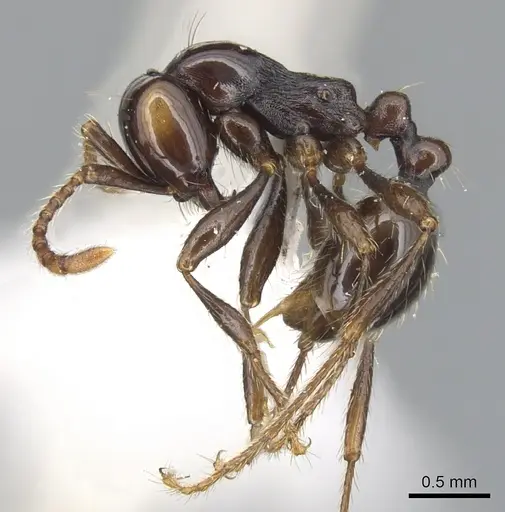
Aenictus rotundicollis is a small army ant from the rainforests of Borneo, instantly recognizable by its distinctive dome-shaped thorax that rises high and rounded like a hill . Workers measure just over 4 mm long and are dark reddish-brown with only a pair of standing hairs on the head vertex . Unlike most ants you might consider keeping, this species has only ever been found as workers - no queens have been discovered . They inhabit the lowland rainforests of Sabah, Sarawak, and Brunei, where they likely live as nomadic predators like other army ants . As a member of the army ant group (Dorylinae), these ants almost certainly live in large colonies that roam through the forest preying on other ant species and small invertebrates. The lack of known queens suggests they may reproduce by colony fission - where the colony splits into two - like many army ants, or they possess undiscovered wingless queens. This makes them virtually impossible to keep using standard ant-keeping methods, as you cannot acquire a founding queen.
Quick Summary
- Difficulty: Expert
- Origin & Habitat: Borneo (Sabah, Sarawak, and Brunei), inhabiting lowland rainforests [1][2].
- Colony Type: Unknown, only the worker caste has been described. Likely reproduces by colony fission or undiscovered ergatoid queens based on typical Aenictus patterns.
- Size & Growth:
- Queen: Unknown, no queens described [2].
- Worker: 4.15-4.25 mm total length [1].
- Colony: Unknown, likely hundreds to thousands of workers based on army ant biology.
- Growth: Unknown
- Development: Unknown, no brood development data available for this species. (Development timing is unstudied. Related army ants typically have rapid development in warm conditions, but specific timelines for this species are not documented.)
- Antkeeping:
- Temperature: Warm tropical conditions, roughly 24-28°C based on Borneo lowland rainforest habitat. Start at 25°C and observe activity levels.
- Humidity: High humidity, maintain damp conditions similar to tropical forest floor. Keep nest substrate moist but not waterlogged.
- Diapause: No, this is a tropical lowland species that does not experience seasonal cold.
- Nesting: Nomadic, army ants do not build permanent nests. In captivity this would require a large, expandable setup allowing constant movement, which is impractical for most keepers.
- Behavior: Highly mobile predator that likely conducts raids on other ant nests and small invertebrates. Workers are active and agile. Only workers are known, so typical colony behavior involving queens is unobserved.
- Common Issues: only workers are known, no queens are available to start colonies, making standard captive keeping impossible., army ants require massive amounts of prey daily that is extremely difficult to provide in captivity., nomadic lifestyle requires constant relocation and space changes unsuitable for standard test tube or formicarium setups., colony reproduction likely occurs by fission (splitting), which requires established colonies of massive size first., extremely challenging to maintain due to specialized army ant biology and unknown specific requirements.
Identification and Appearance
Aenictus rotundicollis workers are small but distinctive army ants measuring 4.15-4.25 mm in total length [1]. Their most striking feature is the promesonotum, the front part of the thorax, which forms a high, strongly convex dome shape that gives the species its name (rotundicollis means 'round neck') [1].
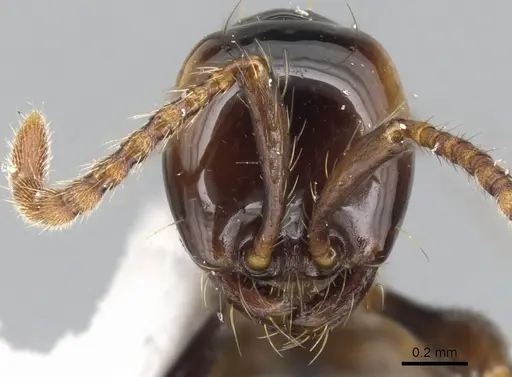
The workers are dark reddish-brown in color with smooth, shiny heads and only two standing hairs on the top of the head [1]. Their antennae are relatively short, not reaching the back corners of the head, and the terminal segment is almost as long as the three preceding segments combined [1]. The petiole (waist segment) is short and almost as tall as it is long, with a well-developed triangular projection underneath [1].
This species belongs to the Aenictus laeviceps species group and is very similar to Aenictus sonchaengi, though it can be distinguished by subtle differences in body proportions and hair patterns [1][3].
Natural History in Borneo
These ants inhabit the lowland rainforests of Borneo, specifically in the Malaysian states of Sabah and Sarawak, as well as Brunei [1]. They are probably sympatric with Aenictus sonchaengi, meaning they live in the same areas and may encounter each other [1].
As army ants (subfamily Dorylinae), they almost certainly live a nomadic lifestyle, constantly moving through the leaf litter and soil of the forest floor. Army ants do not build permanent nests like other ants. Instead, they form temporary bivouacs, clusters of living ant bodies, that house the queen (if present) and brood while the colony moves.
The diet likely consists primarily of other ant species' brood (eggs, larvae, and pupae) and other small ground-dwelling invertebrates. Army ants are specialized predators that conduct raids on other ant nests, overwhelming them with numbers and carrying away the brood to feed their own colony.
The Army Ant Keeping Challenge
Aenictus rotundicollis presents insurmountable challenges for captive keeping. First, only workers have ever been collected, no queens are known to science [2]. Without queens, you cannot start a colony from a single foundress as you would with most ant species.
Second, army ants require enormous quantities of food. A colony might need dozens or hundreds of prey items daily, specifically other ant brood or small invertebrates. This feeding volume is practically impossible for hobbyists to sustain.
Third, their nomadic nature means they need constant access to new foraging areas and will quickly exhaust any small enclosure. They do not settle into a nest box or test tube, they need to roam.
Finally, even if you acquired an established colony (which would require collecting an entire wild colony including the queen or reproductive workers), maintaining the specific humidity, temperature, and space requirements of tropical army ants requires specialized equipment beyond standard ant-keeping gear.
Theoretical Care Requirements
If one were to attempt keeping this species (which is not recommended), you would need to replicate Borneo lowland rainforest conditions. Temperature should remain warm and stable around 24-28°C without fluctuations. Humidity must stay high, think damp forest floor, not dry air, with moist substrate but good ventilation to prevent mold.
Housing would require a massive, expandable setup, possibly a series of connected containers or a large terrarium, allowing the colony to roam and establish temporary bivouacs. Standard test tubes, Y-tong nests, or acrylic formicariums are completely unsuitable.
Diet would need to consist of live prey, specifically other ant brood and small invertebrates. They would likely not accept sugar water or typical feeder insects alone. The sheer volume of prey required makes this impractical for captive maintenance. [1]
Frequently Asked Questions
Can I keep Aenictus rotundicollis in a test tube?
No. Test tubes are completely unsuitable for this species. Only workers are known, so you cannot start a colony from a single queen in a test tube. Additionally, as army ants, they require large spaces to roam and do not form permanent nests.
How do I found a colony of Aenictus rotundicollis?
You cannot found a colony using standard methods because no queens have ever been described for this species. Army ants typically reproduce by colony fission (splitting an existing colony) or through undiscovered wingless queens. Without access to an established wild colony, founding is impossible.
What do Aenictus rotundicollis eat?
As army ants, they are specialized predators that likely feed on the brood (eggs, larvae, and pupae) of other ant species, as well as small ground-dwelling invertebrates. They would require live prey and would not survive on sugar water or typical feeder insects alone.
Do Aenictus rotundicollis need hibernation?
No. They come from the lowland rainforests of Borneo, which are warm year-round. They do not require a winter rest period or diapause.
Are Aenictus rotundicollis good for beginners?
No. This species is unsuitable for beginners or even experienced keepers. They are extremely difficult to acquire, require massive amounts of specialized prey, need huge enclosures, and their biology (with only workers known) makes standard colony founding impossible.
How big do Aenictus rotundicollis colonies get?
The exact colony size is unknown, but based on their biology as army ants, colonies likely contain hundreds to thousands of workers. Army ants typically form large, mobile colonies rather than small contained nests.
Why are there no queens described for Aenictus rotundicollis?
Scientists have only collected workers from this species. Army ants often have unusual reproductive systems, some reproduce by colony fission, while others have wingless ergatoid queens that look like large workers. The reproductive caste for this specific species has not been discovered or described yet.
Can I keep multiple Aenictus rotundicollis workers together?
Workers from the same colony might tolerate each other, but workers from different colonies will likely fight. However, keeping just workers without a queen or brood is pointless as they cannot establish a reproducing colony. The colony would simply die out as workers age.
Report an Issue
The current care sheet is based fully on literature. See inconsistencies, or something that's incorrect? Please , it will be resolved after review from an admin. Contributing to the blogs tab also helps providing information, to make us be able to further improve the caresheets. Thank you for your support!
References

This caresheet is licensed under CC BY-SA 4.0 .
Community Blogs
CASENT0903686
View on AntWeb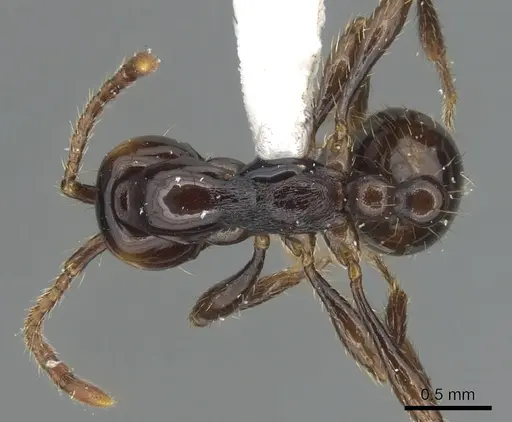
Literature
Loading distribution map...Loading products...