
Golden Raider ant
Aenictus rotundatus
- Sci. Name
- Aenictus rotundatus
- Subfamily
- Dorylinae
- Author
- Mayr, 1901
- Common Name
- Golden Raider ant
- Distribution
- Found in 6 countries
Introduction
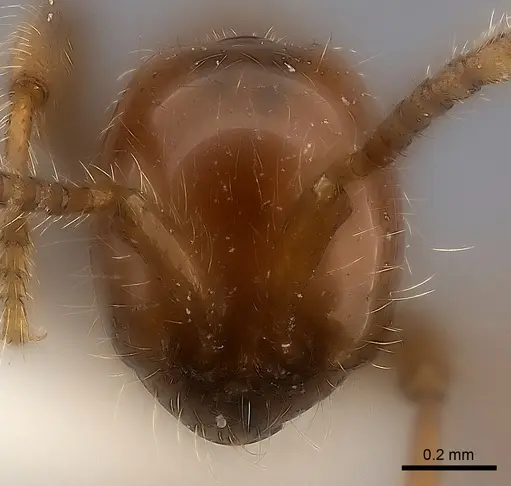
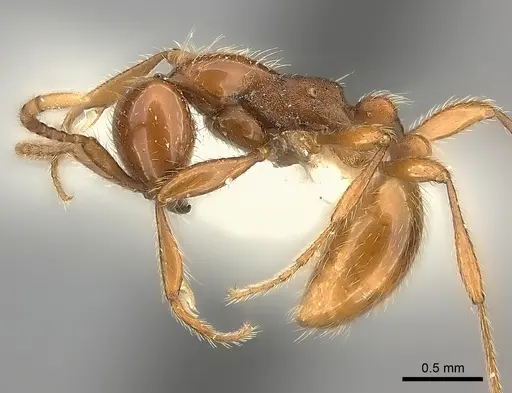
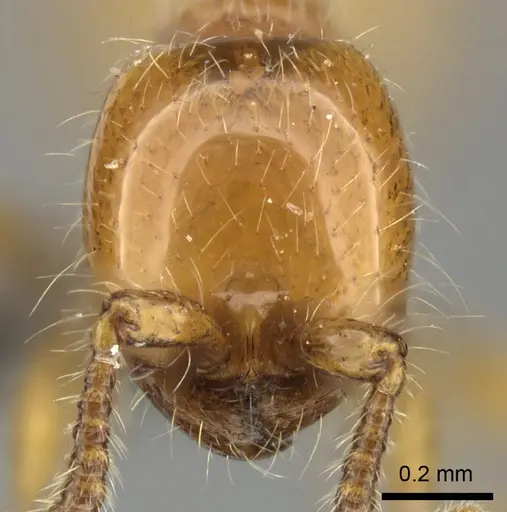
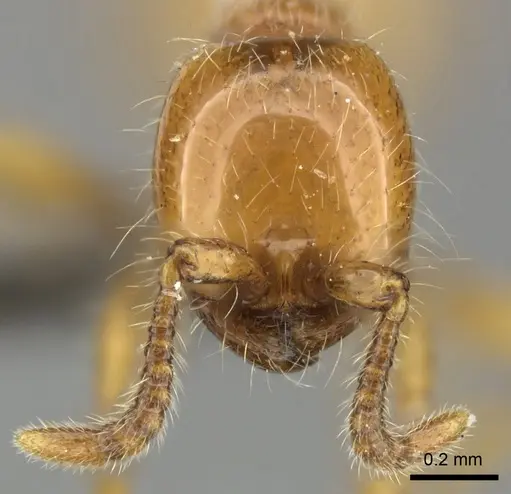
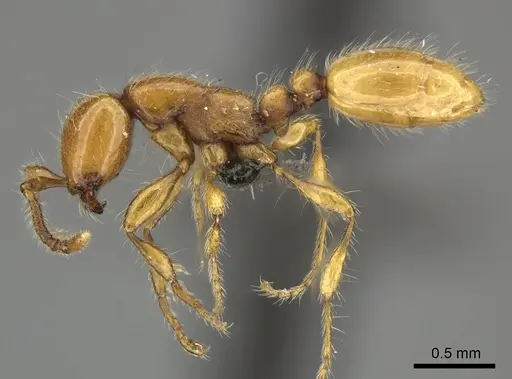
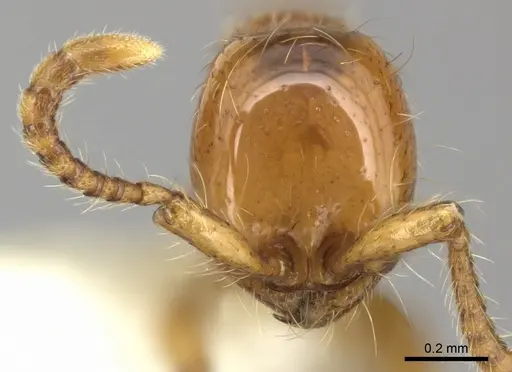
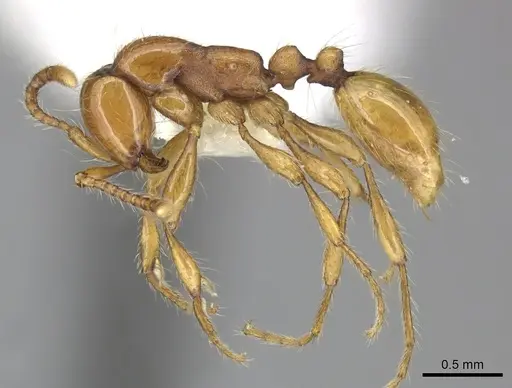
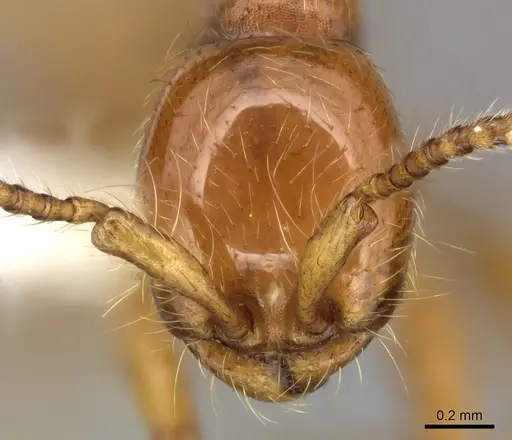
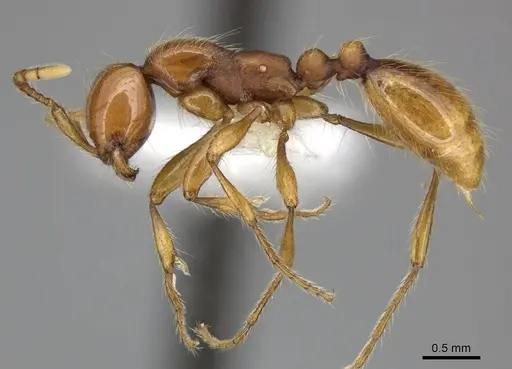
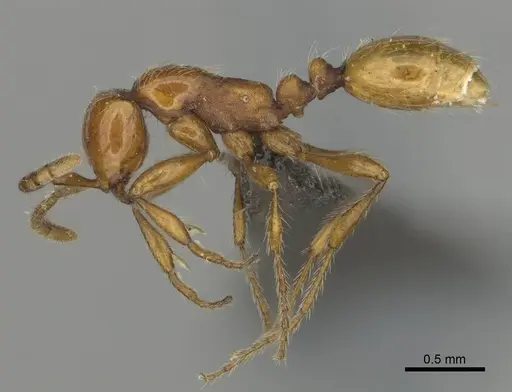
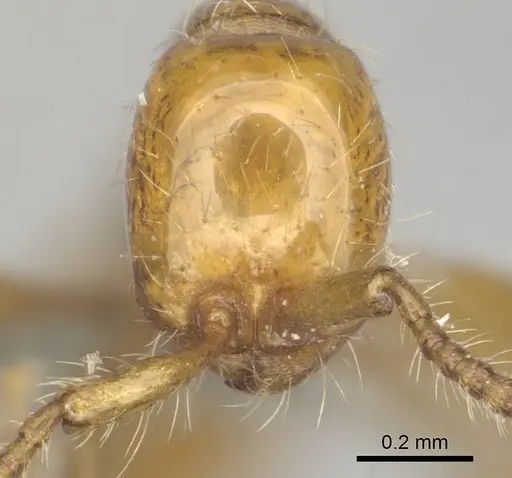
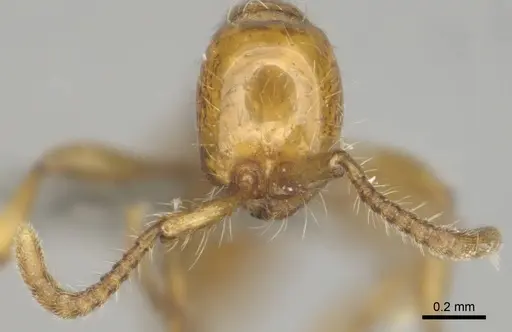
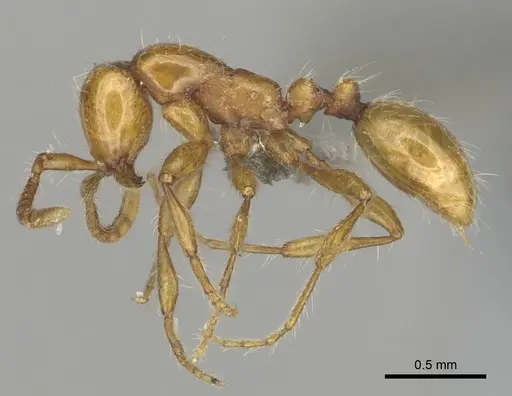
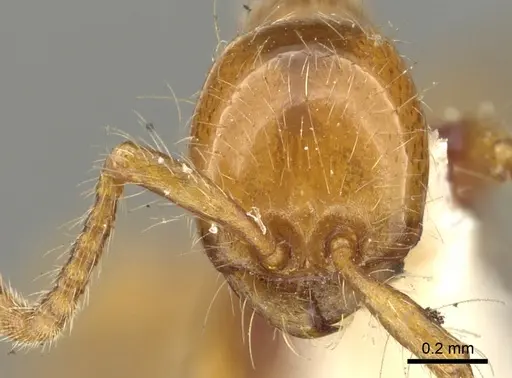
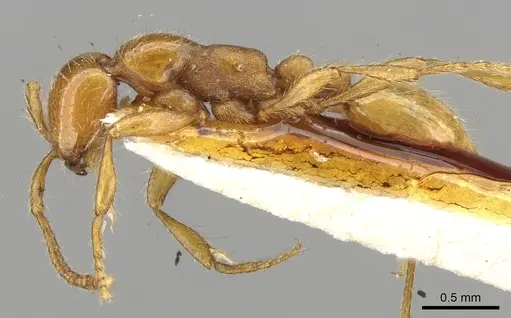
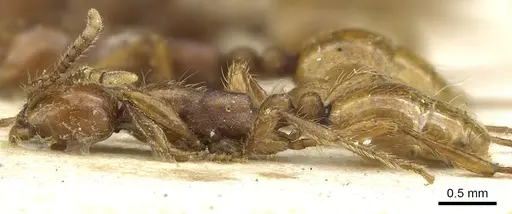
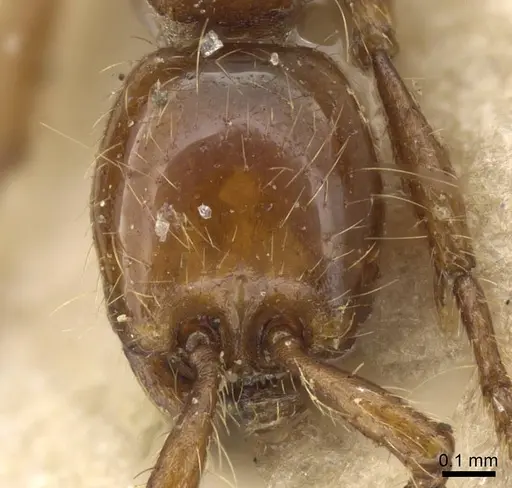
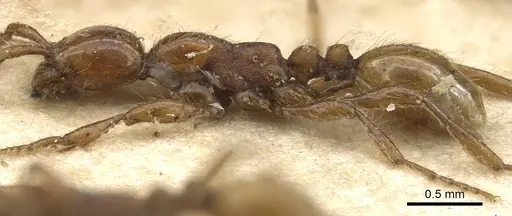
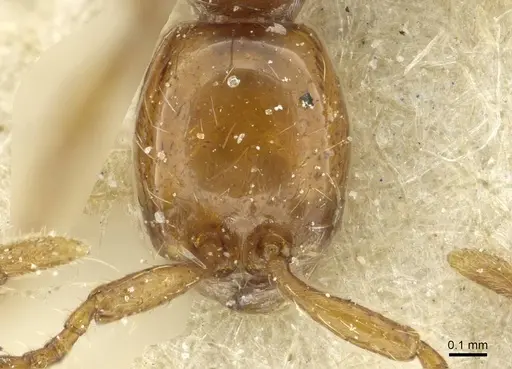
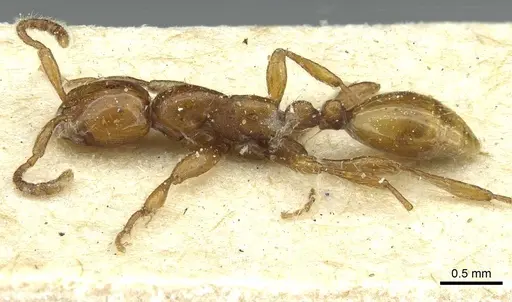
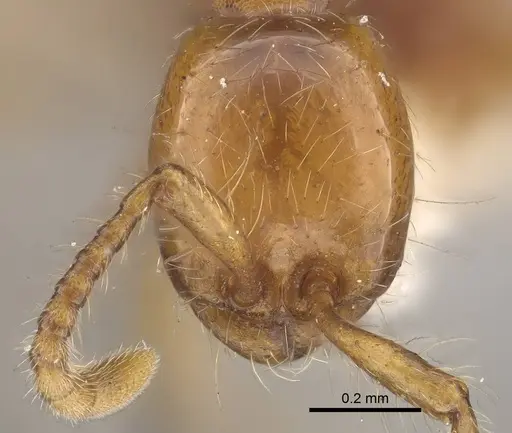
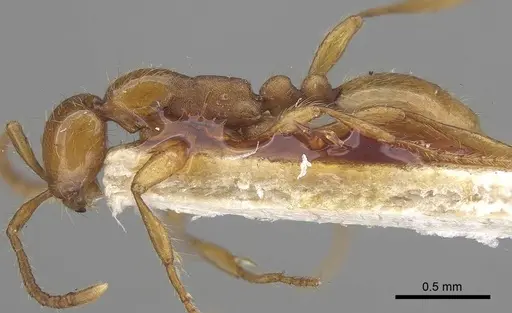
Aenictus rotundatus is a small Afrotropical army ant found across southern and eastern Africa, from South Africa to Sudan . Workers are small with dark brown coloration and variable surface sculpture ranging from smooth and shining to strongly reticulated . They inhabit woodlands, Acacia savannas, and fynbos vegetation, showing strong preference for woodland over shrubland or forest . Live workers display two conspicuous red spots visible through their pale cuticle - these are the postpygidial glands used for trail communication . The species possesses a chemical defense in the Dufour gland containing springene . As true army ants in the subfamily Dorylinae, they live a nomadic lifestyle with no permanent nest, forming temporary bivouacs while constantly moving to find prey .
Quick Summary
- Difficulty: Expert
- Origin & Habitat: Southern and Eastern Africa (South Africa, Namibia, Zimbabwe, Kenya, Sudan, Tanzania) in woodlands, Acacia savannas, Proteoid Fynbos, and Restioid Fynbos [1][2][3].
- Colony Type: Army ant, reproduces by colony fission. No queen caste has been described for this species. Colonies contain thousands of workers [1].
- Size & Growth:
- Queen: No queens known [1].
- Worker: Size data unavailable [1].
- Colony: Up to several thousand workers [1].
- Growth: Not applicable, colonies grow by fission.
- Development: Not applicable, army ants do not have a founding stage. Colonies reproduce by splitting [7]. (Colony fission means a mature colony splits into two, with one half taking the old reproductives and the other raising new ones from existing brood.)
- Antkeeping:
- Temperature: Keep warm and stable, roughly 24-28°C. These are Afrotropical ants that do not tolerate cold [7].
- Humidity: Moderate humidity around 50-60%. Keep the nest area slightly damp but not wet, matching their woodland and fynbos habitats [3][2].
- Diapause: No, tropical species that remains active year-round [7].
- Nesting: Not applicable, these are nomadic army ants that do not build permanent nests. They require massive foraging areas and will not stay in a standard formicarium [6].
- Behavior: Nomadic and subterranean or surface-foraging army ants that travel in trails [6][4]. They are predatory and constantly on the move. Because of their small size and army ant behavior, escape prevention is nearly impossible in standard setups [1].
- Common Issues: cannot be founded from a single queen, you must collect an established colony, which is extremely difficult and harmful to wild populations., massive food requirements, army ants need constant supplies of live prey (termites, small insects) daily, making feeding impractical for hobbyists., nomadic behavior means they will abandon any nest you provide and wander constantly, requiring specialized large-scale laboratory setups., tiny worker size combined with trail-following behavior makes escapes inevitable in standard antkeeping equipment.
Army Ant Biology and Why Standard Antkeeping Fails
Aenictus rotundatus is a true army ant, which means it has evolved away from the typical antkeeping model entirely. Unlike most pet ants, you cannot start a colony from a single queen in a test tube. These ants have no known queen caste, instead, colonies reproduce by fission, where a large colony splits into two groups [1]. One group keeps the old reproductive individuals while the other raises new ones from existing brood.
This biological strategy makes them impossible to keep using standard hobbyist methods. You cannot buy or catch a 'founding queen' because they do not exist in the way they do for other ants. Collecting an established colony means taking thousands of workers, brood, and the specialized reproductive forms from the wild, which requires destroying their foraging trails and temporary bivouacs. Even researchers struggle to maintain Aenictus colonies long-term [8].
Their nomadic lifestyle compounds the problem. These ants do not build permanent nests. They form temporary clusters (bivouacs) in soil cavities or under objects, staying only a few days before moving on to follow prey [6]. In captivity, they will constantly try to wander, making them impossible to contain in standard formicaria.
Housing Requirements
If you attempt to keep Aenictus rotundatus, forget everything you know about formicaria. These ants need massive, specialized laboratory setups often called 'ant arenas', large containers with extensive substrate for digging temporary tunnels and massive foraging areas [6]. Standard Y-tong blocks, plaster formicaria, or soil nests are completely unsuitable for long-term keeping.
The setup would need to be several feet in length to accommodate their foraging trails, with soil or sand deep enough for temporary bivouac formation. You would need to provide multiple potential resting sites since they abandon locations frequently. Most importantly, the barrier system must be perfect, these are small ants that can squeeze through minute gaps, and as army ants, they will test every corner of the enclosure [1].
Even with perfect housing, the colony will likely die within weeks due to stress from confinement. In nature, these colonies travel constantly across woodlands and farmland edges [2]. Captivity restricts this essential movement, causing colony decline.
Feeding and Diet
Aenictus rotundatus is a specialized predator that feeds on other insects, particularly termites and soft-bodied prey [6]. As army ants, they have massive food requirements, a colony of several thousand workers needs a constant supply of live prey, not occasional feeding [1].
In captivity, you would need to provide live termites, small insects, or other arthropods daily in quantities that would be difficult and expensive to maintain. They do not accept sugar water or honey as their primary food source, they are obligate predators that hunt using coordinated trail raids guided by pheromones from their postpygidial glands [4]. The feeding response is triggered by trail pheromones containing 2-methyl-nicotinate and 2-methyl-anthranilate [4].
Without the ability to forage naturally over large areas, captive colonies quickly starve or fail to trigger proper feeding behaviors. This is why researchers note that colonies 'could not be maintained for bioassays' even for short-term pheromone studies [8].
Chemical Defense and Morphology
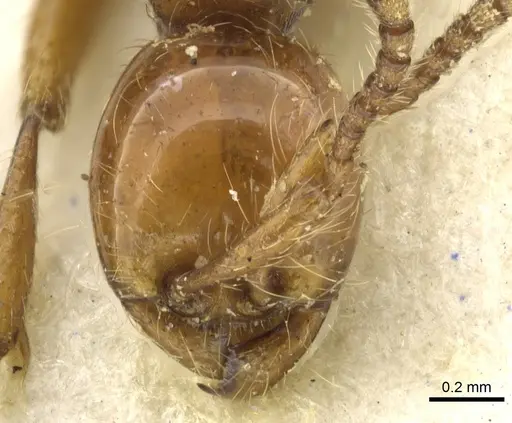
Live workers of Aenictus rotundatus can be identified by two conspicuous red spots visible through their pale cuticle, these are the postpygidial glands used for chemical communication [4]. These glands contain the trail pheromones 2-methyl-nicotinate and 2-methyl-anthranilate that guide foraging raids [4].
Additionally, the species possesses a chemical defense in the Dufour gland containing springene, a compound also found in other army ants [5]. This likely serves as a defensive secretion against predators or competitors.
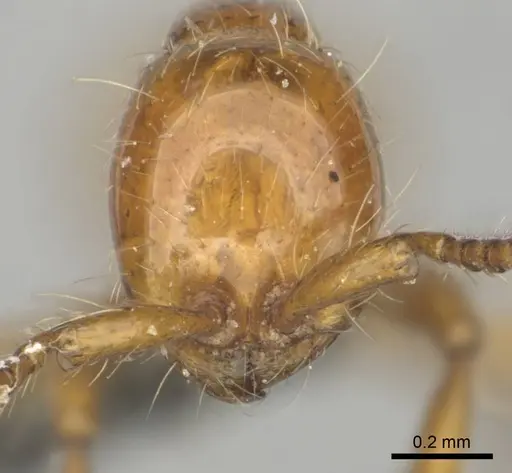
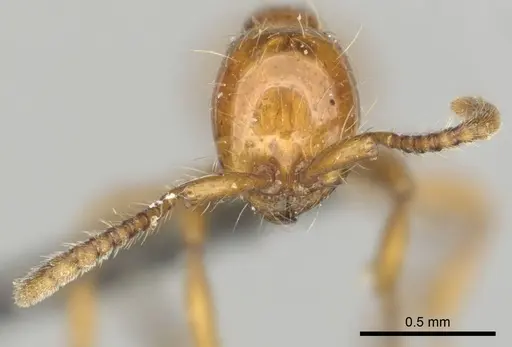
The species shows high morphological variability in subpetiolar process, color, and sculpture across its range, with some populations being lighter and smoother than others [1]. This variation led to previous descriptions of separate species and subspecies (now synonymized), but genetic data may eventually reveal cryptic species within this complex [1].
Temperature and Environmental Conditions
These ants come from warm Afrotropical regions across southern and eastern Africa [1]. They have been collected from sea level up to moderate elevations, though they show negative association with high mountain areas above 1200m [9].
Keep them warm and stable, roughly 24-28°C, with moderate humidity around 50-60% [3][2]. They do not require hibernation as they are tropical. However, temperature is the least of your worries, even with perfect conditions, their biological requirements for space and food make captive keeping nearly impossible.
In nature, they prefer woodland and savanna habitats over dense forest or open shrubland [2]. This suggests they need some cover but not extreme humidity. The fynbos populations in South Africa experience Mediterranean climates with winter rainfall, indicating they can handle seasonal dryness but prefer stable warmth [3].
Frequently Asked Questions
Can I keep Aenictus rotundatus in a test tube?
No. These are army ants that cannot be founded from a single queen. They have no known queen caste and reproduce by colony fission. Additionally, they are nomadic and will not stay in a test tube or any standard nest [1][7].
How do I start an Aenictus rotundatus colony?
You cannot start a colony from a single queen. Army ants reproduce by splitting existing colonies (fission). You would need to collect an entire established colony from the wild, which requires taking thousands of workers and brood, and is extremely difficult, harmful to wild populations, and likely to fail in captivity [7].
What do Aenictus rotundatus eat?
They are specialized predators that hunt termites and other small insects using coordinated trail raids. They require massive amounts of live prey daily, a colony of thousands needs constant feeding, not occasional meals [6][4]. They do not accept sugar water as a primary food source.
How big do Aenictus rotundatus colonies get?
Colonies can reach several thousand workers. One type specimen series was described as 'a large colony of some thousands of individuals' [1].
Do Aenictus rotundatus need a queen?
This question does not apply to army ants like it does to other species. They have no permanent queen stage that can be isolated. Reproduction happens through colony fission. The reproductive forms are rarely seen and not described for this species specifically [1][7].
Are Aenictus rotundatus dangerous?
They are small ants that cannot sting humans effectively, but they can bite. As army ants, they are aggressive predators, though their small size limits the threat to humans. The real danger is to other insects in your home if they escape [1].
Do Aenictus rotundatus need hibernation?
No. They are tropical Afrotropical ants from warm regions of Africa. They remain active year-round and do not require cooling or diapause [7].
Why are my Aenictus rotundatus dying?
If you somehow obtained these ants, they are dying because they cannot be kept in captivity with standard methods. They require constant movement, massive foraging areas, huge amounts of live prey, and specialized laboratory conditions that hobbyists cannot provide. Even researchers struggle to maintain them [8].
How long until Aenictus rotundatus get their first workers?
This question does not apply to army ants. They do not have a founding stage where a queen raises first workers. Colonies grow by splitting existing mature colonies (fission), not by founding [7].
Can I keep multiple Aenictus rotundatus colonies together?
No. Different colonies are hostile to each other. Army ant colonies are distinct units that raid each other if they meet. You should never mix colonies [7].
Report an Issue
The current care sheet is based fully on literature. See inconsistencies, or something that's incorrect? Please , it will be resolved after review from an admin. Contributing to the blogs tab also helps providing information, to make us be able to further improve the caresheets. Thank you for your support!
References

This caresheet is licensed under CC BY-SA 4.0 .
Community Blogs
CASENT0217160
View on AntWeb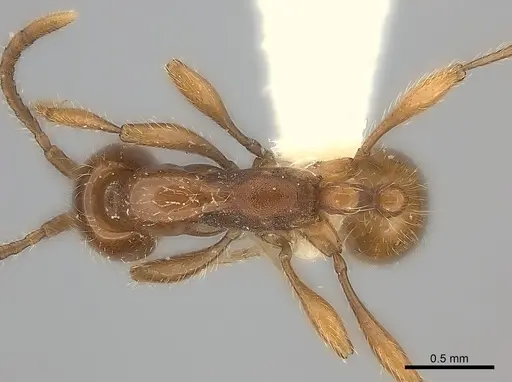
CASENT0235823
View on AntWeb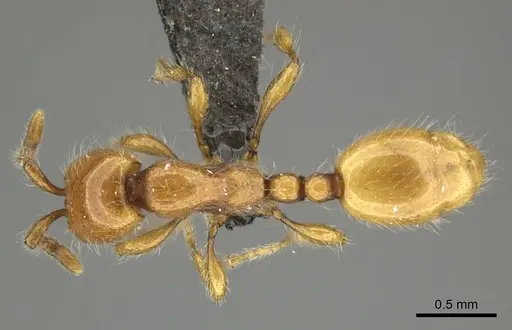
CASENT0249284
View on AntWeb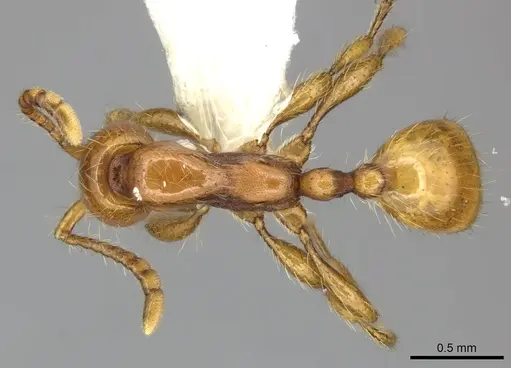
CASENT0249285
View on AntWeb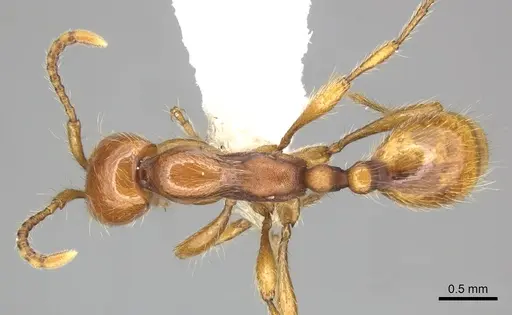
CASENT0252024
View on AntWeb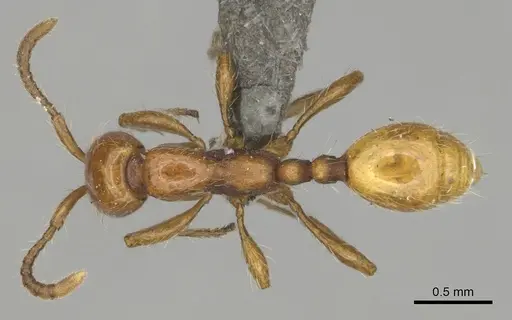
CASENT0252029
View on AntWeb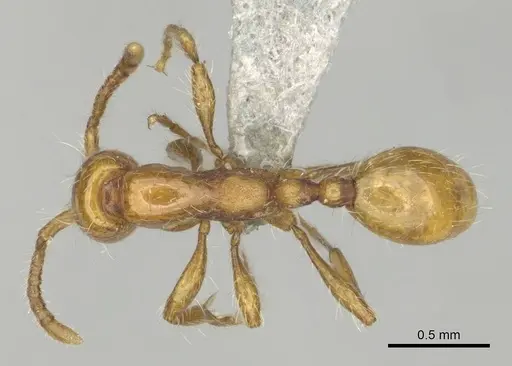
CASENT0902687
View on AntWeb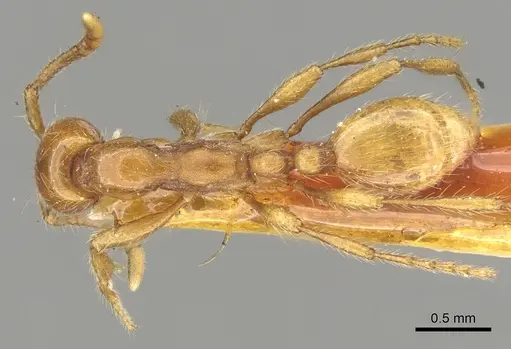
CASENT0902688
View on AntWeb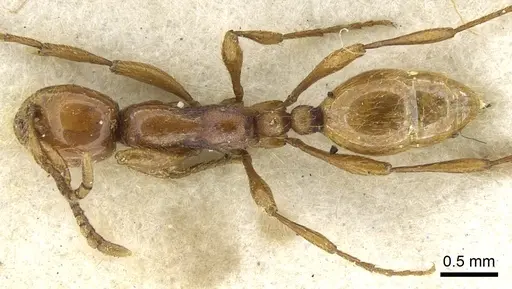
CASENT0905850
View on AntWeb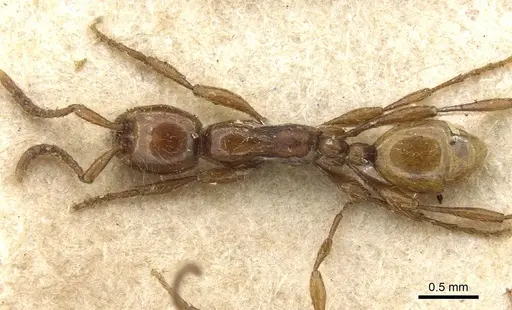
CASENT0911439
View on AntWeb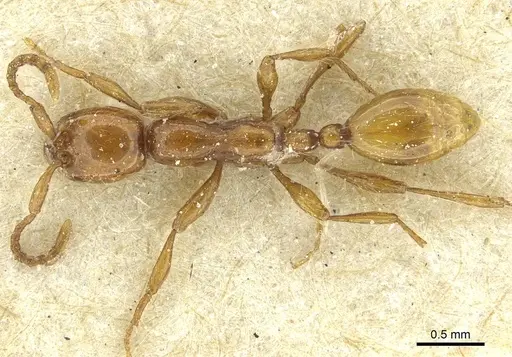
CASENT0919641
View on AntWeb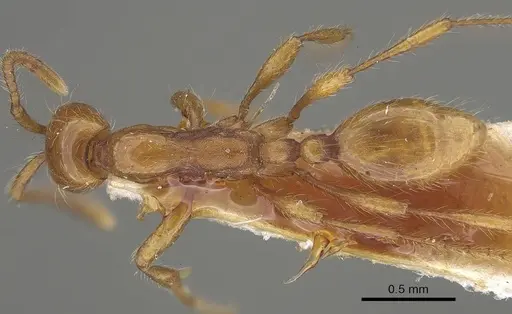
Literature
Loading distribution map...Loading products...