
Aenictus pinkaewi
- Sci. Name
- Aenictus pinkaewi
- Subfamily
- Dorylinae
- Author
- Jaitrong & Yamane, 2013
- Distribution
- Found in 0 countries
Introduction
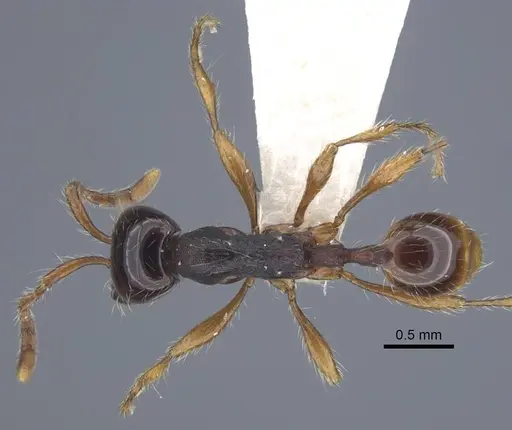
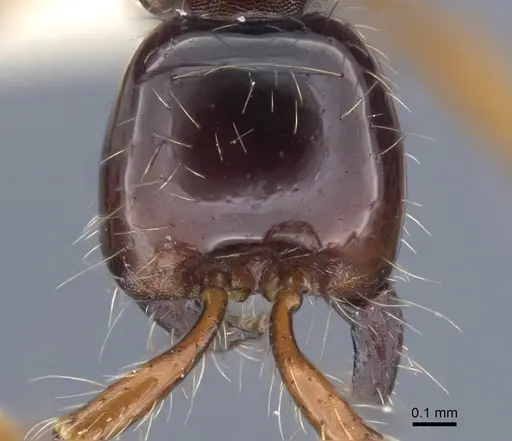
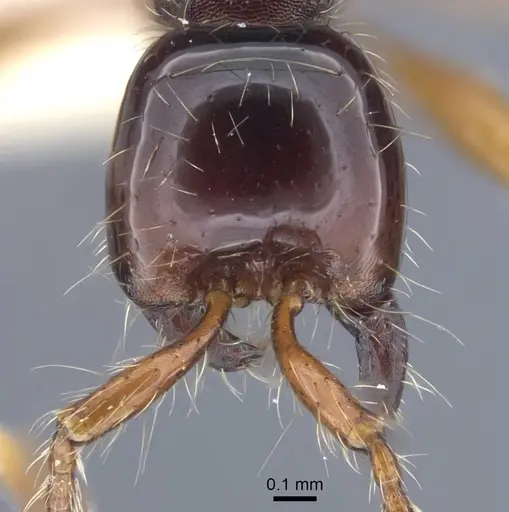
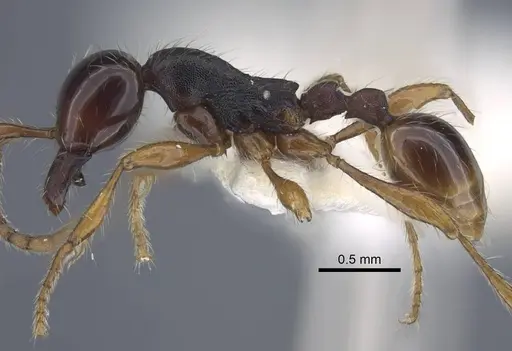
Aenictus pinkaewi is a tiny army ant from the highlands of northern Thailand. Workers measure 2.9-3.35 mm in total length and are dark reddish-brown with yellowish-brown legs and gaster tips . They belong to the Aenictus ceylonicus species group and can be recognized by their cylindrical petiole and short, rectangular heads . Scientists have only discovered workers, no queens or males have ever been collected or described . These ants are active predators that hunt on the forest floor both day and night. Unlike many ants that scavenge or visit sugar sources, Aenictus pinkaewi specializes in hunting other ants, particularly Pheidole species . They are nomadic army ants, constantly moving through secondary forests and open areas rather than building permanent nests .
Quick Summary
- Difficulty: Expert
- Origin & Habitat: Highland forests of northern Thailand (Chiang Mai Province), found in secondary forest and forest interiors at ground level [1][2]
- Colony Type: Unknown, only the worker caste has been documented, queens have never been collected [2]
- Size & Growth:
- Antkeeping:
- Temperature: Keep at room temperature, specific requirements unknown but highland origin suggests preference for moderate temperatures
- Humidity: Provide moisture through damp substrate, specific humidity needs undocumented
- Diapause: Likely no, tropical highland species from Thailand probably active year-round [2]
- Nesting: Nomadic, does not construct permanent nests, forms temporary bivouacs in soil or leaf litter [2]
- Behavior: Highly aggressive specialized predators that hunt day and night, prey specifically on other ants (observed raiding Pheidole colonies) [1]. Small size creates significant escape risk.
- Common Issues: only workers are known, impossible to establish a captive colony without a queen., require live ant prey (specialized Pheidole predators), extremely difficult to maintain in captivity., nomadic lifestyle requires constant movement and space impossible to provide in standard formicaria., tiny size means excellent escape prevention is essential.
Why This Species Cannot Be Kept in Standard Captivity
You cannot establish a captive colony of Aenictus pinkaewi because queens have never been discovered. Only worker specimens exist in scientific collections [2]. Without a queen, workers cannot reproduce, and the colony will die out as workers age. This makes the species impossible to maintain long-term in captivity.
Additionally, Aenictus pinkaewi is an army ant with specialized biology that conflicts with standard ant-keeping equipment. They are nomadic hunters that do not build permanent nests. Instead, they form temporary bivouacs and constantly move through foraging areas [2]. A standard test tube or formicarium cannot accommodate this lifestyle.
Natural History and Raiding Behavior
Aenictus pinkaewi inhabits highland areas of northern Thailand, particularly around Chiang Mai [1]. Workers forage on the ground surface in highly varied situations, from open areas to deep forest interiors, and are active both day and night [2].
These ants are specialized predators that hunt other ants. Researchers observed them preying specifically on Pheidole ants [1]. They are not generalist scavengers and will not accept sugar water or typical feeder insects like mealworms or crickets. This obligate ant predation makes them extremely difficult to feed in captivity.
Identification Features
Workers of Aenictus pinkaewi are small, measuring 2.9-3.35 mm in total length [1]. They have a cylindrical petiole that is distinctly longer than high, and a short, subrectangular head that is slightly shorter than broad [1].
The coloration is distinctive: the head, petiole, and postpetiole are dark reddish-brown, the mesosoma (middle section) is dark brown, and the gaster is dark reddish-brown with yellowish-brown tips and lateral faces [1]. The legs are yellowish-brown [1]. They are most similar to Aenictus fuchuanensis but can be distinguished by morphological details of the head and petiole [2].
Housing Requirements for Nomadic Species
Even if you could obtain a queen, Aenictus pinkaewi requires housing that mimics their nomadic lifestyle. They do not dig permanent nests but instead form temporary bivouacs in soil or leaf litter [2]. You would need a massive foraging arena with constant access to live prey colonies.
Their small size presents another challenge: escape prevention must be perfect. Fine mesh barriers and tight-fitting lids are essential, though the constant movement and hunting behavior of army ants makes containment extremely difficult.
Frequently Asked Questions
Can I keep Aenictus pinkaewi in a test tube?
No. They are nomadic army ants that require space to move and hunt. Additionally, only workers are known for this species, so you cannot establish a breeding colony.
How do I start a colony of Aenictus pinkaewi?
You cannot. Queens have never been collected or described for this species. Without a queen, workers cannot reproduce and the colony will eventually die out.
What do Aenictus pinkaewi eat?
They are specialized predators of other ants, particularly Pheidole species. They do not accept sugar water, honey, or standard feeder insects.
How long until first workers for Aenictus pinkaewi?
Unknown. Since queens have never been observed in captivity or described scientifically, no egg-to-worker timeline exists.
Do Aenictus pinkaewi need a queen?
Yes. Like all ants, they require a queen to produce new workers. Since queens are unknown for this species, maintaining a permanent colony is impossible.
Are Aenictus pinkaewi dangerous to humans?
They are not dangerous to humans due to their small size, but they are highly aggressive toward other ants and will attack prey colonies immediately.
Do Aenictus pinkaewi need hibernation?
No. They come from tropical highland Thailand and remain active year-round.
Why are my Aenictus pinkaewi dying?
If you somehow have these ants, they are likely dying because they lack a queen to replace workers, or because they are not receiving their specialized diet of live ant prey.
Report an Issue
The current care sheet is based fully on literature. See inconsistencies, or something that's incorrect? Please , it will be resolved after review from an admin. Contributing to the blogs tab also helps providing information, to make us be able to further improve the caresheets. Thank you for your support!
References

This caresheet is licensed under CC BY-SA 4.0 .
Community Blogs
CASENT0917241
View on AntWeb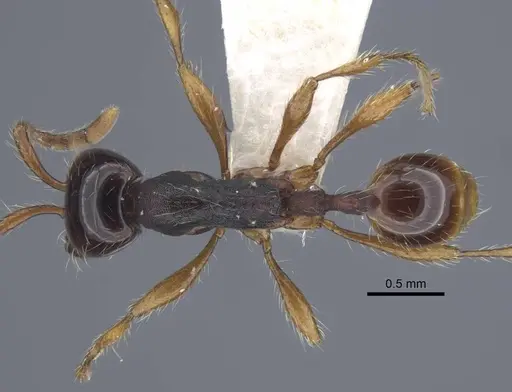
Literature
Loading distribution map...Loading products...