
Aenictus koloi
- Sci. Name
- Aenictus koloi
- Subfamily
- Dorylinae
- Author
- Gómez, 2022
- Distribution
- Found in 1 countries
Introduction
Aenictus koloi is a recently described army ant species from the primary forests of West Africa. Workers were first collected in 2019 in Ivory Coast's Taï National Park and later found in Ghana, making this one of the least-known ant species in the hobby . The workers are exceptionally small for an army ant, with a head width of 0.56mm and a mesosoma length of 1.06mm . Unlike most ant species available to hobbyists, only workers have ever been collected - no queens, males, or colony foundations have been documented, making captive keeping currently impossible .
Quick Summary
- Difficulty: Expert
- Origin & Habitat: Ivory Coast and Ghana, West Africa. Found in primary forest at 200m elevation, foraging on the ground [1][2].
- Colony Type: Unknown, only workers have been collected. No queens or colony structure has been documented [2].
- Size & Growth:
- Queen: Size data unavailable, queens have never been collected [2].
- Worker: Size data unavailable, only fragmentary measurements exist (head width 0.56mm, mesosoma 1.06mm) [1].
- Colony: Unknown, no colony size data exists for this species.
- Growth: Unknown
- Development: Unknown, no developmental data exists for this species. (No data available.)
- Antkeeping:
- Temperature: Likely 24-28°C based on tropical West African habitat. Keep warm and stable.
- Humidity: Likely high (70-80%) based on primary forest floor conditions. Keep substrate consistently moist.
- Diapause: No, tropical species active year-round [2].
- Nesting: Unknown, no natural nest observations exist [2].
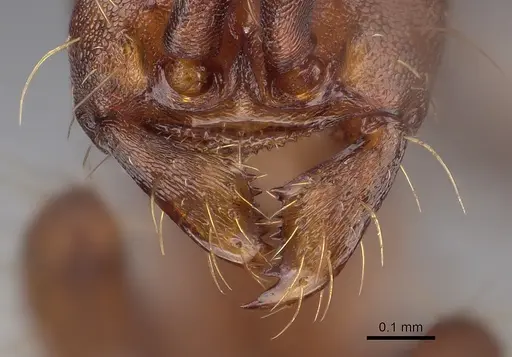
- Behavior: Ground-foraging army ant that hunts other ants and termites [2]. Workers are extremely small and can pass through standard ant keeping mesh, creating severe escape risk. They lack stingers and defend with mandibles.
- Common Issues: only workers are known, no method exists to found a captive colony., extreme escape risk due to tiny size requires specialized containment., specialized predatory diet on other ants and termites is difficult to maintain., unknown colony structure means even wild-caught colonies cannot be established., lack of queens means colony death is permanent, no replacement reproductives available., no developmental data exists to guide captive breeding attempts.
Why Aenictus koloi Cannot Currently Be Kept
Aenictus koloi presents a unique problem for ant keepers: science has never found a queen [2]. Every colony in captivity requires a queen to lay eggs and produce workers. Without observed queens, males, or nuptial flights, we simply do not know how these colonies reproduce or how new nests are founded. The species was described in 2022 from workers collected in Ivory Coast, plus two additional workers from Ghana [1][2]. Until researchers discover the reproductive castes and document their founding behavior, keeping this species is impossible. Even if you collected workers from the wild, the colony would slowly die off as workers age, with no way to replace them.
Identification and Size
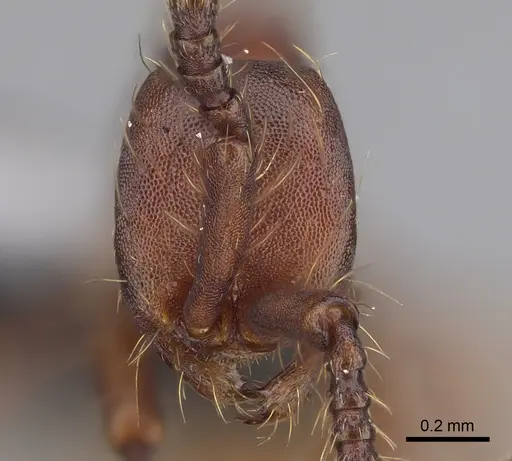
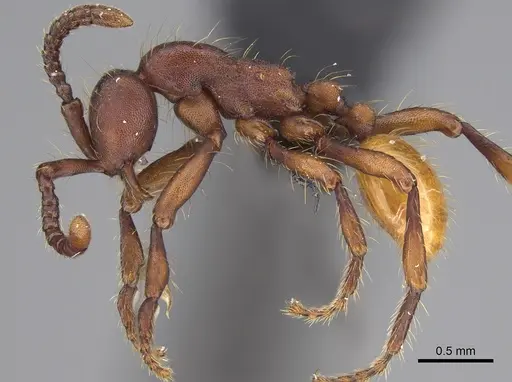
These are exceptionally small ants. Workers have a head width of just 0.56mm and a mesosoma length of 1.06mm [1]. The head shows a net-like (reticulated) texture, and the leg femurs are cylindrical rather than swollen [1]. Their overall color is brown with a brighter yellowish-brown abdomen [1]. A small projection under the waist called the subpetiolar process is poorly developed and tiny [1]. If you somehow obtained these ants, you would need magnification to confirm their identity.
Natural History and Habitat
Researchers collected the type series by hand in November 2019 at the Taï Research Centre in Taï National Park, Ivory Coast [2]. The habitat is primary forest at 200 meters elevation [2]. Workers were found foraging on the ground, suggesting they hunt surface prey rather than foraging in trees [2]. This ground-foraging behavior differs from some army ants that raid columns in vegetation. The climate is tropical, with consistent temperatures and high humidity year-round, suggesting these ants do not experience seasonal dormancy.
Theoretical Care Requirements
While we cannot provide a standard care guide, we can infer basic needs from the collection data. The tropical West African location suggests keeping them warm, around 24-28°C. The primary forest floor habitat indicates high humidity requirements, roughly 70-80%. However, these are merely inferences. We do not know their nest structure preferences, whether they need specific soil types, or how much space a colony requires. Army ants typically need large foraging areas to accommodate their raiding behavior. [2]
Feeding Ecology
Aenictus are true army ants that prey primarily on other ants and termites. Workers lack stingers and instead use their mandibles to subdue prey. In captivity, they would require a constant supply of small ant colonies or termites to raid, which presents obvious practical challenges. Unlike many pet ant species that accept honey or sugar water, army ants are almost exclusively predatory and would likely ignore sweet foods entirely.
Frequently Asked Questions
Can I keep Aenictus koloi in a test tube?
No. Test tubes are designed for claustral founding queens, and no queens of this species have ever been documented. Even if you had workers, they would require massive space for army ant raiding behavior, far more than a test tube provides.
How long until Aenictus koloi gets first workers?
Unknown. Since no founding behavior has been observed and no queens are known, we have no data on development timelines.
What do Aenictus koloi eat?
Based on typical Aenictus behavior, they likely prey on other ants and termites. They are specialized predators and would not accept standard ant foods like honey or seeds.
How big do Aenictus koloi colonies get?
Unknown for this specific species. Related Aenictus army ants maintain colonies ranging from several hundred to thousands of workers, but A. koloi may differ.
Do Aenictus koloi need hibernation?
No. They come from tropical West Africa where temperatures remain stable year-round. They likely remain active throughout the year.
Are Aenictus koloi dangerous?
They are extremely small and unlikely to penetrate human skin, but army ants can bite. However, they pose no significant danger to humans due to their size.
Can I keep multiple Aenictus koloi queens together?
This question cannot be answered because no queens have ever been found. We do not know if this species has one queen or multiple queens.
Why are there no Aenictus koloi queens available?
Scientists have only collected workers. Army ant queens are often hidden deep in nests and may only be present during certain colony phases. The species was described in 2022,so research is still in early stages.
Report an Issue
The current care sheet is based fully on literature. See inconsistencies, or something that's incorrect? Please , it will be resolved after review from an admin. Contributing to the blogs tab also helps providing information, to make us be able to further improve the caresheets. Thank you for your support!
References

This caresheet is licensed under CC BY-SA 4.0 .
Community Blogs
KGCOL00552
View on AntWeb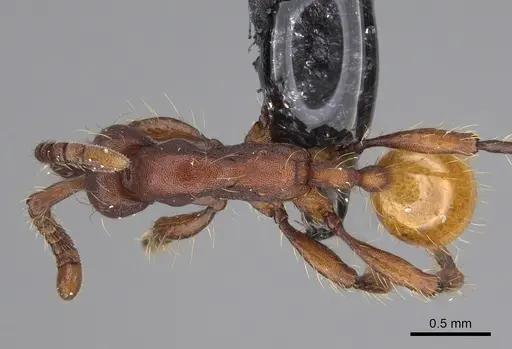
Literature
Loading distribution map...Loading products...