
Aenictus dentatus
- Sci. Name
- Aenictus dentatus
- Subfamily
- Dorylinae
- Author
- Forel, 1911
- Distribution
- Found in 2 countries
Introduction
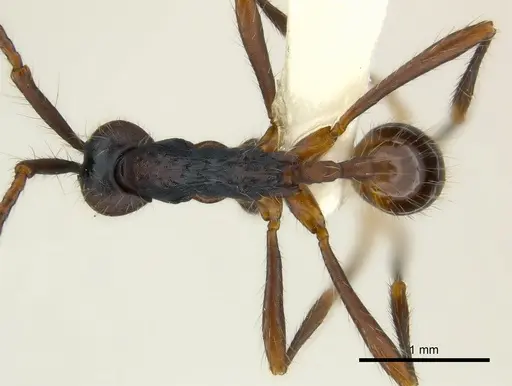
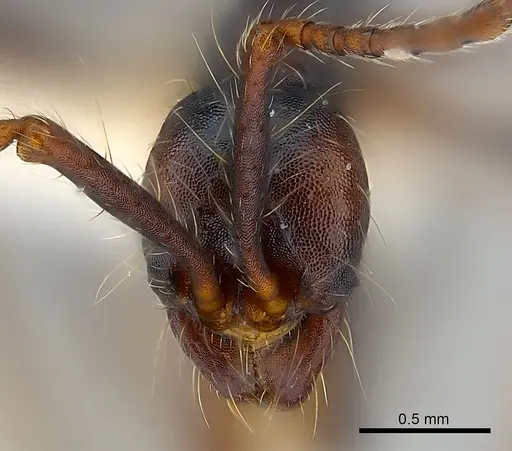
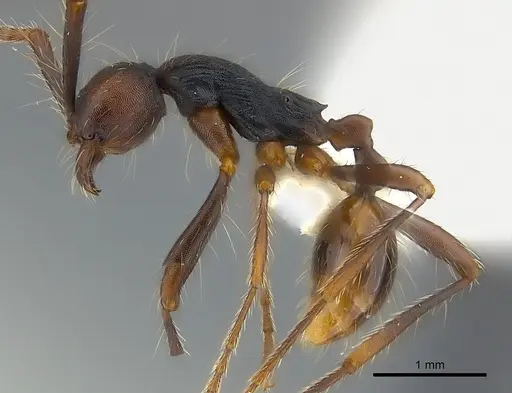
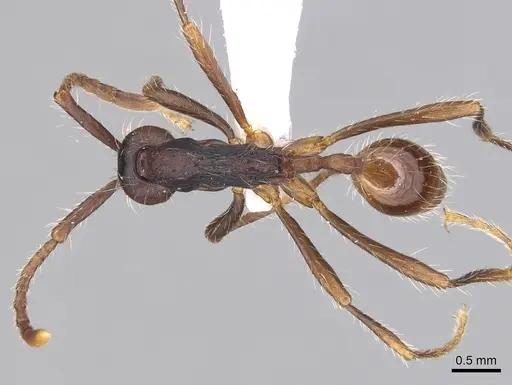
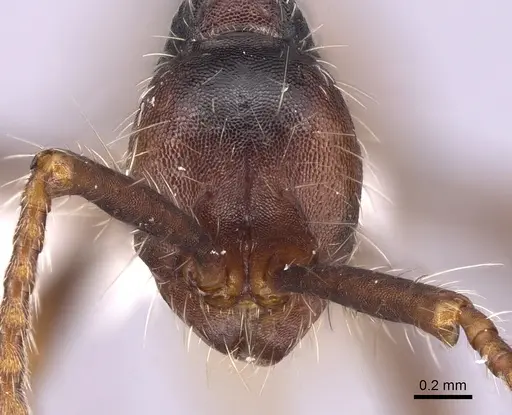
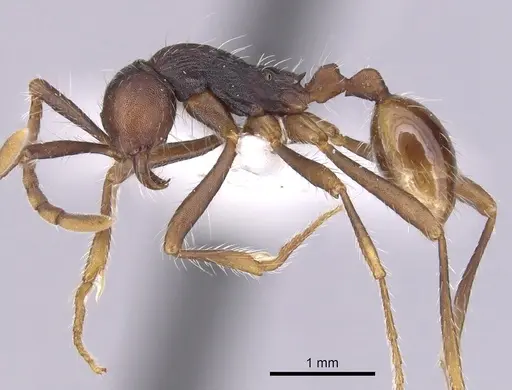
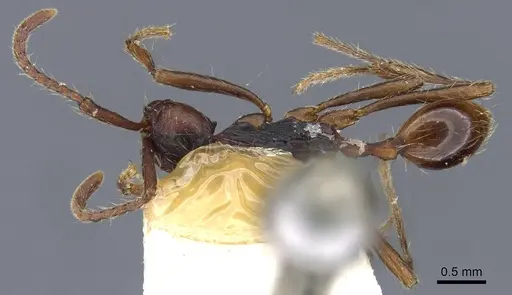
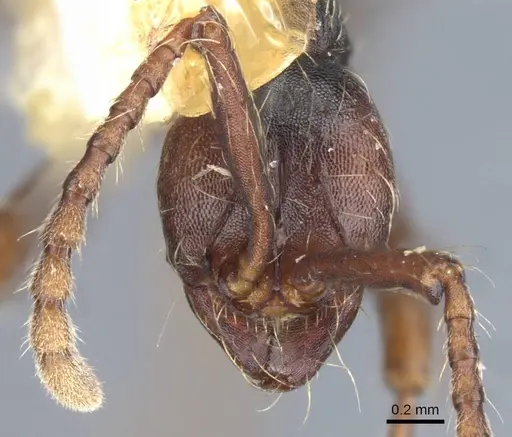
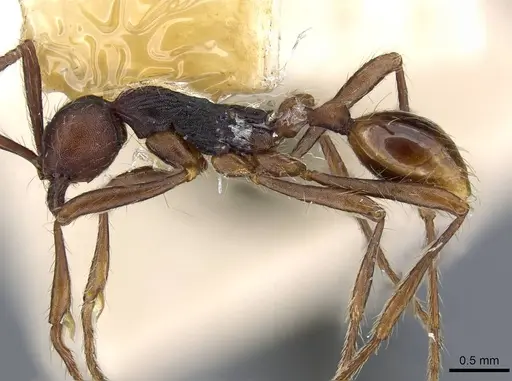
Aenictus dentatus is a small army ant species found throughout Southeast Asia and southern China. Workers measure approximately 4.4-4.6 mm in total length, with a distinctive reddish-brown coloration and unusually long antennae that extend beyond the head . This species belongs to the Aenictus pachycerus group, characterized by a sharp tooth-like ridge on the propodeum that overhangs the declivity . Unlike most ants, these are true army ants that lack permanent nests and instead roam the forest floor in organized raids, hunting other ant colonies day and night .
Quick Summary
- Difficulty: Expert
- Origin & Habitat: Tropical forests of Thailand, Malaysia, Borneo, Sumatra, Java, and India, found in primary and disturbed forests from sea level up to 1,300 meters elevation [1][5].
- Colony Type: Colony structure unconfirmed, all known specimens are workers only, with no queens ever collected [5].
- Size & Growth:
- Queen: Unknown, queens have never been collected or documented [5].
- Worker: 4.4-4.6 mm total length [1][2].
- Colony: Unknown, likely contains thousands of workers based on typical army ant colony sizes.
- Growth: Unknown
- Development: Unknown, founding behavior has never been documented [5]. (Queens have never been observed, making captive colony founding impossible.)
- Antkeeping:
- Temperature: 24-28°C, maintain warm tropical conditions [1].
- Humidity: High humidity with damp substrate, replicate tropical forest floor conditions [1].
- Diapause: No, tropical species remain active year-round [1].
- Nesting: Nomadic with no permanent nest. Requires massive space for natural raiding behavior [5].
- Behavior: Highly aggressive specialist predators that hunt other ants day and night. Extremely nomadic, forming temporary bivouacs instead of permanent nests. Workers are small enough to escape through gaps smaller than 1mm [1].
- Common Issues: impossible to feed sustainably, requires constant supply of living ant colonies, primarily Pheidole species., nomadic behavior causes stress and death in confined spaces like test tubes or formicaria., tiny size allows escape through gaps smaller than 1mm., queens are unknown, colonies cannot be started from single queens.
Natural History and Raiding Behavior
Aenictus dentatus is a specialist predator of other ants, with Pheidole species comprising approximately 90% of their prey [4]. They conduct raids day and night through leaf litter, with columns appearing on the surface only briefly before returning underground [4]. When attacking colonies, they pursue prey up to 2 meters high on tree trunks and disable soldier ants by cutting off their gasters before carrying adults and brood back to their temporary camp [6]. This species is a column raider that transports prey through the leaf litter layer rather than openly on the surface [4].
Why These Ants Cannot Be Kept Conventionally
Aenictus dentatus represents the extreme end of ant-keeping difficulty. As true army ants, they are nomadic and lack a permanent nest, instead forming temporary living structures called bivouacs [5]. Standard test tubes and formicaria are completely unsuitable, confinement causes rapid colony death. They require massive spaces to accommodate their raiding columns. Additionally, they are only known from worker collections, queens have never been documented in the field, making colony founding impossible [5].
Housing Requirements
If attempted for research purposes only, they would require a room-sized enclosure with deep leaf litter, soil, and complex terrain to allow natural raiding behavior. The enclosure would need perfect escape prevention, workers are approximately 4.4-4.6 mm long and can pass through very small gaps [1]. Standard barriers like Fluon may be insufficient, physical mesh barriers of extremely fine grade would be necessary.
Feeding Requirements
This is the primary barrier to keeping. They are obligate predators of other ants, specifically requiring Pheidole colonies [4][6]. A single colony would need multiple ant colonies fed to them weekly or daily. They do not accept sugar water, seeds, or standard feeder insects, they hunt and consume only other ants [4]. Their prey size averages around 4.5 mm, roughly equal to their own body length [6].
Temperature and Humidity
Maintain tropical forest floor conditions: 24-28°C with high humidity and damp substrate [1]. They inhabit areas from sea level to 1,300 meters elevation but prefer warm, stable temperatures [1]. No winter rest period is required as they are a tropical species.
Frequently Asked Questions
Can I keep Aenictus dentatus in a test tube?
No. Test tubes are completely unsuitable for these nomadic army ants. They require massive spaces to accommodate their raiding behavior and will die quickly in confined spaces [5].
What do Aenictus dentatus eat?
They are specialist predators of other ants, primarily Pheidole species which make up 90% of their diet, along with Nylanderia and other small ants [4][1]. They do not accept sugar water or standard feeder insects.
How long until Aenictus dentatus get their first workers?
Unknown. Queens have never been collected or observed founding colonies, so development timelines are unconfirmed [5].
Do Aenictus dentatus sting?
As members of the army ant subfamily Dorylinae, they possess a functional sting. However, their small size means they pose minimal danger to humans [5].
Are Aenictus dentatus good for beginners?
Absolutely not. They are among the most challenging ants to keep, requiring specialized facilities, constant access to living ant prey, and massive enclosures. They are suitable only for research institutions.
How big do Aenictus dentatus colonies get?
Exact numbers are unknown, but as army ants, colonies likely contain thousands of workers.
Do Aenictus dentatus need hibernation?
No. They are tropical ants from Southeast Asia and remain active year-round [1].
Can I start a colony from a single queen?
No. Queens have never been documented for this species. All known specimens are workers only [5].
Report an Issue
The current care sheet is based fully on literature. See inconsistencies, or something that's incorrect? Please , it will be resolved after review from an admin. Contributing to the blogs tab also helps providing information, to make us be able to further improve the caresheets. Thank you for your support!
References

This caresheet is licensed under CC BY-SA 4.0 .
Community Blogs
Literature
Loading distribution map...Loading products...