
Aenictus camposi
- Sci. Name
- Aenictus camposi
- Subfamily
- Dorylinae
- Author
- Wheeler & Chapman, 1925
- Distribution
- Found in 3 countries
Introduction
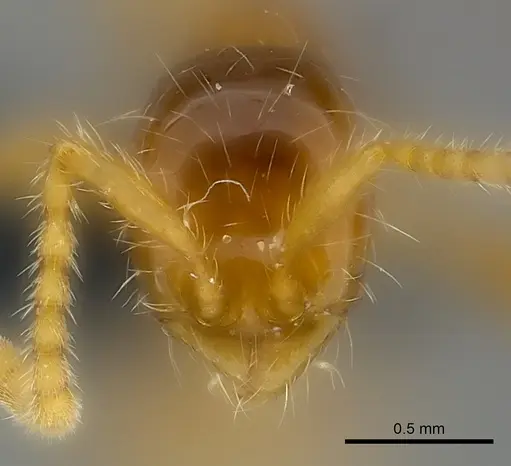
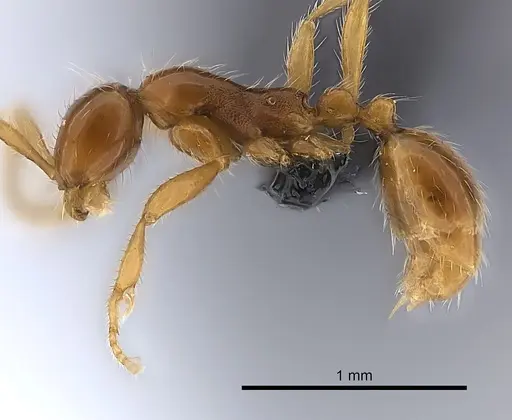
Aenictus camposi are tiny army ants from Southeast Asia. Workers measure 2.6-2.7 mm total length and have a pale yellow body with a light brown mesosoma . They inhabit the Philippines, Thailand, Malaysia (Sabah, Sarawak), Indonesia (Sumatra, Borneo), and Singapore , found from lowland to highland forests in both natural and disturbed areas . Unlike ants that build permanent nests, these nomadic ants form temporary shelters called bivouacs - living clusters of worker bodies that protect the queen and brood. The type series was discovered in a bivouac beneath the bark of a fallen tree . They are specialized hunters that prey almost exclusively on other small ants, particularly Paratrechina species and Prenolepis naoroji .
Quick Summary
- Difficulty: Expert
- Origin & Habitat: Tropical Southeast Asia including the Philippines, Thailand, Malaysia (Sabah, Sarawak), Indonesia (Sumatra, Borneo), and Singapore [1][2]. Found in lowland to highland forests, both natural and disturbed [1]. Records from southern China are likely misidentifications of Aenictus vieti or Aenictus gutianshanensis [2].
- Colony Type: Likely single-queen with massive worker numbers (typical army ant structure), though exact queen number is unconfirmed. Colonies are nomadic and do not build permanent nests.
- Size & Growth:
- Queen: Size data unavailable
- Worker: 2.6-2.7 mm total length [1]
- Colony: Unknown, typical Aenictus colonies reach thousands of workers, but specific data for this species is unavailable
- Growth: Fast (inferred from tropical army ant biology)
- Development: Unknown, specific development timeline unconfirmed for this species (Tropical army ants typically develop faster than temperate species, but exact timing for A. camposi is undocumented.)
- Antkeeping:
- Temperature: Warm tropical conditions, approximately 24-28°C. Provide a gentle gradient with a warm side.
- Humidity: High humidity required, keep nest material damp but not waterlogged, similar to forest floor conditions [1].
- Diapause: No, this is a tropical species that remains active year-round [2].
- Nesting: Nomadic bivouacs only, they do not build permanent nests. In nature they form temporary bivouacs under bark, in soil cavities, or in leaf litter [3][5]. Standard static nests are unsuitable.
- Behavior: Highly aggressive specialized predators that conduct raids on other ant colonies [4]. They are hypogeic, meaning they forage underground and in leaf litter, though they will emerge into the open to raid [4][5]. Workers have sparse hair coverage and smooth shiny bodies [1]. Their small size makes escape prevention difficult with standard setups.
- Common Issues: escape prevention is difficult due to 2.6mm worker size, they can pass through standard mesh and small gaps., cannot survive on standard ant foods like honey or insects, they require live ant prey (specialized predators of Paratrechina and other small ants) [4]., nomadic behavior means they will not stay in a standard nest, they need continuous space to move and form bivouacs., maintaining a supply of appropriate live prey ants is extremely difficult and may violate regulations on transporting ants.
The Army Ant Lifestyle
Aenictus camposi lives as a true army ant, which means they are nomadic hunters that do not build permanent nests [3][5]. Instead, they form bivouacs, temporary shelters made from the living bodies of the workers themselves, clustering together to protect the queen and brood. The type specimens were found in a bivouac beneath the bark of a fallen tree [3]. In captivity, standard acrylic or plaster nests with defined chambers will not work. These ants need space to wander and will eventually abandon any fixed nesting site.
Feeding and Diet
These ants are specialized predators of other ants. Research in Malaysia found they feed specifically on small Formicinae ants, particularly five different species of Paratrechina and Prenolepis naoroji [4][1]. Their prey averages 1.9 mm in length, roughly three-quarters the size of the Aenictus workers themselves [4]. This specialization makes them nearly impossible to keep in standard ant-keeping setups. They will not accept honey, sugar water, or typical feeder insects like mealworms or crickets. You would need a constant supply of live small ants.
Housing Challenges
Standard ant-keeping equipment is unsuitable for Aenictus camposi. Their nomadic behavior means they require extensive foraging space, essentially a large habitat where they can roam freely and form temporary bivouacs. Their tiny size (2.6-2.7 mm) presents an escape risk [1]. They can squeeze through small gaps in standard aquarium silicone and pass through standard steel mesh. You would need specialized fine mesh and perfectly sealed containers. Because they are hypogeic (underground foragers) [4], they need deep substrate layers to simulate natural foraging conditions, yet they also need open areas for raiding.
Temperature and Humidity
As a tropical species restricted to tropical regions [2], Aenictus camposi requires warm, stable temperatures. Aim for roughly 24-28°C with a gentle heat gradient so the colony can self-regulate. They inhabit lowland to highland forests where humidity remains high [1]. Keep the substrate consistently moist, think damp forest floor, not wet swamp. The nest material should feel damp to the touch but not have standing water. Good ventilation is essential to prevent mold in these humid conditions, though airflow must be minimal enough to maintain humidity.
Colony Structure and Growth
While specific queen numbers for Aenictus camposi are unconfirmed, army ants typically maintain colonies with a single queen (monogyne) but with massive worker populations. New colonies form through fission (splitting) rather than individual queens founding alone. This means you cannot start a colony with a single queen in a test tube, you would need to obtain an entire established colony section with workers, brood, and a queen. Growth rate is likely fast given their tropical nature, but specific development timelines from egg to worker remain undocumented for this species. [1][3]
Frequently Asked Questions
Can I keep Aenictus camposi in a test tube?
No. Army ants like Aenictus camposi are nomadic and do not stay in fixed nests. They form temporary bivouacs and require extensive space to move. A test tube is completely unsuitable and will result in the colony dying or escaping [3][5].
What do Aenictus camposi eat?
They are specialized predators of other small ants. They specifically hunt Paratrechina species and Prenolepis naoroji [4][1]. They will not accept sugar water, honey, or standard feeder insects. You would need a constant supply of live ant prey, making them extremely difficult to feed in captivity.
How big do Aenictus camposi colonies get?
Exact colony size is unknown for this species, but typical Aenictus colonies reach thousands of workers. Army ants maintain massive colonies compared to most other ant species.
Are Aenictus camposi good for beginners?
No. They are expert-only ants that require specialized housing, constant live ant prey, and massive colony sizes to survive. They are not recommended for antkeepers.
Do Aenictus camposi need hibernation?
No. They are a tropical species from Southeast Asia and remain active year-round. They do not require cooling or hibernation (diapause) [2].
How do I house Aenictus camposi?
Standard ant nests will not work. They need large, sealed habitats with extremely fine mesh to prevent escapes given their 2.6mm size [1]. They require deep substrate for underground foraging and open space for raiding, plus conditions that allow them to form bivouacs rather than using defined chambers.
Why are my Aenictus camposi dying?
Likely causes include: incorrect diet (they need live ant prey, not honey or insects) [4], unsuitable housing (they need nomadic space, not static nests), or escapes (they are tiny and squeeze through small gaps) [1].
Report an Issue
The current care sheet is based fully on literature. See inconsistencies, or something that's incorrect? Please , it will be resolved after review from an admin. Contributing to the blogs tab also helps providing information, to make us be able to further improve the caresheets. Thank you for your support!
References

This caresheet is licensed under CC BY-SA 4.0 .
Community Blogs
CASENT0217372
View on AntWeb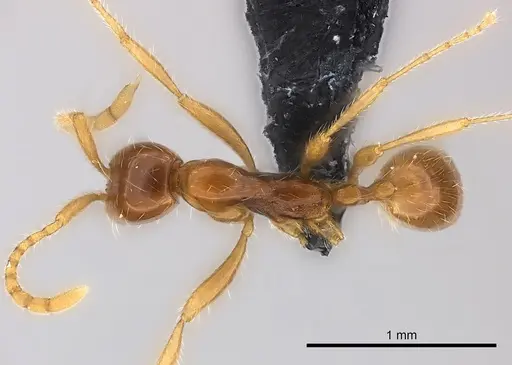
Literature
Loading distribution map...Loading products...