
Aenictus asantei
- Sci. Name
- Aenictus asantei
- Subfamily
- Dorylinae
- Author
- Campione <i>et al.</i>, 1983
- Distribution
- Found in 1 countries
Introduction
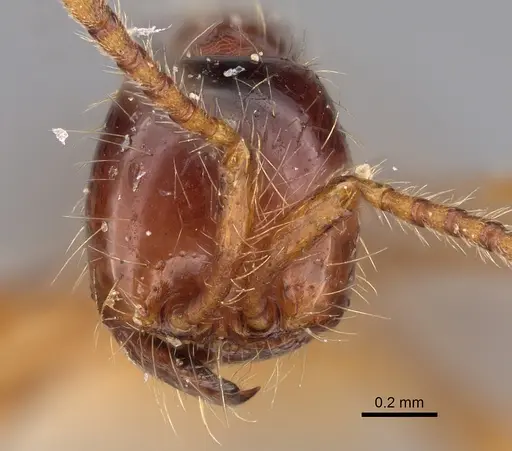
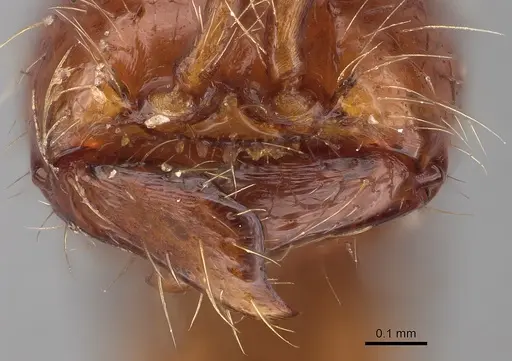
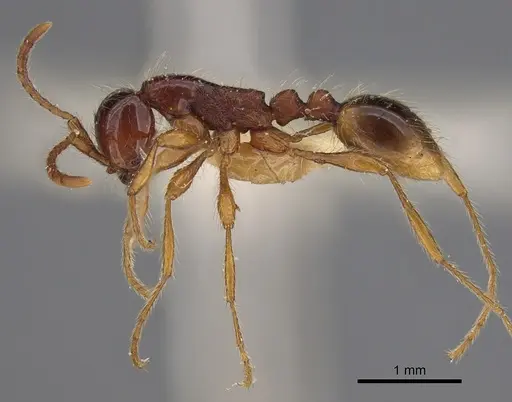
Aenictus asantei is a West African army ant species found in Ghana and Nigeria. Workers measure 3.47-3.89 mm total length and have a distinctive appearance - they are dark reddish-brown with unusually long mandibles that cross over each other when closed . They are completely blind, having no eyes, and navigate using chemical trails . This species is one of the larger Afrotropical Aenictus species . Unlike the massive swarms of driver ants, A. asantei raids in organized columns - branching trails of workers that spread out to hunt prey . They are specialist predators of other ants, particularly targeting Pheidole species and collecting brood and adults as food .
Quick Summary
- Difficulty: Expert
- Origin & Habitat: Ghana and Nigeria in West Africa. Found in coastal scrub, grassland, and cultivated farmland such as cassava and cocoa plantations [2].
- Colony Type: Unknown. Based on typical army ant patterns, likely maintains single-queen colonies, but this is unconfirmed for this species.
- Size & Growth:
- Queen: Approximately 9.86 mm total length [2].
- Worker: 3.47-3.89 mm total length [1].
- Colony: Unknown. Army ant colonies typically reach thousands of workers, but specific counts for this species are unconfirmed.
- Growth: Unknown.
- Development: Unknown, development time has not been documented for this species. (No studies have tracked brood development in this species.)
- Antkeeping:
- Temperature: Unconfirmed. Based on tropical Ghana habitat, likely requires warm stable conditions around 24-28°C year-round [2].
- Humidity: Unconfirmed. Coastal scrub and farmland habitats suggest moderate to high humidity [2].
- Diapause: No, tropical species that remains active year-round [2].
- Nesting: Subterranean in nature. In captivity would require a large naturalistic setup with soil and extensive foraging space to accommodate their nomadic behavior [2].
- Behavior: Column-raiding army ants. They forage in organized branching trails rather than swarms. Workers are blind and rely entirely on chemical trails and touch. They are aggressive predators of other ant species but harmless to humans. Their small size means they can escape through minute gaps [2][1].
- Common Issues: they only eat other ants, making feeding extremely difficult and ethically problematic for most keepers., they emigrate frequently (move nests) and require huge spaces to accommodate their nomadic lifestyle., tiny size (3.5 mm) means escapes are likely without perfect barriers and fine mesh., they require consistent warmth and high humidity, drying out quickly kills them., colony founding is unstudied, starting a new colony from a queen may be impossible with current knowledge.
Natural History and Raiding Behavior
Aenictus asantei is a true army ant from West Africa. Workers have no eyes and navigate using chemical trails laid by their nestmates [2]. They hunt in organized columns, branching lines of workers that spread out to find prey, rather than forming the massive swarms seen in driver ants [2]. These columns can be one to four workers wide and may stretch for meters [2]. When they find other ants, they attack and carry back the brood and adults to eat [2]. They are especially fond of Pheidole ants and have been seen carrying queen pupae, workers, and larvae [2]. Colonies are nomadic and frequently move house, with observations of emigrations happening in the morning around 9:50 AM [2].
Housing Challenges
Keeping these army ants presents extreme challenges. They nest underground in soil and move frequently, one observation describes a colony emigrating at 9:50 AM with workers carrying prey [2]. This nomadic behavior means they need enormous spaces to roam and will quickly outgrow or abandon standard formicaria. Their small size, workers are only 3.47-3.89 mm long, combined with their active foraging means escape prevention must be perfect [1][2]. They require a setup that allows for extensive horizontal foraging trails while maintaining high humidity in the nest area, which is difficult to achieve in typical ant farms.
Feeding Requirements
These ants are obligate predators of other ant species. In the wild, they specifically target Pheidole colonies, taking eggs, larvae, pupae, and adults as food [2]. This makes them nearly impossible to feed in captivity for ethical and practical reasons. You would need a constant supply of live ant colonies to sustain them. They do not accept standard ant foods like honey water, seeds, or dead insects. This dietary specialization is the primary reason they are considered unkeepable by most antkeepers.
Climate and Environment
Native to coastal Ghana and Nigeria, these ants live in warm, humid conditions. While exact temperature requirements are unstudied, they likely need tropical conditions around 24-28°C year-round with high humidity [2]. They do not require hibernation. The nest soil should be kept moist but not waterlogged, similar to the conditions in coastal scrub and farmland where they are found [2].
Frequently Asked Questions
Can I keep Aenictus asantei in a test tube?
No. Test tubes are far too small for these active army ants. They need large spaces to form their raiding columns and cannot be confined to a test tube [2].
What do Aenictus asantei eat?
They eat other ants, specifically species like Pheidole. They collect ant brood (eggs, larvae, pupae) and adults as prey [2].
How long until first workers for Aenictus asantei?
Unknown. The development timeline from egg to worker has not been documented for this species [2].
Are Aenictus asantei good for beginners?
No. They are expert-level ants due to their specialized diet of other ants, nomadic behavior, and space requirements [2].
Do Aenictus asantei need hibernation?
No. They come from tropical West Africa and remain active year-round [2].
Can I keep multiple Aenictus asantei queens together?
Unknown. Combining unrelated queens has not been documented and is not recommended [2].
Why are my Aenictus asantei dying?
The most likely causes are lack of live ant prey (they cannot eat sugar or dead insects), insufficient humidity, or inadequate space for their raiding behavior [2].
How big do Aenictus asantei colonies get?
Unknown. Army ant colonies are typically large, but specific counts for this species have not been published [2].
Report an Issue
The current care sheet is based fully on literature. See inconsistencies, or something that's incorrect? Please , it will be resolved after review from an admin. Contributing to the blogs tab also helps providing information, to make us be able to further improve the caresheets. Thank you for your support!
References

This caresheet is licensed under CC BY-SA 4.0 .
Community Blogs
NHMUK012849241
View on AntWeb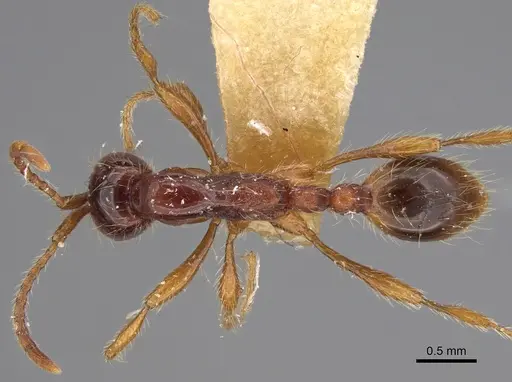
Literature
Loading distribution map...Loading products...