
Aenictus arabicus
- Sci. Name
- Aenictus arabicus
- Subfamily
- Dorylinae
- Author
- Sharaf & Aldawood, 2012
- Distribution
- Found in 1 countries
Introduction
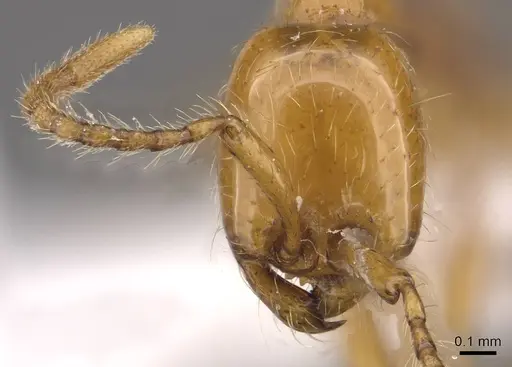
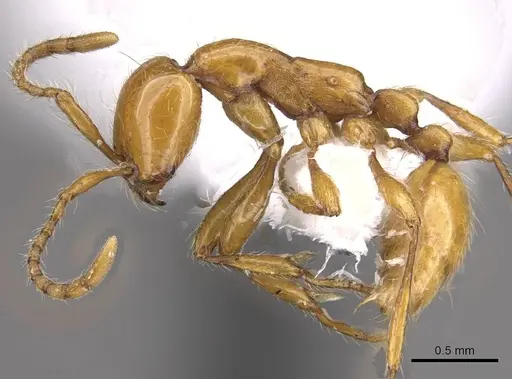
Aenictus arabicus is a tiny yellow army ant and the only known species of its genus from Saudi Arabia . Workers measure 2.75-3.12 mm in total length with smooth, shiny bodies and long antennae that reach about two-thirds of the head when laid back . Scientists discovered 22 workers in April 2012 under leaf litter next to a guava tree on a farm at 1300m elevation in Saudi Arabia's Al-Baha Province . The soil was wet from irrigation and the site sat in a narrow valley between mountains and coastal plains . This species belongs to the Aenictus wroughtonii species group, which includes species from Greece, India, and Thailand . No queens or males have ever been found, making captive keeping impossible with current knowledge .
Quick Summary
- Difficulty: Expert (currently impossible)
- Origin & Habitat: Al-Baha Province, Saudi Arabia, specifically a farm at 1300m elevation in the Afrotropical region [1][3]
- Colony Type: Unknown, only the worker caste has been documented [1]
- Size & Growth:
- Antkeeping:
- Temperature: Unknown, the type locality has mild to warm temperatures year-round at 1300m elevation [1]. Start around 22-25°C and observe.
- Humidity: High humidity required, found in well-saturated soil under leaf litter [1]. Keep substrate damp but not waterlogged.
- Diapause: Unknown, likely not required given the mild climate, but unconfirmed.
- Nesting: Unknown, army ants are typically nomadic and do not build permanent nests [3].
- Behavior: Unknown specifically for this species. As members of the army ant genus Aenictus, they likely conduct group raids like related species [3]. Workers are extremely small at under 3mm, so escape prevention would be nearly impossible [1].
- Common Issues: no queens are known, making it impossible to start a captive colony., only 22 specimens exist in scientific collections, so obtaining workers is impossible for hobbyists., extremely small size means they can escape through the tiniest gaps., army ant biology requires massive foraging ranges not achievable in standard setups.
Why This Species Cannot Currently Be Kept
You cannot keep Aenictus arabicus because no queens exist in captivity or even in scientific collections [1]. Scientists have only found 22 workers total, all from one collection event in 2012 [1]. Without a queen, workers cannot reproduce, lay eggs, or establish a colony. Even if you obtained workers, they would live only weeks or months before dying of old age. Additionally, army ants require specialized care involving massive foraging territories and frequent nest moves that standard ant keeping setups cannot provide. This species remains a scientific curiosity only.
Natural History and Habitat
The type locality sits at 1300 meters elevation in a narrow valley between Saudi Arabia's coastal plain and mountain ranges [1]. The climate here differs sharply from the hot, dry lowlands, the mountains create clouds and fog, especially in winter, bringing higher rainfall [1]. Workers were actively foraging on the ground under leaf litter next to a guava tree in April [1]. The soil contained accumulated organic matter and was well-saturated from irrigation [1]. This suggests the species prefers humid, shaded microhabitats rather than arid conditions.
Taxonomic Significance
Aenictus arabicus represents the first and only record of army ants (subfamily Dorylinae) from Saudi Arabia [1]. It belongs to the Aenictus wroughtonii species group, which includes species from Greece, India, and Thailand [1][2]. The species is named after the Arabian Peninsula [1]. Its discovery in the Afrotropical region of southwestern Saudi Arabia suggests more undiscovered ant species may await finding in this isolated mountain area [1].
Frequently Asked Questions
Can I keep Aenictus arabicus in a test tube setup?
No. You cannot keep this species because no queens have ever been found [1]. Even if you had workers, they would die without reproducing. Additionally, army ants need specialized setups with huge foraging areas, not test tubes.
Where can I buy Aenictus arabicus?
You cannot buy this species. Only 22 workers exist in the world, all preserved in scientific museums [1]. No live colonies exist in captivity.
How long until Aenictus arabicus gets their first workers?
Unknown. Scientists have never observed a queen or founding colony of this species [1].
What do Aenictus arabicus eat?
Unknown specifically for this species. Other Aenictus species are army ants that prey on other ants and small arthropods, but the diet of A. arabicus has not been studied [3].
Do Aenictus arabicus need hibernation?
Unknown. They come from a region with mild winters, so diapause is likely unnecessary, but this has not been confirmed [1].
Are Aenictus arabicus dangerous?
They are extremely small ants (under 3mm) and unlikely to pose any danger to humans [1]. However, like all army ants, they may possess stings or strong mandibles for hunting prey.
Why are they called army ants?
Aenictus is a genus of army ants in the subfamily Dorylinae. Army ants are known for conducting raids in groups and having nomadic lifestyles without permanent nests [3].
Can I collect Aenictus arabicus in Saudi Arabia?
The species has only been found once at a specific farm location in 2012 [1]. Even if you found them, collecting wild ants in Saudi Arabia requires permits and knowledge of local regulations. Given their extreme rarity, collection would be scientifically irresponsible.
Report an Issue
The current care sheet is based fully on literature. See inconsistencies, or something that's incorrect? Please , it will be resolved after review from an admin. Contributing to the blogs tab also helps providing information, to make us be able to further improve the caresheets. Thank you for your support!
References

This caresheet is licensed under CC BY-SA 4.0 .
Community Blogs
CASENT0280972
View on AntWeb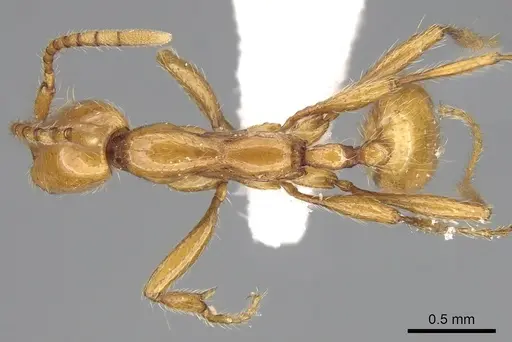
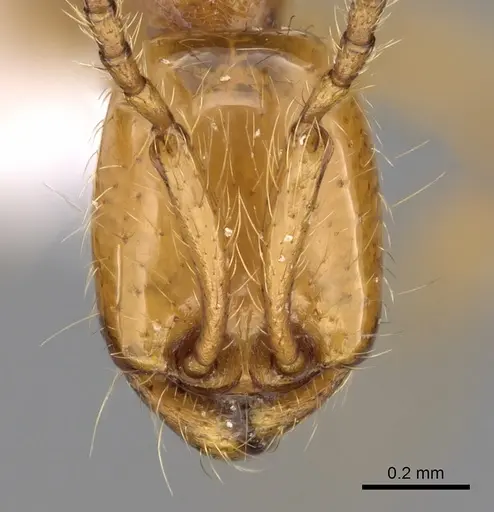
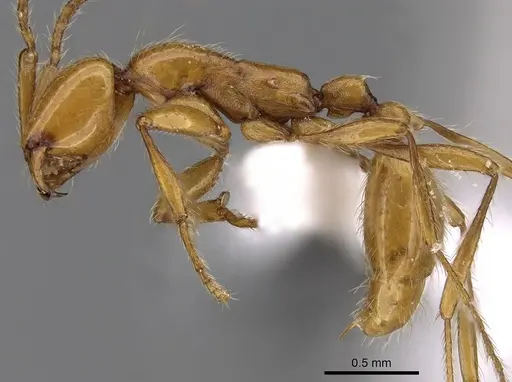
CASENT0911127
View on AntWeb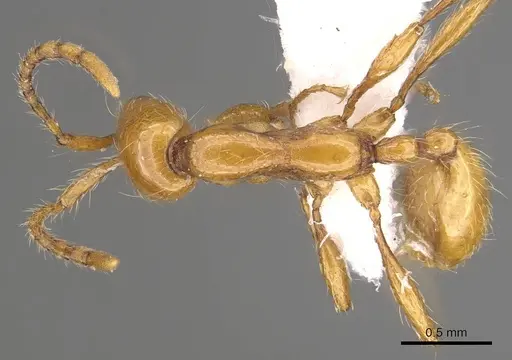
Literature
Loading distribution map...Loading products...