
Aenictus alticola
- Sci. Name
- Aenictus alticola
- Subfamily
- Dorylinae
- Author
- Wheeler, 1930
- Distribution
- Found in 1 countries
Introduction
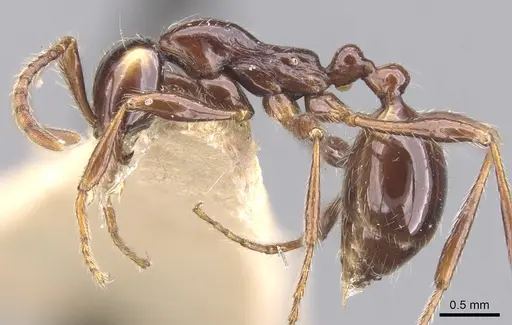
Aenictus alticola is a relatively large army ant species from the mountains of Luzon in the Philippines. Workers measure 4.35-4.75 mm in total length and display a reddish-brown coloration with a darker head and pale yellow antennal segments . This species is only known from worker specimens collected at high altitude (1,800 meters) in Luzon, specifically from a single large colony observed raiding at Polis Pass, Bontoc . The species belongs to the Aenictus laeviceps group and can be distinguished from similar species by its larger size and the triangular shape of the subpetiolar process . Nothing is known about the detailed biology of this species .
Quick Summary
- Difficulty: Expert
- Origin & Habitat: Philippines (Luzon), montane forests at 1,800m elevation [1]
- Colony Type: Army ant, colonies likely contain multiple queens (polygyne) based on typical army ant biology. No queens have ever been described for this species, only worker specimens are known [2].
- Size & Growth:
- Queen: Unknown, no queens described [2]
- Worker: 4.35-4.75 mm total length [1]
- Colony: Unknown, likely thousands of workers based on army ant biology and the large colony observed at type locality [2]
- Growth: Unknown
- Development: Unknown (Development timing is unconfirmed. Army ants typically have rapid brood development compared to other ants, but specific data for this species does not exist.)
- Antkeeping:
- Temperature: Unknown, likely 18-24°C based on high-altitude (1,800m) montane habitat [1]. Start at 22°C and observe activity levels.
- Humidity: Unknown, likely moderate to high humidity typical of montane forests. Provide gradient from moist to slightly dry.
- Diapause: Unknown, tropical highland species may slow activity during cooler months but likely do not require true hibernation.
- Nesting: Not applicable, army ants do not build permanent nests. In nature they form temporary bivouacs and are nomadic.
- Behavior: Highly aggressive army ant specialized in raiding other ant colonies and social insect nests. Workers forage in groups and are active predators. Their small size (under 5mm) means escape prevention would be extremely difficult if attempting containment [1].
- Common Issues: no queens are known to science, you cannot start a colony from a queen., army ants require massive enclosures and constant supply of live ant prey to survive., rare species with restricted range, ethical and conservation concerns regarding collection., high-altitude origin suggests specific temperature requirements that are difficult to replicate., nomadic lifestyle means they do not tolerate permanent nest structures.
Why Aenictus alticola Cannot Be Kept in Captivity
Aenictus alticola is effectively impossible to keep in a home formicarium for several fundamental reasons. First, no queens have ever been described for this species, science only knows workers [2]. Without queens, you cannot start a colony. Army ants like Aenictus reproduce by colony fission, where a mature colony splits into two, with workers taking brood and queens to new locations. This process requires an established colony to begin with. Second, army ants are obligate predators of other social insects, primarily ants. They require constant access to large amounts of live prey, specifically other ant colonies, which is impossible to provide sustainably in captivity. Third, these ants are nomadic, meaning they do not stay in one place but constantly move their bivouac (temporary nest). A static formicarium violates their basic biology. Finally, this is a rare species known only from high-altitude Luzon, making collection ethically questionable and potentially impacting wild populations.
Natural History and Army Ant Biology
While specific biology of Aenictus alticola is undocumented, we can infer patterns from the genus Aenictus. These are Old World army ants that hunt in organized raids, primarily targeting other ant species and social insect colonies. Unlike New World army ants (Eciton), Aenictus workers do not have soldiers, all workers are similar in size. They possess well-developed postpygidial glands used for chemical communication during raids [4]. Colonies are large and contain multiple queens (polygyne). When the colony grows too large, it splits through fission, with workers carrying brood and queens to establish new bivouacs. The type series of Aenictus alticola was collected from a single large colony found raiding at 6,000 feet, confirming this species follows the typical army ant lifestyle of active group predation [2].
High-Altitude Habitat and Climate
Aenictus alticola inhabits montane forests at 1,800 meters elevation in the mountains of Luzon, Philippines [1]. This high altitude suggests cooler temperature requirements than lowland tropical ants. While exact thermal preferences are unknown, the climate at 1,800m in Luzon typically ranges from 15-25°C depending on season, with high humidity and frequent mist. If attempting to keep these ants (which is not recommended), you would need to replicate these cooler montane conditions rather than typical hot tropical setups. The species was found in Polis Pass, Bontoc, an area characterized by mountain forest with rotting wood and leaf litter, typical army ant bivouac sites.
Identification and Similar Species
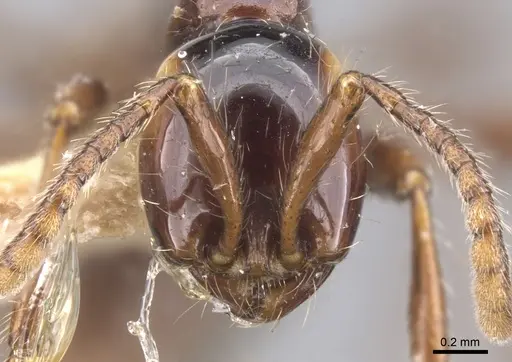
Workers of Aenictus alticola are relatively large for the genus at 4.35-4.75 mm total length [1]. They belong to the Aenictus laeviceps species group and are most similar to Aenictus luzoni, but can be distinguished by several features: Aenictus alticola is distinctly larger, has antennal scapes that are as long as or longer than the head width, and has a high, subtriangular ventral appendage on the subpetiolar process [1]. In contrast, Aenictus luzoni has shorter scapes and a rudimentary ventral appendage. The body is reddish-brown with the vertex of the head darker, and antennal segments VII-X have pale yellow ventral surfaces [1].
Frequently Asked Questions
Can I keep Aenictus alticola in a test tube or formicarium?
No. Aenictus alticola is an army ant species that cannot be kept in standard ant-keeping setups. They have no described queens (only workers are known), reproduce by colony fission rather than founding, require constant access to live ant prey, and are nomadic, meaning they do not stay in permanent nests.
How do I find a queen for Aenictus alticola?
You cannot. No queens have ever been described for this species in scientific literature. The species is only known from worker specimens collected from the wild [2]. Army ant queens are extremely difficult to find as they remain deep within the colony and do not leave to found new nests alone.
What do Aenictus alticola eat?
While specific diet studies do not exist for this species, Aenictus army ants are specialized predators of other social insects, particularly other ant species. They raid nests to steal brood (eggs, larvae, pupae) and prey on workers. They do not accept honey, sugar water, or typical ant foods, they require live prey.
What temperature do Aenictus alticola need?
Exact requirements are unknown, but they come from high-altitude montane forests at 1,800m elevation in Luzon [1]. This suggests they prefer cooler temperatures than lowland tropical ants, likely in the 18-24°C range rather than hot 28-30°C conditions.
Are Aenictus alticola dangerous?
Like most army ants, they can bite and likely have stings (typical for the genus), but at 4-5mm size they pose no serious threat to humans. However, they are aggressive predators and will attack other ants immediately if housed nearby.
How big do Aenictus alticola colonies get?
The exact size is unknown, but the type specimen series came from a single large colony found raiding in the wild [2]. Army ant colonies typically contain thousands to tens of thousands of workers.
Can I buy Aenictus alticola queens online?
No. Queens do not exist in the trade because they have never been described by scientists. Any seller claiming to have Aenictus alticola queens is misidentifying the species or selling workers that cannot start a colony.
Do Aenictus alticola need hibernation or diapause?
It is unknown if they require a winter rest period. As a tropical highland species, they may slow down during cooler months but likely do not require true hibernation like temperate ants.
Report an Issue
The current care sheet is based fully on literature. See inconsistencies, or something that's incorrect? Please , it will be resolved after review from an admin. Contributing to the blogs tab also helps providing information, to make us be able to further improve the caresheets. Thank you for your support!
References

This caresheet is licensed under CC BY-SA 4.0 .
Community Blogs
CASENT0902681
View on AntWeb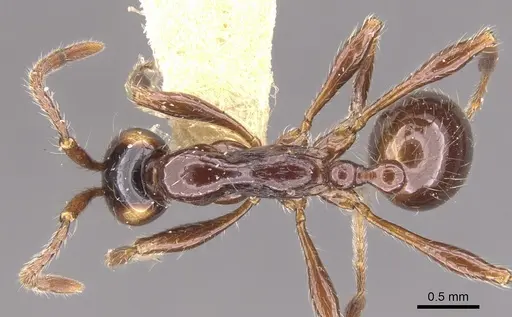
Literature
Loading distribution map...Loading products...