
Adetomyrma caudapinniger
- Sci. Name
- Adetomyrma caudapinniger
- Tribe
- Amblyoponini
- Subfamily
- Amblyoponinae
- Author
- Yoshimura & Fisher, 2012
- Distribution
- Found in 1 countries
Introduction
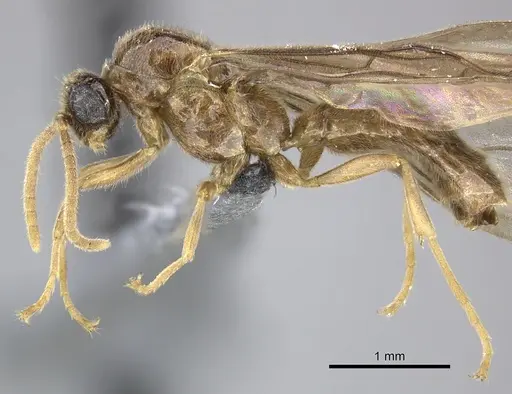
Adetomyrma caudapinniger is one of the rarest ants in the world - known only from three male specimens collected in Madagascar. Males have distinctive bilobed parameres (reproductive structures) that resemble tail fins, giving the species its name derived from Latin 'caudapinna' (tail fin) and 'gero' (have) . All specimens were collected in Miandritsara Forest at 822m elevation in the Fianarantsoa province, making this a endemic Madagascar species . The complete colony structure remains unknown since only males have ever been found - no queens, workers, or colonies have been discovered . This species represents a unique challenge in ant keeping: it cannot be kept in captivity because the queen caste has never been collected or described. Males alone cannot establish colonies - they exist solely to mate with queens during nuptial flights. Until wild colonies with queens are discovered, Adetomyrma caudapinniger will remain one of the many mysterious 'male-only' species in the genus Adetomyrma.
Quick Summary
- Difficulty: Expert (currently impossible)
- Origin & Habitat: Madagascar: low altitude rainforest at 822m elevation in Miandritsara Forest,40 km south of Ambositra, Fianarantsoa province [1].
- Colony Type: Unknown, only male specimens have been described [1].
- Size & Growth:
- Queen: Size data unavailable, queens have never been collected [1].
- Worker: Size data unavailable, workers have never been collected [1].
- Colony: Unknown, colony size has never been documented [1].
- Growth: Unknown
- Development: Unknown, no development data exists [1]. (Queens and workers have never been collected [1].)
- Antkeeping:
- Temperature: Specific requirements unknown. Based on collection from 822m elevation rainforest, moderate temperatures around 20-25°C are likely, but this is speculative.
- Humidity: Specific requirements unknown. Rainforest habitat suggests high humidity needs.
- Diapause: Unknown
- Nesting: Unknown, nesting biology has never been observed.
- Behavior: Unknown, no living colony observations exist. All knowledge comes from three preserved male specimens [1].
- Common Issues: only male specimens are known, making colony establishment impossible., no captive care protocols exist for this species., availability limited to three museum specimens., cannot be purchased or traded since queens are undiscovered.
Why This Species Cannot Currently Be Kept
Adetomyrma caudapinniger represents a special case in ant keeping: it is effectively impossible to keep because only males are known to science. The species was described from just three male specimens collected in Malaise traps in January 2007 [1]. Without knowledge of the queen caste, workers, or colony foundation behavior, there is no way to start a colony. Males cannot found colonies, they exist only to mate with queens during nuptial flights. Until researchers discover queens and workers in the wild, or successfully rear a colony from a collected queen, this species will remain unavailable to ant keepers. The specimens reside in the California Academy of Sciences collection [1], not in the pet trade.
Male Morphology and Identification
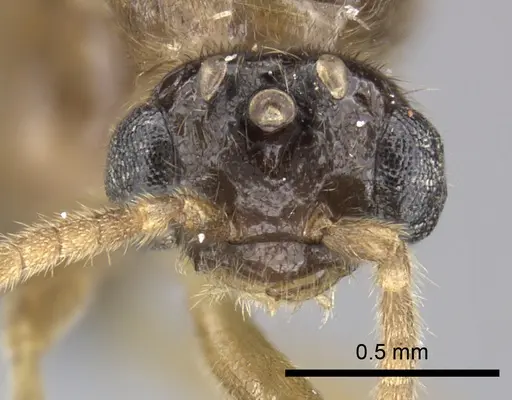
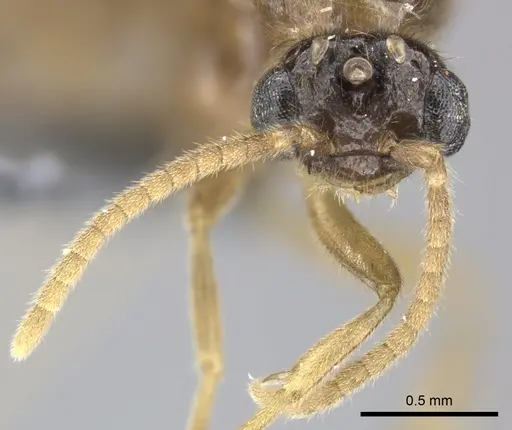
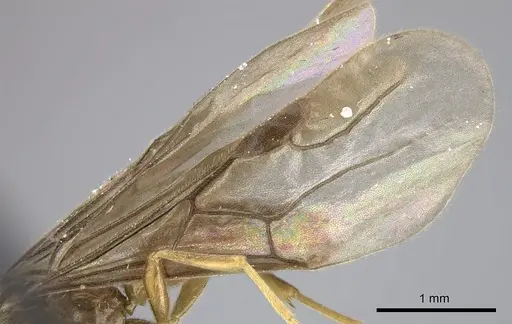
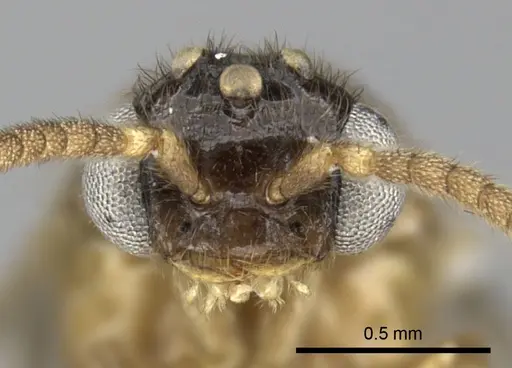
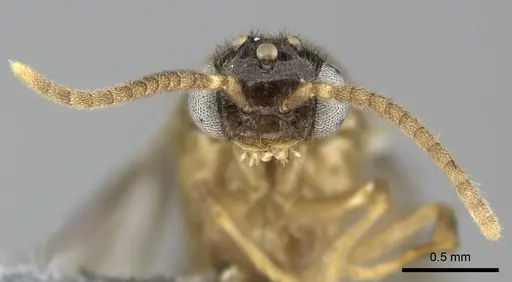
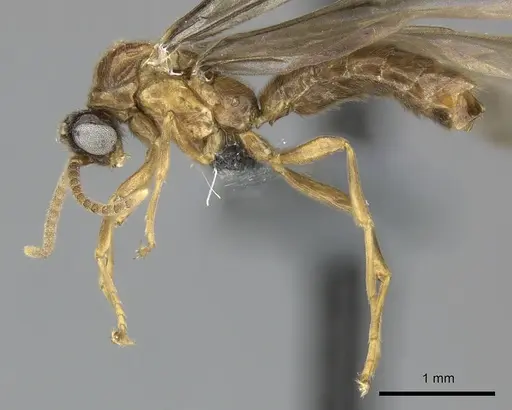
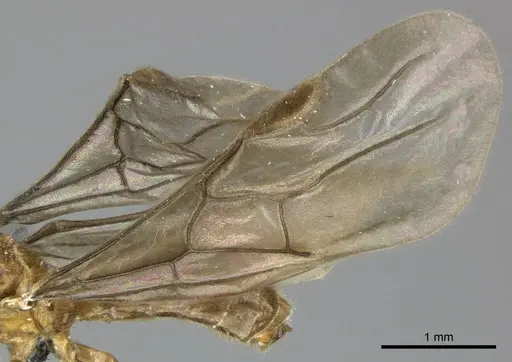
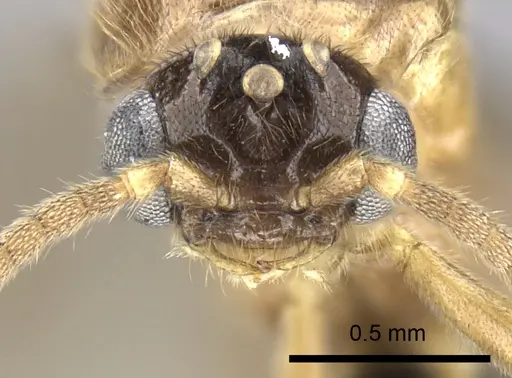
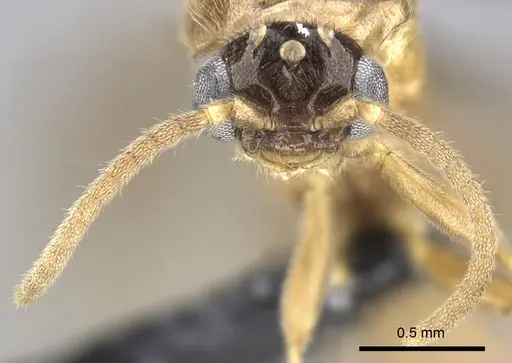
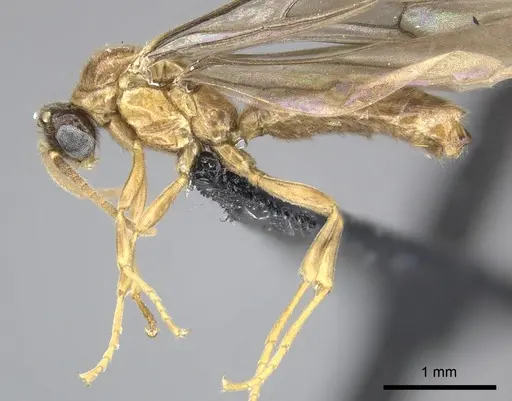
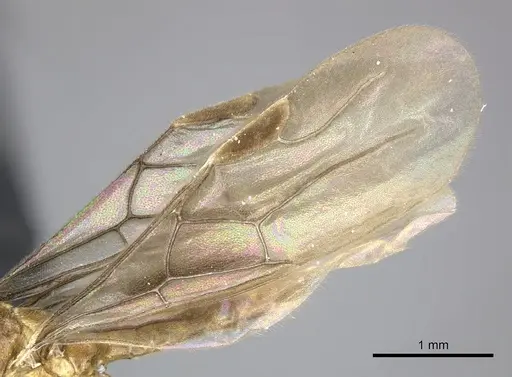
While you cannot keep them, the males have distinctive features. The most striking feature is the bilobed paramere, which has a distinct lobe on the back portion making it look like a tail fin, hence the species name caudapinniger [1]. Males have a palpal formula of 2,2 (two maxillary and two labial palps) [1]. Their heads are darker than the rest of their bodies, creating a weakly bicolored appearance [1]. The eyes are well-developed and prominent, and the distance between the lateral ocellus and the eye is about as long as the diameter of the lateral ocellus [1]. The subpetiolar process is developed as spinose with one to two hairs ventrally [1].
Collection Locality and Habitat
All known specimens come from the same location in Madagascar: Miandritsara Forest, approximately 40 km south of Ambositra in the Fianarantsoa province [1]. The collection site sits at 822 meters elevation in low altitude rainforest [1]. The specimens were collected using Malaise traps during January 2007 [1]. This suggests males fly during the rainy season in Madagascar, but without data on when queens fly or where colonies nest, this observation has limited practical use for keepers.
Genus and Systematic Position
Adetomyrma caudapinniger belongs to the subfamily Amblyoponinae, a group of primitive ants often called 'dracula ants' for their habit of feeding on the hemolymph of their own larvae [2]. However, this behavior has not been confirmed in A. caudapinniger specifically. The genus Adetomyrma is endemic to Madagascar, meaning it occurs nowhere else on Earth [1]. Several Adetomyrma species are known only from males, suggesting these ants may be cryptic nesters that are rarely encountered, or simply understudied due to Madagascar's vast and often inaccessible forests.
Frequently Asked Questions
Can I keep Adetomyrma caudapinniger in captivity?
No. This species is currently impossible to keep because only male specimens are known. Without queens or workers, there is no way to start or maintain a colony [1].
How long until first workers for Adetomyrma caudapinniger?
Unknown. The development timeline from egg to worker has never been documented because queens and workers have never been collected [1].
What does Adetomyrma caudapinniger eat?
Unknown. The diet of this species has never been studied. Related Amblyoponinae ants are often predatory, but this is speculative for A. caudapinniger [1].
Where does Adetomyrma caudapinniger come from?
This species is known only from Madagascar, specifically from Miandritsara Forest near Ambositra in the Fianarantsoa province [1].
How big do Adetomyrma caudapinniger colonies get?
Unknown. Colony size has never been documented since only three male specimens have been found [1].
What is the difficulty level of keeping Adetomyrma caudapinniger?
Expert. This species cannot currently be kept in captivity because only males are known to exist in collections [1].
Do Adetomyrma caudapinniger ants sting?
Unknown. Since only males have been collected and no living colonies have been observed, defensive behaviors including stinging capability remain unstudied. Amblyoponinae ants typically have functional stings, but this is not confirmed for this species [1].
Can I buy Adetomyrma caudapinniger queens?
No. Queens of this species have never been collected or described. The only specimens are three males housed at the California Academy of Sciences [1].
Report an Issue
The current care sheet is based fully on literature. See inconsistencies, or something that's incorrect? Please , it will be resolved after review from an admin. Contributing to the blogs tab also helps providing information, to make us be able to further improve the caresheets. Thank you for your support!
References

This caresheet is licensed under CC BY-SA 4.0 .
Community Blogs
CASENT0111791
View on AntWeb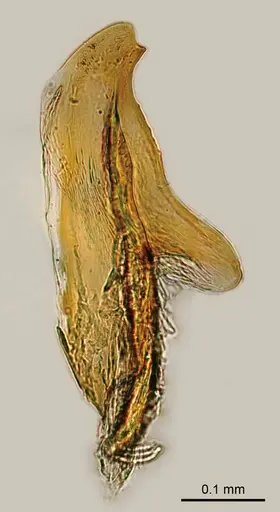
CASENT0244402
View on AntWeb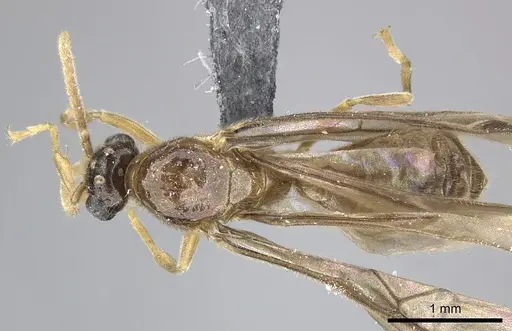
CASENT0244415
View on AntWeb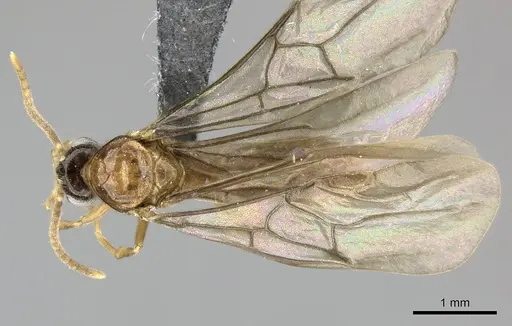
CASENT0244416
View on AntWeb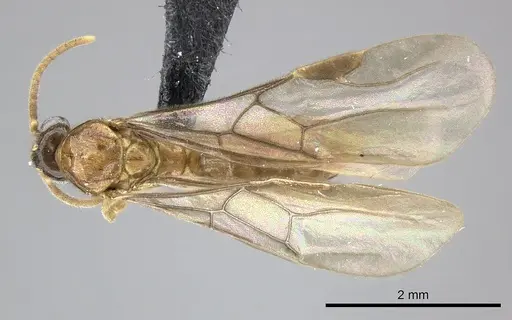
Literature
Loading distribution map...Loading products...