
Adelomyrmex cristiani
- Sci. Name
- Adelomyrmex cristiani
- Tribe
- Solenopsidini
- Subfamily
- Myrmicinae
- Author
- Fernández, 2003
- Distribution
- Found in 1 countries
Introduction
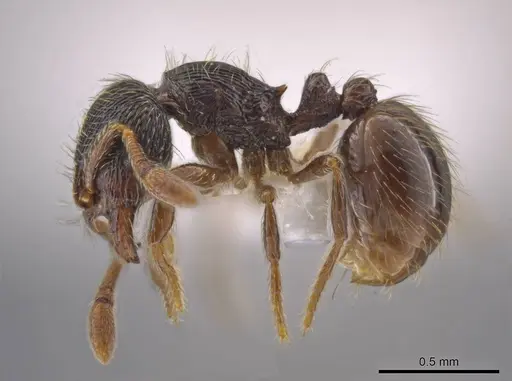
Adelomyrmex cristiani is a tiny ant species native to the Andean cloud forests of Colombia and Ecuador. Workers measure just 1.87mm in total length, making them one of the smallest species in the entire Adelomyrmex genus . They have a light brown body with paler legs and antennae, small eyes with only about 6 ommatidia, and a distinctive high petiole that rises above the postpetiole . These ants live in the leaf litter of humid cloud forests at elevations between 1500-1950 meters, where they nest in rotting wood or soil . The species was described in 2003 by Fernando Fernández and named in honor of Dr. Cristián T. Samper, a supporter of Colombian entomological research . Only the worker caste has been documented - queens and males remain unknown .
Quick Summary
- Difficulty: Hard
- Origin & Habitat: Andean cloud forest of Colombia (Cordillera Occidental, Tatamá) and Ecuador (Pichincha) at 1500-1950m elevation. They inhabit humid leaf litter environments in highland forests [3][5].
- Colony Type: Unknown, only worker caste has been described. Colony structure (single queen vs. multiple queens) has not been documented [4].
- Size & Growth:
- Antkeeping:
- Temperature: Keep around 18-22°C. This species comes from cool Andean cloud forests at high elevation, so avoid overheating. Room temperature (around 20°C) is likely ideal [3].
- Humidity: High humidity is essential, these ants live in cloud forest leaf litter. Keep substrate consistently moist but not waterlogged. Provide a water tube as a moisture source [3][5].
- Diapause: Unknown, no data on overwintering requirements. The Andean location suggests they may tolerate cooler conditions but diapause behavior has not been documented.
- Nesting: Use a test tube setup or naturalistic formicarium with moist substrate. Their tiny size and leaf litter habitat suggest they do well in tight, humid enclosures with small chambers. A small test tube with cotton-reared water reservoir works well for founding colonies.
- Behavior: These are tiny, cryptic leaf litter ants that are rarely seen above ground. Workers forage slowly through the substrate and are not aggressive. Their small size (under 2mm) means escape prevention is critical, they can squeeze through standard test tube barriers. They are likely nocturnal or crepuscular based on their small eyes. Given their tiny size, they pose no danger to keepers [1].
- Common Issues: tiny size makes escape likely without fine mesh barriers., high humidity requirements can lead to mold if ventilation is poor., no documented queen means finding a mated queen for sale is extremely unlikely., limited distribution makes wild collection difficult and potentially harmful., cold-sensitive, temperatures above 25°C may be harmful.
Discovery and Taxonomy
Adelomyrmex cristiani was described in 2003 by Fernando Fernández from worker specimens collected in Colombia's Cordillera Occidental mountain range [1]. The species was named to honor Dr. Cristián T. Samper, director of Colombia's Instituto Humboldt from 1995-2001,for his support of insect surveys [1]. The holotype worker came from Berlese samples (leaf litter extraction) taken at 1650m elevation in the Tatamá transect [5]. Later research by Longino (2012) examined additional workers from the same transect at 1540m and 1950m, plus one specimen from Pichincha Province, Ecuador at 1500m elevation [5]. Notably, specimens showed variation in mandibular dentition and petiole sculpture, suggesting possible cryptic species or significant intraspecific variation [5]. The queen and male castes remain undescribed, making this a species known only from workers [4].
Natural Habitat and Distribution
This species is known only from the Andean cloud forests of Colombia and Ecuador. In Colombia, specimens come from the Tatamá region in the Western Cordillera at elevations between 1540-1950m [5]. The single Ecuador record is from Pichincha Province at 1500m [5]. These are humid, highland forest environments with consistent moisture and moderate temperatures. The ants were collected from leaf litter samples, indicating they are litter-dwelling species that live in the top layers of forest floor debris [3]. This microhabitat is characterized by high humidity, stable temperatures, and protection from direct sunlight. The limited distribution and specialized habitat make this a species that is unlikely to be encountered in large numbers in the wild [3].
Identification and Morphology
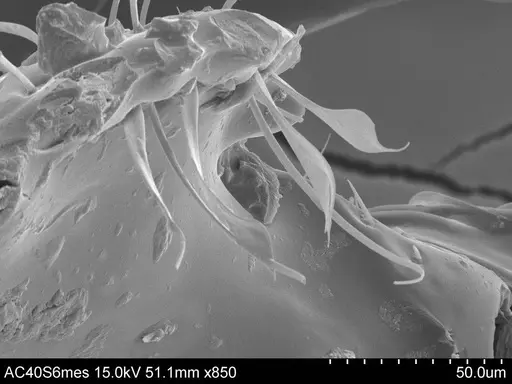
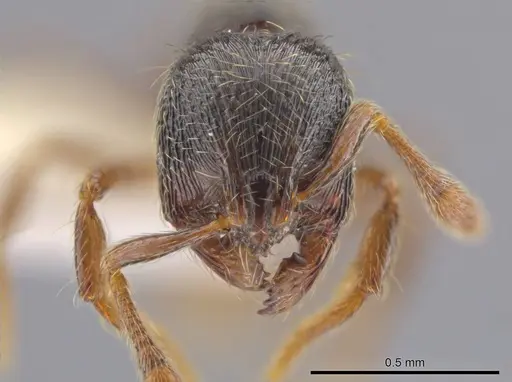
Adelomyrmex cristiani is one of the smallest species in the genus, with workers measuring just 1.87mm total length [2]. Key identification features include: very small eyes with only about 6 ommatidia, a short clypeal seta, a high petiole that is distinctly taller than the postpetiole, and a propodeum with a sharp angulation rather than spines [1][4]. The body is light brown with paler legs and antennae. The gaster (abdomen) is smooth and shiny with numerous dark punctures [1]. The mandibles have 5 teeth decreasing in size from the apical teeth. The head and promesonotum have longitudinal rugulae (grooves), while the gaster is relatively smooth [1]. These tiny ants can be distinguished from similar species by their small size, short clypeal setae, and the distinctive height difference between petiole and postpetiole [4].
Keeping Adelomyrmex cristiani in Captivity
This is an advanced species to keep due to limited availability and lack of documented biology. Since only workers are known from the wild, you will not find mated queens for sale, the queen has never been described [4]. If colony fragments or workers become available, they require a setup that mimics their natural leaf litter habitat. Use a small test tube or formicarium with consistently moist substrate. Temperature should be kept cool (18-22°C), avoid overheating as this species comes from cool Andean elevations [3]. High humidity is essential, but ensure some ventilation to prevent mold. Feed small prey items like pinhead crickets, fruit flies, or other tiny insects. Given their minute size, standard ant keeping barriers may not be sufficient, use fine mesh or fluon to prevent escapes. This species is not recommended for beginners due to the lack of biological data and specialized requirements.
Similar Species and Identification Challenges
Longino (2012) noted that specimens of A. cristiani show significant variation, with some specimens having mandibular dentition similar to Central American species like Adelomyrmex dentivagans, Adelomyrmex mackayi, Adelomyrmex nortenyo, and Adelomyrmex quetzal [5]. The Ecuador specimen and some Colombian specimens share characteristics that suggest they may represent a different species or significant geographic variation [5]. This taxonomic uncertainty means that specimens from different locations may actually be distinct species. For antkeepers, this highlights the importance of accurate provenance documentation when keeping this species. The genus Adelomyrmex contains about 20 described species, many of which are similarly small and cryptic [6]. Proper identification often requires examination under magnification by an expert.
Frequently Asked Questions
Can I keep Adelomyrmex cristiani as a pet ant?
This species is extremely difficult to keep because only workers have ever been documented, the queen has never been described [4]. This means you cannot obtain a mated queen to start a colony. If wild-caught workers are available, they would likely not survive long without a queen. This is not a species recommended for ant keeping.
How big do Adelomyrmex cristiani workers get?
Workers are tiny at just 1.87mm total length, making them one of the smallest ants in the genus Adelomyrmex [1][2].
Where does Adelomyrmex cristiani live in the wild?
They live in Andean cloud forests in Colombia and Ecuador at elevations between 1500-1950 meters [5]. Specimens have been collected from leaf litter in the Tatamá region of Colombia's Western Cordillera and in Pichincha Province, Ecuador [5].
What temperature do Adelomyrmex cristiani ants need?
Keep them cool at 18-22°C. This species comes from high-elevation Andean cloud forests where temperatures are moderate year-round [3]. Avoid temperatures above 25°C as they may be harmful.
Are Adelomyrmex cristiani good for beginners?
No. This species is not recommended for beginners. The queen has never been described, so you cannot start a colony from a queen. Additionally, their high humidity requirements, tiny size, and limited availability make them an advanced species to keep [4].
How long do Adelomyrmex cristiani workers live?
This has not been documented. Typical Myrmicinae workers may live several months to over a year, but specific lifespan data does not exist for this species.
What do Adelomyrmex cristiani eat?
Their exact diet is unknown. Based on being a member of the Solenopsidini tribe, they likely are generalist omnivores that eat small insects, honeydew, and other organic matter. Feed tiny prey items like fruit flies, pinhead crickets, or similar small insects.
Do Adelomyrmex cristiani need hibernation?
Diapause requirements are unknown. The Andean cloud forest location suggests they may not require a true hibernation, but they likely benefit from cooler temperatures during winter months.
Why is Adelomyrmex cristiani so rare in ant keeping?
This species is rarely kept because only the worker caste has ever been documented, the queen and male are unknown [4]. Without a described queen, it is impossible to start a colony from a mated queen. Additionally, their limited distribution in high-elevation cloud forests makes them difficult to find and collect.
Report an Issue
The current care sheet is based fully on literature. See inconsistencies, or something that's incorrect? Please , it will be resolved after review from an admin. Contributing to the blogs tab also helps providing information, to make us be able to further improve the caresheets. Thank you for your support!
References

This caresheet is licensed under CC BY-SA 4.0 .
Community Blogs
CASENT0631970
View on AntWeb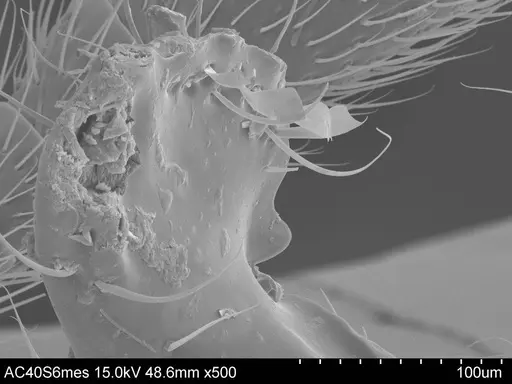
CASENT0633335
View on AntWeb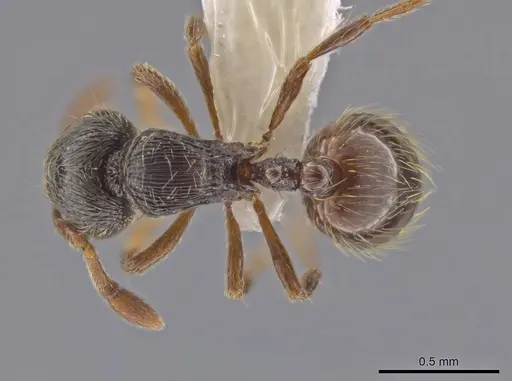
Literature
Loading distribution map...Loading products...