
Acropyga ayanganna
- Sci. Name
- Acropyga ayanganna
- Tribe
- Plagiolepidini
- Subfamily
- Formicinae
- Author
- LaPolla, 2004
- Distribution
- Found in 1 countries
Introduction
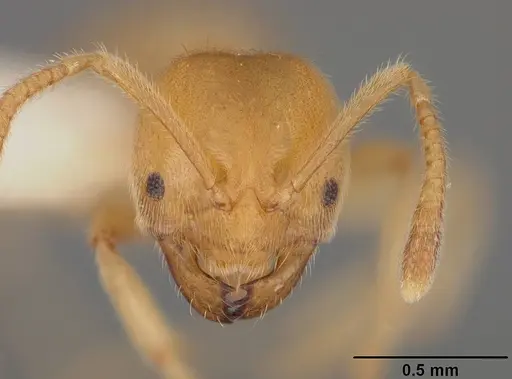
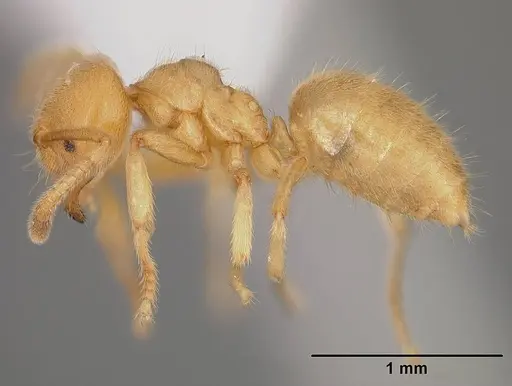
Acropyga ayanganna is a small, yellow ant from the Formicinae subfamily. Workers measure 2.28-2.57 mm in total length and queens reach 3.88 mm . The species is only known from Mount Ayanganna in Guyana, where it was discovered in 2004 . This ant forms an obligate mutualism with mealybugs (Neochavesia), tending them for honeydew . Colonies contain many thousands of workers and multiple queens . Unlike other Acropyga species that build poorly defined chambers, Acropyga ayanganna constructs well-defined nest chambers in sandy soil, under rocks, or in rotten logs .
Quick Summary
- Difficulty: Expert
- Origin & Habitat: Mount Ayanganna in Guyana, South America, at approximately 1134 m elevation. This remote peak in the Pakaraima Mountains represents the only known locality. They nest in sandy soil along stream banks, under rocks and root mats, and in rotten logs within forest [1].
- Colony Type: Polygynous, colonies contain multiple dealate queens [1].
- Size & Growth:
- Queen: 3.88 mm [1]
- Worker: 2.28-2.57 mm [1]
- Colony: Many thousands of workers [1]
- Growth: Unknown, no captive data exists
- Development: Unknown, no captive breeding records exist (Development time is unstudied. Based on tropical Acropyga biology, eggs likely develop faster at warmer temperatures, but specific timelines remain undocumented.)
- Antkeeping:
- Temperature: Keep warm and stable, roughly 24-28°C year-round. This is inferred from their tropical origin near the equator (5°N latitude) where seasonal temperature variation is minimal [1].
- Humidity: Keep the nest substrate consistently moist but not waterlogged. Their natural habitat in tropical forest and along stream banks suggests high humidity requirements [1].
- Diapause: No, as a tropical species, they do not require hibernation [1].
- Nesting: Naturalistic setup required. Provide deep, moist soil or sand for chamber construction. They build diffuse nests with many tunnels and well-defined chambers, unlike the simple tunnel expansions seen in other Acropyga [1].
- Behavior: Docile and non-aggressive. Workers are small and slow-moving, focusing on tending mealybugs rather than foraging widely. Escape risk is low due to size, but they require specialized care due to their obligate mutualism [1].
- Common Issues: obligate mealybug mutualism means they require living mealybug cultures (Neochavesia) to survive and will not thrive on standard ant foods., extreme rarity in the hobby with no captive breeding records, only wild-caught colonies are available., diffuse nesting behavior requires space for extensive tunnel systems rather than compact nest chambers., tropical warmth requirements year-round, temperatures below 24°C may stress the colony., founding behavior is unconfirmed, no data exists on how queens establish new colonies.
The Mealybug Mutualism
Acropyga ayanganna maintains an obligate trophobiosis with mealybugs of the genus Neochavesia [2]. The ants protect these sap-sucking insects and feed on their honeydew secretions. In the wild, workers keep mealybugs in the same chambers as brood, forming mixed piles [1]. When disturbed, workers actively gather both brood and mealybugs together, demonstrating the integrated nature of this relationship. Without mealybugs, the ants cannot survive, they will not accept standard sugar water or protein sources long-term. Captive keeping requires maintaining a healthy culture of Neochavesia mealybugs, making this species extremely challenging [2][1].
Nesting and Chamber Construction
In the wild, Acropyga ayanganna builds diffuse nests without a central nesting area, instead spreading many tunnels and chambers through sandy soil, under rocks, or within rotten logs [1]. Unlike other Acropyga species that construct chambers barely larger than their tunnels, Acropyga ayanganna builds well-defined, distinct chambers [1]. When provided with loose dirt in laboratory settings, they immediately construct organized chambers to house brood and mealybugs. This suggests captive colonies need deep, loose substrate (sand or fine soil) rather than rigid pre-made chambers [1].
Colony Structure and Queen Number
This species is polygynous, multiple queens coexist within colonies. Researchers collected several dealate (wingless, mated) queens alongside workers from single nests, confirming multiple queens per colony [1]. Wild colonies reach many thousands of workers. At Mount Ayanganna, nests were so abundant and diffuse that boundaries between colonies were difficult to determine, though this likely represents polydomy (multiple nest sites per colony) rather than supercoloniality [1].
Association with Other Insects
Besides their primary mutualism with Neochavesia mealybugs, Acropyga ayanganna nests have also yielded specimens of Mixorthezia reynei, an ortheziid scale insect [3]. Whether this represents a true secondary mutualism or accidental contamination remains unclear. The single specimen was collected alongside mealybugs from a nest in Guyana [3].
Environmental Requirements
As a tropical species from approximately 5°N latitude, Acropyga ayanganna requires warm, humid conditions year-round. Their native habitat at 1134 m elevation on Mount Ayanganna experiences consistent tropical temperatures [1]. Keep colonies at roughly 24-28°C without seasonal cooling. The nest substrate should remain moist but not waterlogged, matching the humid conditions of forest floor and stream bank habitats [1].
Frequently Asked Questions
Can I keep Acropyga ayanganna in a test tube?
Test tubes are unsuitable. Acropyga ayanganna constructs diffuse nests with multiple chambers in soil or sand. They require space to build their characteristic well-defined chambers and to house mealybug cultures [1].
What do Acropyga ayanganna eat?
They feed exclusively on honeydew from mealybugs (Neochavesia) that they tend in their nests [2]. This is an obligate mutualism, the ants cannot survive without their mealybug partners. They will not accept standard ant foods like sugar water or insects long-term [1].
How long until first workers in Acropyga ayanganna?
Development time from egg to worker is unknown. No captive breeding records exist for this species. Based on related tropical ants, development likely takes several weeks at warm temperatures, but this remains unstudied [1].
Are Acropyga ayanganna good for beginners?
No. This species requires specialized care including living mealybug cultures, specific nesting substrates, and consistent tropical warmth. They have never been successfully kept in captivity long-term and are unavailable in the hobby trade [1].
Can I keep multiple queens together?
Yes, this is a naturally polygynous species with multiple queens per colony in the wild [1]. However, introducing unrelated queens has not been studied, and given the extreme difficulty of keeping this species, attempting to combine queens is not recommended.
How big do Acropyga ayanganna colonies get?
Wild colonies contain many thousands of workers [1]. No captive colonies have been maintained long enough to determine growth rates or maximum size in captivity.
Do Acropyga ayanganna need hibernation?
No. This tropical species requires warm temperatures year-round. Hibernation would likely harm or kill the colony [1].
Where can I get Acropyga ayanganna?
This species is essentially unavailable in antkeeping. It is known only from Mount Ayanganna in Guyana and has never been cultured in captivity. Wild collection would require travel to this specific remote location and may be legally restricted [1].
Why are my Acropyga ayanganna dying?
Without captive records, specific causes remain unconfirmed. Likely factors include lack of mealybugs (their only food source), temperatures too cool (below 24°C), insufficient humidity, or inappropriate nesting substrate. This species has never been successfully maintained in captivity [1].
Report an Issue
The current care sheet is based fully on literature. See inconsistencies, or something that's incorrect? Please , it will be resolved after review from an admin. Contributing to the blogs tab also helps providing information, to make us be able to further improve the caresheets. Thank you for your support!
References

This caresheet is licensed under CC BY-SA 4.0 .
Community Blogs
USNMENT00413391
View on AntWeb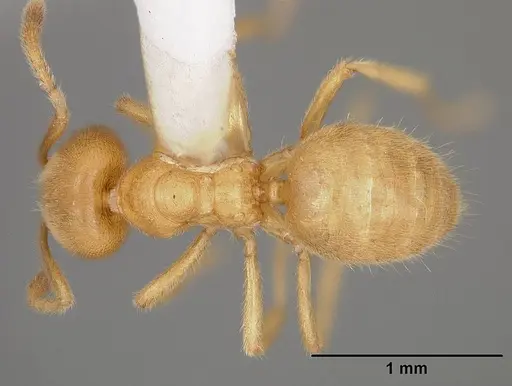
Literature
Loading distribution map...Loading products...