
Acromyrmex fowleri
- Sci. Name
- Acromyrmex fowleri
- Tribe
- Attini
- Subfamily
- Myrmicinae
- Author
- Rabeling <i>et al.</i>, 2019
- Distribution
- Found in 1 countries
Introduction
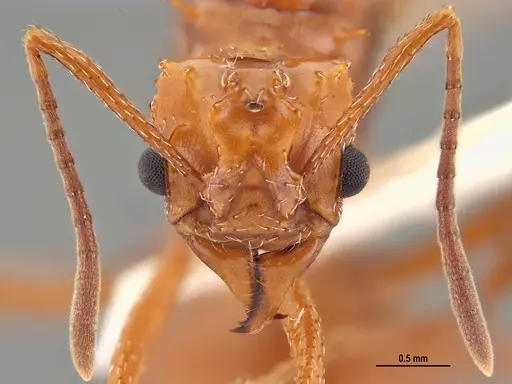
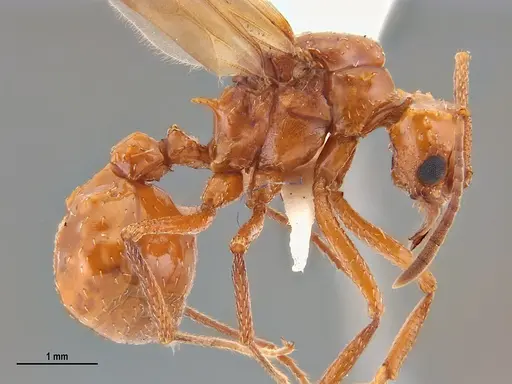
Acromyrmex fowleri is a small, shiny ant from the coast of Brazil. Queens measure 7.3-8.1 mm and have a smooth, orange-brown appearance with unusually long legs and antennae for their size . Unlike most ants you can keep in captivity, these are obligate social parasites - they have no workers of their own and cannot survive without their host species, Acromyrmex rugosus . These ants represent an extreme form of social parasitism called inquilinism. Multiple parasite queens live together inside the host colony, sharing the space with the host queen rather than killing her . The species was discovered in 1992 near Ilhéus, Brazil, and formally described in 2019, but appears to have nearly vanished from its original location and may be locally extinct in the wild . This is one of the rarest and most specialized ants in the world - it cannot be kept in captivity and should not be collected.
Quick Summary
- Difficulty: Expert, requires host species, likely locally extinct, and has no worker caste
- Origin & Habitat: Coastal restinga forest (sandy, nutrient-poor coastal forest) of Ilhéus, Bahia, Brazil [1]
- Colony Type: Polygynous workerless inquiline parasite of Acromyrmex rugosus, multiple parasite queens coexist with the host queen [1]
- Size & Growth:
- Queen: 7.33-8.13 mm [1]
- Worker: No worker caste, species is workerless [1]
- Colony: Up to 38 parasite queens observed in single host nests, no workers produced [1]
- Growth: Not applicable, workerless species relying on host colony
- Development: Not applicable, species does not produce workers (This species consists only of queens and males, reproduction and development occur within host colonies)
- Antkeeping:
- Temperature: Unknown, likely requires warm tropical conditions matching host Acromyrmex rugosus
- Humidity: Unknown, follows host colony requirements
- Diapause: Unknown, likely not required as tropical species
- Nesting: Inside established nests of host species Acromyrmex rugosus [1]
- Behavior: Slow-moving, host queen-tolerant, obligate social parasite that relies entirely on host workers for care. Uses sting as defense mechanism (Myrmicinae).
- Common Issues: requires an established, healthy colony of the specific host species Acromyrmex rugosus to survive., newly mated queens are repulsed by mature host colonies when attempting to enter, making establishment extremely difficult [1]., species may be locally extinct in its native range and is exceptionally rare, last confirmed observations around 2004 [1]., legal restrictions apply to collection and export from Brazil, not available in the pet trade.
Social Parasite Biology
Acromyrmex fowleri is a workerless inquiline, meaning it has no worker caste and lives permanently inside the nests of its host [1]. The parasite queens are significantly smaller than their host counterparts and have smooth, shiny bodies with reduced sculpturing, traits typical of social parasites [1][3]. Unlike some parasites that kill the host queen, these ants are host queen-tolerant, they coexist peacefully alongside the Acromyrmex rugosus queen in the same nest [1]. The parasite queens rely entirely on host workers to tend the fungus garden and feed them. In census data, researchers found up to 38 parasite queens living in a single host colony alongside the host queen and her workers [1]. This species belongs to the Myrmicinae subfamily and uses sting as its defense mechanism.
Host Species Requirements
You cannot keep Acromyrmex fowleri without its specific host, Acromyrmex rugosus [1][2]. This is an obligate relationship, the parasite has no workers to forage, tend fungus, or care for brood. In nature, about 7.7% of host colonies were found to be parasitized, though this rate was observed during the 1990s when the species was more common [1]. The host colonies appeared healthy despite the presence of parasites, with fungus gardens showing no signs of decline [1]. If attempting to maintain this species (which is not recommended for hobbyists), you would first need a thriving, mature colony of A. rugosus, then attempt to introduce parasite queens, though success rates are likely extremely low.
Mating Flights and Colony Establishment
Mating flights happen before dawn, around 6-7 AM, with large numbers of winged queens and males found along the beach drift line at the Atlantic Ocean [1]. This suggests mating occurs outside the host nest, likely during these pre-dawn flights. While flights occur year-round at low rates, they peak from October through March, with 70% of collected alates found in November [1]. After mating, queens face a significant barrier: observations show that newly mated A. fowleri queens are detected and repulsed by host workers when they try to enter mature colonies [1]. This suggests successful colony establishment is rare and may require specific conditions or newly founded host colonies rather than mature ones.
Conservation Status and Availability
Acromyrmex fowleri appears to have suffered a severe population crash. During the 1990s, host nest density was estimated at about 20 nests per hectare in the Ilhéus region, and the parasite seemed common [1]. However, by 2004, systematic surveys found only five parasite alates during an entire year of searching along a 6-km beach transect where they were previously abundant [1]. The species may now be locally extinct in its type locality, though this is unconfirmed [1]. Due to their rarity, specific host requirements, and likely protected status as Brazilian endemics, these ants are not available in the pet trade and should not be collected.
Housing the Host-Parasite System
Maintaining this species requires first establishing a healthy Acromyrmex rugosus colony in a suitable formicarium with fungus garden chambers [1]. The setup must accommodate leaf-cutting ant needs, space for foraging, fresh vegetation for fungus substrate, and controlled humidity. Only mature, stable host colonies could potentially accept parasite queens, though as noted, mature colonies often repulse intruding parasite queens [1]. There are no established protocols for successfully introducing parasite queens to host colonies in captivity, and given the species' apparent extinction in the wild, such attempts should not be made outside of conservation research programs.
Frequently Asked Questions
Can I keep Acromyrmex fowleri without a host colony?
No. These ants are obligate social parasites with no worker caste. They cannot survive without their host species, Acromyrmex rugosus, and will die immediately if removed from the host nest [1].
Do Acromyrmex fowleri have workers?
No. This is a workerless species. The queens rely entirely on host workers from Acromyrmex rugosus colonies for food, fungus garden maintenance, and brood care [1].
Can I keep multiple Acromyrmex fowleri queens together?
Yes. These ants are polygynous, meaning multiple queens can live together in the same host colony. In the wild, up to 38 parasite queens have been found coexisting in a single host nest [1].
How do I start an Acromyrmex fowleri colony?
You cannot start a colony in the traditional sense. Queens do not found colonies independently. You must introduce newly mated queens to an established Acromyrmex rugosus colony. However, host workers often repulse and kill intruding parasite queens, making successful establishment extremely unlikely [1].
Are Acromyrmex fowleri legal to keep?
Likely not. They are Brazilian endemics from a restricted coastal habitat and may be protected. Additionally, the species appears to be locally extinct or extremely rare in the wild, making collection unethical and potentially illegal [1].
What do Acromyrmex fowleri eat?
They eat the fungus grown by their host colony. Like other leaf-cutting ants, Acromyrmex rugosus cultivates fungus gardens using collected vegetation. The parasite queens consume this fungus and are fed by host workers, they do not forage or process leaves themselves [1].
Why are Acromyrmex fowleri called workerless?
They lack a worker caste entirely. The species consists only of queens and males. This is an extreme adaptation to social parasitism, where the parasites have lost the ability to produce workers and instead exploit the worker force of their host species [1][3].
Where do Acromyrmex fowleri come from?
They are only known from the coast of Ilhéus in Bahia, northeastern Brazil, specifically from restinga habitat, coastal forests on sandy, nutrient-poor soils [1].
Report an Issue
The current care sheet is based fully on literature. See inconsistencies, or something that's incorrect? Please , it will be resolved after review from an admin. Contributing to the blogs tab also helps providing information, to make us be able to further improve the caresheets. Thank you for your support!
References

This caresheet is licensed under CC BY-SA 4.0 .
Community Blogs
ANTWEB1047716
View on AntWeb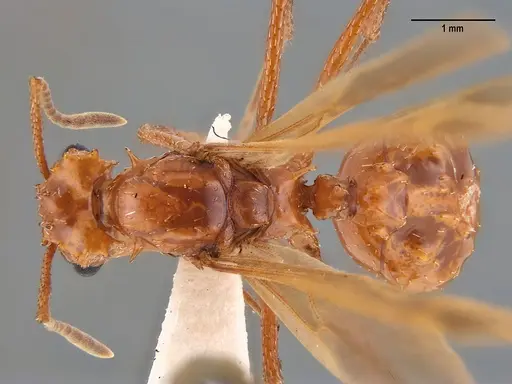
Literature
Loading distribution map...Loading products...