
Acanthostichus lattkei
- Sci. Name
- Acanthostichus lattkei
- Subfamily
- Dorylinae
- Author
- MacKay, 1996
- Distribution
- Found in 1 countries
Introduction
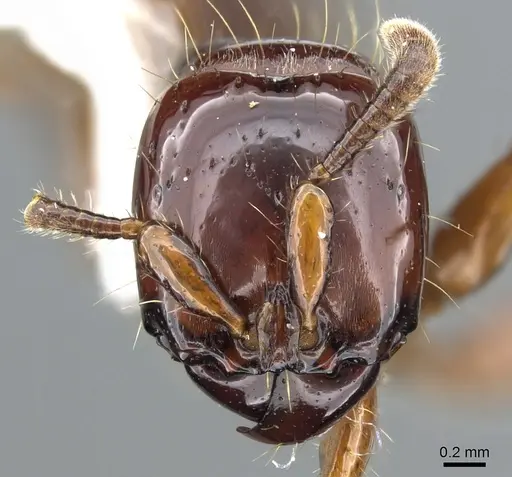
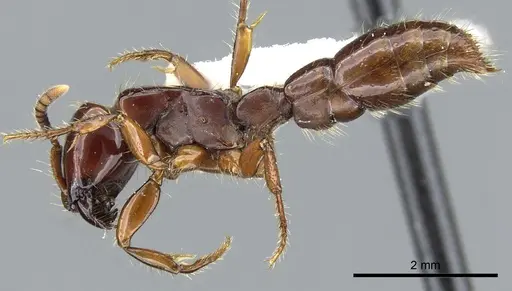
Acanthostichus lattkei is a tiny ant species known only from workers collected in the mountains of western Venezuela. Workers were found in soil beneath leaf litter in tropical forest at 500 meters elevation . Only the worker caste has ever been described - no queens or males have been discovered . This species belongs to the subfamily Dorylinae, which includes army ants and other specialized predators. Key identification features include elongated antennal scapes, a petiole longer than wide with longitudinal troughs and fine striations on the dorsal surface, and a well-defined median tooth on the clypeus . Their specific biology, including colony structure and diet, remains completely unknown.
Quick Summary
- Difficulty: Expert
- Origin & Habitat: Venezuela (Táchira state), collected in soil below leaf litter in tropical forest at 500m elevation [1][2].
- Colony Type: Unknown, only the worker caste has been described [2].
- Size & Growth:
- Queen: Unknown, no queens have ever been described [2].
- Worker: Size data unavailable, only head measurements (HL 0.96-1.40mm, HW 0.93-1.34mm) are known, but full body length has not been recorded [2].
- Colony: Unknown.
- Growth: Unknown.
- Development: Unknown, no developmental data exists for this species. (Development timeline is unconfirmed.)
- Antkeeping:
- Temperature: Unknown, likely 24-28°C based on tropical origin, but unconfirmed. Start at 25°C and observe activity levels.
- Humidity: High humidity likely required based on tropical forest floor habitat, keep substrate consistently damp [2].
- Diapause: No, tropical species from Venezuela unlikely to require hibernation.
- Nesting: Naturalistic setup with soil and leaf litter layers, extremely small chambers needed due to tiny worker size [2].
- Behavior: Activity patterns unknown. Workers are extremely small, so escape prevention must be exceptional, use fine mesh and barriers [2].
- Common Issues: dietary requirements are completely unknown, colony may fail without proper research., extreme small size means escapes are likely without specialized containment., no queens have ever been collected or described, making founding impossible with current knowledge., lack of captive care documentation means this species cannot be kept in captivity., only known from a handful of worker specimens, scientific knowledge is extremely limited.
Identification and Appearance
Acanthostichus lattkei workers are tiny and can be identified by several distinctive features. They have elongated antennal scapes that extend beyond the back of the head. The petiole is longer than it is wide, with a rough dorsal surface featuring at least two longitudinal troughs and many fine longitudinal striae. The underside of the petiole has a large, posteriorly directed tooth. The clypeus has a well-defined median tooth and well-developed lateral angles. The back of the head is concave. These features help distinguish them from similar species like Acanthostichus bentoni, which has a strongly excised medial border of the clypeus [2].
Natural History and Habitat
This species is known only from the type locality in Táchira, Venezuela, specifically near Presa Las Cuevas at 500 meters elevation [1]. Workers were collected from soil beneath leaf litter on the tropical forest floor [1]. This suggests they are subterranean ants that live in the interface between soil and decaying plant matter. The habitat is tropical montane forest, indicating warm temperatures and high humidity year-round. No other biological information is available, nothing is known about their diet, colony structure, or behavior [2].
Captive Care Considerations
You should not attempt to keep this species. Acanthostichus lattkei is not available in the ant trade, and even if you could obtain workers in Venezuela, you cannot start a colony because no queens have ever been found or described [2]. The species is known only from 11 worker specimens total (1 holotype,10 paratypes). Without a queen, workers cannot be sustained long-term as they cannot reproduce. Additionally, their extremely small size means they can escape through gaps that would stop larger ants. If you were to attempt housing, you would need a naturalistic setup with actual soil and leaf litter layers, kept damp and warm, but success would be purely theoretical with no scientific basis.
Feeding and Diet
The diet of Acanthostichus lattkei is completely unknown. Other members of the genus Acanthostichus are specialized predators of termites, but whether this specific species shares that diet has not been confirmed [2]. Do not assume standard ant diets of sugar water and mealworms will work. Without knowing their natural diet, captive maintenance is not feasible.
Frequently Asked Questions
Can I keep Acanthostichus lattkei as a pet?
No. This species is not available in the ant trade, and even if you collected workers in Venezuela, you cannot start a colony because no queens have ever been found [2].
What do Acanthostichus lattkei eat?
Their diet is unknown. Related species in the genus eat termites, but this has not been confirmed for Acanthostichus lattkei specifically [2].
How big do Acanthostichus lattkei colonies get?
Colony size is unknown. Only 11 individual workers have ever been collected (1 holotype,10 paratypes) [2].
Do Acanthostichus lattkei need a queen?
Yes, like all ants, they need a queen to reproduce. Unfortunately, queens of this species have never been described, so founding a colony is currently impossible [2].
What temperature do Acanthostichus lattkei need?
Temperature requirements are unconfirmed. They likely need tropical temperatures around 24-28°C based on their origin in Venezuelan tropical forest, but this is an estimate rather than confirmed data.
Do Acanthostichus lattkei need hibernation?
No, they come from tropical Venezuela and likely remain active year-round without a winter rest period.
Where do Acanthostichus lattkei nest?
In the wild, they nest in soil below leaf litter in tropical forests at 500m elevation in Táchira, Venezuela [1].
Are Acanthostichus lattkei good for beginners?
No. They are extremely rare, poorly known, and impossible to found in captivity with current knowledge since no queens have ever been found. Beginners should choose well-documented species like Lasius niger or Tetramorium immigrans.
Report an Issue
The current care sheet is based fully on literature. See inconsistencies, or something that's incorrect? Please , it will be resolved after review from an admin. Contributing to the blogs tab also helps providing information, to make us be able to further improve the caresheets. Thank you for your support!
References

This caresheet is licensed under CC BY-SA 4.0 .
Community Blogs
CASENT0903671
View on AntWeb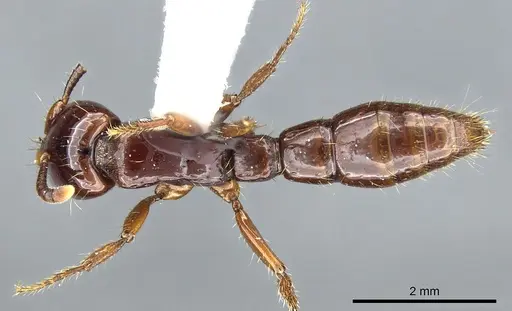
Literature
Loading distribution map...Loading products...