
Acanthostichus kirbyi
- Sci. Name
- Acanthostichus kirbyi
- Subfamily
- Dorylinae
- Author
- Emery, 1895
- Distribution
- Found in 2 countries
Introduction
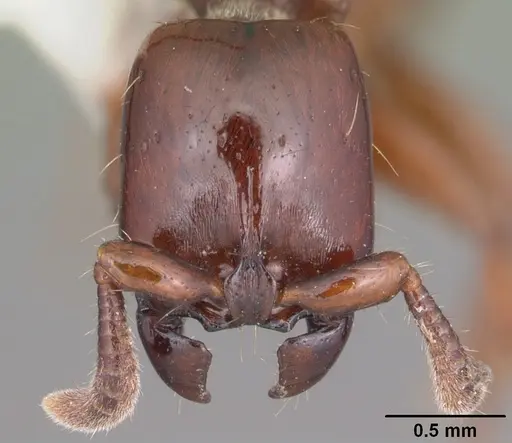
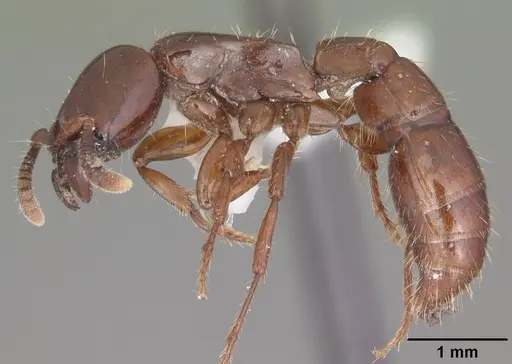
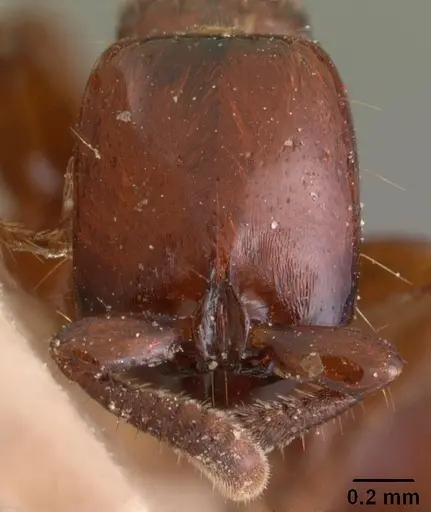
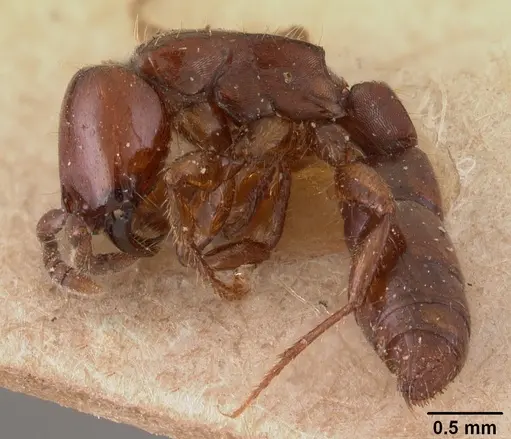
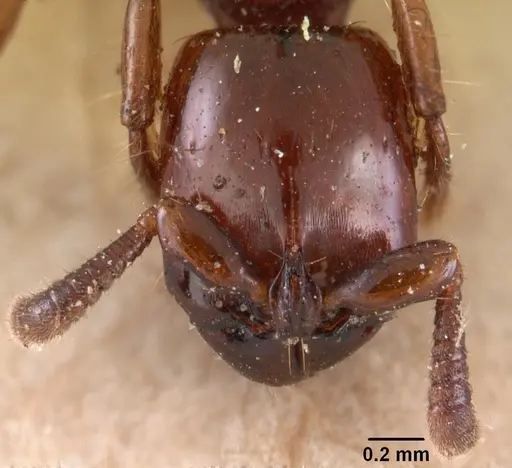
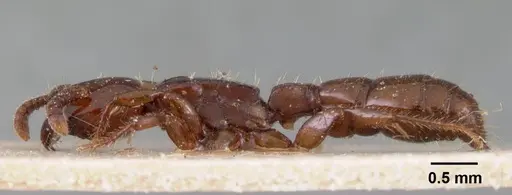
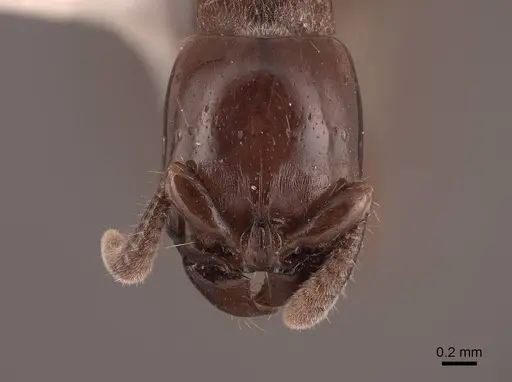
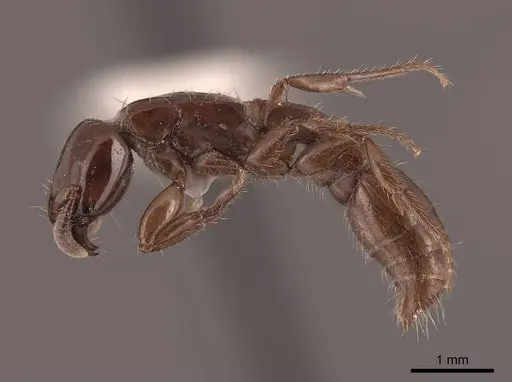
These slender ants reach about 5-6 mm in length and move with the rapid, purposeful gait of army ants when they forage . Found across South America from Argentina to Peru, they inhabit forest floors where they hunt termites in coordinated raids . Unlike true army ants, they do not swarm in massive hordes; instead, small columns of workers move stealthily beneath leaf litter to attack termite nests, stashing their prey under pieces of bark or debris before carrying it back to hidden nests in ground crevices or under tree roots . Their entire biology revolves around termite predation, making them one of the most specialized ants in the Neotropical region . They possess well-developed teeth on the clypeus and a distinctive petiole that is longer than it is wide, with a subpetiolar process featuring a large lobe and backward-pointing tooth . Their close relationship to the genus Cylindromyrmex places them among the specialized predatory doryline ants, though they remain poorly understood in captivity .
Quick Summary
- Difficulty: Expert
- Origin & Habitat: South American tropics including Argentina, Bolivia, Brazil, Paraguay, and Peru [3][5]. They inhabit forest floors with leaf litter, rotting wood, and stones [3].
- Colony Type: Unknown, no studies have documented whether colonies contain one queen or multiple queens [3].
- Size & Growth:
- Queen: Size data unavailable, queens have not been described in available research.
- Worker: ~5-6 mm [1].
- Colony: Unknown, observed columns contain at least 50 workers but maximum size is undocumented [3].
- Growth: Unknown.
- Development: No development data exists for this species. (No direct development studies exist for this species.)
- Antkeeping:
- Temperature: Tropical species, keep at 24-26°C. Avoid temperatures below 20°C.
- Humidity: Forest floor species, keep nest substrate moist but not waterlogged, similar to a damp forest floor with leaf litter.
- Diapause: Unlikely required given tropical distribution, but unconfirmed.
- Nesting: In nature they use crevices under roots and stones [3]. In captivity, use a naturalistic setup with soil, leaf litter, and flat stones, or a plaster nest with narrow chambers.
- Behavior: Fast-moving with army-ant-like foraging columns. They hunt termites aggressively and move with constant antennal twitching [3]. Likely defensive given specialized predatory lifestyle. Escape risk is moderate to high due to speed and slender 5-6 mm bodies.
- Common Issues: sourcing termites as food is extremely difficult in captivity and acceptance of alternative prey is unconfirmed., founding behavior is completely unknown, raising colonies from queens may be impossible., wild-caught colonies may be large and require extensive space and specialized housing., rapid movement means they can escape through small gaps if barriers are not secure.
Natural History and Distribution
Acanthostichus kirbyi ranges across the South American tropics from Argentina and Paraguay through Brazil to Peru [3][5]. They represent one of the most widely distributed species in their genus [3]. Phylogenetic studies place them as the sister group to Cylindromyrmex, forming a lineage of specialized predators within the Dorylinae subfamily [2][4][6].
In the wild, they inhabit forest floor habitats where they nest in soil crevices, under stones, or beneath tree roots [3]. Their distribution across tropical lowlands suggests they require warm, stable temperatures year-round without significant seasonal cooling.
Feeding and Diet - The Termite Challenge
These ants are obligate termite predators, making captive care extremely difficult [2][3]. Workers hunt in small columns that move through leaf litter to locate termite nests, then attack and carry prey back to the colony [3]. Observations describe them collecting caches of dead termites under bark before transporting them to the nest [3].
This specialized diet presents the primary obstacle to keeping them in captivity. They may not accept standard ant foods such as mealworms, crickets, or sugar water. Successful captive maintenance likely requires a steady supply of live termites, which most keepers cannot provide. Whether they can be conditioned to accept alternative prey remains unstudied.
Housing and Nest Setup
Wild colonies nest in ground crevices, under stones, or beneath tree roots [3]. They require humid microhabitats with access to leaf litter and soil.
For captive housing, a naturalistic setup works best. Use a container with several inches of soil or plaster, topped with leaf litter and flat stones for cover. Provide narrow tunnels or chambers rather than open spaces. If using a formicarium, choose one with tight chambers sized to their 5-6 mm bodies and maintain high humidity through regular misting or a water tower. Ensure excellent ventilation to prevent mold while keeping the substrate damp.
Behavior and Temperament
Workers move rapidly with constant antennal movement, reminding observers of army ants like Eciton [3]. They forage in distinct columns that travel beneath leaf litter, suggesting they rely heavily on chemical trails and tactile cues rather than vision [3].
When disturbed, they likely defend themselves and their termite prey, though specific defense mechanisms for this species are undocumented. Their speed and slender build allow them to squeeze through surprisingly small gaps, so use fine mesh barriers and tight-fitting lids on all enclosures.
Colony Founding and Reproduction
Founding behavior is completely unknown for this species. No studies document whether queens found colonies alone or in groups, or whether they seal themselves in to raise the first workers (claustral founding) or must forage during the founding stage (semi-claustral founding).
Without confirmed observations of queens or nuptial flights, attempting to found a colony from a single queen is not recommended. Most captive colonies would need to be collected as mature colonies from the wild, though this requires proper permits and ethical collection practices.
Frequently Asked Questions
Can I keep Acanthostichus kirbyi in a test tube?
Unknown. Since founding behavior is unconfirmed, we do not know if queens can be housed in test tubes or if they require soil chambers. Wild colonies are best housed in naturalistic setups with soil and leaf litter rather than test tubes.
What do Acanthostichus kirbyi eat?
They are specialized termite predators that hunt in raiding columns [2][3]. Whether they accept other prey such as mealworms, crickets, or sugar water in captivity is unknown. You would likely need a supply of live termites to maintain them.
How long until Acanthostichus kirbyi get their first workers?
Unknown. No development data exists for this species. Development timeline cannot be estimated without further research.
How big do Acanthostichus kirbyi colonies get?
Unknown. Field observations describe columns of at least 50 workers, but maximum colony size has never been documented [3].
Are Acanthostichus kirbyi good for beginners?
No. They require specialized termite diets and their complete life history is unknown, making them suitable only for expert keepers with access to termite colonies and experience with cryptic forest-floor species.
Do Acanthostichus kirbyi need hibernation?
Unlikely. They come from tropical South America where temperatures remain warm year-round [3].
Can I keep multiple Acanthostichus kirbyi queens together?
Unknown. Whether this species forms single-queen or multiple-queen colonies has not been documented. Combining unrelated queens is not recommended.
Report an Issue
The current care sheet is based fully on literature. See inconsistencies, or something that's incorrect? Please , it will be resolved after review from an admin. Contributing to the blogs tab also helps providing information, to make us be able to further improve the caresheets. Thank you for your support!
References

This caresheet is licensed under CC BY-SA 4.0 .
Community Blogs
CASENT0006101
View on AntWeb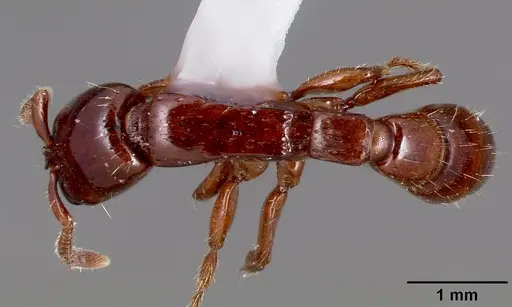
CASENT0102000
View on AntWeb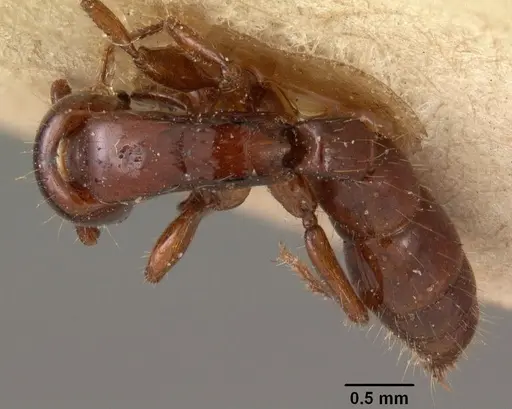
CASENT0102001
View on AntWeb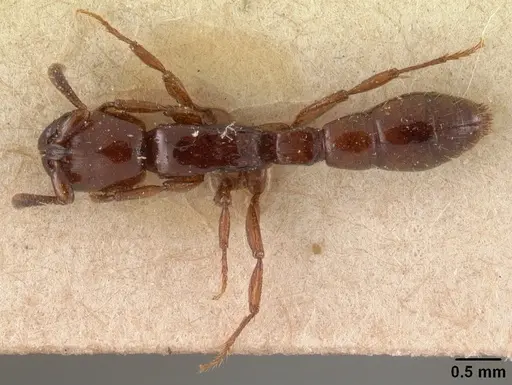
CASENT0106071
View on AntWeb
FMNHINS0000062998
View on AntWeb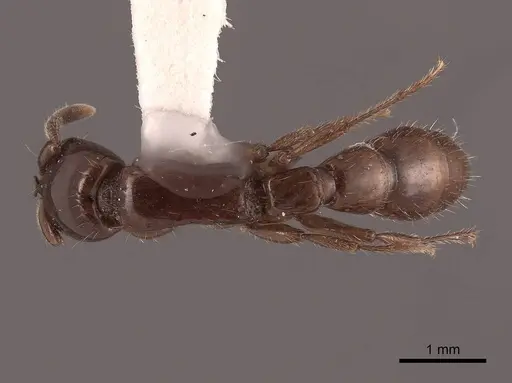
Literature
Loading distribution map...Loading products...