
Acanthostichus fuscipennis
- Sci. Name
- Acanthostichus fuscipennis
- Subfamily
- Dorylinae
- Author
- Emery, 1895
- Distribution
- Found in 1 countries
Introduction
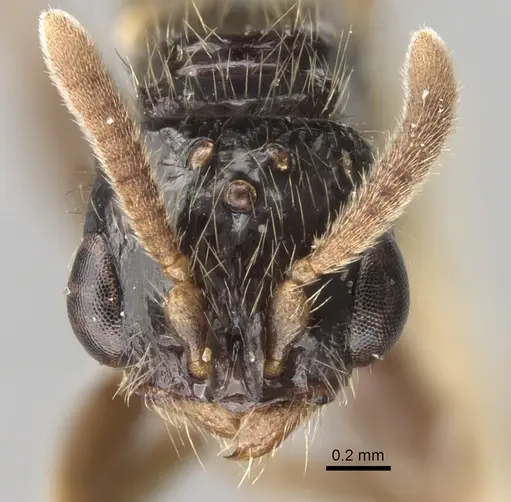
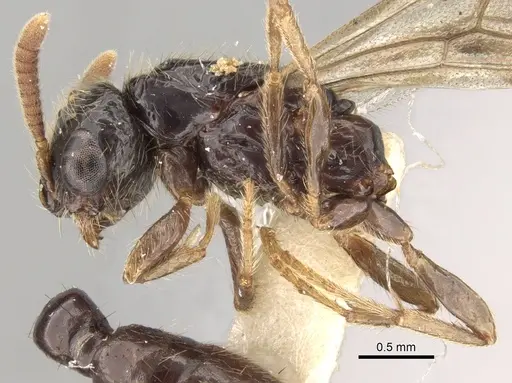
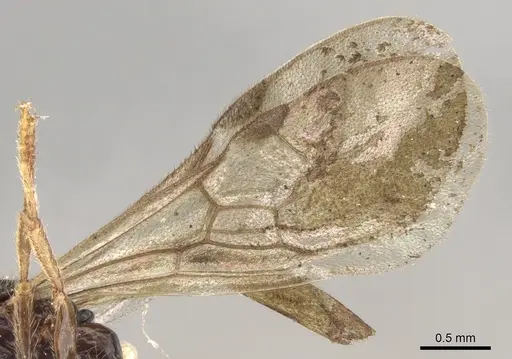
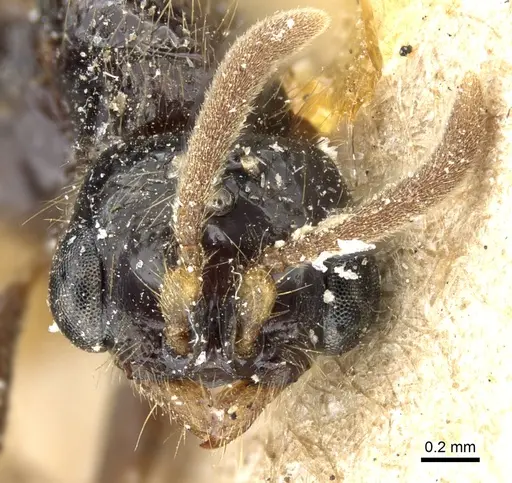
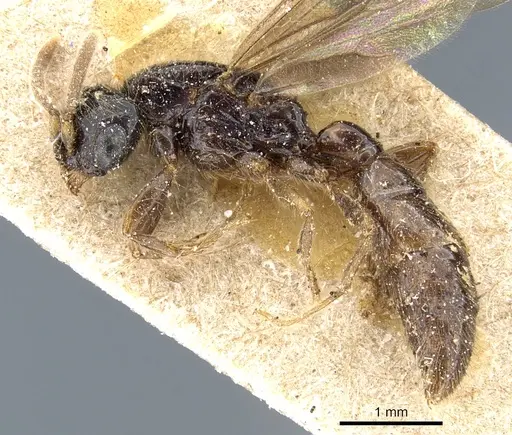
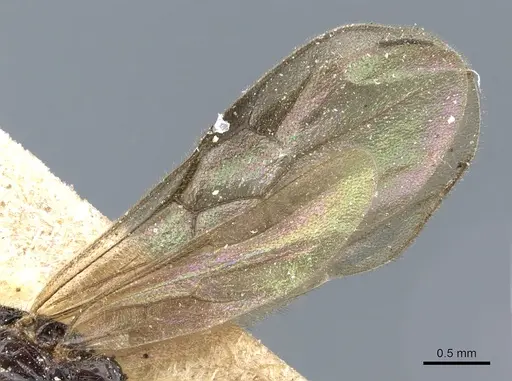
Acanthostichus fuscipennis is a Neotropical ant species known only from males - workers have never been collected or described . Males are recognized by their distinctive blue or purple metallic reflections on the head and pronotum, and a petiole node that is broader than long when viewed from above . The species ranges across Brazil, Colombia, Ecuador, and Venezuela . Males are attracted to light and have been collected in light traps throughout most of the year, with records in January and from April through October . The taxonomic history is complex: Emery's original 1895 description was based on a mixed series containing two species, causing confusion with Acanthostichus quadratus until Mackay designated a lectotype in 1996 .
Quick Summary
- Difficulty: Expert
- Origin & Habitat: Neotropical region: Brazil (Pará), Colombia, Ecuador, Venezuela. Males collected in light traps and malaise traps, suggesting forest habitats [1][2].
- Colony Type: Unknown, workers have never been observed [1].
- Size & Growth:
- Antkeeping:
- Temperature: Unknown, no thermal data available for this species.
- Humidity: Unknown.
- Diapause: Unknown.
- Nesting: Unknown.
- Behavior: Unknown for workers. Males are attracted to light sources and have been collected in light traps and malaise traps [1].
- Common Issues: workers have never been collected, making captive keeping impossible., historically confused with Acanthostichus quadratus due to mixed type series [1]., males collected at lights cannot establish colonies.
The Mystery of the Missing Workers
Acanthostichus fuscipennis represents a significant gap in ant taxonomy, despite being described in 1895,no one has ever found the workers [1]. Every collection consists solely of males caught in light traps or malaise traps. This means nothing is known about what the colonies look like, what they eat, or how they live. For antkeepers, this makes the species impossible to maintain. You cannot establish a colony from males alone, and without knowing what the workers look like, you cannot identify wild-caught colonies even if you found them. The workers likely live underground or in specialized microhabitats that make them difficult to collect, while the winged males fly to lights where entomologists catch them [1][2].
Taxonomic History and Male Identification
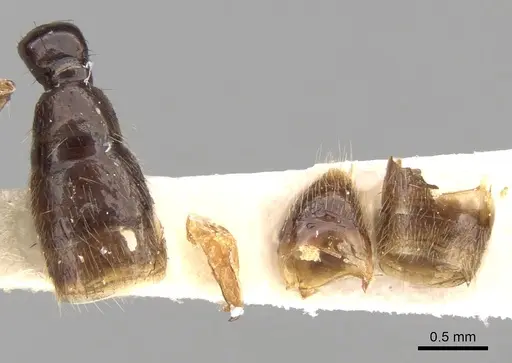
The taxonomy of this species has caused confusion for over a century. Emery's original 1895 description was based on a mixed series containing two different species on the same pin, the upper specimen became the lectotype of A. fuscipennis, while the lower specimen actually belonged to Acanthostichus quadratus [1][3]. This caused many males in collections to be misidentified until Mackay revised the genus in 1996. Males of Acanthostichus fuscipennis can be recognized by their petiole node, which is wider than it is long when viewed from above and has a distinct transverse suture across the posterior edge [2]. Most specimens show blue or purple reflections on the head and body [2]. The genitalia also differ from related species, featuring an elongated aedeagus with small, widely spaced teeth [1].
Distribution and Seasonal Activity
This species ranges across the Neotropical region, with records from Brazil (Pará), Colombia, Ecuador, and Venezuela [1][2]. Males have been collected in light traps in January and from April through October, suggesting an extended mating season or multiple flight periods throughout the year [1]. Colombian and Venezuelan specimens were captured in malaise traps during September, October, and February, confirming males are active across seasons [1]. This year-round male activity might indicate either overlapping generations or a very long flight period for this species.
Why You Cannot Keep This Species
You should not attempt to keep Acanthostichus fuscipennis. Since only males are known, there is no way to start a colony. Even if you collected what you thought were workers in the appropriate range, you could not identify them as this species without associated males. If workers are ever discovered, they would likely be specialist predators like other Acanthostichus species, but this remains speculation. Do not purchase specimens labeled as this species, they would be males incapable of founding colonies. Wait for taxonomists to discover and describe the workers before attempting captive care [1].
Frequently Asked Questions
Can I keep Acanthostichus fuscipennis in captivity?
No. Only males are known, and males cannot start colonies. Workers have never been collected, so the basic biology required for keeping them, such as diet, nesting habits, and colony structure, remains completely unknown [1].
How do I identify Acanthostichus fuscipennis workers?
You cannot. Workers of this species have never been collected or described. Any workers found in the range of this species would be impossible to identify as Acanthostichus fuscipennis without associated males [1][2].
What do Acanthostichus fuscipennis eat?
Unknown. Since workers have never been observed, their diet is unconfirmed. Related species in the genus Acanthostichus are specialized predators, but you should not assume this species has the same requirements [1].
Where can I find Acanthostichus fuscipennis queens?
Queens have never been collected. The species is only known from males captured in light traps and malaise traps [1][2].
How big do Acanthostichus fuscipennis colonies get?
Unknown. Without observed workers or colonies, colony size cannot be estimated [1].
Why are only males known for this species?
The workers likely live underground or in specialized habitats that make them difficult to collect. Males, being winged and attracted to lights, are frequently caught in light traps, while the elusive worker caste remains hidden [1][2].
Can I buy Acanthostichus fuscipennis?
You should not attempt to purchase or keep this species. Any specimens sold would be males that cannot establish colonies, and the species cannot be maintained in captivity until workers are discovered and their biology understood [1].
Report an Issue
The current care sheet is based fully on literature. See inconsistencies, or something that's incorrect? Please , it will be resolved after review from an admin. Contributing to the blogs tab also helps providing information, to make us be able to further improve the caresheets. Thank you for your support!
References

This caresheet is licensed under CC BY-SA 4.0 .
Community Blogs
CASENT0281969
View on AntWeb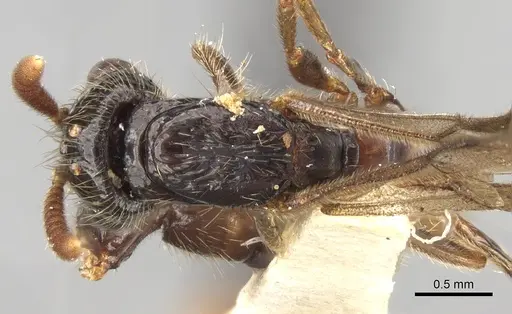
CASENT0903783
View on AntWeb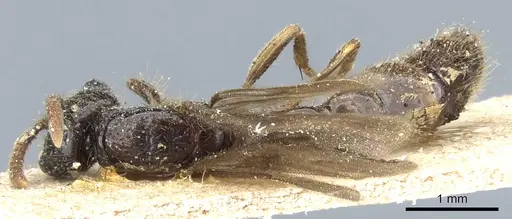
Literature
Loading distribution map...Loading products...