
Acanthoponera peruviana
- Sci. Name
- Acanthoponera peruviana
- Tribe
- Heteroponerini
- Subfamily
- Ectatomminae
- Author
- Brown, 1958
- Distribution
- Found in 3 countries
Introduction
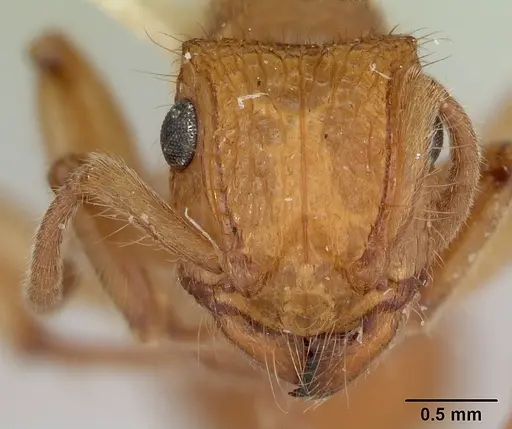
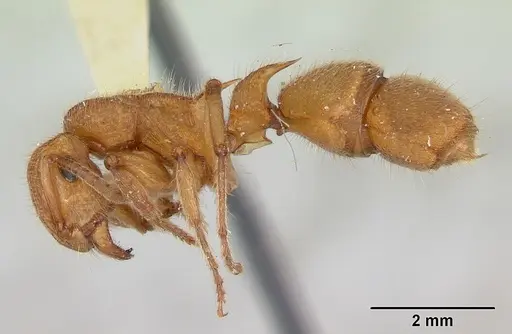
Acanthoponera peruviana is a medium-sized predatory ant belonging to the subfamily Ectatomminae. Workers measure 7.13-8.84 mm with a distinctive bright ferruginous yellow to brown coloration . The species is characterized by well-developed straight propodeal spines and a unique petiolar shape where the anterior face meets the dorsal face in a long continuous curve ending in a broad, long posterior spine . The gaster is notably depressed and broadened with a deep constriction between the postpetiole and second segment. This species is found across the Amazon region of South America, including Brazil, Ecuador, French Guiana, and Peru, where it inhabits tropical forest environments . As a Poneromorph ant, A. peruviana is a predatory species that hunts small invertebrates. The limited specimens collected in pitfall traps suggest they are occasional ground foragers rather than highly active surface-dwelling ants . Their specialized morphology, including the prominent propodeal spines and powerful sting, indicates they are well-equipped predators capable of taking down prey larger than themselves.
Quick Summary
- Difficulty: Medium
- Origin & Habitat: Amazon region of South America, Brazil, Ecuador, French Guiana, and Peru. Found in tropical forest environments, with specimens collected in pitfall traps suggesting ground-level foraging activity [1][3].
- Colony Type: Unconfirmed, colony structure (single-queen or multi-queen) has not been documented in scientific literature.
- Size & Growth:
- Queen: Unknown, queen measurements not described in available literature
- Worker: 7.13-8.84 mm [1]
- Colony: Unknown, no colony size data available
- Growth: Unknown, no development timing data available
- Development: Unknown, development timeline has not been studied for this species (No direct data on egg-to-worker development for this species.)
- Antkeeping:
- Temperature: Aim for 22-26°C as a starting point. No specific thermal studies exist for this species, but related Poneromorphs in the genus typically thrive in warm, stable conditions. Create a gentle gradient allowing workers to self-regulate.
- Humidity: Keep substrate moderately to consistently moist. As a ground-foraging species from tropical Amazon habitats, they likely prefer damp conditions. Provide a moisture gradient with a moist nesting area and slightly drier foraging space.
- Diapause: Unknown, no studies on overwintering requirements or seasonal dormancy. As a tropical species from the Amazon, they likely do not require a diapause period.
- Nesting: Naturalistic setups with moist substrate work well. Given their ground-foraging behavior and the presence of propodeal spines, they likely prefer nests with soil or decaying wood. In captivity, a Y-tong or plaster nest with moisture provision works. Provide chambers scaled to their medium size.
- Behavior: Temperament is likely defensive given their powerful sting and predatory nature. They are ground foragers that hunt small invertebrates. Escape risk is moderate, their medium size makes them capable of escaping through standard barriers, but they are not extreme escape artists. Use standard escape prevention (Fluon on edges, tight-fitting lids). Their sting is functional and capable of penetrating human skin, handle with care.
- Common Issues: no specific temperature or humidity requirements documented, keepers must experiment and observe colony response, development timeline unknown makes it difficult to assess if colony is progressing normally, sting capability means handling requires caution, limited availability in the antkeeping hobby means less community knowledge to draw from, tropical origin suggests they may be sensitive to temperature drops
Housing and Nest Setup
Acanthoponera peruviana is a medium-sized ant that benefits from a naturalistic or semi-naturalistic setup. Given their ground-foraging behavior and tropical origin, provide a nest with moist substrate, a Y-tong nest, plaster nest, or naturalistic setup with soil all work well. The nest should have chambers scaled appropriately for workers, with enough space for the colony to expand. Provide a water tube or moisture reservoir to maintain humidity. Since they are ground foragers, include an outworld area where you can offer prey items. Escape prevention is important, while not tiny, they are active enough to find gaps. Use standard barriers like Fluon on test tube rims or formicarium edges. [1]
Feeding and Diet
As a Poneromorph ant, Acanthoponera peruviana is predatory and should be fed a protein-rich diet. Offer small live invertebrates such as fruit flies, pinhead crickets, small mealworms, or other appropriately sized prey. Since they are ground foragers, prey should be offered in the outworld where they can hunt. The frequency should match colony size, a founding queen needs occasional prey (once weekly), while an established colony may need prey several times per week. Remove uneaten prey after 24-48 hours to prevent mold. Sugar sources are not typically required for Poneromorph ants, but you can occasionally offer a drop of honey or sugar water to see if it is accepted. [1]
Temperature and Seasonal Care
Keep A. peruviana at warm temperatures in the 22-26°C range. No specific optimal temperature has been studied, but this range is typical for tropical Amazon species. Use a heating cable on one side of the nest to create a gentle gradient, allowing workers to move between warmer and cooler areas. Monitor colony behavior, active, foraging workers indicate good conditions, sluggish ants suggest temperatures are too low. As a tropical species from the Amazon basin, they do not require hibernation. Avoid sudden temperature changes.
Behavior and Handling
Acanthoponera peruviana has a functional sting and will use it if threatened. These are defensive ants by nature, they are predators equipped with powerful venom for subduing prey. When keeping them, avoid disturbing the nest unnecessarily and never handle them with bare hands. If you need to move them, use gentle techniques like coaxing them into a container rather than grabbing. Their medium size and ground-foraging habits mean they are not particularly fast-moving compared to some other ant species. The distinctive propodeal spines and petiolar morphology are not just for show, these ants are well-equipped hunters. [1]
Colony Establishment
Establishing a colony of Acanthoponera peruviana can be challenging due to limited availability in the antkeeping hobby. If you obtain a founding queen, she will need a quiet, dark location and minimal disturbance during the founding period. Provide a test tube setup with a water reservoir and keep her at warm, stable temperatures. Offer small prey items once the first workers emerge. Growth rate is unknown, be patient and avoid checking the nest too frequently, as disturbance can cause queens to abandon or eat their brood. The lack of documented colony size data means you will be pioneering husbandry for this species.
Frequently Asked Questions
How long does it take for Acanthoponera peruviana to produce first workers?
The egg-to-worker timeline is unknown, this species has not been studied for development timing. You will need to be patient and monitor your colony's progress.
Do Acanthoponera peruviana ants sting?
Yes, they have a functional sting capable of penetrating human skin. These are predatory ants with powerful venom used to subdue prey. Handle with care and avoid direct contact.
What do Acanthoponera peruviana eat?
As predatory Poneromorph ants, they eat small live invertebrates. Offer fruit flies, pinhead crickets, small mealworms, or other appropriately sized prey. Remove uneaten prey after 24-48 hours. Sugar sources are not typically required but may be occasionally accepted.
Are Acanthoponera peruviana good for beginners?
This species is rated as medium difficulty and is not ideal for complete beginners. Limited availability and lack of documented care information make it challenging. Experience with other predatory ants like Poneramorphs would be helpful. If you are new to antkeeping, consider starting with more established species like Lasius or Camponotus.
What temperature do Acanthoponera peruviana need?
Aim for 22-26°C as a starting point. No specific studies exist for this species, but tropical Amazon species typically need warm, stable conditions. Create a gentle gradient and adjust based on colony activity.
How big do Acanthoponera peruviana colonies get?
Colony size is unknown, no research has documented maximum colony sizes for this species.
Can I keep multiple Acanthoponera peruviana queens together?
Colony structure (monogyne vs polygyne) has not been documented for this species. Combining unrelated queens is not recommended due to lack of information about their social structure. Keep queens separate until you confirm they have mated and established workers.
Do Acanthoponera peruviana need hibernation?
Diapause requirements are unknown. As a tropical Amazon species, they likely do not require true hibernation. However, slight temperature reduction during winter months (to around 20°C) may be appropriate. Monitor colony activity and adjust based on behavior.
What size nest do Acanthoponera peruviana need?
Use chambers scaled for medium-sized ants. A Y-tong or plaster nest with multiple chambers works well. The nest should allow for colony expansion over time. Provide a moisture source and keep the nesting area humid.
Why are my Acanthoponera peruviana dying?
Common issues include: temperature too low, humidity incorrect (too dry or waterlogged), disturbance during founding, or poor prey quality. Review these parameters and make gradual adjustments. Limited availability also means wild-caught colonies may have existing health issues.
Report an Issue
The current care sheet is based fully on literature. See inconsistencies, or something that's incorrect? Please , it will be resolved after review from an admin. Contributing to the blogs tab also helps providing information, to make us be able to further improve the caresheets. Thank you for your support!
References

This caresheet is licensed under CC BY-SA 4.0 .
Community Blogs
CASTYPE06889
View on AntWeb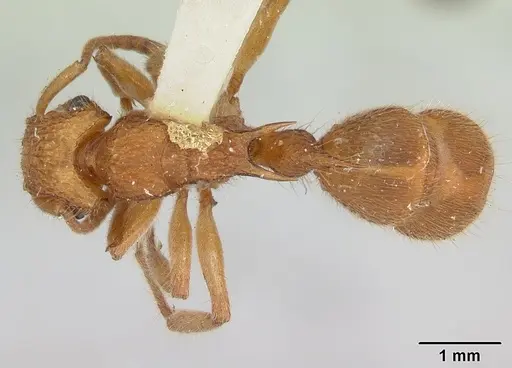
Literature
Loading distribution map...Loading products...