
Acanthoponera mucronata
- Sci. Name
- Acanthoponera mucronata
- Tribe
- Heteroponerini
- Subfamily
- Ectatomminae
- Author
- Roger, 1860
- Distribution
- Found in 4 countries
Introduction
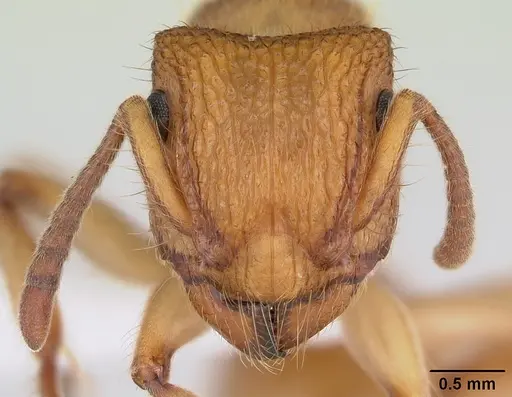
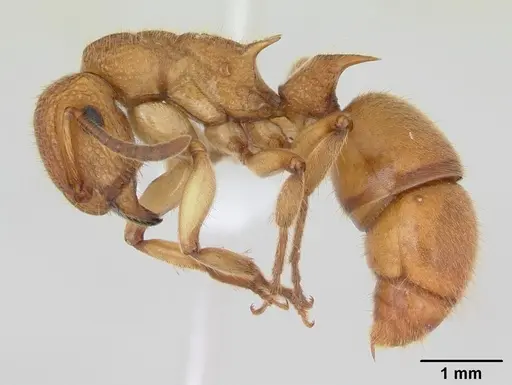
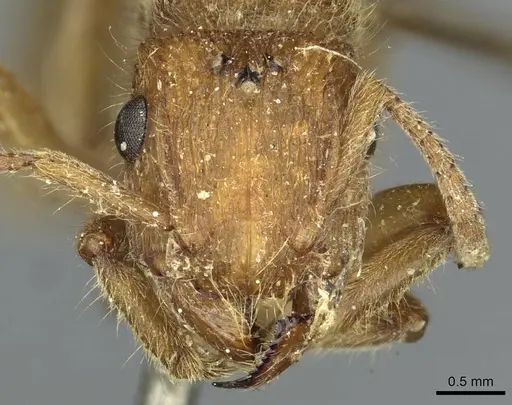
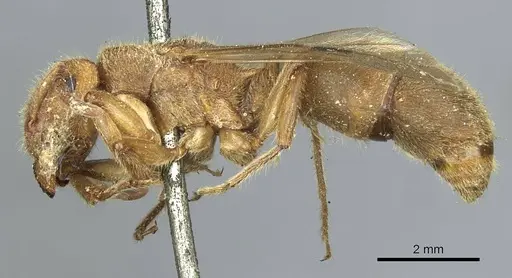
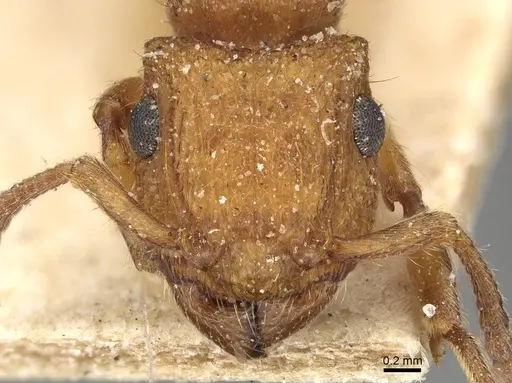
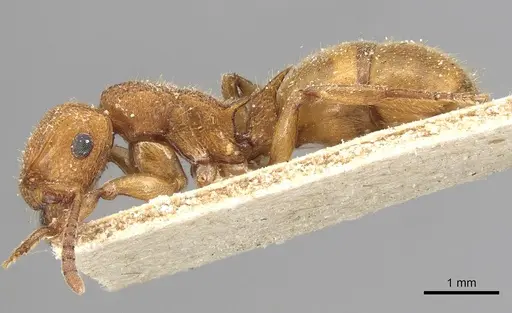
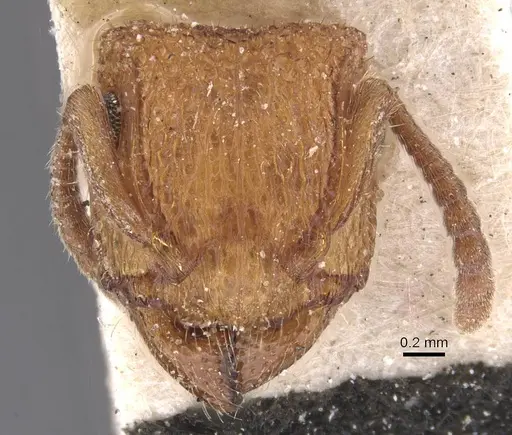
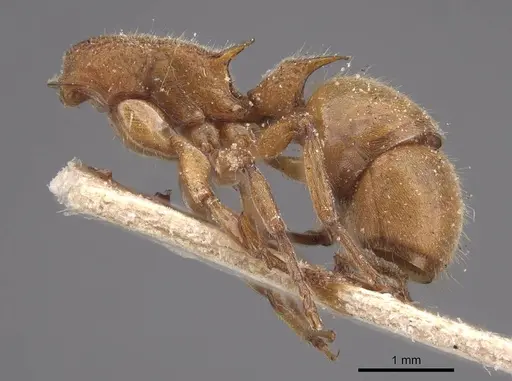
Acanthoponera mucronata is a medium-sized ant belonging to the subfamily Heteroponerinae, found throughout northern South America. Workers measure 6.73-9.61mm and have a distinctive yellow to brown coloration with well-developed straight propodeal spines . The species is characterized by a strong constriction between the first and second gastral segments and a translucent subpetiolar process . These ants are arboreal nesters, building their colonies in vegetation rather than underground, and they forage nocturnally on plants . They are considered indicator species of minimally disturbed forest ecosystems . Unlike many poneromorphs, Acanthoponera mucronata shows an omnivorous diet that includes protein baits like sardines .
Quick Summary
- Difficulty: Medium
- Origin & Habitat: Neotropical region, Argentina, Bolivia, Brazil, Colombia, Ecuador, Paraguay, Peru, and Venezuela. Found in Atlantic Forest, Cerrado, Caatinga, and urban areas at elevations from 80-1200m [5][1].
- Colony Type: Colony structure is not well-documented in scientific literature. Based on related Heteroponerini species, likely single-queen (monogyne) colonies with potential ergatoid replacement reproductives. Queens are winged and reproductive females are attracted to lights at night [6][1].
- Size & Growth:
- Queen: ~9-11mm, inferred from worker size and genus patterns
- Worker: 6.73-9.61mm [1]
- Colony: Up to 200 workers, inferred from arboreal nesting and related species
- Growth: Moderate, inferred from tropical poneromorph patterns
- Development: 6-10 weeks at optimal tropical temperatures (24-28°C), inferred from related Ponerinae species (Development time is inferred from related Ponerinae species. No direct study on this species' development exists.)
- Antkeeping:
- Temperature: Keep at 24-28°C. These are tropical ants from South America, so they need warm conditions. A heating cable on one side of the nest creates a temperature gradient [1].
- Humidity: Keep the nest substrate consistently moist but not waterlogged. They inhabit Atlantic Forests and forest edges, so provide humidity through moist substrate. A water tube should always be available for drinking [1][2].
- Diapause: No, these are tropical ants that do not hibernate. Maintain consistent temperatures year-round [1].
- Nesting: Arboreal nesters in the wild, building nests in vegetation and fallen logs [7]. In captivity, they do well in naturalistic setups with wood pieces or cork bark, or in Y-tong/plaster nests with moist substrate. They prefer enclosed spaces with some darkness.
- Behavior: Nocturnal foragers that search for prey on vegetation [1]. They are predatory and will hunt small invertebrates. Workers are relatively large and can deliver a sting, though they are not typically aggressive toward humans. They are moderate escape risk, use standard barrier methods like fluon. Queens are winged and attracted to lights at night during nuptial flights [6].
- Common Issues: tropical temperature requirements mean colonies suffer in cool rooms below 24°C, arboreal nesting means they may not accept typical underground test tube setups, provide elevated nesting options, nocturnal activity means you may not see much movement during daylight hours, small colony sizes mean slow growth, patience is required, wild-caught colonies may have parasites that affect captive survival
Natural History and Distribution
Acanthoponera mucronata is found throughout northern South America, with records from Argentina, Bolivia, Brazil, Colombia, Ecuador, Paraguay, Peru, and Venezuela [6]. They are most common in Brazil, occurring across multiple biomes including the Atlantic Forest, Cerrado, Caatinga, and even urban areas [1]. In Colombia, they are found in Amazonas, Meta, and Valle del Cauca between 80-1200m elevation [5][8]. They are considered an indicator species of minimally disturbed forest, meaning they thrive in healthy ecosystems with minimal human disturbance [2]. In their native range, they are often found in mature forest canopies where they build arboreal nests in vegetation or decaying wood [9][7].
Feeding and Diet
These ants are omnivorous with a strong preference for protein. In the wild, they are attracted to sardine baits in olive oil, demonstrating their interest in protein-rich foods [3][4]. They are predatory hunters that forage nocturnally on vegetation, searching for small invertebrates [1]. In captivity, you should offer a varied diet including small live prey like fruit flies, pinhead crickets, and mealworms. They will likely accept protein gels and can also be offered sugar water or honey occasionally, though protein should be the primary food source. Based on their stinger morphology being adapted for piercing, they are active predators [10]. Feed them small prey items 2-3 times per week and keep sugar water available at all times.
Temperature and Housing
As tropical ants from northern South America, Acanthoponera mucronata requires warm temperatures between 24-28°C [1]. They do not undergo diapause or hibernation. Because they are arboreal nesters in the wild, they may not accept traditional test tube setups meant for ground-nesting species. Instead, provide a naturalistic setup with cork bark, wood pieces, or a formicarium with chambers positioned at various heights. Keep the nest substrate consistently moist but not waterlogged, these ants come from humid forest environments. A water tube should always be available for drinking. Use moderate ventilation to prevent mold while maintaining humidity.
Behavior and Defense
Acanthoponera mucronata is nocturnal and arboreal, with workers foraging on vegetation at night [1]. They belong to the tribe Heteroponerini, which is associated with predatory behavior and omnivore diets [10]. Workers are relatively large (6.73-9.61mm) and possess a well-developed stinger that they can use for defense [10]. While not typically aggressive toward humans, they can sting if threatened. The stinger morphology shows they are adapted for effective puncture [10]. Colonies are likely small to moderate in size. Queens are winged and reproductive females are attracted to artificial lights at night, which is how they are often collected [6]. Workers are solitary foragers that patrol vegetation individually.
Colony Structure and Reproduction
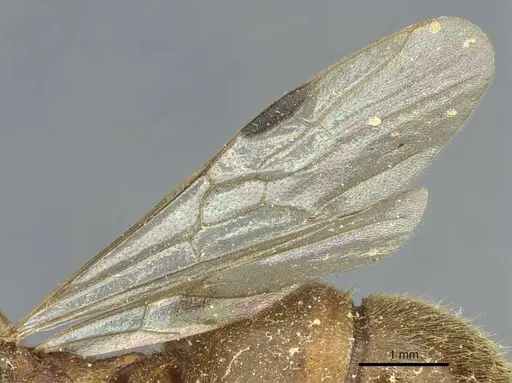
The colony structure of Acanthoponera mucronata is not extensively documented in scientific literature. Queens are winged and reproductive, with females being attracted to lights at night [6]. Males have been described and measured at 7.63mm total length, showing distinct morphological features including large eyes and 13-segmented antennae [6]. Winged reproductives have been collected in Peru in November, suggesting nuptial flights occur during the wet season in tropical regions [6]. Based on related species in the Heteroponerini tribe, colonies are likely founded by a single queen (monogyne) with potential ergatoid replacement reproductives if the queen dies. Colony size is estimated to be small to moderate, likely under 200 workers, which is typical for arboreal nesting poneromorphs.
Frequently Asked Questions
How long does it take for Acanthoponera mucronata to produce first workers?
Exact development time is unconfirmed for this species. Based on related tropical Ponerinae species, expect 6-10 weeks from egg to first worker at optimal temperatures of 24-28°C. Growth is moderate, and colonies will remain small initially.
What do Acanthoponera mucronata ants eat?
They are omnivorous with a preference for protein. In studies, they are strongly attracted to sardine baits [3][4]. Feed them small live prey like fruit flies, pinhead crickets, and mealworms. They will also accept sugar water or honey. Protein should be the primary food source.
Do Acanthoponera mucronata ants sting?
Yes, they can sting. They belong to the Heteroponerini tribe which has well-developed stingers [10]. The stinger is long, slender, and dorsally curved, adapted for effective puncture [10]. However, they are not typically aggressive and will only sting if directly threatened.
What temperature do Acanthoponera mucronata ants need?
Keep them warm at 24-28°C. These are tropical ants from northern South America and do not tolerate cool temperatures well [1]. Use a heating cable on one side of the nest to maintain warmth if your room temperature is below this range.
Are Acanthoponera mucronata good for beginners?
This species is rated as Medium difficulty. They require tropical temperatures and may need arboreal-style housing since they nest in vegetation rather than underground. They are not the easiest species for beginners, but they are manageable if you can provide the warmth and humidity they need.
How big do Acanthoponera mucronata colonies get?
Colony size is not well-documented, but based on related arboreal Heteroponerini species, colonies likely reach up to 200 workers. They are not known for forming supercolonies. Growth is moderate.
Do Acanthoponera mucronata need hibernation?
No, they do not hibernate. These are tropical ants from South America that maintain activity year-round [1]. Keep temperatures consistent at 24-28°C throughout the year.
What type of nest should I use for Acanthoponera mucronata?
Since they are arboreal nesters in the wild, they may prefer elevated nesting options over traditional test tubes. A naturalistic setup with cork bark, wood pieces, or a formicarium with chambers at various heights works well. Keep the nest moist and provide darkness.
Where is Acanthoponera mucronata found?
They are found throughout northern South America: Argentina, Bolivia, Brazil, Colombia, Ecuador, Paraguay, Peru, and Venezuela [6]. Most common in Brazil, particularly in Atlantic Forest, Cerrado, and Caatinga biomes [1].
When do Acanthoponera mucronata queens fly?
Winged reproductives have been collected in November in Peru, suggesting nuptial flights occur during the wet season [6]. Queens are attracted to artificial lights at night, which is a common collection method [6][1].
Report an Issue
The current care sheet is based fully on literature. See inconsistencies, or something that's incorrect? Please , it will be resolved after review from an admin. Contributing to the blogs tab also helps providing information, to make us be able to further improve the caresheets. Thank you for your support!
References

This caresheet is licensed under CC BY-SA 4.0 .
Community Blogs
CASENT0173540
View on AntWeb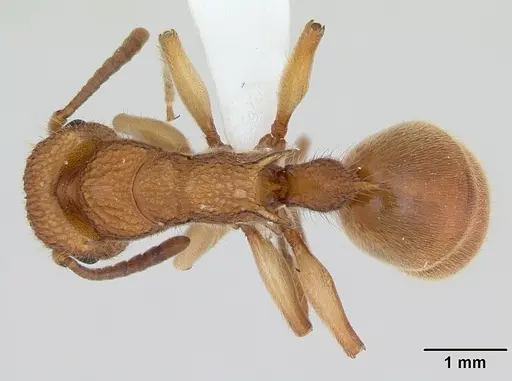
CASENT0913592
View on AntWeb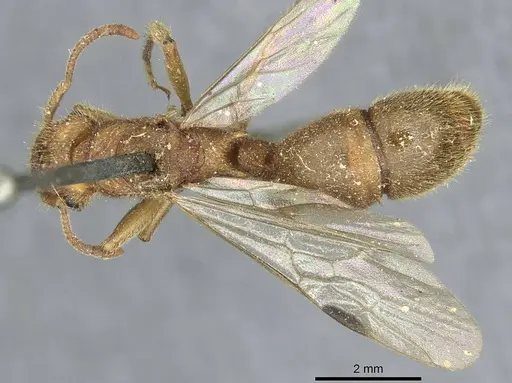
CASENT0915105
View on AntWeb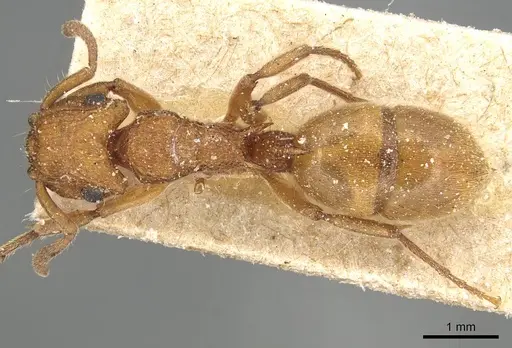
CASENT0915355
View on AntWeb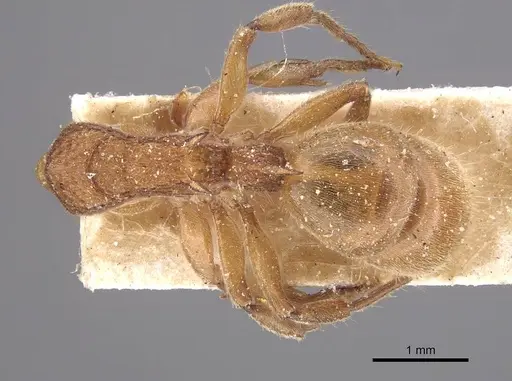
Literature
Loading distribution map...Loading products...