
Acanthomyrmex mizunoi
- Sci. Name
- Acanthomyrmex mizunoi
- Tribe
- Crematogastrini
- Subfamily
- Myrmicinae
- Author
- Jaitrong & Asanok, 2019
- Distribution
- Found in 1 countries
Introduction
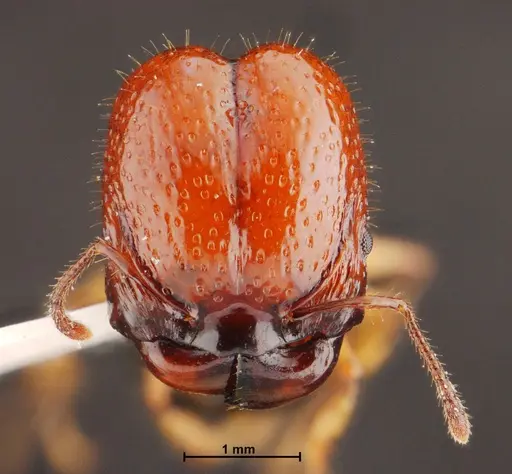
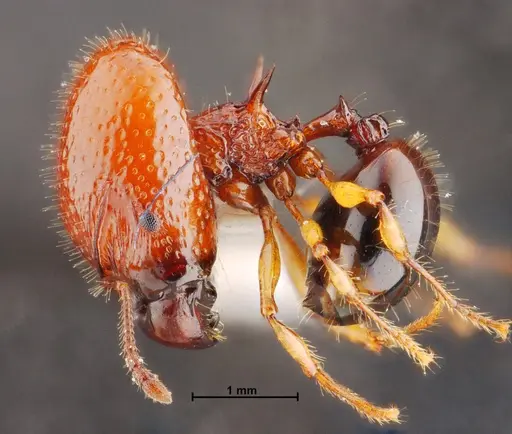
Acanthomyrmex mizunoi is a dimorphic ant species endemic to the highlands of Thailand, found at elevations around 800-900 meters in evergreen forests and coffee plantations . Major workers are robust ants with large heads covered in dense erect hairs and sharp propodeal spines. Minor workers are much smaller with distinctive thoracic spines and a heavily textured head surface. Both castes display reddish-brown to dark brown coloration with darker abdomens . This species is notable for its dual reproductive strategy. Colonies produce both normal winged dealate queens and ergatoid queens - wingless reproductive ants that resemble major workers but possess ocelli. These ergatoid queens serve as backup breeders capable of taking over egg-laying duties if the primary queen dies, providing colonies with a survival advantage .
Quick Summary
- Difficulty: Expert
- Origin & Habitat: Thailand, specifically highland primary hill evergreen forests and coffee plantations at 800-900m elevation in Chiang Rai, Nakhon Nayok, and Nakhon Ratchasima Provinces [1].
- Colony Type: Colonies contain both dealate queens and ergatoid (wingless) replacement reproductives [1].
- Size & Growth:
- Queen: Size data unavailable, head measurements (HW 1.98-2.01mm for dealate queens,1.95-2.01mm for ergatoid queens) are provided in literature but total body length is not specified [1].
- Worker: Size data unavailable, head measurements are provided (major workers HW 2.05-2.28mm, minor workers HW 1.02-1.09mm) but total body length is not specified [1].
- Colony: Unknown, likely small to moderate based on soil-nesting habits [1].
- Growth: Unknown
- Development: Unknown (Development timeline has not been studied. Highland tropical species may develop slowly.)
- Antkeeping:
- Temperature: Moderate temperatures around 22-25°C, avoid temperatures above 28°C [1].
- Humidity: High humidity required, nest substrate should remain consistently moist but not waterlogged [1].
- Diapause: Unlikely required, this is a tropical highland species from Thailand [1].
- Nesting: Soil-nesting species, use naturalistic soil setups or plaster nests with digging substrate [1].
- Behavior: Slow-moving soil-dwelling ants with distinct major and minor worker castes. Minor workers are extremely small and require excellent escape prevention. Major workers are robust with large heads likely used for processing food [1].
- Common Issues: minor workers are extremely small and can escape through the tiniest gaps in mesh or lids., highland humidity requirements make them prone to desiccation if the nest substrate dries out., newly described species (2019) means limited care information and potential difficulty sourcing healthy colonies., soil-nesting behavior may make them difficult to observe in standard clear acrylic nests.
Nest Preferences
In nature, Acanthomyrmex mizunoi nests in soil within primary hill evergreen forests at approximately 800 meters elevation [1]. They also inhabit coffee plantations at higher elevations around 900 meters in Chiang Rai Province [1]. In captivity, provide a naturalistic setup with a deep layer of soil or a plaster nest that allows for digging. They will create small chambers and tunnels where humidity remains stable. Avoid completely dry setups or exposed acrylic nests without substrate, as these highland ants require moist microhabitats. A nest with a soil gradient, damp on one side, slightly less moist on the other, allows the colony to choose their preferred conditions.
Temperature and Humidity
These ants come from the highlands of Thailand at 800-900 meters elevation, not the hot lowlands [1]. Keep them at moderate temperatures around 22-25°C. They probably do not need a strong heat gradient, but a gentle warmth on one side of the nest can encourage activity. Avoid temperatures above 28°C as highland species often tolerate heat poorly. Humidity should remain high, keep the nest substrate damp to the touch but not waterlogged. Use a water tower or regular misting to maintain moisture, and ensure good ventilation to prevent mold while keeping humidity up.
Feeding and Diet
Their specific diet has not been studied in detail. Like most related ants in the tribe Crematogastrini, they likely eat small insects and possibly sweet liquids. Offer tiny live prey such as springtails or fruit flies for the minor workers, and slightly larger prey for the majors. Provide sugar water or honey water as a carbohydrate source. Observe what they accept and remove uneaten food promptly to prevent mold in the humid conditions they require. The major workers' large heads suggest they may process hard foods or seeds, so offering small seeds experimentally may be worth trying. [1]
Behavior and Temperament
This species shows strong worker dimorphism, majors and minors look quite different and probably serve different roles [1]. Major workers have massive heads with dense erect hairs covering the dorsum, and propodeal spines that are broad basally and sharp apically [1]. Minor workers have pronotal spines that are shorter than their propodeal spines, and their heads are coarsely punctured [1]. They are soil-dwelling and probably move slowly when not disturbed. The minor workers are tiny and can escape easily through standard mesh, so use fine mesh barriers or apply Fluon to the upper outworld walls. They are not known to be aggressive, but the majors can likely bite if threatened.
Ergatoid Queens and Colony Reproduction
Unlike most ants that only produce winged queens, Acanthomyrmex mizunoi colonies contain both normal dealate queens and ergatoid queens [1]. Ergatoid queens are wingless reproductive ants that resemble major workers in structure, sculpture, and coloration but possess a median ocellus while lacking lateral ocelli [1]. They are slightly smaller than major workers (head width 1.95-2.01mm versus 2.05-2.28mm) [1]. These serve as backup breeders, if the primary winged queen dies, an ergatoid queen can activate her ovaries and take over egg-laying duties. This means colonies have a built-in insurance policy against queen loss. However, this does not mean you can combine multiple unrelated queens, the ergatoids are replacement reproductives, not co-founders.
Colony Founding
Founding behavior is unconfirmed for this species. If you obtain a dealate queen, assume she needs peace and quiet in a small, dark chamber with moist substrate. Do not disturb her for several weeks. Provide a test tube with soil or a small plaster chamber. Watch for eggs after several weeks. Expect first workers within several months if conditions are right, though this timeline is completely unconfirmed for this species. [1]
Frequently Asked Questions
Can I keep Acanthomyrmex mizunoi in a test tube?
Test tubes may work for founding, but soil-nesting species often prefer darkness and substrate. Use a dark test tube or cover it with foil, and provide a small amount of soil or plaster for them to dig. Once workers arrive, move them to a naturalistic setup with digging substrate.
What is the egg to worker timeline for Acanthomyrmex mizunoi?
Unknown. This species has not been studied in captivity and no development timeline data exists.
How big do Acanthomyrmex mizunoi colonies get?
Unknown in the wild or captivity. No colony size data has been documented for this species.
Do Acanthomyrmex mizunoi ants sting?
They likely possess stings like most Myrmicinae, but their small size means they cannot penetrate human skin. They are not dangerous to humans, though majors may deliver a noticeable bite.
What do Acanthomyrmex mizunoi eat?
Specific diet unknown. Offer small live insects such as springtails or fruit flies, and provide sugar water or honey water. Observe acceptance and adjust based on what they take.
Are Acanthomyrmex mizunoi good for beginners?
No. They are newly described (2019), rare in captivity, have specific high-humidity requirements, and require expert care. Start with easier species like Lasius niger or Camponotus species.
Do Acanthomyrmex mizunoi need hibernation?
Probably not. They come from tropical Thailand and likely do not require a cold休眠 period.
Why are my Acanthomyrmex mizunoi dying?
Common causes include desiccation from low humidity, escapes through tiny gaps, or stress from disturbance. Ensure the nest stays moist and escape-proof.
Can I keep multiple Acanthomyrmex mizunoi queens together?
Not recommended. While they naturally produce ergatoid backup queens within established colonies, combining unrelated founding queens likely leads to fighting. This has not been documented.
What is the best nest type for Acanthomyrmex mizunoi?
Naturalistic soil setups or plaster nests that allow digging behavior work best. Avoid bare acrylic nests. They need substrate to excavate and maintain humidity.
Report an Issue
The current care sheet is based fully on literature. See inconsistencies, or something that's incorrect? Please , it will be resolved after review from an admin. Contributing to the blogs tab also helps providing information, to make us be able to further improve the caresheets. Thank you for your support!
References

This caresheet is licensed under CC BY-SA 4.0 .
Community Blogs
THNHM-I-01198
View on AntWeb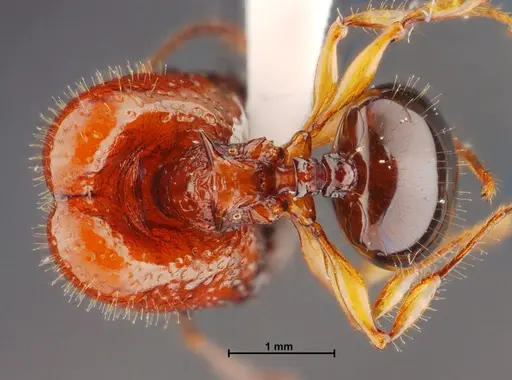
Literature
Loading distribution map...Loading products...