
Acanthomyrmex mindanao
- Sci. Name
- Acanthomyrmex mindanao
- Tribe
- Crematogastrini
- Subfamily
- Myrmicinae
- Author
- Moffett, 1986
- Distribution
- Found in 1 countries
Introduction
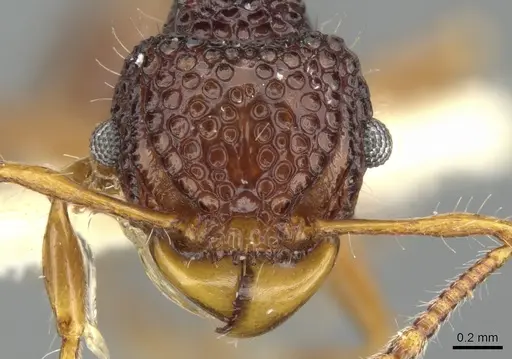
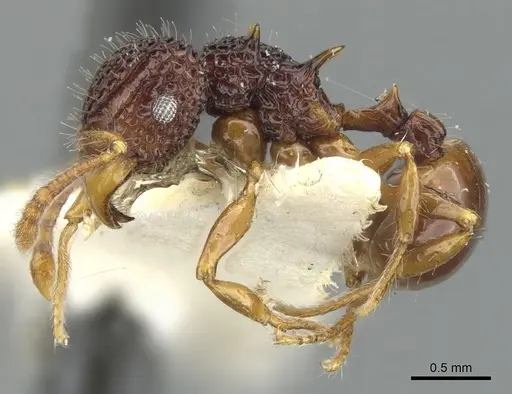
Acanthomyrmex mindanao is a tiny, dimorphic ant from the tropical forests of Mindanao island in the Philippines. These ants show two distinct worker sizes: minors around 2-3 mm and majors reaching 4-5 mm, both colored orange-yellow to reddish-orange with lighter legs [AntWiki]. They nest in rotting logs on the forest floor and build small colonies of fewer than 50 workers [AntWiki]. What makes these ants special is their division of labor between worker types. Minor workers leave the nest to forage for tiny seeds, while major workers stay home to crush the seeds and defend the colony [AntWiki]. This caste-based job splitting is interesting to watch but makes them challenging captives since they need a constant supply of appropriate seeds and maintain small colony sizes that grow slowly.
Quick Summary
- Difficulty: Hard
- Origin & Habitat: Tropical forests of Mindanao island, Philippines, found in rotting logs and leaf litter [1][2][3]
- Colony Type: Likely single-queen (monogyne) colonies given the small colony size, though exact structure remains unconfirmed
- Size & Growth:
- Queen: Size data unavailable, inferred from genus patterns to be approximately 5-6 mm
- Worker: Minors approximately 2-3 mm, majors approximately 4-5 mm, inferred from genus [1]
- Colony: Fewer than 50 workers [1]
- Growth: Slow
- Development: 8-12 weeks at 25-27°C, estimated based on similar tropical Myrmicinae (Timeline is estimated, actual development time has not been documented for this species)
- Antkeeping:
- Temperature: Keep warm and stable around 24-28°C, these are tropical forest ants that need consistent warmth [1]
- Humidity: High humidity required, keep nest material damp like rotting wood, with 60-80% humidity in the nest area
- Diapause: No, tropical species that remains active year-round
- Nesting: Naturalistic setups with rotting wood, or Y-tong nests with small chambers that mimic log cavities [1][4]
- Behavior: Seed-harvesting specialists with distinct major and minor worker roles. Minors forage while majors process seeds and defend. Generally slow-moving and not aggressive toward keepers, but their tiny size means escape prevention must be excellent [1]
- Common Issues: colonies stay small with fewer than 50 workers, which frustrates keepers expecting rapid growth., require specific seed diet, may reject standard ant foods like sugar water or insects., tiny worker size means they can escape through gaps that stop larger ants., rare in collections and difficult to acquire legally and ethically., slow growth means months between brood batches, requiring patience.
Nest Preferences
In the wild, Acanthomyrmex mindanao nests inside rotting logs on the forest floor [1]. Similar species in the genus use cavities in dead twigs, spaces under stones, and leaf litter on the forest floor [4]. For captive colonies, recreate these conditions with a naturalistic setup containing rotting wood or bark, or use a Y-tong nest with small chambers sized to their tiny workers. The nest material should stay consistently damp but not waterlogged, think of the moisture level in a rotting log on a tropical forest floor. Provide tight-fitting chambers rather than open spaces, as these small ants prefer confined cavities where they can control humidity and protect their brood.
Feeding and Diet
These ants are seed harvesters. Minor workers leave the nest to find and carry home tiny seeds, while major workers use their large heads to crush the seeds for the colony [1]. You will need to provide a constant supply of small seeds, think grass seeds, chia seeds, or other tiny varieties. They may also accept small insects, but seeds appear to be their primary food source. Offer sugar water or honey water in very small amounts to see if they accept it, but do not rely on sugars as their main food. Place seeds directly in the nest area or foraging space, and watch for the majors crushing them, this behavior is one of the highlights of keeping this genus.
Temperature and Humidity
As tropical forest ants from the Philippines, Acanthomyrmex mindanao need warm, stable temperatures around 24-28°C [1]. Use a heating cable or mat on one side of the nest to create a gentle gradient, but avoid overheating, these ants live in shaded, damp logs rather than open sun. Humidity is critical: the nest substrate should feel damp to the touch, similar to the inside of a rotting log. Maintain 60-80% humidity in the nest chamber with minimal ventilation to prevent drying. These ants do not need hibernation and remain active year-round.
Behavior and Temperament
Acanthomyrmex mindanao shows clear dimorphism, meaning they have two distinct worker sizes that do different jobs. Minor workers are small and slender for foraging, while majors are stocky with large heads for crushing seeds and defense [1]. This division of labor makes them fascinating to observe, though their small colony size means less overall activity than fast-growing species like Tetramorium. They are not particularly aggressive and rarely bite or sting keepers, but their extremely small size means you must use excellent escape prevention. Fine mesh barriers and tight-fitting lids are essential, as minors can squeeze through gaps that would stop larger ants.
Colony Founding
Founding behavior for Acanthomyrmex mindanao has not been directly observed. Based on patterns seen in related Acanthomyrmex species, queens likely seal themselves in (claustral founding) and raise the first workers using stored body fat without leaving the nest [4]. If you acquire a founding queen, provide a small, dark chamber with high humidity and do not disturb her. Do not offer food during the founding stage unless she shows signs of semi-claustral behavior by leaving the chamber. The first workers (nanitics) will be smaller than typical workers and should emerge within 8-12 weeks if kept at 25-27°C, though this timeline is estimated based on similar tropical ants.
Frequently Asked Questions
Can I keep Acanthomyrmex mindanao in a test tube?
Test tubes can work for founding queens, but add a small piece of rotting wood or bark to give them a more natural cavity. Once workers arrive, move them to a naturalistic setup or Y-tong nest that mimics their log-nesting habits.
How long until Acanthomyrmex mindanao gets its first workers?
Expect roughly 8-12 weeks from egg to first worker at 25-27°C, though this is estimated based on similar tropical ants. The timeline has not been documented specifically for this species.
Can I keep multiple Acanthomyrmex mindanao queens together?
Not recommended. Their small colony size suggests single-queen (monogyne) colonies. Combining multiple queens has not been documented and will likely result in fighting.
Do Acanthomyrmex mindanao ants sting?
They are too small to effectively sting humans. Majors may try to bite with their mandibles if threatened, but they pose no real danger to keepers.
What do Acanthomyrmex mindanao eat?
They primarily eat seeds. Minor workers forage for tiny seeds while majors crush them. Offer grass seeds, chia seeds, or other small varieties. They may occasionally accept sugar water, but seeds should be their main food source.
Are Acanthomyrmex mindanao good for beginners?
No. They are difficult due to their small colony size, slow growth, specific seed diet requirements, and rarity in the hobby. They are better suited for experienced keepers looking for a specialized challenge.
Do Acanthomyrmex mindanao need hibernation?
No. They come from tropical Philippines and remain active year-round. Keep them warm consistently without any cooling period.
Why is my Acanthomyrmex mindanao colony dying?
Common causes include: too dry conditions (they need damp wood-like humidity), wrong food (they need seeds not just sugar), or escape (tiny workers can disappear through small gaps). Also, wild-caught colonies may have parasites or be older colonies near the end of their lifespan.
How big do Acanthomyrmex mindanao colonies get?
They stay small, fewer than 50 workers even at full size. Do not expect the hundreds or thousands of workers seen in other genera.
What is the best nest type for Acanthomyrmex mindanao?
Naturalistic setups with rotting wood and bark work best. Alternatively, use Y-tong or plaster nests with very small chambers and high humidity retention. Avoid large open spaces.
Report an Issue
The current care sheet is based fully on literature. See inconsistencies, or something that's incorrect? Please , it will be resolved after review from an admin. Contributing to the blogs tab also helps providing information, to make us be able to further improve the caresheets. Thank you for your support!
References

This caresheet is licensed under CC BY-SA 4.0 .
Community Blogs
CASENT0901701
View on AntWeb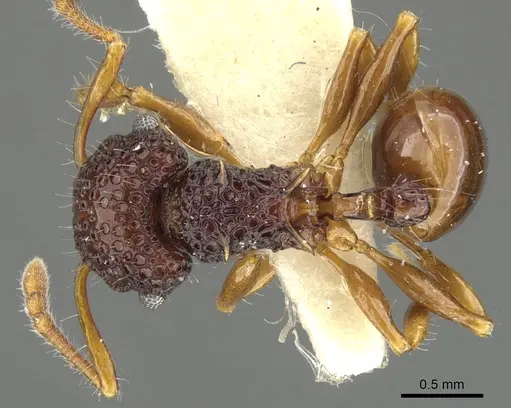
Literature
Loading distribution map...Loading products...