
Acanthomyrmex crassispinus
- Sci. Name
- Acanthomyrmex crassispinus
- Tribe
- Crematogastrini
- Subfamily
- Myrmicinae
- Author
- Wheeler, 1930
- Distribution
- Found in 0 countries
Introduction
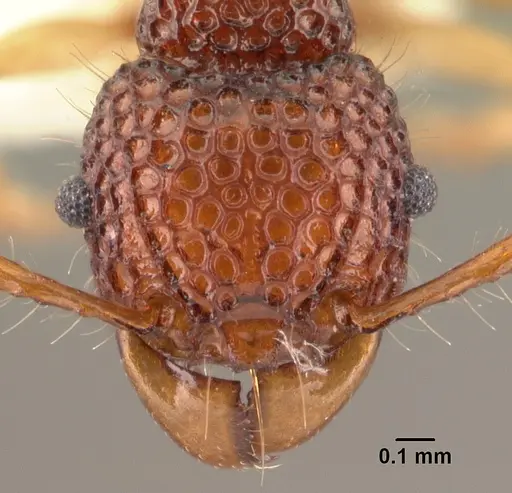
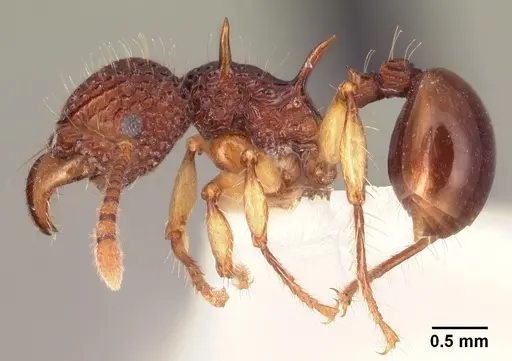
Acanthomyrmex crassispinus is a small myrmicine ant endemic to Taiwan, specifically known from Lanyu Island (Botel Tobago) off the southeast coast . Workers measure 3-3.5 mm in total length and display a striking feature: two pairs of long, stout spines projecting from the thorax, one on the pronotum and one on the epinotum . The genus is notable for its pronounced worker dimorphism, with majors possessing disproportionately large heads . First described by Wheeler in 1930,this species remains rare in both collections and the ant-keeping hobby . The biology of this species is poorly documented. Based on closely related species in the same genus, colonies are small (typically under 100 workers) and nest in small cavities in dead twigs, rotten wood, under stones, or within leaf litter on the forest floor . They likely store tiny seeds in their nests, suggesting a partially granivorous diet alongside typical ant prey . Their restricted island distribution and scarcity make them a challenging species for advanced antkeepers.
Quick Summary
- Difficulty: Expert
- Origin & Habitat: Taiwan (Lanyu Island/Botel Tobago), found in forest floor leaf litter, rotting wood cavities, and under stones in subtropical forest environments [1][2]
- Colony Type: Likely single-queen colonies (unconfirmed). Related species in the genus use ergatoid (wingless) queens [2].
- Size & Growth:
- Queen: Size data unavailable for this species. Ergatoid queens of related species are similar in size to alate queens [2].
- Worker: 3-3.5 mm total length (minors ~3 mm, majors larger with enlarged heads) [1]
- Colony: Under 100 workers based on congener patterns [2]
- Growth: Moderate to slow (estimated)
- Development: Unconfirmed for this species (Related small Myrmicinae typically require several months for first workers. Nanitics may emerge faster than subsequent brood.)
- Antkeeping:
- Temperature: Subtropical Taiwan origin suggests warmth preference. Keep at 24-26°C and observe activity levels. Avoid temperatures below 20°C or above 30°C.
- Humidity: Forest floor species requires moderate to high humidity. Keep nest substrate consistently damp but not waterlogged, with some slightly drier areas available.
- Diapause: Unlikely required given subtropical island origin. A mild winter cooling period (18-20°C for 4-6 weeks) may benefit long-term colony health but is not necessary.
- Nesting: Small cavities in dead twigs, rotten wood, or under stones in nature [2]. In captivity, use Y-tong or plaster nests with narrow chambers. Provide tight, confined spaces appropriate to their small size. Avoid large open chambers.
- Behavior: Slow-moving and cryptic. Workers spend much time hidden in nest cavities. Not known to be aggressive toward humans. Their small size (3 mm) means excellent escape prevention is essential, use fine mesh and barriers. Major workers have enlarged heads with powerful mandibles, likely used for seed processing and defense.
- Common Issues: extreme rarity in the ant trade means captive care data is almost nonexistent, proceed with caution., small colony size makes them fragile, disturbances can significantly set back development., unknown founding type means you may need to experiment with feeding the queen., tiny worker size requires excellent escape prevention, they can squeeze through standard setup gaps., slow growth rate tests patience, beginners often overfeed or disturb the nest too frequently., lack of documented breeding in captivity makes establishing this species challenging.
Nest Preferences and Housing
In nature, these ants nest in small cavities in dead twigs or rotten wood, under or between stones, and in leaf litter on the forest floor [2]. For captive housing, replicate these tight, secure spaces. Y-tong (aerated concrete) nests with narrow chambers work well, as do naturalistic setups with rotting wood fragments. Avoid large open spaces, their small size makes them feel vulnerable in oversized chambers. Provide multiple small cavities so the colony can choose their preferred spot. If using a test tube setup for founding, use smaller diameter tubes (10-12 mm) rather than standard 16-18 mm tubes, as queens may feel more secure in confined spaces [2].
Feeding and Diet
Nests of related species Acanthomyrmex careoscrobis usually contain tiny seeds, suggesting these ants are at least partially granivorous [2]. Offer small seeds (like chia, amaranth, or crushed millet) alongside standard ant foods. They also need protein from small live prey such as springtails, fruit flies, or tiny cricket nymphs cut to size. Sugar sources like honey water or sugar water should be offered but acceptance is unconfirmed, watch to see if they drink. Because colonies stay small, they need only tiny amounts of food. Overfeeding can lead to mold problems in their humid nest environment [2].
Temperature and Seasonal Care
Coming from subtropical Taiwan, these ants prefer warm, stable conditions. Keep them around 24-26°C for best activity. You can create a gentle heat gradient by placing a heating cable or mat on one side of the nest, positioned on top rather than underneath to avoid condensation issues. If the colony shows signs of stress (huddling in one spot, refusing food), adjust the temperature downward slightly. While they likely do not require a true diapause given their island origins, providing a cooler period at 18-20°C for 4-6 weeks during winter may benefit long-term colony health and breeding cycles, though this is unconfirmed for this species.
Colony Founding
The founding behavior of Acanthomyrmex crassispinus has never been documented. Related species in the genus Acanthomyrmex reproduce using ergatoid queens (wingless reproductive females that resemble large workers) [2], but whether this species has winged or wingless queens, or whether queens found colonies alone or in groups, remains unknown. If you obtain a queen, set her up in a small test tube with damp cotton and offer both a dark retreat and occasional small food items (sugar water and tiny prey) to test if she is semi-claustral (needs to forage) or claustral (seals herself in). Do not disturb her frequently, these ants are likely stress-sensitive. The queen may be ergatoid (wingless) based on genus patterns [2].
Defense and Handling
These ants possess two pairs of long thoracic spines (one on pronotum, one on epinotum) which serve as their primary defense against predators [1]. They are not known to sting humans. Workers are slow-moving and cryptic, preferring to hide rather than engage. Major workers have enlarged heads with powerful mandibles likely used for seed-crushing and defense. Their small size means excellent escape prevention is essential, fine mesh (under 1 mm) and Fluon or talcum powder barriers on outworld rims are required.
Frequently Asked Questions
Can I keep Acanthomyrmex crassispinus in a test tube?
Yes, but use smaller diameter tubes (10-12 mm) rather than standard sizes. The queen will likely appreciate a tight, secure space. Keep the cotton damp but not soaked, and place the tube in a dark, warm spot.
How long until Acanthomyrmex crassispinus gets their first workers?
The egg-to-worker timeline is unconfirmed for this species. Based on related small Myrmicinae, expect roughly 3-4 months at 25°C, but this could vary significantly. Patience is essential with this species.
What do Acanthomyrmex crassispinus eat?
They likely eat small seeds (like chia or amaranth) and tiny insects. Related species store seeds in their nests [2]. Offer a variety of small live prey like springtails and fruit flies, plus sugar water or honey water, and observe what they accept.
Do Acanthomyrmex crassispinus need hibernation?
Probably not, given their subtropical Taiwanese origin, but this is unconfirmed. You can keep them warm year-round (24-26°C). However, providing a mild winter cooling to 18-20°C for a few months may benefit long-term health.
Are Acanthomyrmex crassispinus good for beginners?
No. These are expert-level ants due to their rarity, unknown founding requirements, small colony size, and lack of captive care documentation. They are best suited to experienced keepers willing to experiment carefully.
Can I keep multiple Acanthomyrmex crassispinus queens together?
Not recommended. Combining unrelated queens has not been documented for this species. Starting with a single queen is safest.
How big do Acanthomyrmex crassispinus colonies get?
Likely under 100 workers based on related species in the genus [2]. They remain small colonies, which makes them manageable in compact setups but also means they recover slowly from setbacks.
Do Acanthomyrmex crassispinus ants sting?
They are not known to sting humans. They possess spines on their thorax for defense against predators, but these are not used for stinging. They are generally peaceful and shy.
Why are my Acanthomyrmex crassispinus dying?
Common causes include over-disturbance (they are cryptic and stress-sensitive), incorrect humidity (too dry or too wet), escape attempts leading to desiccation, or overfeeding causing mold. Ensure the nest is small, humid, and left undisturbed.
What is the difference between major and minor workers in Acanthomyrmex crassispinus?
Minors are smaller (~3 mm) with normal proportions, while majors have enlarged heads with powerful mandibles likely used for seed-crushing and defense. Both types have the characteristic thoracic spines.
Report an Issue
The current care sheet is based fully on literature. See inconsistencies, or something that's incorrect? Please , it will be resolved after review from an admin. Contributing to the blogs tab also helps providing information, to make us be able to further improve the caresheets. Thank you for your support!
References

This caresheet is licensed under CC BY-SA 4.0 .
Community Blogs
CASENT0101994
View on AntWeb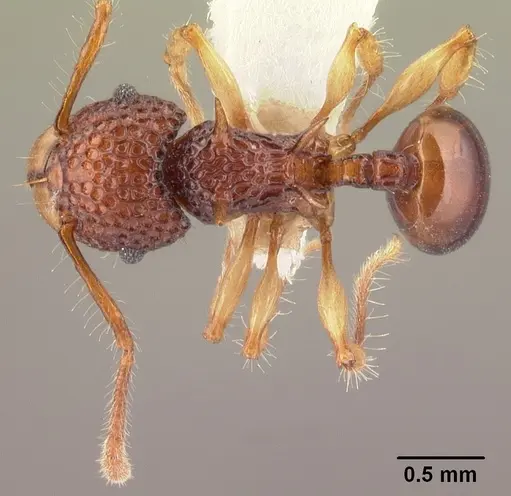
Literature
Loading distribution map...Loading products...